‘The Shape of Wonder’: Lightman and Rees on the Human Side of Science

Unveiling ‘The Shape of Wonder,’ a journey into the lives of scientists by Alan Lightman and Martin Rees. Photo: Penguin Random House

Book Announcement: The Shape of Wonder by Alan Lightman and Martin Rees

Pantheon Books is proud to announce the upcoming release of The Shape of Wonder: How Scientists Think, Work, and Live, a captivating exploration of the scientific world by renowned physicists Alan Lightman and Martin Rees. Scheduled for release on September 2, 2025, this insightful book promises to demystify the scientific process and humanize the brilliant minds behind groundbreaking discoveries. (Penguin Random House, 2025)


Why This Book Matters

In an age of rapid scientific discovery and technological advancement, it’s understandable that many feel uneasy about the future. While we might place our trust in science when boarding an airplane, undergoing a medical procedure, or stepping into an elevator, the lives and motivations of scientists themselves often feel hidden from view.

This distance has bred a troubling mistrust. Concerns about political agendas, financial interests, or institutional ties have caused skepticism toward science at a time when trust is most crucial.

With the challenges of climate change, pandemics, nuclear threats, artificial intelligence, and genetic engineering, understanding science—and those who shape it—has never been more urgent.


Inside The Shape of Wonder

Lightman and Rees take readers inside the minds and lives of scientists across generations and disciplines:

  • A young theoretical physicist and rock climber at the University of Washington.
  • Werner Heisenberg, whose early interests in music and philosophy shaped his path to physics.
  • Govind Swarup, the pioneering Indian astronomer whose work on radio telescopes transformed astronomy.

Through these stories, readers glimpse the passions, daily lives, and ethical concerns of scientists—revealing that they, too, are guided by curiosity, wonder, and responsibility toward the future.


A Manifesto for Science

More than biography, The Shape of Wonder is a manifesto calling for a deeper appreciation of scientific inquiry and its ethical responsibilities. Featuring figures such as Charles Darwin, Barbara McClintock, and Werner Heisenberg, the book presents science as a deeply human endeavor—one that depends on trust, curiosity, and imagination.


Meet the Authors

  • Alan Lightman is a physicist, essayist, and bestselling author of Einstein’s Dreams. He has taught at Harvard and MIT and hosts the PBS series Searching: Our Quest for Meaning in the Age of Science.
  • Martin Rees, the UK’s Astronomer Royal, is a Fellow of Trinity College, Cambridge, former President of the Royal Society, and co-founder of the Centre for the Study of Existential Risks at Cambridge University.

Together, they bring unparalleled insight and perspective to this vital book.


Who Should Read This Book?

The Shape of Wonder is ideal for readers who enjoyed Edward O. Wilson’s Letters to a Young Scientist, as well as anyone fascinated by:

  • Astronomy & physics
  • The natural world
  • Lives of great scientific thinkers
  • The human side of discovery

Release Details

📖 The Shape of Wonder: How Scientists Think, Work, and Live
✍️ By Alan Lightman & Martin Rees
📅 Release Date: September 2, 2025
📚 Publisher: Pantheon Books


This book is a timely, inspiring call to see science not as something distant or abstract, but as a profoundly human pursuit—driven by the same curiosity and wonder that shapes us all.


1756811516

  days

  hours  minutes  seconds

until

‘The Shape of Wonder’ release date
‘White Light’ and the Element of Life and Death: A Luminous Journey Through Phosphorus

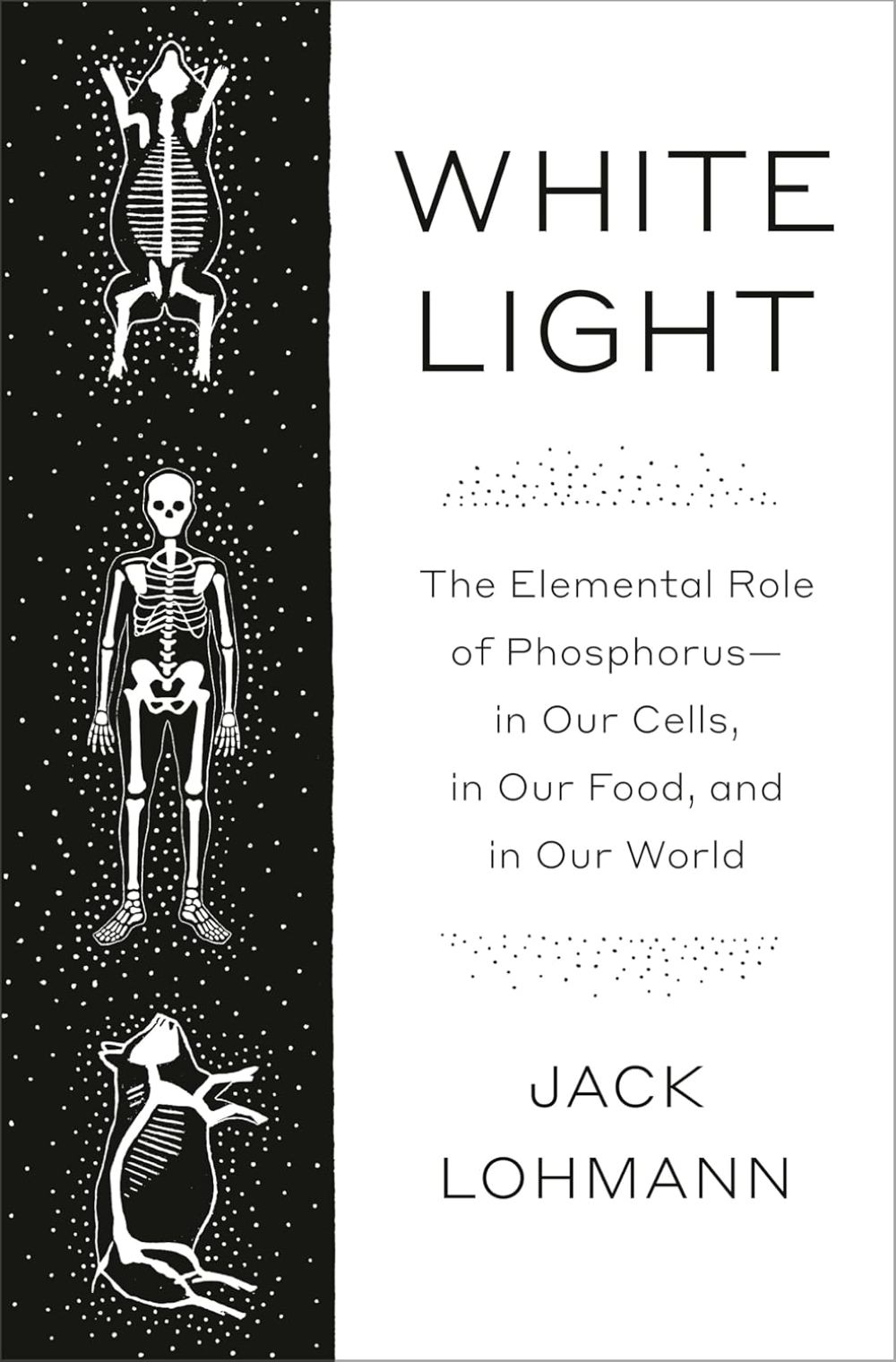
‘White Light’ is a profound and poetic reflection on the cyclical nature of life. Photo: Amazon

White Light: The Elemental Role of Phosphorus—in Our Cells, in Our Food, and In Our World
By Jack Lohmann


Related post: Phosphorus and the Pulse of the Planet: A Look at Jack Lohmann’s ‘White Light’

📖 Review

In White Light, Jack Lohmann delivers a deeply poetic and intellectually rich exploration of phosphorus—the vital yet often overlooked element that both fuels life and marks our decay. Bridging science, history, and philosophy, Lohmann traces phosphorus from the explosive discoveries of alchemy to its indispensable role in DNA, agriculture, and human biology.

White Light is not just about chemistry—it’s a meditation on life, death, and renewal. Lohmann’s lyrical prose elevates the science into something profoundly human.

“Cracked concrete spread out before us, brick ruins, graffiti: the grim equality of destruction by fire.”

He writes not only about phosphates and fertilizers but about our estrangement from the cycles of nature—how we strip-mine the earth and sanitize death, forgetting the ways in which decay feeds rebirth. With urgency and grace, Lohmann calls for a new reverence for the Earth’s resources and a restored relationship with our mortality.

Part science writing, part cultural critique, part spiritual inquiry, readers will walk away with a deeper understanding of phosphorus and more importantly, questioning how we live and die within a closed loop of matter and meaning. He makes the subject easy to understand and accessible to anyone, regardless of their knowledge of science.


✍️Table of Contents

Prologue: Whale Fall

Part I: Life

  1. Sea of Fires
  2. The Acid Test
  3. Lightbringer

Part II: Growth

  1. Stones from Past Times
  2. Rapid Change
  3. The Flood
  4. Peak and Valley

Part III: Rebirth

  1. The End of Everything
  2. Overhaul
  3. Tiny Tracings on a Future World

White Light glows with insight and care, illuminating life’s most fundamental—and fleeting—connections. It is recommended for readers interested in the intersections of science, sustainability, and the soul.

“Cities are composting food scraps. Disenfranchised farmers are fighting for their land. If we listen to those with knowledge—rather than those with money—it is possible to restore the cycles of the earth.”

Rating: 4 out of 5.

* Thank you to Pantheon Books/Penguin Random House for the gifted copy for review consideration. I have not been compensated for this review and all views and opinions expressed are my own.

Brains, Humor, and Science: A Fun and Illustrated Journey with ‘Out of Your Mind’

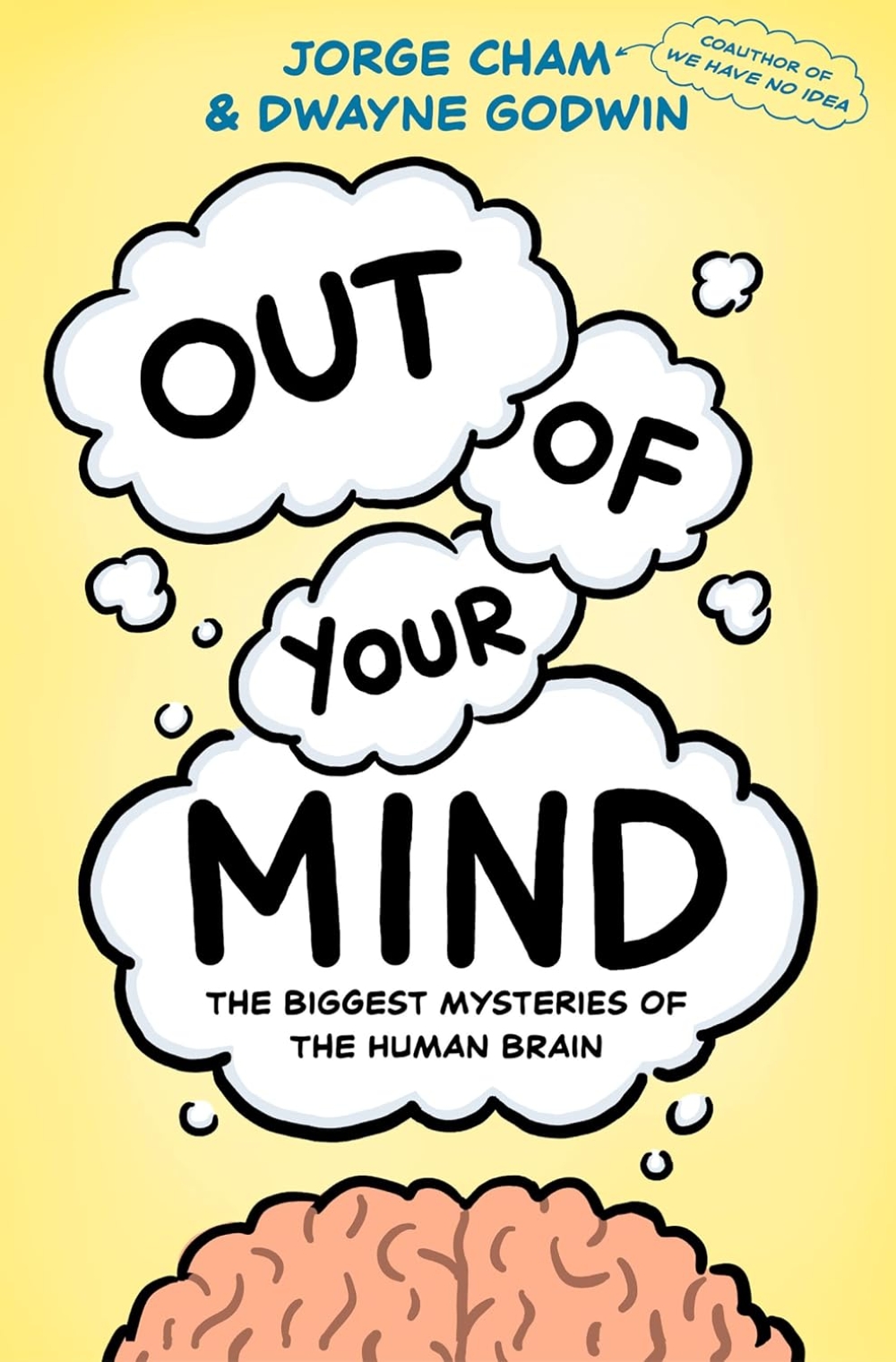
‘Out of Your Mind’ by Jorge Cham and Dwayne Godwin. Photo: Barnes & Noble

“Out of Your Mind” by Jorge Cham and Dwayne Godwin is an engaging and visually captivating exploration of the human brain. This illustrated book takes readers on a journey through the complexities of neuroscience by blending humor, vibrant artwork, and scientific insight to make an often-intimidating subject accessible and entertaining.

Cham, known for his Piled Higher and Deeper (PhD Comics) series, brings his signature wit and illustration style, while neuroscientist Dwayne Godwin provides expert knowledge in an engaging, digestible format. It begins by touching on the subject of identity and what makes who we are and covers a range of topics, including how neurons communicate, the mysteries of consciousness, and the quirks of human memory and perception. The illustrations and comic-style storytelling make complex scientific concepts understandable and fun to explore.

Chapters include:

  1. Where Is The Mind?
  2. Why Do We Love?
  3. Why Do We Hate?
  4. Will an AI Take My Job?
  5. What Are the Limits of Memory?
  6. What Is Addiction?
  7. What Is Consciousness?
  8. What Makes Us Happy?
  9. Do We Have Free Will?
  10. What Happens When We Die?
  11. What Makes Us Human?

Highlights:
3. Why Do We Hate? – explores ideas about where hate comes from and how to combat hate, including some self-reflection because some hatred can be projections of the things we hate in ourselves. “Not only do humans have the capacity to hate, we also use our intelligence to organize and find ways to spread it.”

4. Will an AI Take My Job? – it addresses questions such as whether or not AI can gain consciousness (maybe, but not one that we would recognize) and if AI will eventually take over the world (the jury is still out on that one).

Despite the advanced topic, it manages to balance education and entertainment by using language simple enough to make the material understandable. The humor and visual storytelling ensures that even complex topics remain engaging, making it an excellent read for students, educators, or anyone looking to better understand the brain in a fun and interactive way.

Overall, whether you’re a science enthusiast or just curious about how the brain works, “Out of Your Mind” offers an enjoyable and informative experience. By making neuroscience fun and more accessible for everyone, it reaches a wider range of readers. It is recommended for readers who enjoy science and comics and can appreciate the humor involved in learning something new.

“If your Mind is the sum total of every way you process information and interact with the world, then anything that affects any part of your brain will change you, even if only a little.”

*The author of this blog received a copy for an honest review. The views and opinions expressed here belong solely to her.

Rating: 4 out of 5.

Related post: Unlocking the Mysteries of the Brain: What ‘Out of Your Mind’ Reveals About the Human Brain.

Unlocking the Mysteries of the Brain: What ‘Out of Your Mind’ Reveals About the Human Brain

‘Out of Your Mind: The Biggest Mysteries of the Human Brain’ will be released in January. Courtesy photo, used with permission.

The search to understand how the brain works has been a long-standing scientific endeavor, exploring the complexities of cognition, emotions, memory, and consciousness. Neuroscience and psychology have made significant strides, yet much remains unknown about the brain’s intricate processes. Books such as “The Man Who Mistook His Wife for a Hat” by Oliver Sacks delve into neurological disorders, offering insight into brain function. In “How to Change Your Mind,” Michael Pollan explores neuroplasticity and the impact of psychedelics. Meanwhile, Daniel Kahneman’s “Thinking, Fast and Slow” illuminates decision-making and cognitive biases, offering a deeper understanding of human thought processes.

If you’ve always wanted to learn more about the inner workings of the brain but found the subject too complicated, there’s a new book coming out next month that aims to make it more accessible to all readers.

Out of Your Mind: The Biggest Mysteries of the Human Brain” by Jorge Cham and Dwayne Godwin goes on sale January 28th, 2025. It’s an introductory journey into your own mind—if your inner voice had a Ph. D. in brain science, cracked jokes, and drew cartoons. (Penguin Random House, 2024)

Why do you love? Why do you lie? What makes you happy? Every single thought you have comes from one place: your brain. But what makes it tick? How much of it have we decoded, and how much of it remains an impenetrable mystery?

Join best-selling author and online cartoonist Jorge Cham and neuroscientist Dwayne Godwin on a deep dive into the fascinating world of the human brain, in which they will explore questions such as: What is consciousness? Where is you in the brain? And do we have free will? All while illuminating everything we know (and DON’T know) about one of the most complex objects in the known universe.

Think of it as conversation-ammunition for your next cocktail party, or a quick fascinating read while you’re in the bathroom (don’t worry, the chapters aren’t that long). Centered around questions we all ask ourselves at some point but don’t usually have answers to, “Out of Your Mind” is an illustrated book about the brain that isn’t too brainy. Playful, accessible, and deeply insightful, it’s the one brain book that’s truly accessible and suitable for all brains.

Some of the questions that are addressed include:

  • Where is the mind?
  • Why do we love?
  • Why do we hate?
  • Will an AI take my job?
  • What are the limits of memory?
  • What is addiction?
  • What is consciousness?
  • What makes us happy?
  • Do we have free will?
  • What happens when we die?
  • What makes us human?

JORGE CHAM is the Daytime Emmy-nominated and best-selling cartoonist creator of the popular online comic strip “Piled Higher and Deeper” (known as PHD Comics – phdcomics.com). He is the co-creator, Executive Producer and Creative Director of “Elinor Wonders Why,” one of the highest-rated animated shows on PBS Kids, and the co-author of two popular science books: the best-selling and award-winning “We Have No Idea: A Guide to the Unknown Universe and Frequently Asked Questions about the Universe,”as well as the children’s book “Oliver’s Great Big Universe.” Jorge is also the co-host and co-creator of “Daniel and Jorge Explain the Universe” a popular podcast and radio show. He obtained his Ph.D. in robotics from Stanford University and was an Instructor and Research Associate at Caltech from 2003-2005. He is originally from Panama.

DWAYNE GODWIN is a neuroscientist, an educator, and an academic leader who is a professor in the Department of Translational Neuroscience and served as graduate dean at the Wake Forest University School of Medicine in Winston-Salem, North Carolina. His research centers on the cellular basis of abnormal brain rhythms, including active projects on calcium channel function, epilepsy, and traumatic brain injury. His goal is to use emerging insights about the brain to develop treatments and potential cures for neurological diseases. His science outreach includes Mind in Pictures, cocreated with Jorge Cham for Scientific American Mind, as well as blogs for the Society for Neuroscience and the Museum of the Moving Image.

1738058682

  days

  hours  minutes  seconds

until

‘Out of Your Mind’ release date

Exploring the Intersection of Science and Spirituality in ‘The Miraculous from the Material’

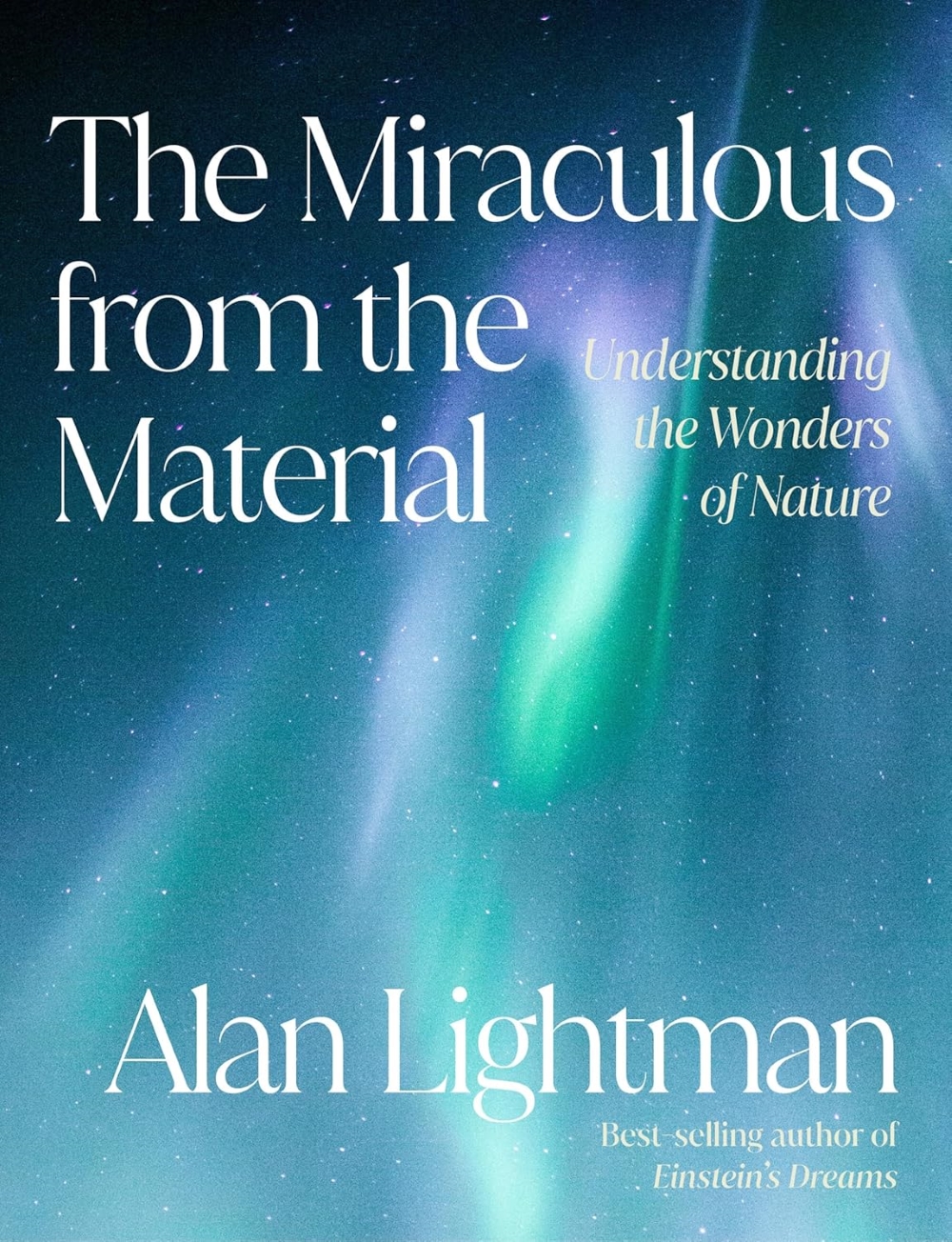
Alan Lightman’s new book ‘The Miraculous from the Material: Understanding the Wonders of Nature’ will be out November 19, 2024. Photo: Amazon.

Books about science and the wonders of the natural world captivate readers with the marvels of the cosmos and the awe-inspiring phenomena of nature. They unravel the mysteries of celestial bodies and open our eyes to the intricate beauty of the world around us. Through engaging narratives and stunning illustrations, these books inspire wonder and curiosity, encouraging us to explore the science behind the beauty that surrounds us, both above and below.

For readers who enjoy books about nature, photography, and science, there’s a new book coming out next month by Alan Lightman that is worth noting.

Alan Lightman earned his PhD in physics from the California Institute of Technology and is the author of seven novels, including the international best seller “Einstein’s Dreams” and “The Diagnosis,” a finalist for the National Book Award. His nonfiction includes “The Transcendental Brain,” “The Accidental Universe,” “Searching for Stars on an Island in Maine,” and “Probable Impossibilities.” He has taught at Harvard and at MIT, where he was the first person to receive a dual faculty appointment in science and the humanities. He is currently a professor of the practice of the humanities at MIT. He is the host of the public television series Searching: Our Quest for Meaning in the Age of Science.

His new book “The Miraculous From the Material: Understanding the Wonders of Nature” is an illustrated exploration of the science behind the universe’s most stunning natural phenomena—from atoms and parameciums to rainbows, snowflakes, spider webs, the rings of Saturn, galaxies, and more. It will be released on November 19, 2024 and is available for pre-order on Amazon. (Penguin Random House, 2024)

“The Miraculous From the Material: Understanding the Wonders of Nature” – Nature is capable of extraordinary phenomena. Standing in awe of those phenomena, we experience a feeling of connection to the cosmos. For acclaimed physicist and novelist Alan Lightman, just as remarkable is that all of what we see around us—soap bubbles, scarlet ibises, shooting stars—are made out of the same material stuff and obey the same rules and laws. This is what Lightman calls “spiritual materialism,” the belief that we can embrace spiritual experiences without letting go of our scientific worldview.

Pairing 36 beautiful, full-color photos evoking some of nature’s most awe-inspiring phenomena with accessible and lyrical personal essays, “The Miraculous from the Material” explores the fascinating science underlying the natural world. Why do rainbows make an arc? Why does a particular waterfall at Yosemite National Park sometimes glow like it’s on fire? How does a hummingbird fly? The world has so many things to marvel at—and the science is just as fascinating.

Lightman’s imagination travels from the world of atoms and molecules to the animal kingdom, from places like Ha Long Bay, Vietnam and the Grand Canyon out to the solar system and beyond, illuminating the majesty of the cosmos and the remarkable science behind it. “The Miraculous from the Material” is a stunning, soaring ode to the beauty and wonder around us, and the perfect holiday gift for photography aficionados, life-long learners, and admirers of the natural world.

1732015806

  days

  hours  minutes  seconds

until

‘The Miraculous from the Material’ release date

Book review: ‘Exploring the Complexity of Human Intelligence’ by Ansh Verma

Ansh Verma is a researcher, author, and philosopher based in Dhanbad, Jharkhand (India). He researches almost everything that can be observed, felt and/or read, including technology, politics, divine, war, behavioral, engineering, investments, military, finance, and mathematics. Post graduation, Verma has almost 20 years of experience in thinking and making sense of the world. His new book “Exploring the Complexity of Human Intelligence” is a comprehensive exploration of prevalent misconceptions that cloud our understanding of intelligence.

“Exploring the Complexity of Human Intelligence” – the core topic of this enlightening book is intelligence and the myths surrounding it. Such myths include the misleading notion of left-brain/right-brain dominance and the widespread belief in using only a fraction of our brain’s capacity. Other topics include gender differences when it comes to intelligence, emotional intelligence, the aging mind and how to address cognitive decline, neuroplasticity, and the cultural biases in IQ testing that can affect people who have different types of cultural intelligence.

In the Introduction, the author writes that the purpose of this book is “to empower readers with accurate knowledge about human intelligence.” By doing so, he hopes readers will understand that intelligence is made up of different factors and then arms them with the information necessary to make appropriate life choices. Chapter 1: Defining Intelligence defines intelligence as more than just what a typical IQ test might measure and that it includes a wide variety of cognitive capacities and aptitudes. In Chapter 2: Nature vs. Nurture, he clarifies the connection between genetics and environment and how they shape cognitive aptitude. In Chapter 3: Brain Myths and Cognitive Abilities, readers can learn all about the various learning styles and the importance of evidence-based approaches to education.

The rest of the book consists of:

Chapter 4: Creativity and Problem Solving
Chapter 5: Learning Styles and Intelligence
Chapter 6: Gender and Intelligence
Chapter 7: Emotional Intelligence
Chapter 8: Memory and Forgetfulness
Chapter 9: Nature of Intelligence in Children
Chapter 10: The Aging Mind
Chapter 11: Neuroplasticity and Learning
Chapter 12: Intelligence and Success
Chapter 13: Intelligence in Different Cultures
Chapter 14: Genetics and Intelligence Revisited

Overall, this is an extremely insightful and deeply researched book on intelligence – how it is made up of different factors but it is continuously changing and adapting, especially when it comes to emotional intelligence and neuroplasticity. By using down to earth language and examples of real people when describing the different learning and intelligence types, the author makes the subject easy to understand. This is a must read for readers interested in a deep study of intelligence and the complexities of the human mind.

“Success is, therefore, a multifaceted concept, and one’s ability to excel in a particular field is influenced by a complex interplay of various attributes and factors.”

*The author was contacted for an honest review of this book. The views and opinions expressed here belong solely to her.

Rating: 5 out of 5.

Book review: ‘The Gravity Guide: Unveiling the Universe’s Hidden Force’ by Ansh Verma

‘The Gravity Guide: Unveiling the Universe’s Hidden Force’ is the new book by Ansh Verma. Photo: Amazon

Ansh Verma is a researcher + author + philosopher based in Dhanbad, Jharkhand (India). He researches almost everything that can be observed, felt and/or read, including technology, politics, divine, war, behavioral, engineering, investing, military, finance, and mathematics. Post graduation, Verma has almost 20 years of experience in thinking/making sense of the world. His new book “The Gravity Guide: Unveiling the Universe’s Hidden Force” is an exploration of gravity and the universe in general.

“The Gravity Guide: Unveiling the Universe’s Hidden Force” – In this excellent guide about all matters related to gravity, the author starts by asking readers if they have ever wondered about the role that gravity plays in nature and everyday life. By first defining how gravity works in “the gentle descent of a leaf” to simply helping us get out of bed in the morning, he creates excitement about the topic, leaving readers wanting to learn more. So he goes back to the beginning, for some interesting back history on how some of the greatest scientists, like Sir Isaac Newton, became involved in studying about gravity. He gradually moves on to explain the role of gravity in terms of the universe and how it affects the tides and how it keeps the universe together, leading to a discussion on black holes.

To wrap it all up, Chapter 7 has a Q&A section with questions such as: How does gravity hold the solar system together? and What’s the difference between weight and mass? No science book is complete without a few experiments, so Chapter 8 has practical experiments to help students not only see but feel the principles of gravity in action. Such experiments include The Pendulum Swing and Water Drops on a coin and make science come alive.

In layman terms, the author skillfully explains gravity and science so that everyone, even if they are not science experts, can understand. So if you if always wanted to know more about gravity but were afraid the topic would be too complicated, or don’t know where to start, give this book a try. You will never look at gravity the same way again.

*The author was contacted for an honest review of this book. The views and opinions expressed here belong solely to her.

Rating: 4 out of 5.

Book review: ‘Cosmic Equilibrium: Exploring Balance in the Universe’ by Ansh Verma

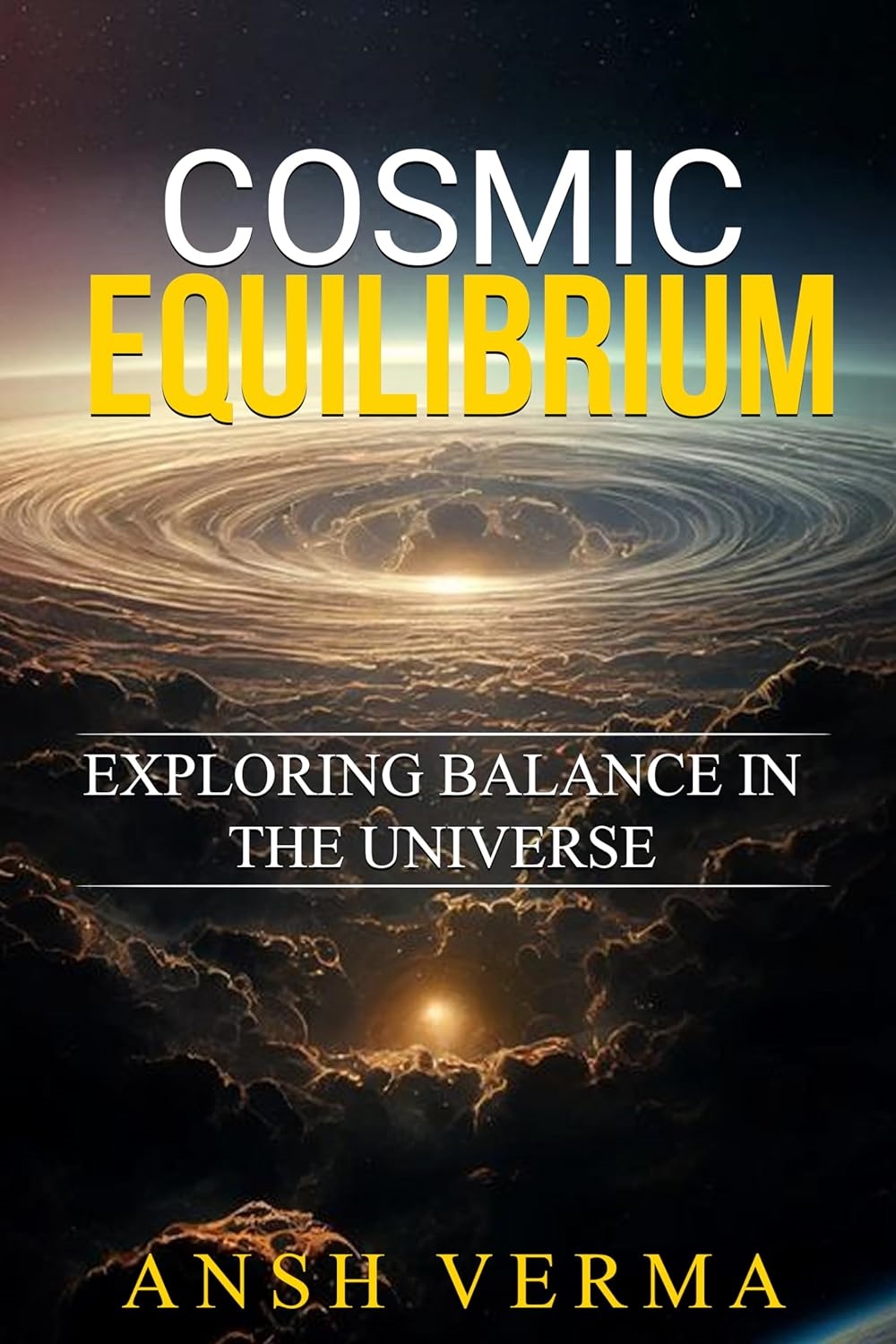
‘Cosmic Equilibrium: Exploring Balance in the Universe’ is the new book by Ansh Verma. Photo: Amazon

Ansh Verma is a researcher, author, and philosopher based in Dhanbad, Jharkhand (India). He researches almost everything that can be observed, felt and or read, including technology, politics, divine, war, behavioral, engineering, investments, military, finance, and mathematics. Post graduation, Verma has almost 20 years of experience in thinking and making sense of the world. His new book “Cosmic Equilibrium: Exploring Balance in the Universe” is a captivating exploration of the intricate harmony and balance that permeates the cosmos.

“Cosmic Equilibrium: Exploring Balance in the Universe” – This thought-provoking book takes readers on a journey through the fundamental principles governing the universe, from celestial harmony to the laws of nature that underpin the cosmos. It delves into the timeless concept of yin and yang, revealing how opposing forces complement and balance each other on both cosmic and human scales.

From the birth and death of stars to the cyclical rhythms of life on Earth, the book examines the interconnectedness of all existence and the profound role of balance in shaping our universe. It bridges the realms of science, philosophy, and culture, offering insights into the diverse ways different societies have revered and integrated the idea of cosmic balance into their beliefs, ethics, and rituals.

This book also tackles the pressing issue of ecological balance on our planet and its broader implications for the cosmic equilibrium. It invites readers to contemplate their place in the vast cosmic tapestry and to reflect on the significance of balance in their own lives. With a holistic approach that combines scientific discoveries, philosophical reflections, and practical applications, this book serves as an enlightening guide to understanding the delicate equilibrium that sustains our universe and inspires us to find balance within ourselves and the world around us.

Balance is the central theme of this book, primarily yin and yang, the concept that “invites us to explore the eternal interplay of opposites that lies at the core of our reality.” It examines balance and harmony in everything from nature to human life. Each chapter is dedicated to a specific type of balance, including Chapter 2: Celestial Harmony, Chapter 3: Balance in Nature, and Chapter 5: Ecological Balance. Especially interesting is Chapter 4: Cultural Perspectives, which emphasizes how all cultures respect this sense of balance within their respective lifestyles.

The author does so much more than just educate readers on how balance works in nature, he also gives practical advice on how they can achieve balance in their personal lives. This includes balancing work and life, balancing technology and nature, and finding balance in consumption. In his Call to Balance in Chapter 8: Conclusion, he encourages readers to be mindful of their place in the universe to create a more balanced and sustainable future for everyone. As we are all connected, we all benefit in the end. If you are interested in an in depth study of the cosmos and the importance of balance and harmony, this is the book for you.

*The author was contacted for an honest review of this book. The views and opinions expressed here belong solely to her.

Rating: 4 out of 5.