Book review: ‘Healing Begins With Us’ by Ronni Tichenor and Jennie Weaver

‘Healing Begins With Us: Breaking the Cycle of Trauma and Abuse and Rebuilding the Sibling Bond’ by Ronni Tichenor and Jennie Weaver. Photo: Amazon

Ronni Tichenor has a Ph.D. in Sociology specializing in family studies from the University of Michigan. Jennie Weaver received her degree from the Vanderbilt School of Nursing, and is a board-certified family nurse practitioner with over 25 years of experience in family practice and mental health. In their new book, “Healing Begins with Us: Breaking the Cycle of Trauma and Abuse and Rebuilding the Sibling Bond” they share their inspiring and hopeful story of healing from their painful upbringing. (Ronni Tichenor, Jennie Weaver, 2023)

“Healing Begins With Us” is the story of two sisters who were not supposed to be friends. Ronni and Jennie grew up in a home with addiction, mental illness, and abuse issues that generated unhealthy dynamics and often pitted them against each other. In this book, they tell the raw truth about their childhood experiences, including the abuse that occurred between them. As they moved toward adulthood, they managed to come together and heal their relationship and break the cycle of intergenerational trauma and abuse in creating their own families. Using their personal and professional experience, they offer advice to help others who are looking to heal from their own painful upbringings or heal their sibling relationships. As sisters and survivors who found a way to emerge from a tragic cycle of intergenerational trauma and abuse, the authors are able to share how to undo the harmful myths and patterns of dysfunction, how to recognize the family dynamics generated by abuse, addiction and mental illness, how to navigate the rocky road of healing damaged sibling relationships in a dysfunctional family, and how to find forgiveness despite the unlikelihood of reconciliation.

It is hard enough to survive abuse and trauma, but being able to recognize it can be half the battle. In Chapter One Introduction, the authors explain that they wrote this book ‘in the hopes of making our extraordinary journey commonplace’ and they only wish is ‘that others will recognize themselves in what we share and use our story….to facilitate their own healing.’ This is because they themselves did not recognize that their parents were abusive and that their home was dysfunctional until they were in their 20s, married, and trying to create stable, loving homes of their own. According to the authors, if children experience Adverse Childhood Experiences (ACEs), they can cause health problems as adults. These ACEs include physical abuse, psychological abuse, and mental illness in parents, among others and more than 60% of people experience at least one. They are handed down from generation to generation and can cause coping behaviors such as overeating, smoking, and substance abuse. Most of the information is presented in the form of conversations between them so the language is easy to understand. Their main focus is on the effects of their experiences and they emphasize that they do not see themselves as victims. The material is honest, direct, and oftentimes painful to read, but they just want to bring awareness and validation to people who experienced similar upbringing. “Healing Begins With Us” is a powerful testament to the will to rise above childhood traumas and create a better tomorrow by breaking intergenerational trauma. The title comes from the fact that oftentimes, the abuser does not acknowledge the harm done, so it is up to us to rise above it. It is recommended for readers interested in self help books that deal with dysfunctional families and breaking intergenerational trauma.

“We are here to say, ‘We see you. We are you.’ We are telling our story to give a name to what so many people experience but don’t fully understand, and to invite them into The Light where they can learn, heal, and create lives of joy.”

*The author received a copy of this book for an honest review. The views and opinions expressed here belong solely to her.

Rating: 4 out of 5.

Sponsored Post

Book review: ‘The Paper Tiger Syndrome’ by Rebecca A. Ward

‘The Paper Tiger Syndrome’ is a guidebook on the journey of healing and self-repair. Photo: Amazon

Rebecca A. Ward is an American therapist, activist, healer, author, speaker, and coach. As a trauma survivor herself, she has triumphed over extraordinary suffering and come out on other side to her joy again. As a licensed therapist in California and ICF-Certified Professional Coach, Rebecca holds a multitude of trauma-informed certifications, including Somatic Experiencing®. She is a member of the International Coaching Federation and CA Marriage and Family Therapists Association. In her new book, “The Paper Tiger Syndrome: How to Liberate Yourself from the Illusion of Fear,” Rebecca shares her personal trauma-to-resilience story and the wisdom from her own clients to help readers transform their own trauma wounds into personal growth, presence, resilience, and joy and reconnect back to the truest version of themselves—what she calls the Original Blueprint®. (Amazon, 2022)

“The Paper Tiger Syndrome” – Paper tigers are thoughts and experiences that conjure up dread but do not present any real danger, they just create the same physiological responses in the human body that our ancestors experienced when they were stalked by predators on the plains. In the modern world, however, those responses are unwarranted. They are neurological “misfires” that harm our mental, emotional, and physical wellbeing, all in an effort to keep us “safe.” In the Preface section of the Introduction, the author explains that the book is “a roadmap to guide you on that journey back home.” This is followed by the Adverse Childhood Experiences (ACEs) survey to help readers find out where to begin since ACEs are known to be linked to chronic health problems, mental illness, and substance abuse in adulthood. The book consists of examples from her clients’ lives, and her own, as well as journaling ideas and exercises/rituals to enhance the healing process. All together, she shares ways to overcome fear, stress, and trauma in your life to help regulate your physical body. Based largely on the principles of somatic therapy, it contains specific exercises and tools to help you walk the bridge from fear to safety to unconditional love. It is divided into ten chapters including The Anatomy of Fear, How We Survive Childhood, and It Takes a Village.

Now more than ever, people are struggling with anxiety and depression. Life’s hardships can create a sense of apprehension that is hard to shake but the truth is that most fears and anxieties are really just paper tigers. A paper tiger is defined as ‘something, or someone, that appears to be a threat, but in reality is powerless.’ The difficulties the author experienced and surpassed give this book an aura of authenticity; she knows what she is talking about and her tone is caring without being condescending. She even pauses every now and then to encourage readers to take a break if necessary. The language is easy to understand and the layout of the information includes diagrams, lists, and reflection opportunities. To get the full benefits, the author recommends having a personal journal to complete the written exercise and write down your thoughts or download the Companion Workbook. Highlights include Chapter Four: It Takes a Village where she stresses that a lack of connection ‘heightens fear reactions and diminishes virtually ever aspect of life, including longevity’ and Chapter Seven: Healing Childhood Wounds where she shares guidelines to help overcome harmful childhood conditionings like body shaming. “The Paper Tiger Syndrome” is a highly informative resource guide that is encouraging and therapeutic and includes the necessary tools to guide readers through their healing journey. It is recommended for readers interested in self help, personal transformation, and spirituality books.

“Fear is a cheap marketing tool to keep you in line. Fear is not the way any infinite Source wants us to feel. We’re here to discover love for all that is in us and around us.”

*The author received a copy of this book for an honest review. The views and opinions expressed here belong solely to her.

Rating: 4 out of 5.

Book review: ‘This Is Going To Hurt: The Truth Always Does’ by Michael Ernest

‘This Is Going To Hurt: The Truth Always Does’ is an informative and insightful book by Michael Ernest. Photo: Michael Ernest, used with permission.

Brother Michael Ernest is a graduate of Lincoln University, formerly known as Ashmun Institute, the first degree-granting Historically Black College and University (HBCU) in the United States, where he earned a B.S. Degree in Criminal Justice. Brother Michael continued his educational pursuits and acquired a Master’s Degree from Wilmington University, College of Social and Behavioral Sciences. His contributions to join several organizations to promote human welfare include being a proud brother of Iota Phi Theta Fraternity Incorporated and Member of the National Association for the Advancement of Colored People (NAACP) to continue the fight irrespective of race, religion, or political affiliation. Brother Michael has focused his study for many weeks, months, and years to compile an arsenal of knowledge and resources (writings, websites, book referrals, educators) to dispense among all people, various races, and religious groups to help promote the great humanitarian cause. His book “This Is Going To Hurt: The Truth Always Does” brings heated debate topics to the forefront of the “so-called” Black Communities throughout the United States. (Michael Ernest, 2022)

“This Is Going To Hurt: The Truth Always Does” – Written for all levels of literacy to indulge in the conversations, many of the subjects discussed in this book’s purpose are designed to rattle the heads of the afraid, complacent, and oppressed people of these “so-called” Black communities. Black Americans’ time for being apologetic for their misfortunes needs to come to an immediate cease-fire. “This Is Going To Hurt: The Truth Always Does” will do that. In the Preface, the author writes that the purpose of the book is to bring together history, research, and hard truths to Black Americans. The book begins with a conversation between two Black men that ends with the conclusion that their neighborhoods cannot be considered “Black communities” because they do not influence anything that goes on in their communities: from the banking institutions to public offices. From there, he discusses topics that should be addressed more frequently and divides them into four chapters: Chapter 1 Economic Sovereignty, Chapter 2 Child Support Hurts The So-Called “Black Community” More Than It Helps It!, Chapter 3 Black Mothers vs. Breastfeeding, and Chapter 4 The Wrap-Up Breaking The Chains of Servitude Get Conscious. Your People Depend On It!

To make effective change in our lives, first we have to face up to the uncomfortable truths. Or, as James Baldwin wrote in a 1962 essay for The New York Times, “Not everything that is faced can be changed; but nothing can be changed until it is faced.” With that said, Michael Ernest does an excellent job of touching on subjects that should be addressed head on. His tone is serious but not confrontational and the language, though sometimes slightly advanced, is easy to understand. One highlight is in the Introduction, where he states that it should be up to Black Americans themselves to strengthen the “Black race character, culture, and heritage.” That before, the slave owners were the bad element, but nowadays, it is drug dealers and gangbangers and that “the moral culpability has shifted to ourselves.” Also notable is Chapter 1 Business Sovereignty where he stresses the importance of business diversity in black neighborhoods because it “invites innovation, which ultimately benefits consumers with new and better products and services, helps drive economic growth, and increases living standards.” His advice is meant to enrich peoples lives, like the importance of surrounding ourselves with likeminded individuals and civic engagement. “This Is Going To Hurt: The Truth Always Does” is a small but informative book that should be on everyone’s to read list. It is eye opening and contains well researched topics dealing with urban life as seen through the eyes of a Black man. Even though the target readership is Black Americans, the information presented can apply to everyone, especially when he admonishes readers to “Hold yourself accountable. Don’t pass the buck!” It is recommended for readers who like motivational and self help books and can appreciate being presented with uncomfortable truths.

“Read literature from the scholars who came before you to liberate your mind of centuries of captivity. Only this will kill the roots of those weeds embedded in the dark part of your history, reversing the negative misfortunes that have been done to you and your ancestors.”

* The author received a copy of this book for an honest review. The views and opinions expressed here belong solely to her.

Rating: 4 out of 5.

Sponsored Post

New book release: ‘You Don’t Need Salvation’ by H. Conradie

‘You Don’t Need Salvation’ is available on Amazon. The Kindle version will be available December 1, 2022. Photo: H. Conradie, used with permission.

H. Conradie is the author of “You Don’t Need Salvation: you have no sin,” the book that frees millions of people from the idea that they are sinful and need salvation. (H. Conradie, 2022)

“You Don’t Need Salvation” – Have you ever doubted the existence of the biblical Adam and Eve? Have you ever wondered why a book with so many contradictions should be called the ‘Word of God’? Have you wondered why no trace of Hebrew slaves can be found in any Egyptian records?

You are not alone! Billions of people brought up to believe biblical myths have asked the same questions you do and are demanding answers now. The Christian narrative of mankind being ‘lost’ is based upon the myth of ‘Adam and Eve.’ Children brought up in Christian homes are programmed to believe in myths as if they were real and told that they are lost forever except if they believe in the solution offered for a problem that does not exist.

As a former Christian who preached on street corners at the age of 18, I struggled for many years to find the courage to openly say that creation does not align with creation myths. Find proof in these pages that the Bible cannot be the ‘Word’ of a perfect God, as it is historically inaccurate, full of contradictions, scientifically inaccurate, and bases its ‘solution’ on the myth of the ‘first Adam.’ Free yourself and your loved ones now from the 2000-year-old lie that you are sinful and in need of salvation.

Sponsored Post

Book review: ‘You Were Not Born to Suffer’ by Blake D. Bauer

‘You Were Not Born to Suffer’ by Blake D. Bauer. Photo: amazon

Blake D. Bauer is a wisdom teacher with an extensive background in psychology, alternative medicine, nutrition, traditional healing, and mindfulness meditation. Based on both his personal experience overcoming deep suffering, addiction and adversity, as well as his professional success with thousands of people worldwide, his work combines what he has found to be the most effective approaches to optimal mental, emotional and physical health. He is the author of the international bestselling book “You Were Not Born to Suffer: Overcome Fear, Insecurity and Depression and Love Yourself Back to Happiness, Confidence and Peace.” In this life-changing book, Blake Bauer explains why depression, addiction, physical illness, unfulfilling work and relationship problems are caused by years of hiding true emotions, denying a life purpose and living in fear.

First published in 2012, “You Were Not Born to Suffer” begins with an author Preface where he states that this updated edition contains insights that have helped thousands of people around the world improve their personal and professional lives. He faced his own battles with depression and now sees his purpose as sharing what he learned from his own suffering so that others can enjoy their lives as fully as possible. He acknowledges that life is short and people often take it for granted but assures readers that their happiness lies in their own hands and is “a daily choice we each need to make to overcome fear, negativity and guilt.” In the Introduction, he explains how the material in the book came from his search for freedom from his personal suffering, mental, emotional and physical, and a desire for the truth about life, himself and life’s purpose. The book is divided into thirty-three chapters ranging from Healing Guilt, Shame and Insecurity, Healthy Self-Esteem, Confidence and Trust in Life and Live Fully Before You Die. Each one begins with an inspirational quote and a reminder to take deep breaths and some end with “Practical Questions” and “Key Affirmations” to summarize key elements.

More than a self-help book, “You Were Not Born to Suffer” is a gentle reminder that even though our childhoods might have been difficult, it is time to move on and take charge of our lives.  Blake D. Bauer has gone through these challenges and is more than eager to share what he learned: plainly put, you alone are responsible for your own happiness, stop blaming others and take control of your own destiny/purpose. To do that, it is important to heal the past to affect the present. He includes inspirational quotes, mindfulness and breathing exercises as well as personal exercises such as writing letters to your younger self. The language is simple and easy to understand and he does not come across as preachy or condescending. Some of the topics dealing with spirituality and how the universe works may not be for everyone, but the overall guidance and advice is universal. Regarding self-esteem “Anyone who judges or rejects us only does so because they are still judging and rejecting themselves, so their reaction to us actually has little to do with us.” Standout chapters: Chapter 24: Practical Nutrition and Lifestyle Guidance – contains nutrition advice (drinking plenty of water and avoiding highly processed foods) and lifestyle tips (mindfulness, meditation, journaling); and Chapter 15: Inhale Life Deeply and Slowly – focuses on the importance of slowing down and deep breathing. “You Were Not Born to Suffer” is a practical guide filled with positive messages on how to effectively handle financial worries, loneliness, guilt and self-doubt, among other issues. It is recommended for readers who appreciate advice on learning to take better care of themselves, heal old pain and live life to the fullest.   

“Because the purpose of human life is to enjoy it fully, while learning what it means to love unconditionally, filing our days with the small things that make us feel great is vital to creating a fulfilling life.”

*The author received a copy of this book for an honest review. The views and opinions expressed here belong solely to her.

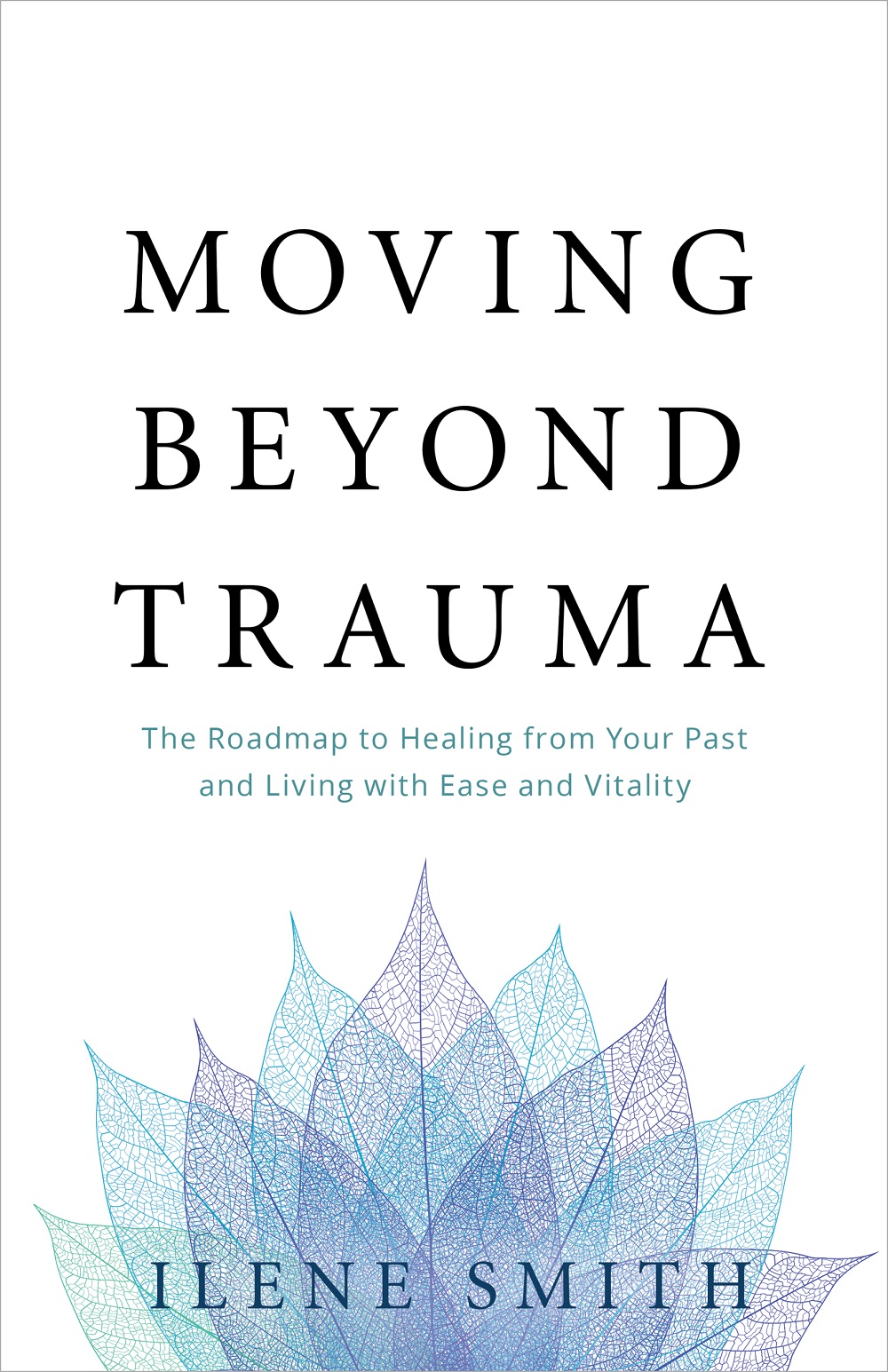
Book review: ‘Moving Beyond Trauma’ by Ilene Smith

movingbeyondtrauma
‘Moving Beyond Trauma’ by Ilene Smith. Photo: google

Ilene Smith is a certified professional coach and Somatic Experiencing practitioner with master’s degrees in exercise physiology and mental health counseling.  Her research into Somatic Experiencing and eating disorders has contributed to the importance of Somatic Experiencing and body-based therapies in recovery.  With master’s degrees in exercise physiology and mental health counseling, Ilene blends talking, touch work and movement to create synergy between a client’s body and mind.  In her first book “Moving Beyond Trauma: The Roadmap to Healing from Your Past and Living with Ease and Vitality,” Ilene Smith introduces readers to Somatic Experiencing, a body-based therapy capable of healing the damage done to the nervous system by trauma.  She breaks down the way in which trauma impacts the nervous system and presents a program designed to process trauma in a non-threatening way.

It is important to note that, as the disclaimer at the beginning states, “This book is not intended as a substitute for medical or psychological advice from professionals.”  “Moving Beyond Trauma” is divided into two parts: Part One: Understanding the Mind-Body Connection which consists of chapters like ‘My Journey to Healing’ and ‘What Healing Looks Like’ and Part Two: Creating Change where in Chapter 5 the reader can assess his or her problem behaviors by taking a series of quizzes and in subsequent chapters, apply healing exercises and get tips for living a healthy lifestyle. In the Introduction, the author emphasizes that because the body and mind are connected, “psychological stress is held and manifests in our physical body.”  Even though she believes in talk therapy up to a point because it does have its benefits, most of the time it dredges up past experiences, which are often traumatic. Due to this, some people end up re-traumatizing themselves instead of healing. What she offers in Somatic Experiencing is a way to track and notice body sensations and experiences so that the body can begin to heal.

Since not all human beings are the same, not everyone experiences healing the same way so it is natural that not all methods of therapy work for everyone.  While some do benefit from talk therapy, for some, retelling their story can reactive the trauma and therefore they can not move past it. This is where “Moving Beyond Trauma” can help by defining the different types of trauma: developmental, collective and generational and providing healthy ways of coping. Through case stories about her past clients that dealt with anxiety, trauma, depression and eating disorders the author successfully presents her case that by confronting the body’s pain reactions, particularly to the nervous system, people can push past and begin the healing process. The language is not overly clinical so it is easy to comprehend the material. Readers will be able to understand their own trauma and, by doing the self-assessments, hopefully learn more about themselves and what triggers their anxiety and stress. It is an easy read and recommended for anyone looking for self-enrichment or for healthy living tips.

“I believe that it is when we are placed right in the middle of the most adverse experiences life has to present us with that we have the opportunity to build the most resilience for ourselves.”

*The author received a copy of this book for an honest review. The views and opinions expressed here belong solely to her.

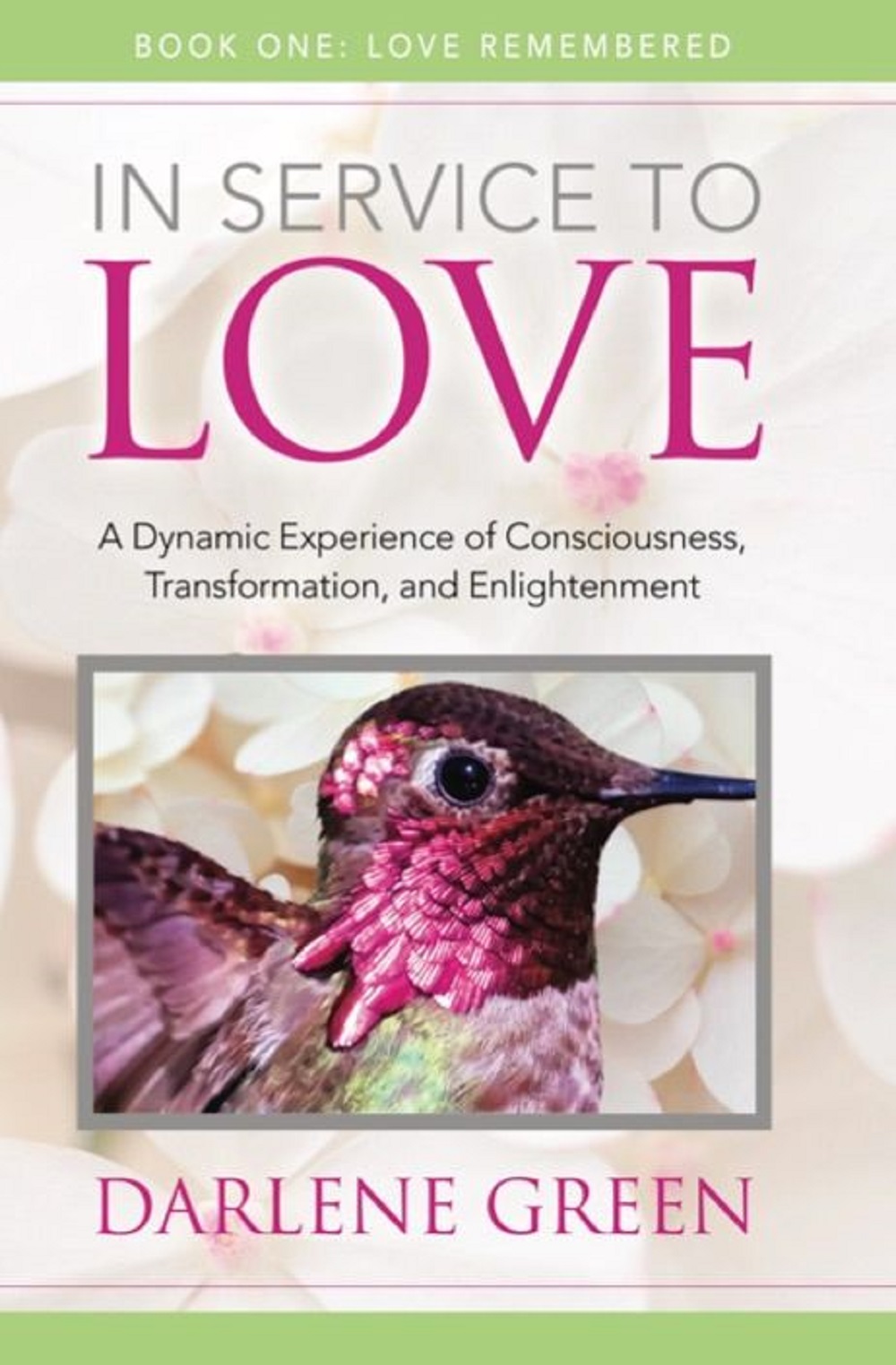
Guest post: In Service to Love: Living on the Edge of Creation by Darlene Green

inservicetolove
‘In Service to Love Book One: Love Remembered’ by Darlene Green. Courtesy photo, used with permission. 

“In Service to Love” began the morning of December 26, 2017. When I awoke, I felt immediately overcome with Love, appreciation, and enveloped in the rich, palpable presence of the sacred divine. I could feel and see the exquisite, brilliant light of Masters, and the Elohim before me. I could do no other than sob. An invitation was extended to sit with the Masters of the Council of Light as Scribe for one year in collaboration. I said, “Yes!” I knew in an instant this was the mission I had always felt at the depths of my being and was so sacredly kept I dared not even utter the words. And “Day 1” poured through my fingers.

I have always been deeply empathic, intuitive and sensitive. This created a chasm between what I sensed and the physical reality I saw. I became an avid student of spirituality and pieces of the puzzle started lining up. I never thought of myself as a writer. My natural inclinations are as a healer and teacher. In 2015 I connected powerfully with my own history as Scribe with profound events at sacred sites in Southern France. I began to practice reaching for the fine frequencies that contain inspiration. It was both beautiful and frustrating as the experience required developing adeptness at sensing my own inner realms. Following a car accident in February of 2017, all work stopped as I turned deeply inward for healing. Then December 26, 2017 occurred.

As I sat down each day to write “In Service to Love,” I was guided by the Council of Light to what I can only describe as a field of fine, exquisite frequency that contains depth, concepts, pictures and colors. Each day was written from a different frequency even as my mind struggled to understand the process. Sometimes full concepts landed in my awareness as a picture that contained all the information then, my work was to interpret the picture I was given utilizing words that were a frequency match. Some days I was invited to expand my reach as the Council of Light moved into even finer light realms. Other times there was no thinking at all as the words flowed like honey onto the keyboard.

I continue to live a Master’s class in accessing original thought. At times I work to reach the space of connection and ultimately realize there is some limitation I am taking into the space that clouds my vision. My personality left to its own devices is fraught with doubt. So, my goal is to access my unlimited divine knowing by raising my awareness and frequency. In those moments in meditation I ask, “What may I release that I may see clearly?” Mostly what shows up are ways I discount myself. When I release my limitations, the air clears as I reach my truth unfettered by the beliefs of my personality. An expansive sense of freedom and delight ensues.

Two of the keys to access my most potent creativity:

1) Immaculate presence in the Now: I visualize myself within a series of concentric circles, with my center-most point being the exquisite stillness of the present moment. When my attention is in the outer-rings I am highly distracted, so, I watch myself walk to my center. There I experience the absence of thought. I take a deep breath and allow.

2) Willingness to not know: Accessing my greatest innovative capacity only occurs as I move beyond what I already know. Potent creating is not about rearranging what already has been, it is about accessing my own high frequency field where innovation arises in my awareness only in the Now moment.

Central messaging of “In Service to Love” invites us each to consider our own innovative capacity. Not as something that is unreachable, or only for a few of us, but as something that is deeply, intrinsically connected to our soul’s voice. As we connect to our own heart’s essence, we become the contribution we each intend. I continue to lean into the unknown to move beyond my own limited perceptions as I write daily. I feel the time we are in now requests our best to show up. With works inspired through the lens of our essential Self, how could we be anything else?

I am hoping the works of “In Service to Love” invites a new perspective for the reader. One that resonates powerfully with their own exquisite truth. Enlightenment is not a state to be earned; it is a natural process where we claim our wholeness. When we gently release the burden of who we are not, who we are shines brilliantly.

************************************************************************
As a natural empath, healer, teacher and scribe, Darlene Green has followed her heart’s direction in discovery of the sacred in life. After many years of spiritual practice and study, Darlene experienced an invitation by the Masters of the Council of Light to sit with them as scribe, daily, for one year and one day. The result is the extensive body of work that is In Service to Love, relayed through three books: “In Service to Love Book One: Love Remembered,” “In Service to Love Book Two: Love Elevated” and “In Service to Love Book Three: Love Now.”

Book review: ‘Decisions’ by Robert L. Dilenschneider

decisions
‘Decisions’ is one of Robert L. Dilenschneider’s best selling books about business and professional advice. Courtesy photo, used with permission.

Robert L. Dilenschneider has hired more than 3,000 successful professionals and advised thousands more. He is the founder of The Dilenschneider Group, a corporate strategic counseling and public relations firm based in New York City. Formerly president and CEO of Hill & Knowlton, he is the author of the bestselling books “A Briefing for Leaders,” “The Critical First Years of Your Professional Life,” “50 Plus! Critical Career Decisions for the Rest of Your Life,” “Decisions: Practical Advice from 23 Men and Women Who Shaped the World” and others. They all offer readers practical life and business advice for whatever stage in life they happen to be experiencing.

“Decisions: Practical Advice from 23 Men and Women Who Shaped the World” begins with a catchy sentence: ‘This book is intended to make your life better’ and it certainly delivers on its promise. Decisions are a part of everyday life for everyone, regardless of background. How people make decisions is critical to their future. This remarkable book focuses on twenty-three individual who made decisions that shaped the world and their stories stretch from 218 B.C to the present. It is divided into four parts which are in turn divided into individual chapters about a particular person and the most important decision he/she made. These are: Part One: War and Peace (Harry Truman, Elie Wiesel) Part Two: Commerce and Invention (Johann Gutenberg, Henry Ford) Part Three: Science (Marie Curie, Rachel Carson) and Part Four: Breaking Boundaries (Julius Caesar, Abraham Lincoln).

As a whole it analyzes not just the decision but provides background and history regarding the subject matter. The one major lesson to be learned is that many advances in civilization were made because most inventions, like the printing press, the automobile and general banking, were designed to reach everyone, not just the rich. This is turn made room for advances in society which is beneficial to growth. At the end of each chapter there is a decision section that summarizes the lessons readers can use in their own lives.

“The Critical First Years of Your Professional Life” is targeted to young people about to enter the real world of business and professional careers but the advice in these pages is invaluable to anyone, regardless of age or expertise. The Introduction gives a chapter by chapter synopsis to help readers focus on a specific topic. First off, it explains why the book is so important: because it is the paper or electronic version of a mentor in a world increasingly without any generous men and women who at one time would have helped young people entering the workforce. It also emphasizes the five goals in reading this helpful guide: 1)gaining self-knowledge 2)feeling empathy 3)presenting yourself well 4)retrieving information effectively and being informed and 5)solving problems. Standout chapters include: Networking, Making Allies of Your Elders and Image. The best part about this guide is that depending on what advice readers need, they can go back and re-read chapters on their own or if need be, read the whole book more than once because the information contained is ageless.

Lastly, “50 Plus! Critical Career Decisions for the Rest of Your Life” strives to help the more mature worker navigate the everchanging workforce rules. It emphasizes the importance of refreshing skillsets to meet the challenges of competing in today’s job market. The target audience “includes people who are highly accomplished and economically secure but intellectually bored or emotionally dissatisfied.” Some of the chapters include: The New Rules, Time to Change, On Your Own and Becoming a Consultant. Readers may be at a crossroads or unsure of how to proceed with the rest of their lives and this book gives helpful advise on finding a new career direction, growing within their current field, starting their own business or finally realizing a dream. Regardless of what they decide, the author ends by stating that retiring to just play golf or lay around the house is synonymous with giving up and that is never a good thing.

“Be ready to take criticism, and even ridicule and derision. Think about this as part of your decision process. Rather than turning away, be prepared to develop a thick hide.” – from “Decisions”

*The author received a copy of these books for an honest review. The views and opinions expressed here belong solely to her.

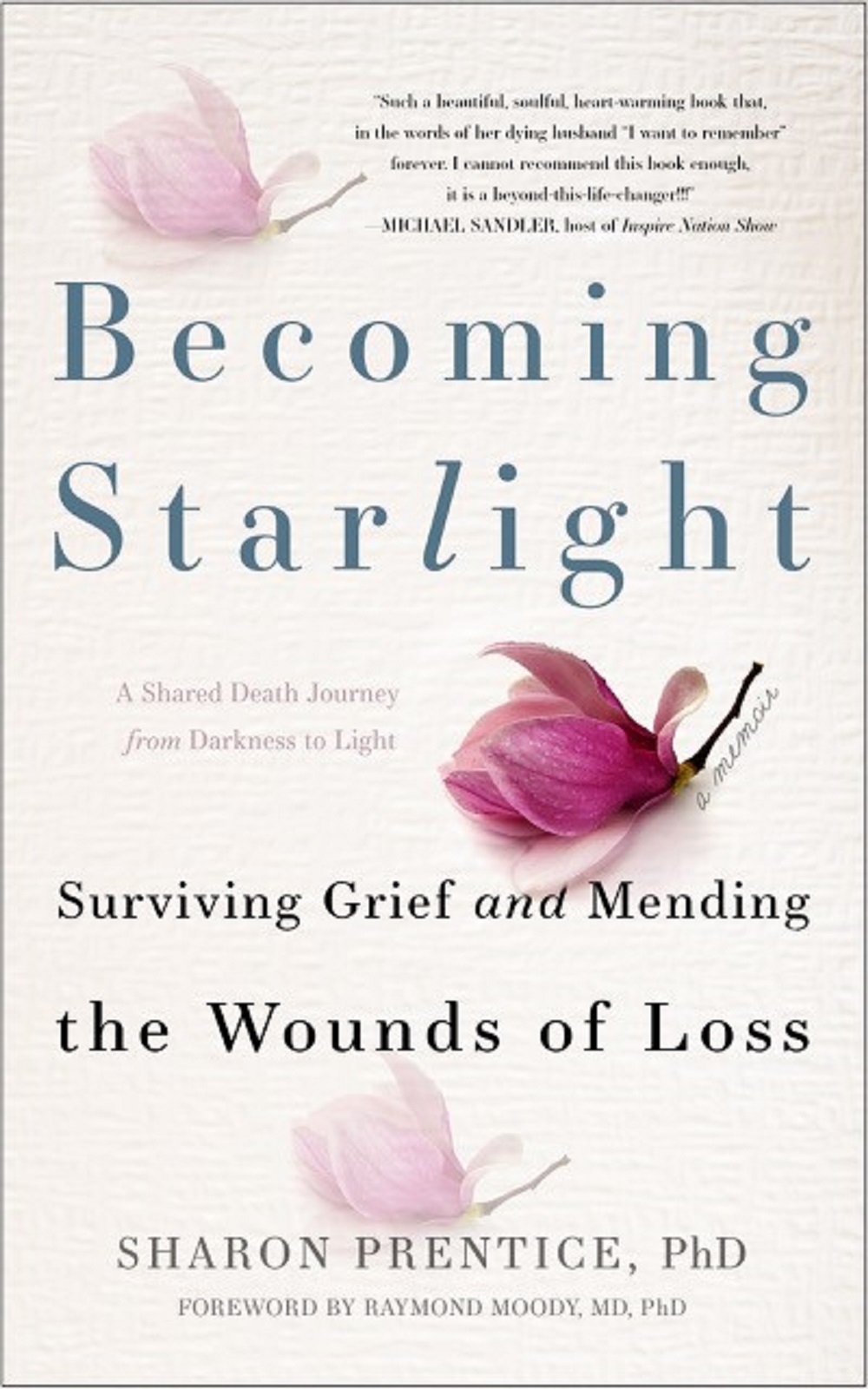
Book of the week: ‘Becoming Starlight’ by Sharon Prentice, PhD

becomingstarlight19
‘Becoming Starlight’ by Sharon Prentice, PhD. Courtesy photo, used with permission.

“Becoming Starlight” is a memoir about the process of grief and its relationship to the mysteries concerning the afterlife. This book will bring comfort to those who are feeling unrelenting sorrow over the loss of loved ones. This memoir is a story of surviving grief and mending the wounds of loss.

In this deeply personal book, Sharon Prentice shares her long and difficult journey to find inner peace and cope with the death of her daughter and husband, all while trying to reconnect with God. Even though the subject matter may be difficult at times, including the details of her husband’s illness and deteriorating health, some readers may find solace in knowing that others have experienced such hardships. The language is easy to understand and the story flows from chapter to chapter and makes it a page turner for the target audience. In this case, it is the religious community that may find themselves questioning their faith and are looking for reassurances that in the end, their faith is not in vain. Sometimes the tone is unforgiving to scientists, science and those who do not believe in the afterlife and may turn off some readers. Regardless, the highlight is definitely the author’s description of her Shared Death Experience as it comes across as a beautiful experience that surrounded her with love, hope and comfort when she needed it most. “Becoming Starlight” is recommended for readers who are genuinely interested in the afterlife and need the comforting words of someone who, despite her personal losses, came out a better person.

“Dr. Sharon Prentice, in her book Becoming Starlight, assists all of humanity by transmuting our collective fear of death into love when she journeys to that mysterious place we call Heaven and returns to share her experiences with us. This messenger is worth listening to.”
— Tim Miejan, editor of The Edge Magazine

“In Becoming Starlight, the author teaches us the most important lesson of all—that love is the eternal fiber connecting all existence, living and beyond. Her extraordinary true story provides faith and ease to all who wonder what happens when our loved ones or we die.”
—Randi Fine, Author of Close Encounters of the Worst Kind, Podcast Host of A Fine Time for Healing

Dr. Sharon Prentice is a psychotherapist and spiritual counselor whose work focuses on helping patients process the grief of losing a loved one. “Becoming Starlight” is her memoir of healing from the devastating loss of her daughter and husband. She experienced a unique spiritual experience, known as a Shared Death Experience (SDE) which gave her a peek into forever and a sense of peace that was otherworldly.

*The author received a copy of this book for an honest review. The views and opinions expressed here belong solely to her.

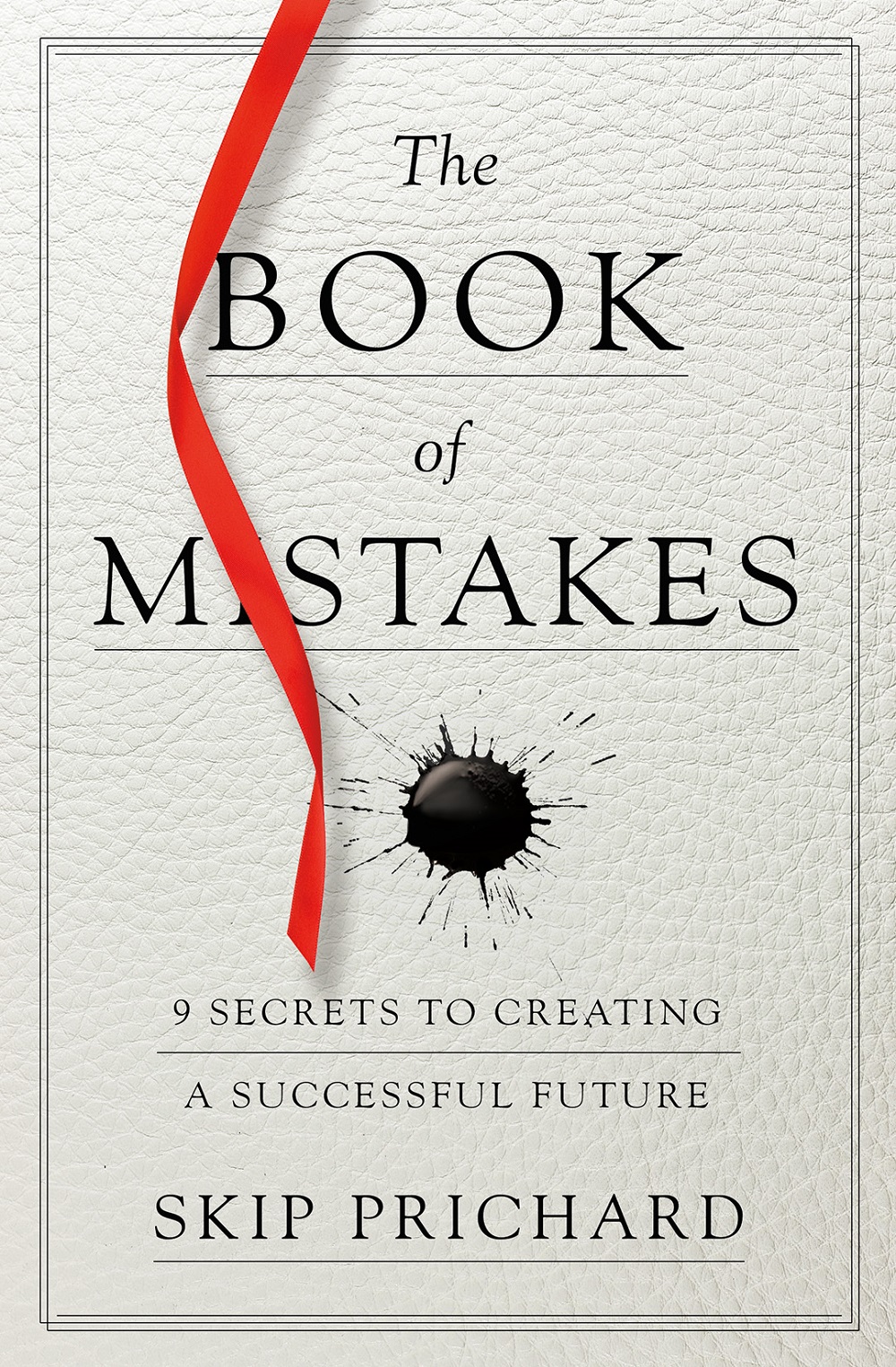
Book review: ‘The Book of Mistakes’ by Skip Prichard

bookofmistakes
‘The Book of Mistakes’ is Skip Prichard’s new book on creating a successful future. Courtesy photo, used with permission. 

Skip Prichard is an accomplished CEO, growth-oriented business leader and keynote speaker. He has spoken on topics such as leadership, personal development, growth strategies, culture, corporate turnarounds and the future of publishing. In his new book “The Book of Mistakes: 9 Secrets to Creating a Successful Future” he shares the nine mistakes that prevent many people from achieving their goals and how to overcome them to help reinvent their lives.

“The Book of Mistakes” begins with a Prologue set in England in 1425 where an unnamed monk is on a mission to hide the last of the ten copies he had transcribed from an ancient manuscript. His goal is to keep them from falling into the wrong hands until they can be distributed to the nine Teachers and the new Keeper. From there, the stories take off: one is in the present where David is living a generic life that includes an unreliable job, until he meets a young woman who jump starts a journey that changes his life forever. The other story take place in the American colonies in 1771 and centers around Aria, a teenager who is trying to fulfill her sick Uncle Raymond’s last wish. She needs to retrieve a manuscript from the family home and protect it at all costs. The two stories eventually coincide as David crosses paths with several strangers he names the Playwright, the Bartender, the Artist and so on, who each give him one “mistake” that he can learn from to improve his life. These include, among others, “working on someone else’s dream,” “allowing some else to define your value” and “surrounding yourself with the wrong people.” As he gets each life lesson, he finds his life slowly improving until he is ready to share them with others.

At first glance, it seems that this is a self-help book, which it is. But it is a self-help book cleverly disguised as an adventure complete with an ancient origin story and a scavenger hunt of sorts. This makes learning fun as the reader goes along with David as he meets these strangers who share their knowledge with him, eagerly flipping pages to get to the next “mistake.” Without giving too much of the content away, the advice that Skip Prichard gives may sound like common sense, but sometimes it is necessary to be reminded that it is indeed a mistake to “stay in your comfort zone” and “blend in instead of standing out.” He does so without sounding condescending and in language that is easy to understand and filled with details and imagery. Since the sections are conveniently divided by Mistakes and Laws, it is easy to refer back to them as needed. Highlights include Mistake #9: Believing You Have All the Time in the World and Mistake #6: Allowing Temporary Setbacks to Become Permanent Failures. Self-help books tend to be dry and boring and therefore difficult to get through to get much needed advice, but this is a fast-paced book, similar to Dan Brown’s “The DaVinci Code.” “The Book of Mistakes” brilliantly combines advice and a storytelling to get the message across and is recommended for readers who enjoy a suspenseful story jam-packed with life lessons.

“…on the one hand, live each day as if it’s your last and, on the other, as if it’s your first. Your last keeps you focused on what really matters…Your first is important because you also must have a longer view, or you will never accomplish the goals that are hard and take longer.”

*The author received a copy of this book for an honest review. The views and opinions expressed here belong solely to her.