Inside The Means of Prediction and Why the Future of AI Depends on Who Owns It

The Means of Prediction by Maximilian Kasy explains how power, not technology, will define life with AI. Photo: The University of Chicago Press

Book Spotlight: The Means of Prediction by Maximilian Kasy

Publication Date: November 4, 2025
Publisher: University of Chicago Press

“An eye-opening examination of how power—not technology—will define life with AI.”

Artificial intelligence is everywhere. It filters what we see online, screens us in job interviews, and even factors into decisions about justice and warfare. Its presence has become so vast that many people feel resigned to its rule, believing AI is simply our collective destiny. (The University of Chicago Press, 2025)

In The Means of Prediction: How AI Really Works (and Who Benefits), economist Maximilian Kasy challenges that narrative. He argues that AI is not an inevitable or uncontrollable force, it’s a human creation, shaped by the choices and interests of those who own and operate it.

Kasy makes a bold claim: AI isn’t especially mysterious or complex. What makes it powerful and dangerous is who gets to control it. The “means of prediction,” as he calls them, consist of the essential ingredients of AI: data, computing power, expertise, and energy. These are the levers through which ownership and influence are exercised.

Inside the Book

Some of the chapters include:

  • The Story of Humans Versus Machines
  • What is Artificial Intelligence?
  • The Means of Prediction
  • Automation
  • The Ancient Questions Behind AI

Across these chapters, Kasy offers both a primer on how AI really works and a powerful critique of how it’s governed. He cuts through the noise of technical debates to ask the fundamental question:

Who controls AI’s objectives and how is that control maintained?

A Call for Democratic Control

Rather than treating AI as an unstoppable technological wave, Kasy invites readers to see it as a political and social choice. In a world already shaped by inequality, he argues that AI will deepen existing divides unless it’s placed under public and democratic control.

His framework is analytical and visionary, a blend of economics, ethics, and practical insight into how society might reclaim agency over one of the most consequential technologies of our time.


About the Author

Maximilian Kasy is a professor of economics at the University of Oxford and previously taught at Harvard University. His research explores machine learning and the social impact of AI, focusing on how technology intersects with power, equity, and governance.

Forgotten Places, Living Memory: A New Work by Raja Shehadeh

‘Forgotten’ by Raja Shehadeh and Penny Johnson. Photo: Barnes & Noble

Forgotten: Searching for Palestine’s Hidden Places and Lost Memorials

What do forgotten ruins, abandoned mosques, and erased memorials tell us about a people and their history? In his newest work, Raja Shehadeh, alongside Penny Johnson, takes readers on a journey through Palestine’s hidden past and contested memory.

Palestinian human-rights lawyer, activist, and acclaimed author Raja Shehadeh returns with a new work that is both poignant and necessary. Forgotten: Searching for Palestine’s Hidden Places and Lost Memorials (co-authored with Penny Johnson) is a profound meditation on memory, loss, and the preservation of Palestinian heritage. The book releases on September 30 and is available now for pre-order. (Other Press, 2025)


Uncovering the Forgotten Corners of Palestine

In Forgotten, Shehadeh explores hidden or neglected memorials and places across historic Palestine—now Israel and the Occupied Palestinian Territories. From ancient ruins to sacred sites like the Nabi ‘Ukkasha mosque and tomb, each chapter reveals what these places might tell us about the land and the people who live between the Mediterranean Sea and the Jordan River.

With Johnson by his side, Shehadeh poses urgent questions: What has been memorialized? What has been left abandoned or erased—and why?


Memory, Erasure, and Resistance

Whether standing on a cliff overlooking Lebanon or at the Dead Sea—the lowest land-based elevation on earth—the authors trace the fragile threads of memory in a fragmented landscape.

In elegiac, elegant prose, they confront the complexities of commemoration: Israel’s resistance to acknowledging the Nakba, and the evolving ways Palestinians remember—or are prevented from remembering—their own history.

Ultimately, Forgotten reminds us that remembering is not a passive act. It is resistance.


Recognition and Praise

  • Publishers Weekly: Longlisted in Fall 2025 Fiction & Nonfiction Preview Titles: History
  • The New Statesman: Book of the Day selection
  • The New Statesman: Named one of the Best Books of 2025 So Far

Forgotten is more than history—it is an act of remembrance, defiance, and storytelling. If you’re interested in exploring how memory shapes identity and belonging, this book deserves a place on your shelf.

📚 Pre-order your copy today and join the conversation on what it means to remember—and resist.


Advance Praise for Forgotten:

“Shehadeh and Johnson, a married couple based in Ramallah, began the book as a way to explore the landscape during the pandemic. The resulting work, Forgotten, is a heartbreaking, hopeful look at how Palestinian culture endures in spite of the occupation and the Israeli government’s attempts to remove all traces of it from the land that they ‘share unequally.'” —THE IRISH TIMES

“In this journey through Palestine, married couple Shehadeh and Johnson explore the careless treatment and outright destruction of the region’s Muslim memorials and historical sites. One of the more complex realities they grapple with is not just Israel’s hand in erasing this history, but Palestine’s own role.” —THE NEW STATESMAN

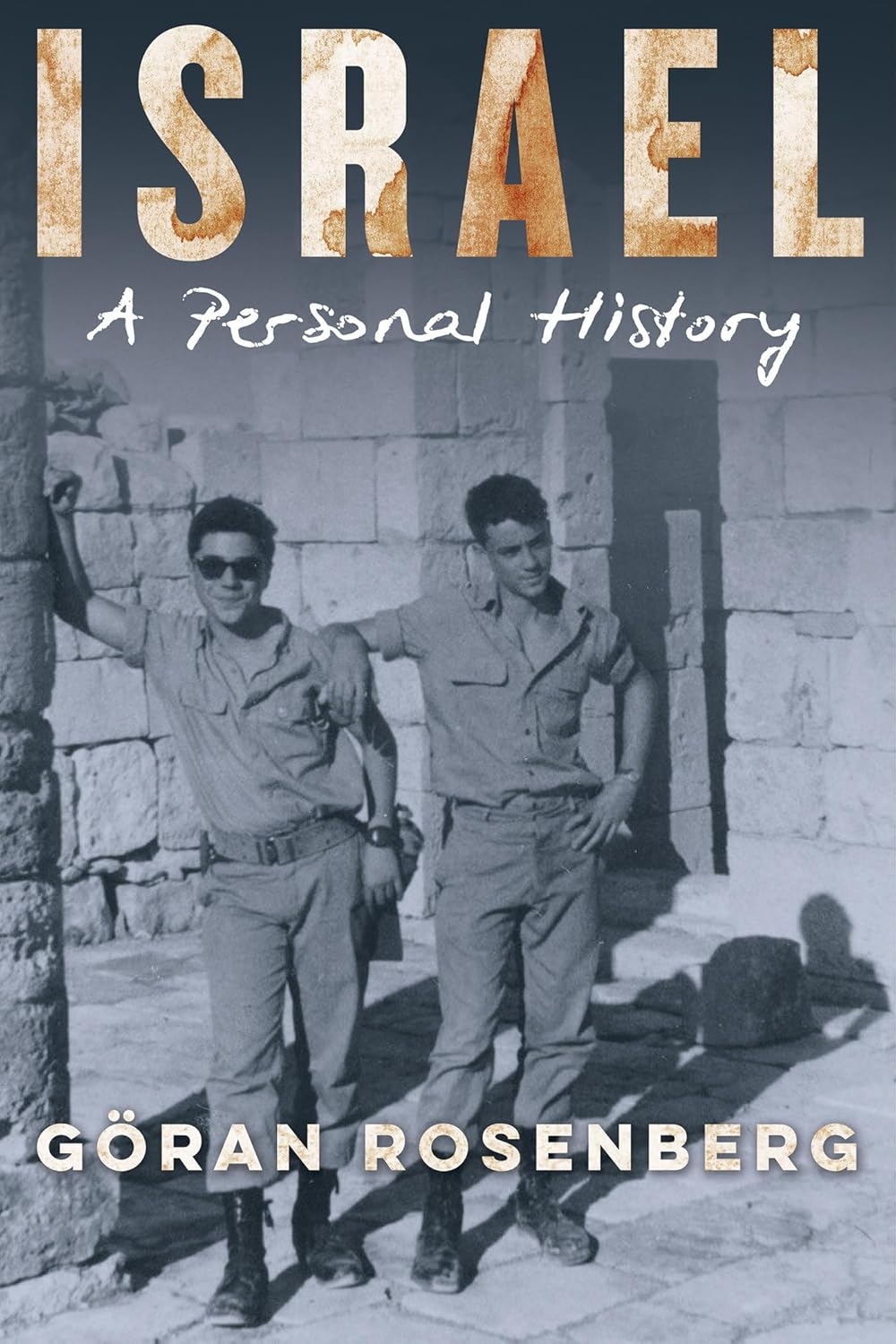
A Story Between Survival, Hope, and Reckoning: ‘Israel: A Personal History’

In ‘Israel,’ Göran Rosenberg, son of Holocaust survivors grapples with the dream of Zionism and its consequences. Photo: Other Press

Book Spotlight: Israel: A Personal History by Göran Rosenberg

On Sale: October 7, 2025 | Published by Other Press

Combining poignant memoir and historical research, Israel: A Personal History tells the story of a son of Holocaust survivors grappling with the dream of Zionism and its consequences. Originally published in Swedish, this highly acclaimed book will be available in English this fall. (Other Press, 2025)


Where the Story Begins

Israel picks up where Göran Rosenberg’s internationally acclaimed and award-winning childhood memoir, A Brief Stop on the Road From Auschwitz, leaves off.

After his father’s suicide in 1960 in a small industrial town in Sweden, Rosenberg’s mother emigrates with her two children to Israel. At first, young Göran is swept into the world of pioneer Zionism—enchanted by its ideals, visions, and ethos. But as he grows, his journey becomes one of uncovering betrayed ideals, buried stories, false promises, and erased villages.


A Personal and Political Exploration

The result is a work that is both deeply personal and meticulously researched. Rosenberg explores the contradictory visions that shaped the Zionist project, alongside the ethnic violence, oppression, discrimination, and dispossession that followed in its realization.

Part memoir, part history of ideas, Israel is also the political autobiography of a Jewish European intellectual—“a child of dreams and disillusionments, an astute observer of our times.”


About the Author

Göran Rosenberg was born in 1948 in Sweden, the son of Auschwitz survivors. He is the author of several books, including:

  • Det förlorade landet (Israel: A Personal History in Swedish)
  • A Brief Stop on the Road From Auschwitz (Other Press, 2015)
  • Another Zionism, Another Judaism (Other Press, 2025)

📚 Recognized by Publishers Weekly: Israel: A Personal History was longlisted in Publishers Weekly’s Fall 2025 Fiction & Nonfiction Preview: History.


1759836894

  days

  hours  minutes  seconds

until

‘Israel: A Personal History’ release date

Finding Harmony: The Message of ‘Peace Over Politics’ by Tonja Myles

The new book ‘Peace Over Politics’ gives practical tools to manage mental health and chronic stress during election season. Photo: Amazon

The mental health crisis in America persists as a silent epidemic, affecting millions across all demographics. Despite increased awareness, stigma and inadequate access to care have worsened the situation, leaving many untreated or undertreated, especially among marginalized communities. Anxiety and depression rates are soaring, compounded by societal pressures, economic instability, and now, the lingering effects of the COVID-19 pandemic. Addressing this crisis demands systemic changes, from policy reforms to efforts to destigmatize getting treatment, to ensure every individual has access to the support they need for their mental well-being.

In her new book, author Tonja Myles and mental health expert addresses the importance of protecting your inner peace during political chaos. Polarized politics and never-ending news cycles have created a national mental health crisis that will only worsen if people cannot build needed skills to survive. (Tonja Myles, 2024)

“Today’s political climate is more divisive than ever, and you have to protect your inner peace and mental health like never before. Our current election season is a source of chronic stress that will only worsen if we do not learn the needed skills to cope.” – 988 Suicide & Crisis Lifeline subject matter expert and spokeswoman Tonja Myles

Released this month, “Peace Over Politics: How to Navigate Protecting Your Peace During Political Climates,” gives readers practical tools to manage this crisis. According to the American Psychological Association, following daily political news can negatively affect your mental health, but disengaging from society can be harmful too, she says. Myles, a community engagement advisor for the Huntsman Family Foundation and mental health expert, says everyone must learn how to practice self-care while balancing good citizenship, regardless of political party.

The book shows readers how to cultivate inner harmony while engaging in compassionate activism to create positive change in the world. With these skills, people can gracefully navigate political differences and create unity within their communities, she says.

The book “shares many of the tools, tips, and resources that are needed to build a blueprint for living whole and well even when much around us, online and offline, is loud, divisive, and needlessly harmful,” says American Psychiatric Association Foundation Executive Director, Rawle Andrews Jr.

“Peace Over Politics: How to Navigate Protecting Your Peace During Political Climates” will help readers:

  • Understand inner harmony – become self-aware and emotionally balanced so you can navigate political discourse with composure and empathy
  • Reflect on your values – examine your values and determine how they align with your desire for peace amidst political influences
  • Navigate ideological differences – engage in constructive conversations with empathy and active listening to foster understanding and bridge divides
  • Make healthy boundaries – set and assert healthy boundaries to protect your peace in the face of political discourse and societal pressures
  • Create community connections – engage in community activities, promote dialogue, and collaborate to cultivate your peace and shared understanding amidst political differences
  • Practice compassionate activism – create positive changes in the world while you prioritize your peace and well-being

Tonja Myles is the co-founder and executive director of the faith-based outpatient center Set Free Indeed and the community support program Set Free Indeed Ministry. She is the community engagement advisor for the Huntsman Family Foundation and spokeswoman for the 988 Suicide & Crisis Lifeline. She has won more than a dozen awards for her service including the Johns Hopkins Substance Abuse Innovators Award 2005 and the Daily Point of Light award 2004. She is an ordained minister, Certified Peer Recovery Specialist, author, community activist, and Army National Guard veteran.