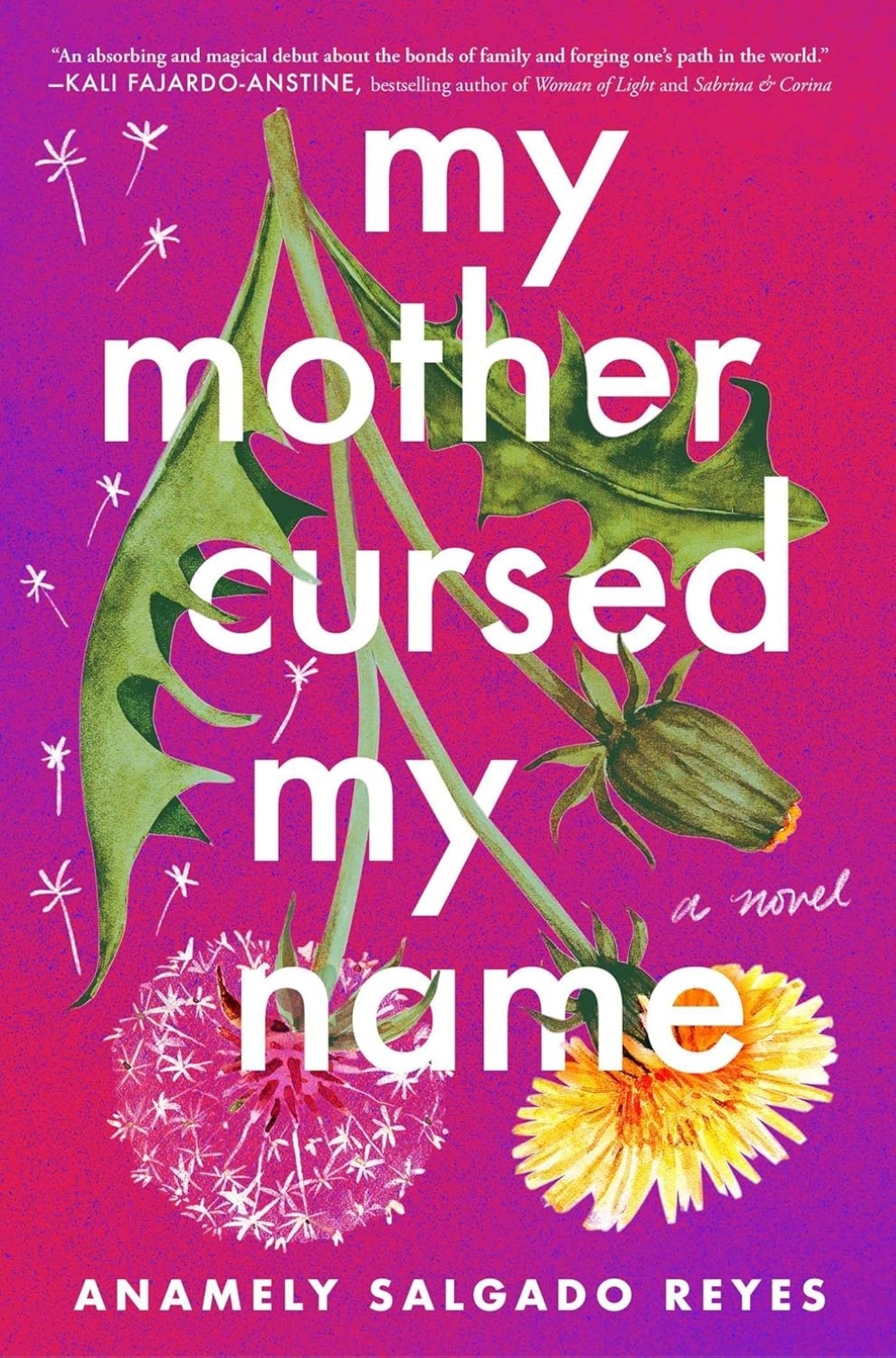
When Names Shape Destiny: A Book Review of ‘My Mother Cursed My Name’

My Mother Cursed My Name is the debut novel by Anamely Salgado Reyes. Photo: Barnes & Noble

My Mother Cursed My Name Book Review: A Magical Realism Novel About Generational Trauma

My Mother Cursed My Name by Anamely Salgado Reyes is a debut novel that explores three generations of strong Mexican American women: Olvido, Angustias, and Felicitas. Blending magical realism, women’s fiction, and family drama, the novel examines generational trauma, grief, identity, and the power of names. Set near the U.S.–Mexico border, the story follows a grandmother’s ghost who meddles in her living family’s life from beyond the grave.


Book Overview: What My Mother Cursed My Name Is About

The novel opens with the history of the Olivares women, dating back to 1917, when Justa Olivares named her daughter Calamidades. Justa believed hardship built character and if she suffered, her daughter should too.

“For generations, the women in the Olivares family attempted to change the course of destiny through the power of names.”

Fast forward to Oakville, Arkansas, where Angustias abruptly pulls her ten-year-old daughter Felicitas out of school to leave town once again. On the road, Felicitas speaks with a mysterious intruder as they head to Grace, Texas, Angustias’ hometown, where her mother Olvido has just died.

The intruder is Olvido herself. Felicitas has the ability to see ghosts, allowing Olvido to linger. Convinced she cannot cross over without resolving unfinished business, Olvido insists on “fixing” Angustias’ life, including her family, career, faith, and future, by working through Felicitas.

Felicitas, who never knew her grandmother, agrees to help in hopes of understanding her. Meanwhile, Angustias, grieving and eager to leave Texas behind, is baffled when the town suddenly rallies around her offering jobs, matchmaking, and church invitations.

Each woman possesses a unique gift: Felicitas sees ghosts, Angustias sees people’s auras, and Olvido draws confessions from others through her cooking. Ultimately, they must learn how to truly listen to one another.


Review: Themes of Generational Trauma, Identity, and Motherhood

My Mother Cursed My Name is a haunting and intimate novel about inherited trauma, unresolved love, and the weight of family expectations. It asks a central question: how much of our destiny is decided before we are born?

The story alternates between Olvido, her daughter Angustias, and her granddaughter Felicitas, revealing how control, often disguised as protection, damages relationships. Olvido’s belief that names determine fate casts a long shadow across generations.

When Angustias becomes pregnant as a teenager, her choice to leave home feels both reckless and necessary, a desperate act of self-preservation. Years later, Felicitas’ attempt to connect with her grandmother delivers a darkly ironic truth: although Olvido is dead, her influence remains powerful.

Reyes’s prose is restrained, vivid, and poetic:

“Between the humidity and the running, her hair has tangled in multiple places as if various birds fought to make a nest on her head.”

Blending emotional realism with a subtle gothic tone, the novel uses death as a metaphor for estrangement and healing. My Mother Cursed My Name is ultimately a poignant exploration of motherhood, resentment, cultural inheritance, and the difficult work of breaking cycles we inherit without consent.

Readers who enjoy Latina literature, magical realism novels, and women’s fiction about family and identity will find this story heartwarming and thought-provoking.

“If only mistakes could anchor Angustias without drowning her, she wouldn’t be so determined on sailing the unknown sea.”


Rating: 4 out of 5.

About the Author: Anamely Salgado Reyes

Anamely Salgado Reyes grew up on both sides of the Mexico–Texas border. Now based in the Rio Grande Valley, she writes stories rooted in family, friendship, culture, and the quiet magic found in everyday life.
Book review: ‘Maribelle’s Shadow’ by Susannah Marren

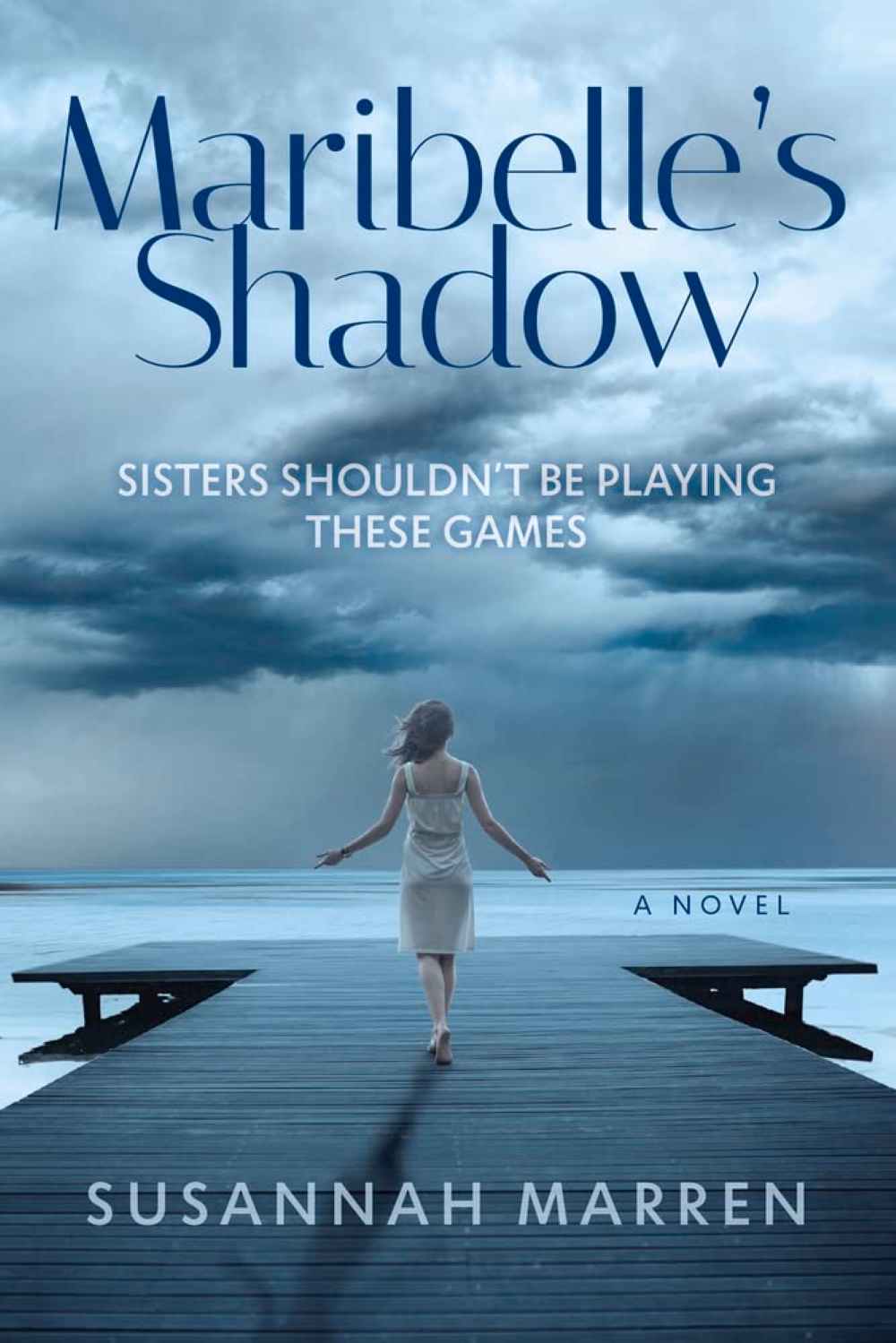
‘Maribelle’s Shadow’ is the latest novel by Susannah Marren. Photo: Amazon

Susannah Marren is the author of “Between the Tides,” “A Palm Beach Wife,” and “A Palm Beach Scandal” and the pseudonym for Susan Shapiro Barash, who has written over a dozen nonfiction books, including “Tripping the Prom Queen,” “Toxic Friends,” and “You’re Grounded Forever,” among others. For her nonfiction, she has been featured in the New York Times, the Wall Street Journal, The New York Post, The Chicago Tribune, Elle, Marie Claire, and has appeared on national television including the Today Show, Good Morning America, CBS, CNN, and MSNBC. Barash has been a guest on national radio including NPR and Sirius Radio. For over twenty years she has taught gender studies at Marymount Manhattan College and has guest taught creative nonfiction at the Writing Institute at Sarah Lawrence College. Presently she is teaching at the Westport Writers Workshop. Her new novel, “Maribelle’s Shadow,” is a compelling tale of deception and family loyalty.

“Maribelle’s Shadow” – The only thing that spreads faster than gossip in Palm Beach is news of a mysterious death. As the editorial director of Palm Beach Confidential, Maribelle Walker knows what lurks beneath the glittering facade of the rich elite on Florida’s most glamorous coast. Or does she? The story begins when her adoring husband Samuel dies suddenly. She knows he is being unfaithful but she is hesitant about confronting him. With his death, secrets surface, including the secrets and lies between Maribelle and her sisters Caroline and Raleigh. Compounding the anguish, the authenticity of their socially ambitious mother Lucinda and lavish lifestyle of mansions, privilege and couture clothes is thrown into doubt. As their carefully constructed image unravels, each sister realizes she must fend for herself. The pathway out is steep and worth any risk – until the winner takes it all.

Even though it is fun to read about the rich and social elite, sometimes the characters are not very relatable, so it is hard to feel sorry for them when their lives take a downward spiral. Such is the case of the Barrow sisters. Thanks to their momager, they are always in society-lady mode and since they are obsessed with their social status, every decision they make, from how they dress to where they are seen and with who, is based on whether or not it will elevate or improve their status. The story is divided into three parts and the chapters are alternately narrated in the point of view of the sisters, so readers get an insight into their thoughts and characters. Because of this, the plot is character driven and the mystery behind Samuel’s death unravels slowly in the background even though it marks the beginning of the end for Maribelle. With highly descriptive language: “…she was trapped in mounds of seaweed, fighting to reach the shoreline,” the story flows naturally through the pages, making this an easy and fun to read novel. It also highlights the point that every family, regardless of social status, has secrets that will eventually come to light. Overall, “Maribelle’s Shadow” is a story of family and loyalty, and how far some people will go to hang on to what they have. It is recommended for readers who enjoy women’s fiction centered around socialites, power, and money.

“Don’t be so dramatic, Maribelle,” Lucinda said. “Samuel was another husband. They come; they go…..They’re fungible. Sisters, friends who are like sisters, aren’t.”

*The author received a copy of this book for an honest review. The views and opinions expressed here belong solely to her.

Rating: 4 out of 5.