
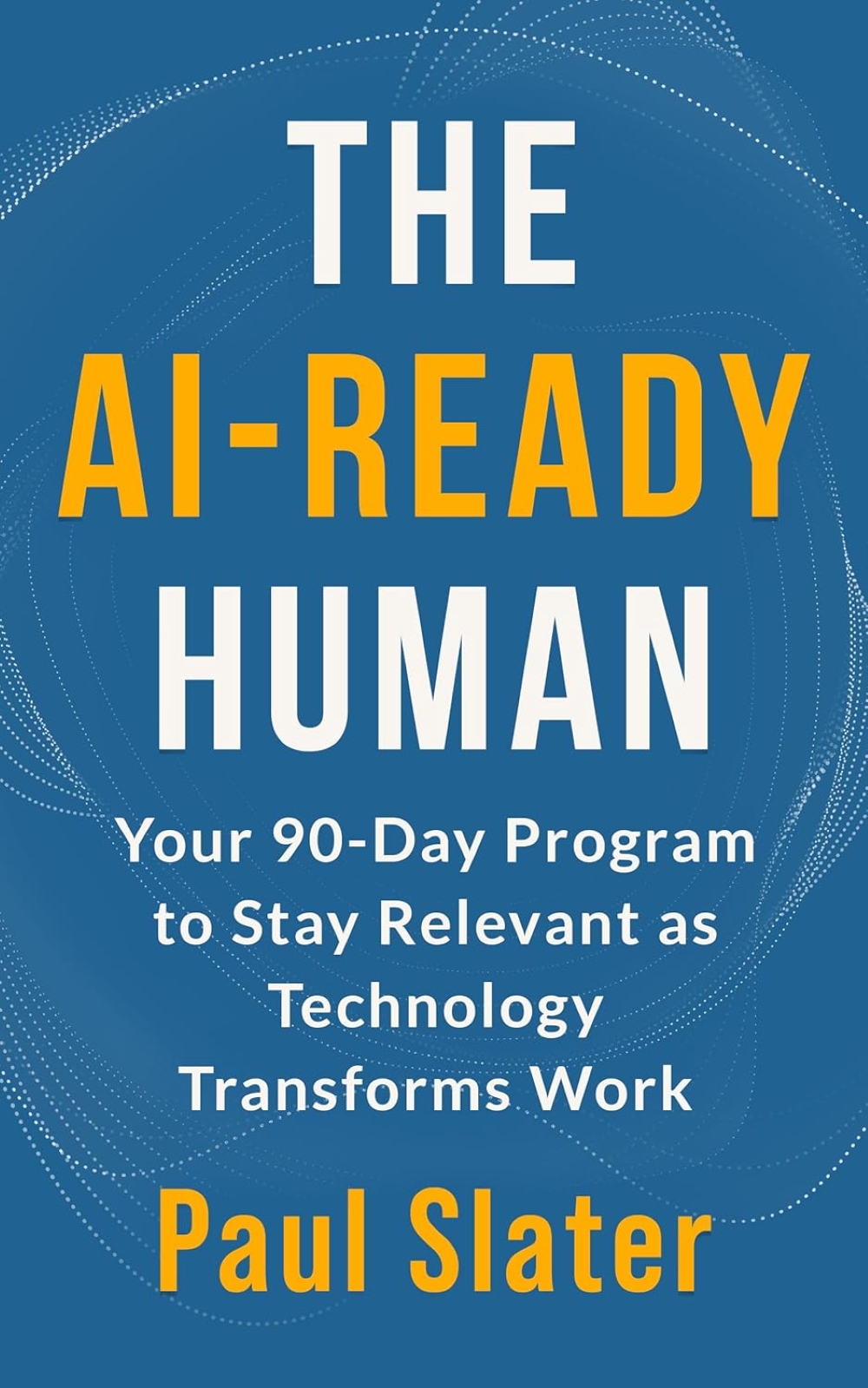
New Book Spotlight: The AI-Ready Human
Your 90-Day Program to Stay Relevant as Technology Transforms Work
By Paul Slater
In a world of seismic technology change, AI is rewriting what it means to be “good” at your job. The professionals who thrive won’t just be the ones who know how to code; they will be the ones who sharpen the capabilities that make technology actually useful: judgment, adaptability, resilience, and clear thinking.
Part Book, Part 90-Day “Brain Workout”
The AI-Ready Human replaces traditional chapters with 90 concepts (days) that build on each other to make you AI-Ready.
Every daily concept includes:
- Clear Explanation: No jargon, just the facts.
- Career Impact: Why this specific concept matters for your professional future.
- Practical Exercises: Tangible steps you can take to grow.
- Reflection Prompts: Tools to help lock in behavior change and new habits.
Who Is This Book For?
The short answer: If you work, and you are human, it’s for you. However, it is particularly essential for:
- Executives: Who must understand the impact of AI on employees and customers.
- Working Professionals: Who are concerned about staying relevant as their industry transforms.
- Managers: Who are tasked with leading their teams through unprecedented change.
The Research Behind the Program
This isn’t just theory. Paul Slater’s 90-day program is built on interviews with over 200 professionals who are sustainably effective with AI every day.
Slater draws on over 30 years at the intersection of advanced technology and personal development, including a decade at Microsoft leading global strategy and contributing to AI think tanks at Harvard, Duke, and Arizona State University.
About the Author: Paul Slater
Paul Slater helps professionals and organizations navigate the “human side” of AI transformation. As the host of the Humanity Working podcast and author of The AI-Ready Human, he focuses on what it actually takes to thrive as intelligent machines reshape our world.
Paul equips professionals to build the human capabilities AI can’t replace—judgment, adaptability, resilience, and meaningful connection.
A Proven Track Record
- Microsoft Veteran: Spent nearly two decades leading global digital transformation and authoring over 20 books for senior technologists.
- C-Suite Advisor: Has delivered briefings to Fortune 500 executives and national governments worldwide.
- Entrepreneur: Co-founded BillionMinds (a Techstars company), creating programs to help employees thrive in the age of emerging tech.
- Academic Contributor: Served on AI-focused think tanks at some of the world’s most prestigious universities.

 SA Examiner