
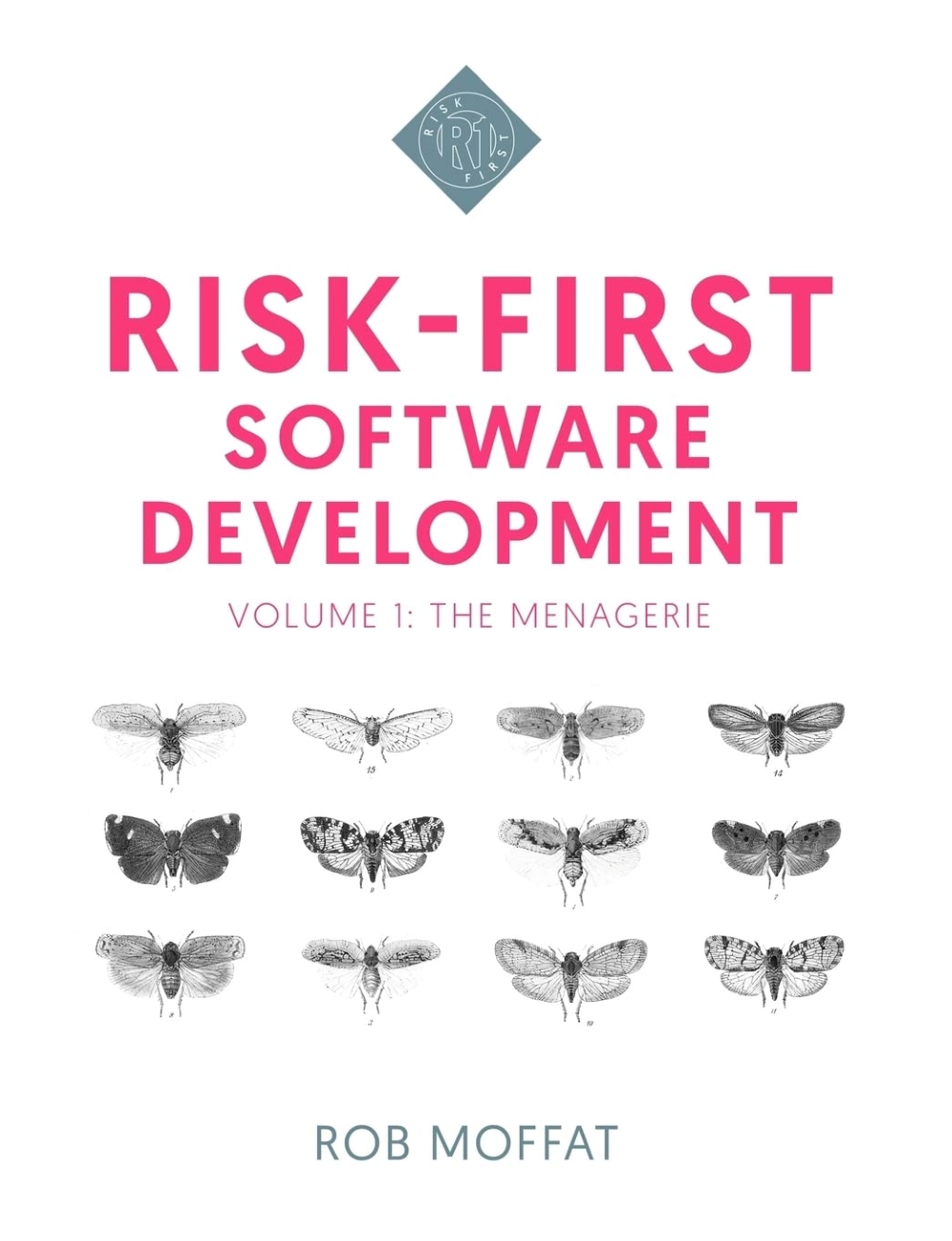
Book Spotlight: Risk-First Software Development: Volume 1: The Menagerie
By Rob Moffat
The software development world is crowded with different practices, metrics, methodologies, tools, and techniques. For example, metrics such as “number of open tickets,” “code coverage,” or “release cadence” give us a numerical feel for how things are going, while methodologies like Scrum, Waterfall, and Lean offer different approaches to organizing our work. (Barnes & Noble, 2026)
But what unites them all?
About Risk-First
The Risk-First perspective is that all of these practices and methodologies have one thing at their heart: managing risk. Risk isn’t just something that appears in a quarterly report; it actually drives every action we take in a project:
- User Experience: A story about improving the user login screen reduces the risk of users failing to sign up.
- Quality Assurance: When we write unit tests, we’re tackling the risk of bugs reaching production and defending against the risk of future changes breaking existing functionality.
- Monitoring: Improving health indicators addresses the risk of an application failing without anyone noticing.
- Feature Development: Implementing a new function mitigates the risk of users becoming dissatisfied and moving to a competitor.
Risk-First makes the case that better understanding the nature of these risks is critical to building software in the complex, interconnected domains we work in today.
About The Menagerie
This book is the first volume of the Risk-First series. It introduces the foundational case for viewing every activity on a software project as an attempt to manage risk. The second edition is now available.
The Menagerie introduces the wide variety of risks you’re likely to encounter, naming and classifying them to improve our collective understanding. The book aims to:
- Develop a Pattern Language for understanding software risk.
- Provide a practical framework for discussing how project activities change the balance of risks we are exposed to.
About the Author
Rob Moffat is a software developer with deep experience in the finance industry, having led regulatory, risk, and transformation IT projects at top-tier investment banks in London. A strong advocate for open source, he currently serves as the Chief Architect for FINOS, the Fintech Open Source Foundation (part of the Linux Foundation).
 SA Examiner