‘The Focused AI Captain’: A Leader’s Guide to Successful AI Transformation

‘The Focused AI Captain’ by FocusFirst founder René Esteban. Photo: Amazon

Book Spotlight: The Focused AI Captain

How to Navigate the Storm, Empower Your Crew, and Deliver Real Value

By René Esteban

Master the Art of Leading AI Transformations for Lasting Business Success

Only 5% of enterprise AI initiatives succeed. Are you ready to be among the elite few who truly transform their organizations?

In today’s rapidly evolving digital landscape, businesses face a common enemy—AI initiatives that fail to deliver real impact. Millions are spent on pilots that never scale. But the true obstacle isn’t the technology itself; it’s how organizations are structured, aligned, and led. (Amazon, 2026)

In The Focused AI Captain, René Esteban, CEO of FocusFirst, reveals why most AI transformations stall and what leaders must do differently to succeed. Grounded in real-world enterprise experience, this book provides a clear, practical roadmap to turn AI ambition into measurable business results.

What You Will Learn

Inside, you will discover how to:

  • Master the 10-20-70 Rule: Allocate resources effectively and maximize AI ROI.
  • Apply the 3D Framework: Learn to Diagnose challenges, set Direction, and Deliver results.
  • Bridge the Trust Gap: Turn employee skepticism into active AI adoption.
  • Move Beyond Pilots: Confidently scale your AI initiatives across the entire organization.

Who is this book for? This book is written for CEOs, executives, and decision-makers who refuse to let their organizations fall behind in the AI revolution. Whether you’re leading a large-scale transformation or preparing your team for the next wave of AI adoption, you’ll gain practical frameworks, leadership insights, and execution tools you can apply immediately.

Get your copy now and start leading your organization to AI-driven success.


About the Author

René Esteban brings unwavering passion to making big goals tangible and inspiring people to achieve them.

As the Founder and CEO of FocusFirst, a Keynote Speaker, and a Senior Advisor to top executives, he has made it his mission to accelerate transformations in organizations. He firmly believes that complex change succeeds best through a clear focus on a single goal, excellent communication, and the active involvement of all stakeholders.

René began his career at Merck, where in his mid-20s he led the global build-out of the e-commerce division, today a billion-dollar business. This experience taught him that successful transformations depend not only on the right strategies, but critically on early and open communication with key stakeholders. His insights led to the development of the award-winning PEAK Method, through which FocusFirst has already guided more than 250 transformations.

René is a passionate entrepreneur with several companies alongside FocusFirst. He cherishes inspiring moments of exchange over Italian wine and loves traveling the world with his family – especially to Italy.
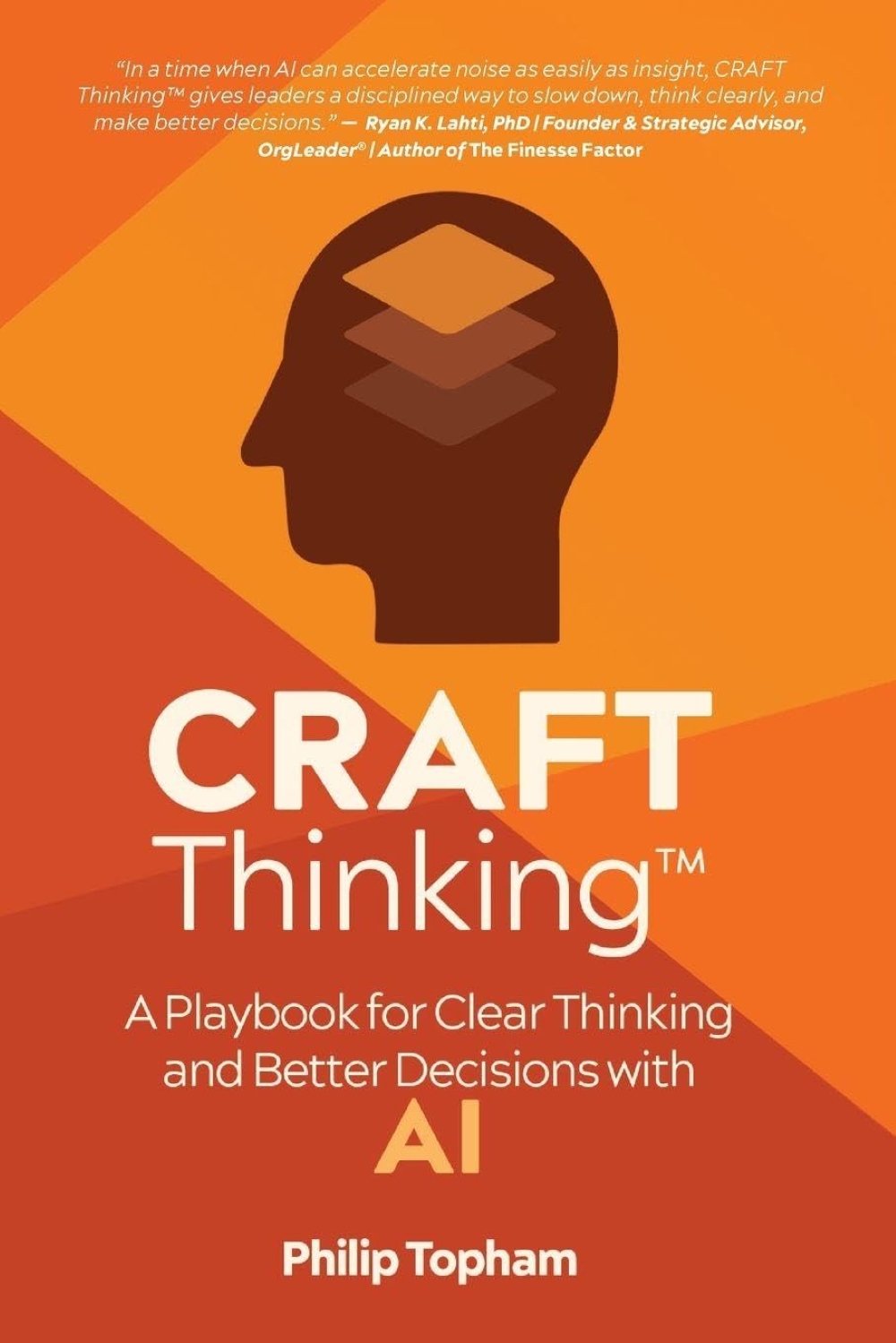
‘CRAFT Thinking’: The Practical Playbook for Everyday AI Work

‘CRAFT Thinking’ is the new book by Philip Topham. Photo: Barnes & Noble

Book Spotlight: CRAFT Thinking: A Playbook for Clear Thinking and Better Decisions with AI

By Philip Topham

Get clearer thinking and better decisions with AI without becoming a prompt engineer.

CRAFT Thinking gives you a simple, five-step method that sharpens how you think, improves the questions you ask, and helps you get consistently better results from any artificial intelligence tool. It’s practical, repeatable, and built for everyday work, not technical experts. (Barnes & Noble, 2026)

The CRAFT Chain Reaction:

  • When your thinking improves, your prompts improve.
  • When your prompts improve, your decisions improve.

Whether you lead a company, manage a team, or simply want to do better work with AI, this playbook gives you the structure to turn uncertainty into clarity and AI conversations into meaningful insight.

The Bottom Line: > AI won’t make your work smarter. Clear thinking will, and CRAFT shows you how.

Get your copy today!


About the Author

Philip Topham

Strategic AI Advisor, Speaker, & Creator of the CRAFT Thinking™ Method

Philip Topham is a strategic AI advisor, speaker, and creator of the CRAFT Thinking™ method, a framework designed to bring clarity, intentionality, and better decision-making into the AI era.

With a career spanning corporate leadership, startup ventures, and board advisory, Philip combines the rigor of an engineer with the insight of a relationship-focused strategist. He’s earned two U.S. patents, contributed to peer-reviewed research, and worked across industries from health tech to clean tech to biotech. What sets him apart is not just his technical depth, it’s his shift toward human-centered leadership.

After stepping away to be a stay-at-home dad, Philip returned with a deeper understanding of what it means to lead with care and purpose. He brings that mindset into his work today, helping leaders think with AI, not just use it, so their organizations can grow wisely, inclusively, and sustainably.

Philip serves as co-chair of the National AI Special Interest Group for the Private Directors Association, and publishes regularly at SavionAI: The Shift.

“AI should serve all of humanity—not just the elite. And it’s our shared responsibility to build companies and institutions worthy of that promise.”


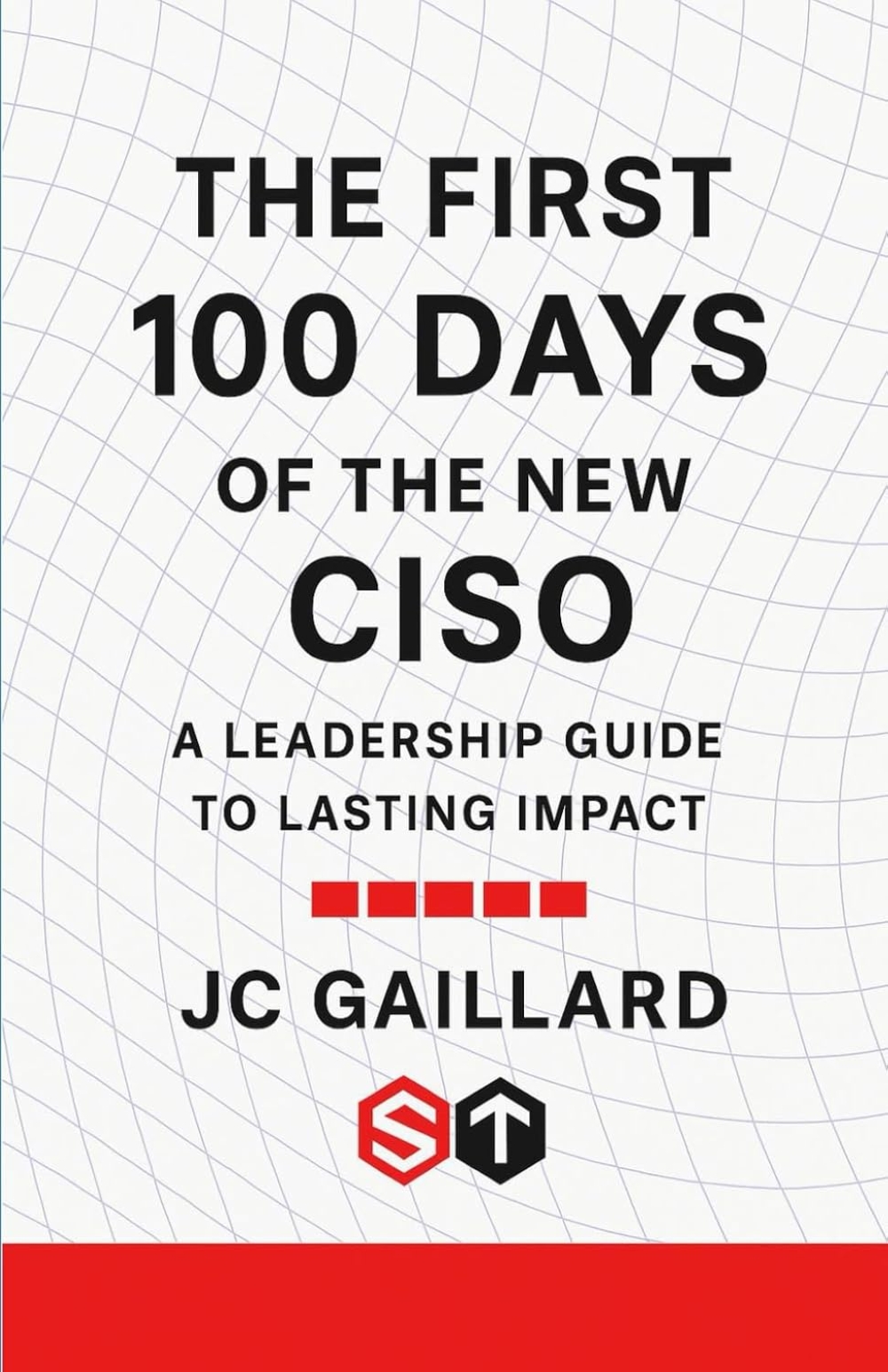
The Blueprint for Cybersecurity Leadership: ‘The First 100 Days of the New CISO’

‘The First 100 Days of the New CISO’ by JC Gaillard is a practical roadmap for real and lasting cybersecurity leadership. Photo: Amazon

Book Spotlight: The First 100 Days of the New CISO

A Leadership Guide to Lasting Impact

By JC Gaillard


When a new Chief Information Security Officer (CISO) steps into the role, their first 100 days don’t just set the tone—they can define their entire legacy. (Amazon, 2026)

In The First 100 Days of the New CISO, seasoned cybersecurity leader and consultant JC Gaillard offers a pragmatic, experience-driven guide to succeeding in those crucial early months and beyond. Drawing on over two decades of advising major global organizations, Gaillard helps CISOs, executives, and boards understand what true leadership in cybersecurity looks like: calm, structured, and aligned with business priorities.

This is not another technical manual. Instead, it is a leadership guide grounded in governance, culture, and the realities of corporate life, serving as a definitive blueprint for the next decade of cybersecurity leadership.


Inside the Book: What You’ll Discover

The book is structured like a consulting playbook and written in clear, disciplined prose. Inside, you’ll find the perspective and tools needed to turn uncertainty into direction, including:

  • The Blueprint for Timing: How to navigate the first 6 days, 6 weeks, and 6 months with clarity and composure.
  • Stakeholder Management: How to build trust and credibility across the organization before trying to drive major change.
  • Business Alignment: Proven techniques for aligning security with business strategy and corporate governance.
  • Boardroom Success: How to communicate effectively and confidently with boards and executive committees.
  • Culture Over Tools: Why culture, rhythm, and proportion matter far more than tools or technology.
  • Lasting Transformation: Understanding what differentiates true, long-term security maturity from short-term, reactionary activity.

Who This Book Is For

Whether you are stepping into the hot seat for the first time or overseeing the person who is, this guide offers invaluable insights:

  • Newly Appointed CISOs seeking a structured, strategic start to their new role.
  • Experienced Security Leaders looking to strengthen their corporate influence and organizational impact.
  • CEOs, CIOs, and Board Members who want to understand what truly effective security leadership looks like.
  • Consultants & Governance Professionals focused on organizational resilience, trust, and transformation.

“If you want to lead with confidence, build maturity, and leave a legacy that lasts beyond your tenure, The First 100 Days of the New CISO will show you how.”


About the Author

JC Gaillard is a leading strategic advisor and a globally recognized cybersecurity thought-leader with over 25 years of experience and a track record of driving fundamental change across global organizations.

He is the Founder and CEO of Corix Partners, a UK-based boutique management consultancy firm and thought-leadership platform. Corix Partners focuses on assisting CIOs and other C-level executives in resolving complex cybersecurity strategy, organization, and governance challenges.


Demystifying AI and Algorithms: A Guide to Making Technology Work for You

‘Human Agency in a Digital World’ is the new book by Marcus Fontoura. Photo: Barnes & Noble

Book Spotlight: Reclaiming Your Role in the AI Era

In an age where algorithms influence everything from our morning playlists to our career paths, it’s easy to feel like a passenger in a vehicle we don’t control. A new book by industry veteran Marcus Fontoura aims to change that narrative. (Digital Agency Book, 2026)


Human Agency in a Digital World

Understand technology and make it work for you

This may be the first true AI-era self-help book—not because we need help using technology, but because we need help using it well. Understanding how algorithms work is the first step in making sure they work for us.

This book is about reclaiming our role, not as passengers, but as pilots, in the fast-moving journey of technological change.

Written by a computer scientist who is also a father and a teacher, this is a deeply personal and accessible guide to the systems shaping our lives.

Why This Book Matters Now

Digital agents are all around us. They suggest songs, answer questions, sort emails, and, often invisibly, shape what we think. But how much power do we really have to redirect their impact?

In Human Agency in a Digital World, Fontoura explores the hidden architectures of modern life, including:

  • Social Media & Search Engines: How they capture and direct attention.
  • Cloud Computing & AI: The invisible backbone of the modern economy.
  • Quantum Technologies: A look into the next frontier of computing.

Drawing from decades of experience building the backbone of the internet, Fontoura demystifies these core concepts, allowing readers to develop digital fluency without needing a computer science degree.

Beyond Optimization

Ultimately, this is a book about people. It explores how we can use efficiency not just for speed or cost-cutting, but to unlock creativity, opportunity, and well-being. With examples ranging from broken playlists to complex protein folding, Fontoura asks a profound question:

What do we want technology to do for us, and what will we do with it in return?


About the Author

Marcus Fontoura is a titan of the tech industry, currently serving his second tenure as Technical Fellow and Corporate Vice President at Microsoft, where he is the CTO for Azure Core.

His distinguished career includes:

  • Stone (2022-2025): Served as CTO, leading engineering and building efficient financial platforms. He remains an advisor to the company.
  • Microsoft (2013-2022): Served as Chief Architect for Azure Compute and led the Azure efficiency team.
  • Research & Development: Previous leadership roles at Google, Yahoo, and IBM Research.

With a career spent at the intersection of complex systems and human needs, Fontoura is uniquely positioned to bridge the gap between “how it works” and “why it matters.”


The Step-by-Step Guide to Implementing AI at Work (2026 Edition)

‘AI At Work’ is the new book on AI for nontechnical professionals by Kate Marshall. Photo: Amazon

New Book Spotlight: AI At Work by Kate Marshall

Stop wondering where to start with AI and start using it.

We all know AI is changing the professional landscape, but without a clear entry point, it’s easy to feel like you’re falling behind. AI at Work: A Step-By-Step Foundational Guide For Implementing AI eliminates the overwhelm by providing a proven, structured process to integrate generative AI into your daily routine. (Amazon, 2026)

This isn’t a collection of random tips or high-level theory; it is a practical roadmap designed to move you from initial setup to full workflow automation.


📘 Overview: AI Literacy Made Practical

Written specifically for non-technical professionals, this guide walks you through a system for bringing generative AI into your daily workflow. The best part? No technical background is needed. Each section is designed to be implemented in under 30 minutes, featuring:

  • Copy-paste-ready prompts
  • Actionable checklists
  • Step-by-step instructions
  • QR codes linking to updated digital resources and FAQs

🚀 What You Will Learn

This book covers the full spectrum of modern AI implementation, including how to:

  • Choose Your Tool: Compare ChatGPT, Claude, Gemini, Copilot, and Grok to find the best fit for your specific needs.
  • Master Prompting: Set up custom instructions and engineering techniques to get useful results on your first try.
  • Automate the Mundane: Triage emails, generate meeting notes, and handle repetitive tasks to save hours every week.
  • Build Reusable Workflows: Create SOPs, templates, and AI workflows for documents and presentations.
  • No-Code Automation: Use Zapier, Make, and Power Automate to build business systems without writing a single line of code.
  • Stay Secure: Navigate data classification, enterprise plans, and “Shadow AI” to ensure you’re using these tools safely.

👤 Is This Book For You?

AI at Work meets you where you are, whether you are an individual contributor, a manager, or an executive. This book is for you if:

  • You are drowning in repetitive work and ready to reclaim your time.
  • You want productivity tools that fit into your actual routine, not another app collecting dust.
  • You are done with the hype and want a beginner-friendly, structured system.
  • You want real outcomes: time saved, better workflows, and professional growth.

Note: The 2026 Edition is updated quarterly via QR codes to ensure you stay current with the rapid evolution of tools like ChatGPT, Claude, and Gemini.


About the Author

Kate Marshall helps professionals implement AI safely and effectively, drawing on over 20 years of experience in cybersecurity training, project management, and courseware development.

She is the founder of TheGrai, a consultancy focused on AI adoption, training, and governance. Kate works with executives, HR leaders, and small teams who know AI matters but don’t have time for endless experimentation.


‘Risk-First Software Development’: A New Framework for Modern Teams

‘Risk-First Software Development’ by Rob Moffat. Photo: Barnes & Noble

Book Spotlight: Risk-First Software Development: Volume 1: The Menagerie

By Rob Moffat

The software development world is crowded with different practices, metrics, methodologies, tools, and techniques. For example, metrics such as “number of open tickets,” “code coverage,” or “release cadence” give us a numerical feel for how things are going, while methodologies like Scrum, Waterfall, and Lean offer different approaches to organizing our work. (Barnes & Noble, 2026)

But what unites them all?


About Risk-First

The Risk-First perspective is that all of these practices and methodologies have one thing at their heart: managing risk. Risk isn’t just something that appears in a quarterly report; it actually drives every action we take in a project:

  • User Experience: A story about improving the user login screen reduces the risk of users failing to sign up.
  • Quality Assurance: When we write unit tests, we’re tackling the risk of bugs reaching production and defending against the risk of future changes breaking existing functionality.
  • Monitoring: Improving health indicators addresses the risk of an application failing without anyone noticing.
  • Feature Development: Implementing a new function mitigates the risk of users becoming dissatisfied and moving to a competitor.

Risk-First makes the case that better understanding the nature of these risks is critical to building software in the complex, interconnected domains we work in today.


About The Menagerie

This book is the first volume of the Risk-First series. It introduces the foundational case for viewing every activity on a software project as an attempt to manage risk. The second edition is now available.

The Menagerie introduces the wide variety of risks you’re likely to encounter, naming and classifying them to improve our collective understanding. The book aims to:

  1. Develop a Pattern Language for understanding software risk.
  2. Provide a practical framework for discussing how project activities change the balance of risks we are exposed to.

About the Author

Rob Moffat is a software developer with deep experience in the finance industry, having led regulatory, risk, and transformation IT projects at top-tier investment banks in London. A strong advocate for open source, he currently serves as the Chief Architect for FINOS, the Fintech Open Source Foundation (part of the Linux Foundation).


The Price of Belonging: Exploring Selfhood in the Digital Age

‘Searches: Selfhood in the Digital Age’ is the new book by Vauhini Vara. Photo: Barnes & Noble

Books that explore the human condition in the digital age offer profound insight into how technology reshapes identity, connection, and meaning. Some examine AI’s emotional entanglement with humans, blurring the lines between empathy and programming, while others critique our obsession with surveillance and digital transparency. These narratives question what it means to be human when algorithms influence choices, relationships, and self-worth. As artificial intelligence grows more integrated into daily life, literature becomes a crucial mirror, reflecting both our fears and hopes for the future.

New this month, from the author of “The Immortal King Rao,”finalist for the Pulitzer Prize, is “Searches: Selfhood in the Digital Age,” a personal exploration of how technology companies have both fulfilled and exploited the human desire for understanding and connection. (Penguin Random House, 2025)

“Searches: Selfhood in the Digital Age” by Vauhini Vara

When it was released to the public in November 2022, ChatGPT awakened the world to a secretive project: teaching AI-powered machines to write. Its creators had a sweeping ambition—to build machines that could not only communicate, but could do all kinds of other activities, better than humans ever could. But was this goal actually achievable? And if reached, would it lead to our liberation or our subjugation?

Vauhini Vara, an award-winning tech journalist and editor, had long been grappling with these questions. In 2021, she asked a predecessor of ChatGPT to write about her sister’s death, resulting in an essay that was both more moving and more disturbing than she could have imagined. It quickly went viral.

The experience, revealing both the power and the danger of corporate-owned technologies, forced Vara to interrogate how these technologies have influenced her understanding of her self and the world around her, from discovering online chat rooms as a preteen, to using social media as the Wall Street Journal’s first Facebook reporter, to asking ChatGPT for writing advice—while compelling her to add to the trove of human-created material exploited for corporations’ financial gain.

Interspersed throughout this investigation are her own Google searches, Amazon reviews, and the other raw material of internet life—including the viral AI experiment that started it all. “Searches” illuminates how technological capitalism is both shaping and exploiting human existence, while proposing that by harnessing the collective creativity that makes humans unique, we might imagine a freer, more empowered relationship with our machines and, ultimately, with one another.

Vauhini Vara has been a reporter and editor for The AtlanticThe New Yorker, and the New York Times Magazine, and is the prize-winning author of “The Immortal King Rao” and“This is Salvaged.

“Vara humanizes the influence of technology in highly personal terms [and] projects what the future holds as tech oligarchs gain political influence. . . . Provocative, challenging, and concerning, Vara’s clever, eye-opening approach brings home the often uneasy confluence of individual desire, social benefits, and corporate ambition.”Booklist, starred review

“Tragic, funny, and relatable[, SEARCHES] is by turns absurd and insightful, engaging with the ethics of algorithms, surveillance, and privacy in a meaningful way. . . . A must read.” Library Journal, starred review

“Readers will be profoundly moved by this remarkable meditation.”Publishers Weekly, starred review