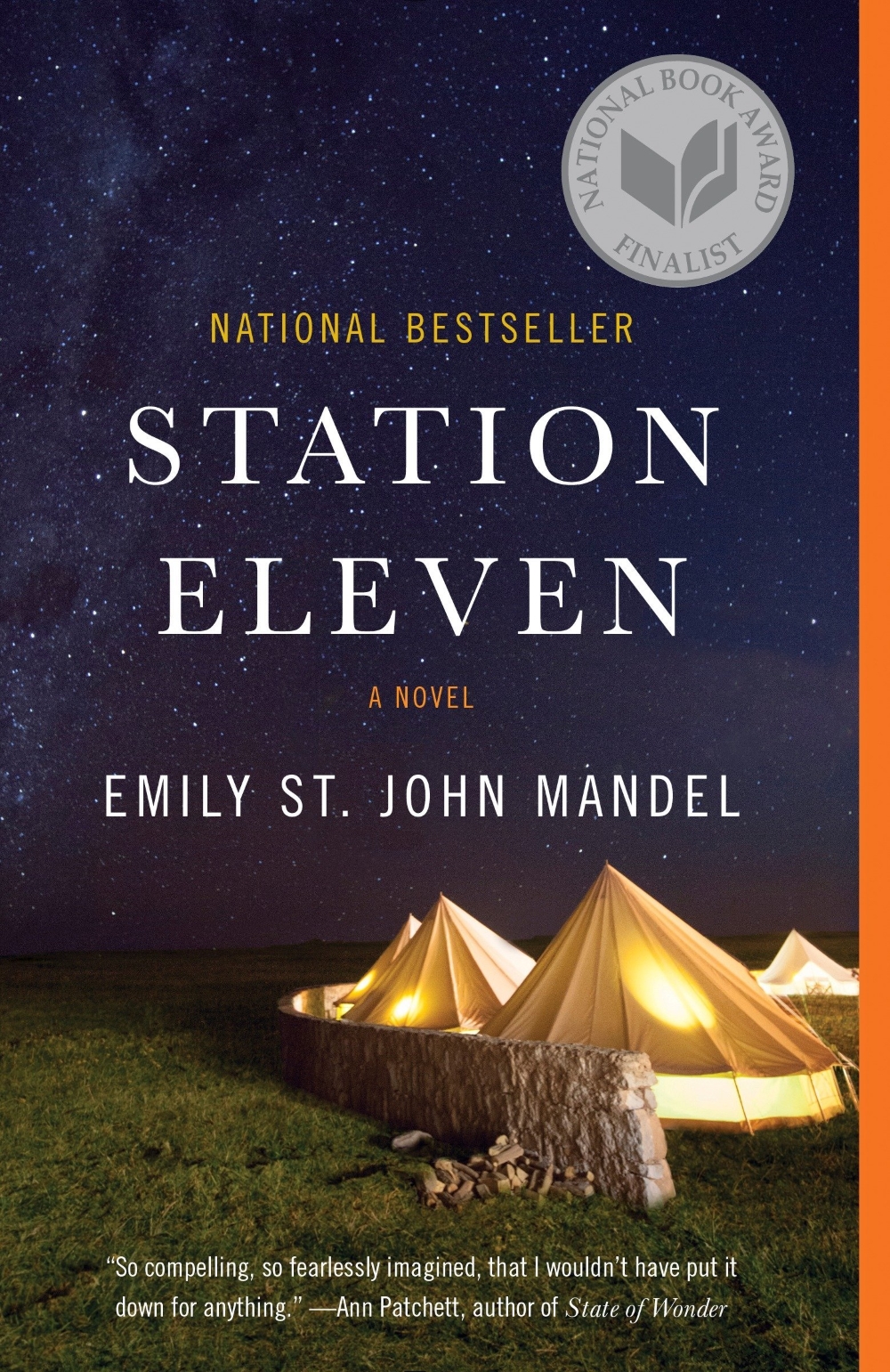
The limited series adaptation of ‘Station Eleven’ is available on HBO Max. Photo: amazon
Emily St. John Mandel is a Canadian novelist and essayist. She has written numerous essays and five novels, including “The Glass Hotel” and “Station Eleven,” which was a finalist for a National Book Award and the PEN/Faulkner Award for Fiction and has been translated into thirty-five languages. “Station Eleven” has been adapted into a limited series, which premiered on December 16, 2021, on HBO Max. It is an audacious, darkly glittering novel set in the eerie days of civilization’s collapse—the spellbinding story of a Hollywood star, his would-be savior, and a nomadic group of actors roaming the scattered outposts of the Great Lakes region, risking everything for art and humanity. (amazon, 2022)
“Station Eleven” – Kirsten Raymonde will never forget the night Arthur Leander, the famous Hollywood actor, had a heart attack on stage during a production of King Lear. That was the night when a devastating flu pandemic arrived in the city, and within weeks, civilization as we know it came to an end. Twenty years later, Kirsten moves between the settlements of the altered world with a small troupe of actors and musicians. They call themselves The Traveling Symphony, and they have dedicated themselves to keeping the remnants of art and humanity alive. When they arrive in St. Deborah by the Water, they encounter a violent prophet who will threaten the tiny band’s existence. As the story takes off, moving back and forth in time, and vividly depicting life before and after the pandemic, the strange twist of fate that connects them all will be revealed.
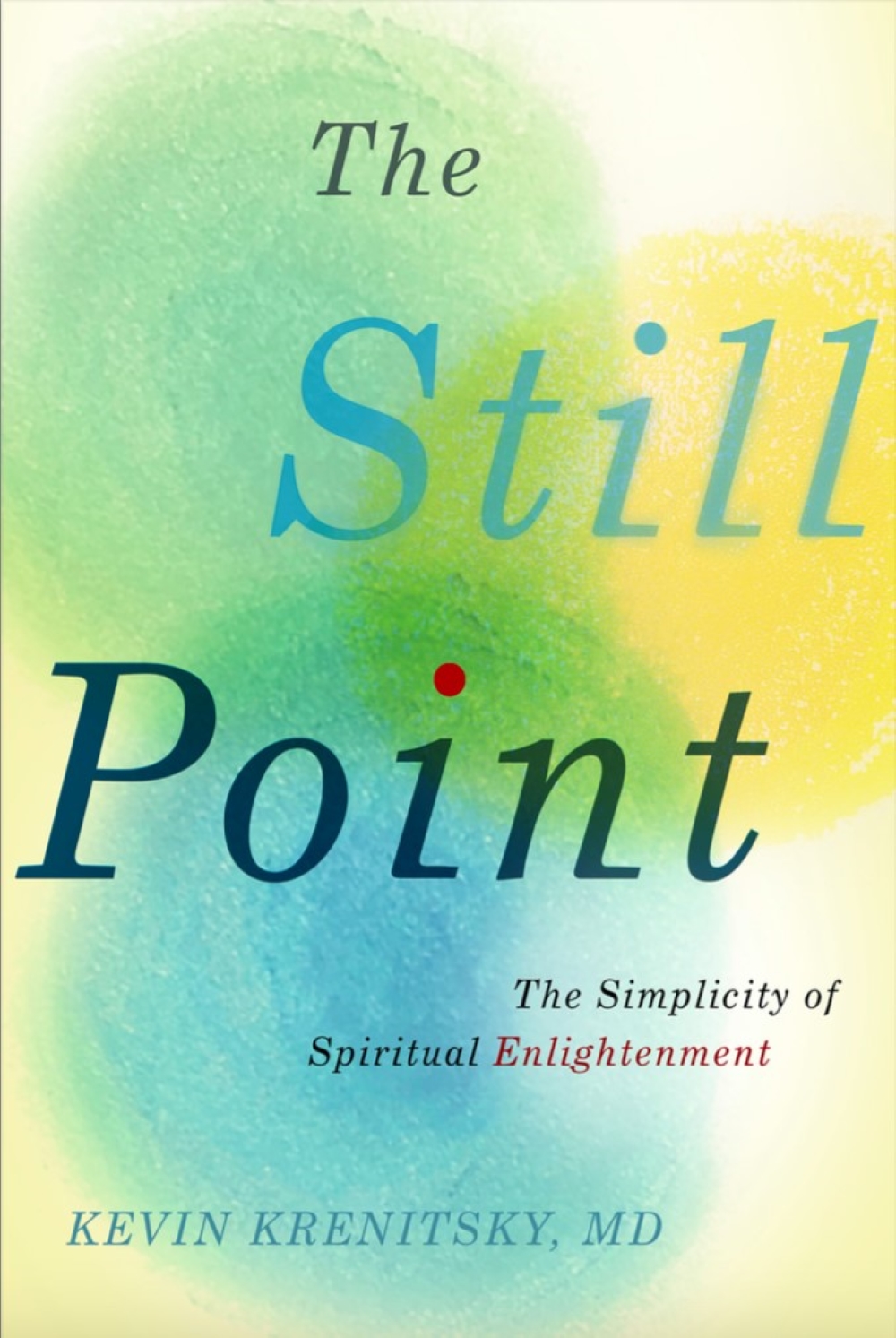
‘The Still Point: The Simplicity of Spiritual Enlightenment’ is Kevin Krenitsky’s new book on discovering and living our lives in alignment with our true self. Courtesy photo, used with permission.
Reprinted with permission from Waterside Productions Inc. 2022
THE UNNATURAL STATE OF BOREDOM AND IMPATIENCE
If we begin to truly examine our day-to-day experience, we will see that most of us are in a constant state of either impatience or boredom. We are always looking to the next moment, or the next experience, to come and deliver us into some sense of peace and fulfillment, but it rarely does. It rarely does because when it comes, we go right on anticipating the next moment without enjoying the peace of the only moment we are ever given, which is now. In the rare times we are not continually waiting for the promise of the next moment, we wander into the past with thought and either regret what has already occurred or fantasize about what we could have done differently. Take some time to really look at your life in this way and see how very rare the moments of true peace and relaxation are. The near constant state of unease most humans experience is usually the best-case scenario because when you add any amount of anxiety to the mix, which a huge number of people suffer from, the anticipation of the future contains a constant level of worry. With anxiety, we still continually reject the present moment in favor of a future moment, but now we also expect something bad to happen in that very future moment we pine for. This is living in bondage that has become so “normal” to most people they don’t even question it or recognize its insanity.
At some points during our lives, we get something that we have been greatly desiring, such as a new job, a big house, or a romantic partner, and for a short time we are content. Instead of realizing this brief happiness is due to the cessation of the constant wanting that came from acquiring the object of our desire, we wrongly project the cause of the happiness onto the object itself. As soon as the happiness or contentment wears off, we start subtly, or not so subtly, searching for the next object to acquire to become happy again. All the while we overlook the true cause of our misery, which is the constant desire to reject the now or “what is” in favor of a better future moment. Thus, the nature of ignorant living, or “living in delusion,” is living as a prisoner to thoughts. The price you pay for identifying your very self with your thoughts and feelings is unhappiness at best and misery at worst. With the rejection of your true nature as the Still Point of awareness, you willingly give up the only recognition that is happiness and peace itself.
Kevin Krenitsky is a medical doctor and author of “The Still Point.” Despite leading a life deemed outwardly “successful,” he lived with a deep background of anxiety, fear, and stress that waxed and waned since early childhood. At the age of forty, in the midst of decades of suppressing tremendous inner and outer conflict, he reasoned there must be another way. This ‘willingness’ led to a decade of studying non-duality by way of “A Course in Miracles.” In 2015, at the height of a successful business career as Chief Commercial Officer at Foundation Medicine (FMI), Kevin turned away into relative isolation, and found the direct path to recognizing ones true nature. He wrote “The Still Point” to help others find their eternal nature, which is happiness itself.
‘Dry Heat,’ Len Joy’s new novel, will be out March 1, 2022. Courtesy photo, used with permission.
Len Joy is the author of three previous novels, “Everyone Dies Famous” (2020), “Better Days” (2018) and “American Past Time” (2014) and a collection of short fiction, “Letting Go” (2018). In his new book “Dry Heat: A Novel”which will be out Tuesday March 1, the day All-American Joey Blade turns 18, he learns his ex-girlfriend is pregnant, is betrayed by his new girlfriend, and is arrested for the attempted murder of two police officers. Then things get bad. Below is an excerpt from “Dry Heat.”
3 P.M. – SATURDAY – NOVEMBER 20, 1999 ROADRUNNER PARK – PHOENIX, AZ
The gangs were always stealing the nylon basketball nets, so the park director had replaced them with galvanized steel chain, which rattled obnoxiously on every bad shot. Joey frowned as his jump shot clanked off the front rim.
“Your shot sucks today, Joey Blade,” Mallory said as she bounced the ball back to him.
“Your boobs are distracting me. Maybe it’s time you started wearing a bra.” Blonde, with a pixie cut that framed her cute little-girl face, Mallory could have passed for a twelve-year-old if it hadn’t been for her huge breasts. She was fifteen, two years younger than Joey, and they had been playground buddies for ten years. She lived with her creepy father in a rundown brick house a block away and escaped to the park most afternoons.
“Come on, concentrate, Mr. All American.” She lifted up her sweatshirt, flashing him as he took his next shot. An airball.
“Aargh.” Joey chased after the errant shot, hip-checking Mallory as he grabbed the ball. He dribbled out to the corner and swished a turnaround jumper. “Yes! No distractions that time.” He pumped his fist.
Mallory smirked. “Better get used to it. You’ll have plenty of distractions when you’re in Lala Land next week.”
Lala Land.
Joey was out of time. He had to make a decision about his trip to USC and he had to make it now. He clanked another free throw off the rim.
“What’s wrong, Joey?”
“Dutch.”
Mallory scowled as she bounced the ball to him. She knew what Joey’s dad was like. Dutch Blade was an unfiltered, heart- on-his-sleeve guy. He could chew someone out one moment and be hugging them the next.
“He doesn’t want you following in the immortal footsteps of O.J.?”
Joey gave her a look. Mallory was always a smartass. Three weeks ago, in his last high school football game, the Shadow Mountain Matadors had defeated Apache Junction, last year’s state champion, 28 to 24. Joey rushed for 264 yards and scored all four touchdowns for Shadow Mountain. After the game, he was contacted by every school in the PAC 10, all promising that he would have a bright future playing football for their university.
He thought it would be cool to have all that attention, but it was really like trying to date five girls at once. Everyone insisted their school was the best choice for Joey. He didn’t like disappointing people and he didn’t want to string anyone along, so he quickly narrowed the search to USC in Los Angeles and the University of Arizona in Tucson.
He dribbled out to the foul line and took another turnaround jumper. The shot was a foot short and wide left.
Mallory scampered over and picked it up. “You can’t blame that one on me.”
Joey tried spinning the ball on his index finger, but he couldn’t keep his focus. “Dutch grew up in Tucson. He loves the Wildcats. He’s always said that if his folks had had the money, he would have gone to U of A instead of Vietnam.” He glided out to the corner again. “Ball!” he shouted. Mallory fired a chest high pass to him and he swished a fifteen-footer.
“Maybe he just wants to keep you close so you can help with the family business,” Mallory said with a faux expression of innocence.
Dutch had started Blade Engine and Crankshaft when he returned from Vietnam. With the help of Joey’s mom, Callie, it had become the largest engine rebuilder in the southwest.
“My dad thinks anyone who goes to California just wants to be a movie star.”
Mallory tilted her head and squinted at him. “You’re pretty cute with that curly hair and those girly eyelashes. I could definitely see you in the movies.”
“Shut up, Mallory. This is serious.”
“What do you want to be when you grow up? A football player? Or are you planning to take over the business?”
Joey gave her the finger. They’d had that discussion before. “I want to be a writer. USC would be better for that, but to my dad, a writer is even worse than a movie star. He doesn’t think it’s a real job unless you’re sweating.”
“So, your big problem is deciding between a free education in California or Arizona?” Mallory arched her eyebrows, suggesting that was the kind of problem most people would love to have. Then she grinned and said, “You want to come over to my place for a glass of ice tea?”
“Uh . . .” Joey stared down at his feet. Mallory was cool, but he couldn’t stand her father. Donny Stewart worked at Blade Engine as a mechanic doing engine installs. He thought he was some kind of comedian. He was always telling stupid, dirty jokes and his delivery sucked. He acted like Joey was disrespecting him for not laughing his ass off. Joey knew Stewart resented him because he was the boss’s kid. Donny Stewart was an all- around creepy guy.
“My dad’s running the install center today.” Mallory said. “He won’t be home for two hours.”
The unfamiliar red Mustang pulled up alongside Lily Reyes, matching her pace as she walked on the sidewalk. Lily didn’t like the feeling of being stalked. She began walking faster, and looked around to see if anyone was outside. The Tallahassee heat and humidity had the neighborhood looking like a ghost town; everyone was at work or had retreated inside their air-conditioned homes. The Mustang continued to creep along and pace her. Its windows were tinted, only offering her a general outline of the male driver wearing a baseball cap.
Maybe I should run up to a house and ring the doorbell, Lily thought. But what if no one was home, and her stalker took that opportunity to come after her?
The car came to a hard stop right next to her. As the passenger window inched downward, Lily took a breath to scream.
“You getting in?”
“Oh, god,” she said, blowing out pent-up air. “I thought you were like some disgusting creep. Where’d you get the car?”
“Borrowed it from a friend.”
Lily opened the passenger door, tossed her backpack inside, and got comfortable in her seat. The cooling AC blew over her. “Nice ride. Must be a good friend to let you borrow it.”
“It’s a business thing.”
Lily decided not to press him for answers. Carlos never liked it when she asked too many questions, and she didn’t want him getting uptight. He seemed distracted about something. Why, he’d barely looked at her.
Lily was kind of hoping he would have noticed how she’d dressed up for him.
“I thought you were going to pick me up at Subway,” Lily said. “Decided to spare you the walk.”
Lily’s mom, Sylvia, didn’t know about Carlos. No one knew about him, except for Lily’s best friend, Madison, and even she wasn’t supposed to know anything. Carlos was paranoid about being busted. When Lily had first started dating him, she’d lied about her age, telling him she was eighteen. It was only after they’d been going together for a month that Lily admitted she was only fifteen. Of course, she hadn’t been the only one stretching the truth. When they’d first hooked up, Carlos had said he was nineteen, not the twenty-one he really was.
“Did you bring some change of clothes?” Carlos asked.
“In the backpack, even though you never explained why I needed them.”
“Always nice to have options.” “Where we going?”
“It’s a surprise.”
Lily tried to play it cool, and hid her smile. Madison seemed to think that Carlos was just using her, but she didn’t know him like Lily did.
“Stopped and got you a wild cherry Slurpee,” he said. “Better drink it before it melts.”
He had remembered her favorite drink. She would certainly mention that to Madison. Lily reached for the Slurpee, and took a long sip.
“Want some?” she asked.
“Not without adding some rum.” “I’m okay with that.”
“Maybe later.”
Carlos liked to party, and liked it even more when Lily joined in with him. She had to be careful, though. Her mom was always in her business.
As if reading her mind, Carlos said, “How long did your mom let you off the leash?”
“I told her I’d probably be eating dinner at Madison’s.”
“That gives us a little time.” “Sure does,” she said.
Lily reached out her hand, and ran it along his leg. Carlos needed to see she was grown-up, and not some kid, but instead of positioning her hand on him like he usually did, Carlos acted preoccupied. Maybe he was just in one of his moods.
She withdrew her hand and began drinking her Slurpee. “Sure you don’t want some?”
He shook his head, and she continued to sip. Halfway through the cup, Lily’s skin began tingling.
“I feel weird,” she said.
“We can get some fresh air at Cascades Park.” “Is that where we’re going?”
Carlos nodded. He still wasn’t looking at her, and seemed unusu ally attentive to his driving, continually checking the rearview and side mirrors.
“It feels like we’re floating,” she said.
Lily flapped the hand not holding her drink. “I’m flying. Whoa.”
Something wasn’t right. Why was she feeling out of it? Her gaze fell to the Slurpee. One look, and the pieces came together. Lily’s accusation was shrill: “You put something in my drink!”
“Relax. I just made you a Molly and benzo cocktail to help loosen you up.”
Lily tried to process her panic, along with Carlos’s explanation. She wanted to feel reassured, but didn’t. One by one, words emerged from her mouth. Each syllable felt as if it were weighted down on her tongue. “Why didn’t you tell me?”
“I wanted you to be calm while I explained a few things.” “Oh, shit.” This was bad. “You’re breaking up with me.” “No, baby, never.”
Lily struggled to find the words, and speak them. “We’re. Still.
Together?”
“Forever, baby. It’s just that things didn’t work out with my big plan.
Remember we talked about that?” “Big score.”
“That’s right. And it would have been, but my luck went bad, really bad.”
Lily managed to say, “That’s okay.”
“No, it’s not okay. Everything went to shit. It put me in the hole for almost five thousand bucks.”
“I can help you . . .”
Lily had earned almost two hundred dollars babysitting. She’d give it to him. But Carlos interrupted before she could finish.
“Thank you, baby. I knew I could count on you. They were going to mess me up bad, maybe even kill me. You were my only hope.”
Lily tried to follow what he was saying, but her brain couldn’t find its balance. Everything was hazy.
“After you work off my marker, baby, we’ll get back together. I promise.”
“Don’t understand.”
“A guy I know fronted the money I owed, but he needed collateral.” “What?”
“I had to put up something of value. And nothing’s more valuable to me than you. I love you.”
Lily had been waiting for a long time to hear those words. But now they sounded wrong. Felt wrong. Love?
Carlos said, “You’re a lifesaver. It will just be for a few months. And when you come back to me, things will be better than ever between us.”
Too dizzy to support her chin, Lily’s face dropped down to her chest.
Talking was beyond her. She didn’t know how long they drove, and was barely aware when they came to a stop. She heard two men talking, but it was like listening in to a dream.
“Is she good to go?”
Lily had never heard that voice before. She would have remembered it if she had. There was something scary about it, a rasp with a serrated edge.
“She agreed to work off what I owe.”
“You explain what would happen to you if she didn’t?” “I told her.”
“Okay, then. I’ll find you if there’s a problem. Count on it. Give me the keys.”
Lily heard retreating footsteps. Carlos didn’t say goodbye. There was a part of her that was still listening for his voice, that wanted him to declare his love for her once more.
She couldn’t lift her head to acknowledge the new occupant of the driver’s seat, but heard the ugly voice.
‘Be Your Own Medical Intuitive’ by Tina M. Zion. Courtesy photo, used with permission.
Tina Zion is the globally acclaimed award-winning author of three medical intuitive books. “Become a Medical Intuitive” won 1st Place Gold from the Body Mind Spirit Book Awards in 2019 and “Advanced Medical Intuition” won the 2020 COVR Visionary Award along with 5 star ratings on Amazon. She is also the author of two Reiki books, “The Reiki Teacher’s Manual” and “Reiki and Your Intuition.” Tina’s books sell in over 40 countries and have been #1 in Canada and Australia. She teaches in Australia, New Zealand, UK, Europe, Canada, Mexico, and throughout the USA. She is also a contributing author in Michael Newton’s book, “Memories of the Afterlife.” Tina has taught self-development courses for 30 years and specifically has specialized in medical intuition for over 10 years, always with 100% stunning reviews by her students. Her new book, “Be You Own Medical Intuitive: Healing Your Body and Soul (Medical Intuition)” guides readers forward into their own personal healing. Below is an excerpt from her new book.
Primary Blocks to Your Intuitive Skills by Tina Zion, Author of “Be Your Own Medical Intuitive”
The blocks that I am discussing here are the primary ones that come up in all of my workshops and my private mentoring sessions. So, these are the most common struggles that I hear from people all over the world. These issues get in the way of people who yearn to do medical intuition but who struggle, in some manner, to get where they want to be. These are the primary blockages that prevent you from becoming an exceptional healer for your own life.
Your Worries or Outright Fears
Seeing Non-Physical Beings – I am here to tell you that deceased people are everywhere. They are at your work, in the yard, in your car, in your house, and at the stores where you shop. They are already everywhere because they are a natural part of life. We are living and breathing in the non-physical world, and it is constantly all around us and within us. You are a spirit right now, and there are spirits everywhere coming and going because they are just as alive as you are. You are a spirit among spirits. So allow yourself to perceive them. You already know they are there, don’t you?
Being Overwhelmed – A common question is, “What if the spirit world takes over my life?” You will notice more as you allow yourself to notice. But the most fascinating thing is that spirits will do exactly what you tell them to do. They will do what you ask because they are real people. For example, if you asked your friend to leave the room for fifteen minutes, they might think it is strange, but they would politely leave the room. It is exactly the same if you are dealing with a dead person. They will do what you say so you must take care to say exactly what you really want them to do.
Life Might Change – Your life will change because you will be living at a more aware and more understanding life than ever before. You will understand what lies underneath other people’s struggles because you have a more profound understanding of what makes you tick, and you will look out of your own eyes at the world in completely different ways.
Failure to Become Intuitive – What happens if you think you have failed? Well, there really is no failure. Becoming more intuitive is about noticing the very subtle signal from the Universe. It is all about noticing or not noticing. Life is about a choice between learning and then improving based on what we’ve learned, or stopping and not moving forward. Every split second in our lives is a choice.
Being Wrong – If you are wrong in some way, then immediately examine how you think you are wrong. What steps did you take or not take? Learn to notice in a different way.
Making It All Up – This is one of my favorite struggles to hear from someone because it is so vitally important to every single medical intuitive. Hear this now: It will never stop feeling like you made it up, imagined it, or dreamed it up. It will never stop feeling that way. Intuition is real, but it will always feel like your imagination because it is information from the non-physical realms. It is not going to be solid like we are accustomed to perceiving in the physical realm that we live in.
Am I Worthy to Receive Intuitive Insights?
I was so surprised when I first heard this particular worry and concern. It had never occurred to me that someone would question if they were good enough. Intuition is truly only information. Granted, it is information from the non-physical life around you, but it is still only information. Do not think of it as something else.
You are also frequently receiving information from spirit guides, angels, and even archangels. You might become aware of Jesus, Muhammad, or Buddha, or any other revered entity. Hear this: If they come to you, then it was their decision and not yours. That in itself tells you how worthy you are. You are in control. It is imperative that you allow yourself to receive the intuition.
The Spirit World Might Dominate Me
Now this is a legitimate thought but does not need to be a worry or a fear. They are often confused, demanding, unaware, still feeling sick, and yes, even dead people can be afraid. Later on in this book, I will discuss the neediness of many, many deceased people. The good news is . . . they will do what you direct them to do. If you realize that you are in charge of a situation with a spirit person, there is nothing to be afraid or worried about. They are not more powerful than you are. They are really just another human in the room. If they come to you, it is because they need or want something.
Loving Intuitive Wisdom or the Spirit World So Much that You May Want to Leave the Physical World
Being an intuitive and a medical intuitive is much more than interacting with dead people. The more you allow yourself to notice the non-physical world, the more you will love it. You will love it because you, as a human, are non-physical and physical at the exact same time. It brings the depth of balance that most people have been searching for throughout their lives. You will not want to leave your current life, but you will realize how alive people are even after their death. The more you receive intuition into your daily life, you will realize a richness that you have never experienced before. If life is like your cake, intuition is the luscious icing on your cake. You will feel more alive than you have ever been before.
What if Family or Friends Find Out I am Intuitive?
I have noticed over many years that families are often alarmed at first when they find out you have been doing healings for yourself. People tend to judge and criticize the things they know the least about. If you do decide to share this part of your life with them then it is the exact time for you to become the teacher. Give them little bits of information at a time. I have seen this time and time again. When family and friends realize your accuracy and your healing abilities, they begin to sense the wonderment of it all and then they hold a respect for you.
I Have Already Experienced Strange Things and I Do Not Want That to Happen Again
People frequently tell me that they have already had spiritual experiences that either terribly frightened them or they terribly frightened their family members. They go on to explain that they have seen inside of themselves and found something dark, or they have known about events which then actually happened in real life. They might know when someone is pregnant before the woman even knows. These are just a few examples.
My response is this: “If you do not want to be aware of those things, then what has brought you to me or to this book? Working with me will absolutely heighten your abilities.” And with a surprised look on their face they often say, “Oh, I guess you are right. I guess I really want to understand what I am getting and not be afraid of these psychic things when they happen.” Then I respond, “Great, that is exactly what will happen as we work together!”
What if I Am Not Normal Anymore?
Living with one foot in the physical world and one foot in the non-physical world at the exact same time is the truest balance of all. You will be differently awake, knowledgeable, and mindful. You will be more powerfully aware, and this will be your new normal. Once you allow yourself to tap into the intelligence of cosmos, you will not be the same again. You will be more.
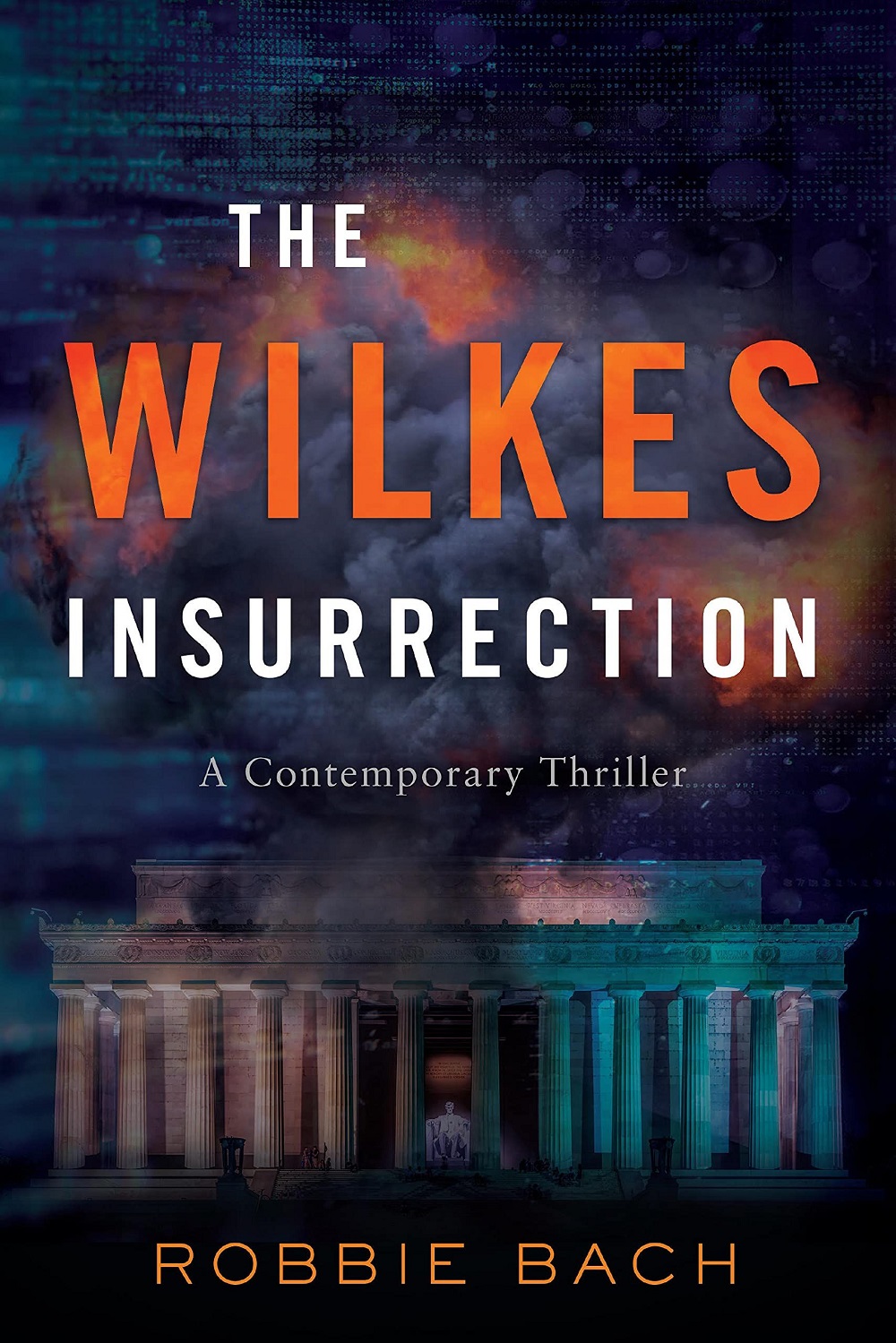
‘The Wilkes Insurrection’ by Robbie Bach will be released on Tuesday, October 12, 2021. Courtesy photo, used with permission.
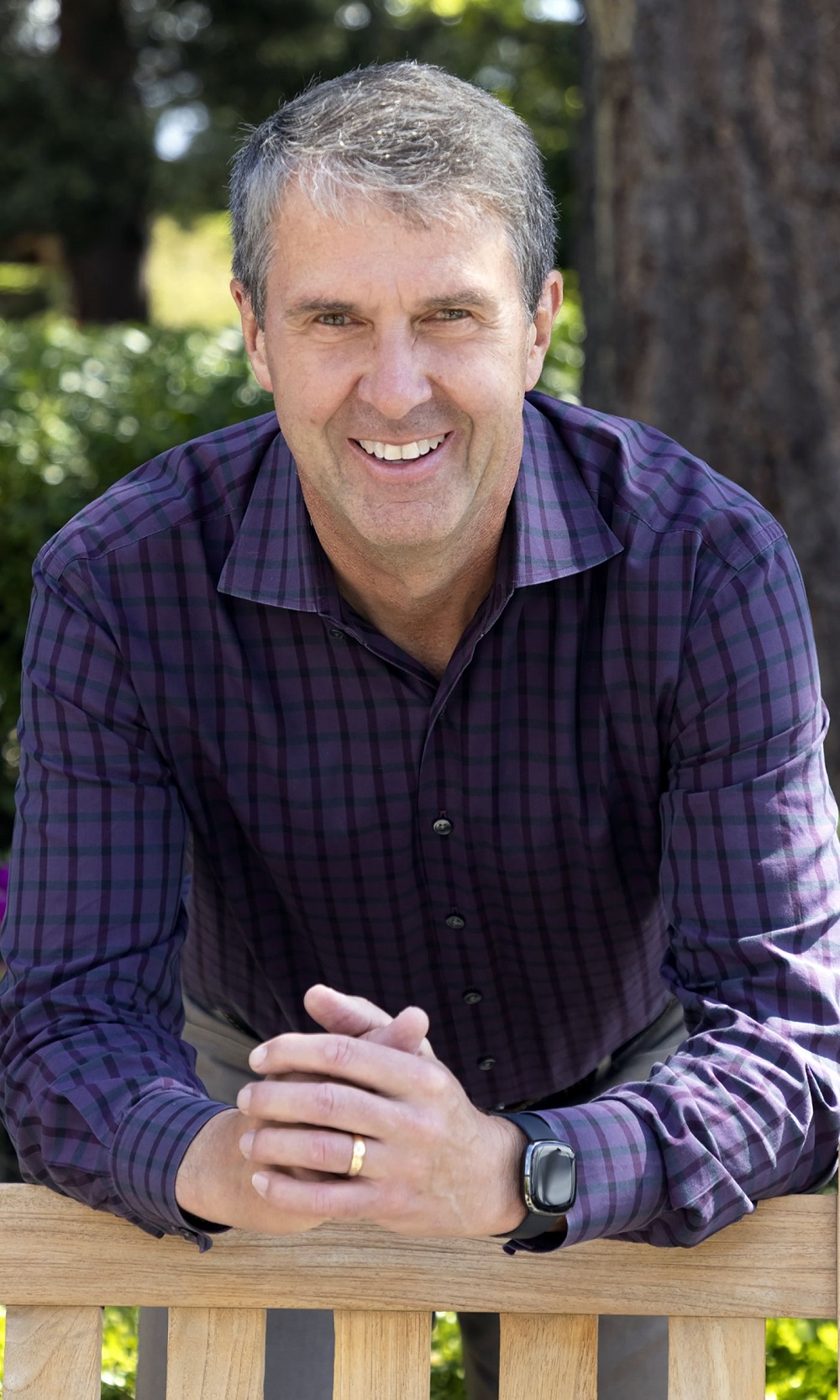
Robbie Bach is best known for founding and leading the team that created the Xbox. Today he is an entertaining storyteller and catalyzing voice who writes books and speaks to audiences on leadership, creativity, strategy, and civic issues. During his twenty-two years at Microsoft, Robbie worked in various marketing and business management roles—including supporting the successful launch and expansion of Microsoft Office and leading the creation and development of the Xbox business. Then as Microsoft’s President of the Entertainment and Devices Division, he was responsible for the company’s worldwide gaming, music, video, phone, and retail sales businesses until he retired in 2010.
In 2015, he published his first book,” Xbox Revisited: A Game Plan for Corporate and Civic Renewal.” “The Wilkes Insurrection,” his first novel, will be released on Tuesday, October 12, 2021. It is a contemporary thriller of anarchic obsession and heroic ambition and a perfect blend of callous villains, complex but captivating protagonists, and political intrigue.
Major Tamika Smith is a Combat Search and Rescue Specialist at Offutt Air Force Base. When a commercial airliner is diverted to attempt an emergency landing, she swings into action.
She grabbed the handheld mic attached to the wall by an accordion cable. “Attention all crews.” And then, “Hey . . . shut the hell up!”
Quiet, finally.
Now, more calmly, she began. “Listen carefully . . .” She tried to balance her sense of urgency with the need for people to take a deep breath and focus. “We’ve got an inbound civilian 757 with two hundred thirteen souls on board. Two hundred passengers and thirteen crew. They blew a door at 34,000 feet and have lost significant hydraulic control. They’re trying to dump fuel, but we should assume that fire and smoke are in our future. They’ll be coming in from the northwest on Runway 12. Tough to guess about touchdown. The pilot will make sure he gets over the airfield. So let’s set up on Ramp B. Five minutes out. Obviously, this is not a drill.”
Air Traffic Control could have diverted the plane to Omaha or Lincoln, but Offutt had some decided advantages. In particular, its remote location reduced the likelihood of casualties on the ground. Her instructions would put the bulk of her team partway down Offutt’s main runway. Given the likelihood of fire, getting stationed close to the scene would buy them critical seconds to douse any flames and pull out survivors. But too far down the runway might make them roadkill in the wreckage.
“Washington—you need to call Commander Jessup. But he’s not going to be much help here until the press arrives.” At that point, his unique pain-in-the-ass skills might be useful. “If you really want to help, you can pair up with me.”
The look on the young captain’s face had equal elements of excitement and terror. Kind of like a teenage boy about to get to second base with his girlfriend for the first time. To his credit, he didn’t hesitate. “Major, I’ve done some training, but you’ll have to tell me what I need to do.”
Yelling above the sound of vehicles revving up, she kept her instructions short and to the point. “Grab some gear, Captain, and follow me. Keys are in the truck.”
They jumped into a vehicle and raced out on to the field, with Tamika directing him down the ramp toward the middle of the runway.
Putting on her equipment, she realized she better prepare him for what was coming. “Look, if this plane comes down hard, there’ll be shit everywhere. Plane parts, luggage, smoke, and probably body parts.”
That did not improve the look on Washington’s face.
“Just stay focused on our task and you’ll be fine. Part of the team will jump on any fires, but our assignment is getting people out and away to safety. As the plane goes past us, we’re going to go like a bat out of hell after it on the runway. Get as close to the fuselage as you can. Then stay with me. I’ve done this too many times before.”
Once in position, Tamika looked back down the runway, mentally tracing a line out toward the horizon. Dusk was settling across the prairie sky in hues of blue, red, and purple. Through the haze, she spotted the 757 with its wing and belly lights blazing. This was clearly not your typical approach. It looked like a boat bobbing across a rough ocean—first up, then down, now left, followed by steep right.
“Rev it up, Captain, it looks like he’ll be lucky to get it down somewhere on the field.”
On the radio: “Listen up—stay narrow for now. I don’t think they have much lateral control, and I don’t want any of us to get hit. Once he goes by, we can spread out based on how lucky he gets. Let’s make this count.”
The growl of the truck engines filled her ears.
In that instant, memories of enemy attacks crashed in. The smell of smoke, the feel of heat, and the cacophony of sounds associated with battle. Tamika’s ears rang with the crackle of her radio, the screams of wounded, and the continuing jackhammer sounds of machine gun fire.
Staring straight ahead, Tamika fought to stay in control. To push back the unwelcome memories that sometimes closed in around her.
“Major? Major Smith?”
“I’m here, Captain.” Adrenaline brought her back to the moment. “Just drive the damn truck when the plane goes by.”
With binoculars, Tamika could see the gaping hole in the right side of the fuselage as the plane shimmied back and forth across the approach vector. It crossed the outer boundary of the field, looming large as it sailed by.
“Go! Go! Go!” She screamed as the cavalcade of fire and rescue vehicles took off down the runway.
At the last moment before touchdown, the plane lurched down on its left side. It bounced once—and then broke apart. The mid-section flipped over and slid across the end of the runway. Both wings split off followed by a fireball. Sounds of destruction boomed across the field.
The initial strike had split the nose away from the main body of the plane. What looked like the first six or seven rows of the passenger compartment along with the cockpit slid all the way past the end of the runway but looked upright and relatively intact.
The main cabin, on the other hand, was in shambles. It went well off to the right side of the runway, settling upside down and facing backward. Smoke poured from gaps in the shell. The last ten rows of the plane had separated hard at landing and somersaulted into a ditch on the left side of the runway, surrounded by crushed debris from the tail.
“Let’s get some foam on that main cabin to the right,” Tamika yelled into her radio. “Crews one, two, and three, converge on the midsection of the fuselage. Four, you have the nose. Five, you’re on the tail section. Let’s move!”
She slammed down the radio and yelled at Washington, “Put us right next to that big hole at the front of the cabin. You’re gonna want your oxygen mask on.”
They screamed down the last stretch of runway then veered off into the sloped grass approaching what was left of Flight 209. As they swung around to the side of the plane, Tamika jumped out of the truck before it had rolled to a stop. She ran up to the opening with her heart pounding. She took a deep breath. Then leapt into the fire.
In that instant, she knew it would be for the last time.
Author Robbie Bach. Courtesy photo, used with permission.
‘The Butterfly House’ is Katrine Enngberg’s new novel and the sequel to “The Tenant.’ Photo: amazon
A former dancer and choreographer with a background in television and theater, Katrine Engberg launched a groundbreaking career as a novelist with the publication of her fiction debut, “The Tenant.” She is now one of the most widely read and beloved crime authors in Denmark, and her work has been sold in over twenty-five countries. Her new book “The Butterfly House” is the sequel to “The Tennant,” and has detectives Jeppe Kørner and Anette Werner race to solve a series of sordid murders linked to some of the most vulnerable patients in a Danish hospital. Read an excerpt here. (amazon,2021)
“The Butterfly House” – Hospitals are supposed to be places of healing. But in the coronary care unit at one of Copenhagen’s leading medical centers, a nurse fills a syringe with an overdose of heart medication and stealthily enters the room of an older male patient. Six days earlier, a paperboy on his route in central Copenhagen stumbles upon a macabre find: the naked body of a dead woman, lying in a fountain with arms marked with small incisions. Cause of death? Exsanguination—the draining of all the blood in her body. Clearly, this is no ordinary murder. Copenhagen investigator Jeppe Kørner, recovering from a painful divorce and in the throes of a new relationship, takes on the case. His partner, Anette Werner, now on maternity leave after an unexpected pregnancy, is restless at home with a demanding newborn and an equally demanding husband. While Jeppe pounds the streets looking for answers, Anette decides to do a little freelance sleuthing. But operating on her own exposes her to dangers she cannot even begin to fathom. As the investigation ventures into dark corners, it uncovers the ambition and greed that festers beneath the surface of caregiving institutions—all the more shocking for their depravity—and what Jeppe and Anette discover will turn their blood as cold as ice.
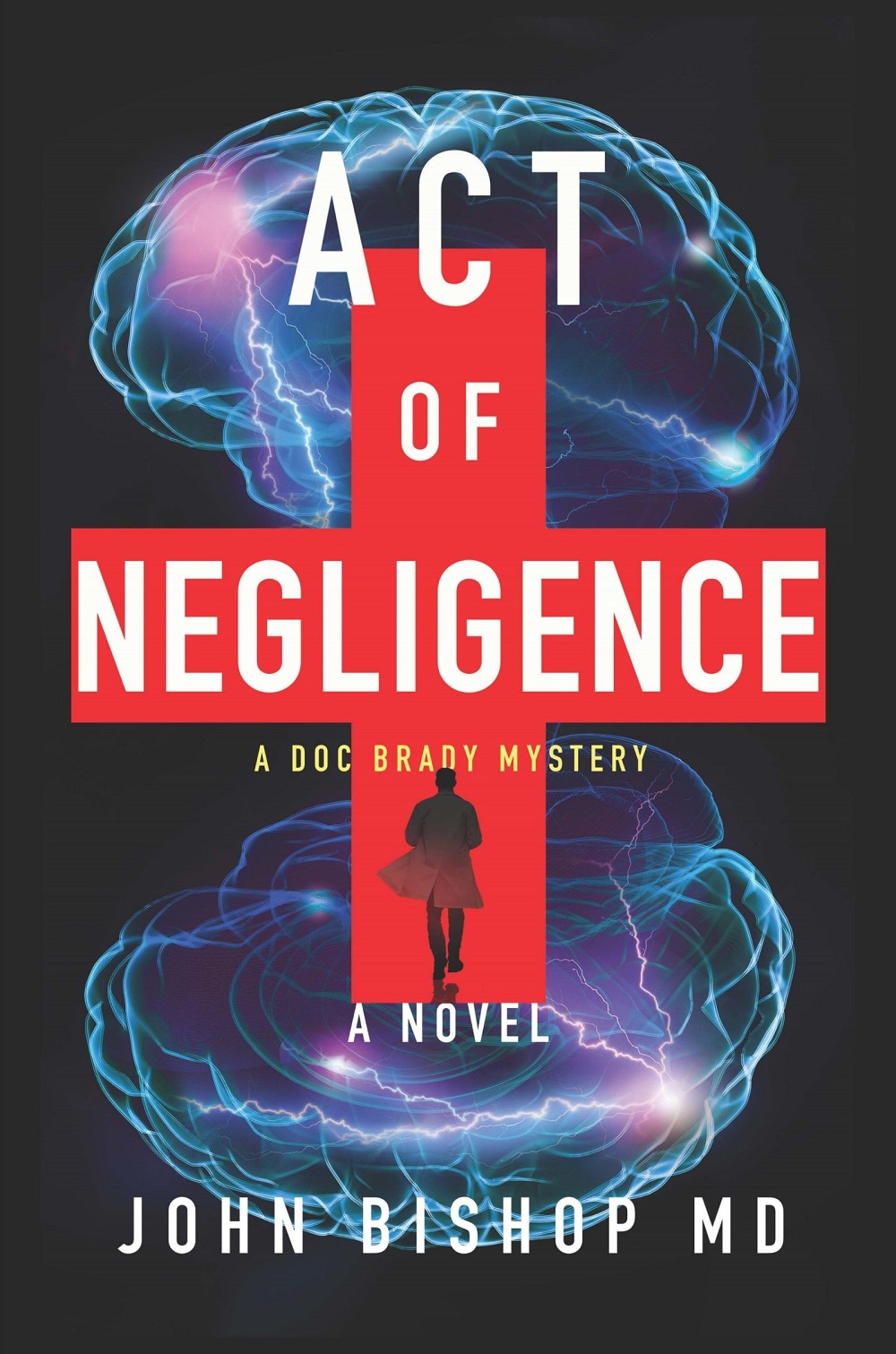
‘Act of Negligence’ will be out on Tuesday, June 15, 2021. Courtesy photo, used with permission.
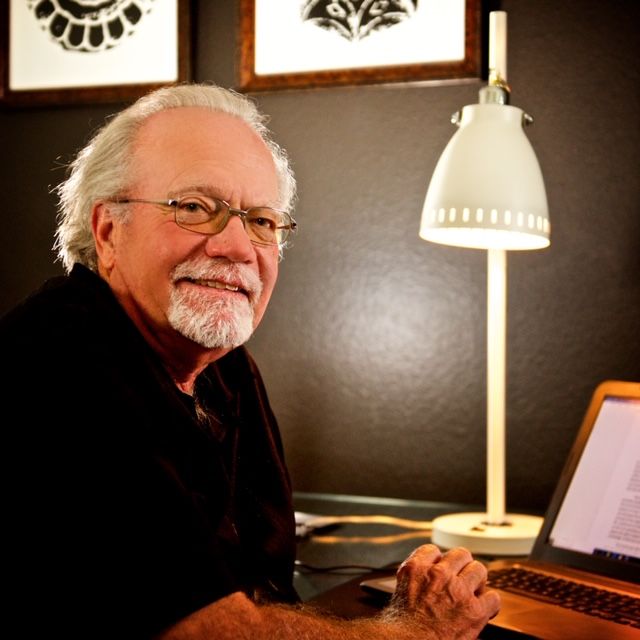
John Bishop MD is the author of “Act of Negligence: A Medical Thriller” (A Doc Brady Mystery). Dr. Bishop has led a triple life. This orthopedic surgeon and keyboard musician has combined two of his talents into a third, as the author of the beloved Doc Brady mystery series. Beyond applying his medical expertise at a relatable and comprehensible level, Dr. Bishop, through his fictional counterpart Doc Brady, also infuses his books with his love of not only Houston and Galveston, Texas, but especially with his love for his adored wife. Bishop’s talented Doc Brady is confident yet humble; brilliant, yet a genuinely nice and funny guy who happens to have a knack for solving medical mysteries. Above all, he is the doctor who will cure you of your blues and boredom. Step into his world with the first four books of the series, and you will l be clamoring for more. The following is an excerpt from “Act of Negligence” which will be released on Tuesday, June 15, 2021.
Act of Negligence: A Medical Thriller (A Doc Brady Mystery) Chapter 1 by John Bishop, MD
There was no response from the patient in Room 823 of University Hospital. She was crouched on the bed, in position to leap toward the end of the bed in the direction of yours truly. I could not determine her age, but she definitely appeared to be a wild woman. Her hair was a combination of gray and silver, long and uncombed and in total disarray. She had a deeply lined face, leathery, with no makeup. Her brown eyes were frantic, and her head moved constantly to the right and left. She was clad only in an untied hospital gown which dwarfed her small frame. My guess? She wasn’t over five feet tall.
“Ms. Adams? Dr. Morgenstern asked me to stop by and see about your knee?”
She did not move or speak; she just continued squatting there in the hospital bed, bouncing slightly on her haunches, and staring at me while her head moved slowly to and fro.
I looked around the drab private room with thin out-of-date drapes and faded green-tinted walls. There were no flowers. I judged the patient to most likely be a nursing-home transfer.
I made the safe move by backing out of the patient’s room, and I walked the twenty yards to the nurses’ station. The white-tiled floors were freshly waxed, but the medicinal smell was distinctly different from the surgical wing. There was an unpleasant pine scent in the air that could not hide the odor of decaying human beings and leaking body fluids. It was the smell of chronic illness and disease.
“Cynthia?” I asked the head nurse on the medical ward, or so announced her name tag. She was sitting at the far side of the long nursing station desk performing the primary duty of a nursing supervisor: paperwork. She was an attractive Black woman in her mid-forties, I estimated.
“Yes, sir?”
“Dr. Morgenstern asked me to see Mrs. Adams in consultation. Room 823? What’s the matter with her? She won’t answer me. She just stares, sitting up in the bed on her haunches, bouncing.”
She smiled and shook her head. “You must be a surgeon.”
“Yes, ma’am. Orthopedic. Dr. Jim Brady.”
“Cynthia Dumond. Mrs. Adams has Alzheimer’s. Sometimes she gets confused. Want me to come in the room with you? Maybe protect you?” she said with a smile.
“Well, I wouldn’t mind the company,” I said, a little sheepishly. “Not that I was afraid or anything.”
“She’s harmless, Doctor. She’s just old and confused.”
We walked back to the hospital room together. The patient seemed to relax the moment she saw the head nurse, a familiar face. “Hello, Ms. Adams,”
Cynthia said. “This is Dr. Brady. He needs to examine your . . .” She gazed at me, smiling again. “Your what?” “Her knee.”
“Dr. Brady needs to look at your knee. Okay?”
The patient had ceased shaking and bouncing, leaned back, slowly extended her legs, laid down, and became somewhat still.
“Very good, Ms. Adams. Very good,” Cynthia said, grasping the elderly woman’s hand and holding it while she looked at me. “Go ahead, Doctor.”
The woman’s right knee was quite swollen, with redness extending up and down her leg for about six inches in each direction. When I applied anything but gentle skin pressure, her leg seemed to spasm involuntarily. How in the world she had managed to crouch on the bed with her knee bent to that degree was mystifying.
“Sorry, Ms. Adams,” I said, but continued my exam. The knee looked and felt infected, but those signs could also have represented a fracture or an acute arthritic inflammation such as gout, pseudo-gout, or rheumatoid arthritis, not to mention an array of exotic diseases. I tried to flex and extend the knee, but she resisted, either due to pain—although I wasn’t certain she had a normal discomfort threshold—or from a mechanical block due to swelling or some type of joint pathology.
“What’s she in the hospital for?” I asked Nurse Cynthia.
“Dehydration, malnutrition, and failure to thrive, the usual diagnoses for folks we get from the nursing home. The doctor who runs her particular facility sent her in.”
“Who is it?”
“Dr. Frazier. Know him?”
“Nope. Should I?”
“No. It’s just that he sends his patients here in the end stages. Most of the folks that get admitted from his nursing home die soon after they arrive.”
“Most of them are old and sick, aren’t they?”
“Yes.”
I looked at her expression while she continued to hold Mrs. Adams’s hand.
“Were you trying to make a point?”
“Not really.” She glanced at her watch. “Are you about through, Doctor Brady? I have quite a bit of work to do.”
“Follow that paper trail, huh?”
“Yes. That’s about all I have time for these days. Seems to get worse every month. Some new form to fill out, some new administrative directive to analyze. Whatever.”
“I know the feeling. There isn’t much time to see the patients and take care of whatever ails them these days. If my secretary can’t justify to an insurance clerk why a patient needs an operation, then I have to waste my time on the phone explaining a revision hip replacement to someone without adequate training or experience. One of my partners told me yesterday about an insurance clerk that was giving him a bunch of—well, giving him a hard time—about performing a bunionectomy. He found out during the course of a fifteen-minute conversation that the woman didn’t know a bunion was on the foot. Her insurance code indicated it was a cyst on the back and she couldn’t find the criteria for removal in the hospital. She was insisting it had to be an office procedure, and only under a local anesthetic. Crazy, huh?”
“Yes, sir. It’s a brave new world.”
“Sounds like a good book title, Nurse Cynthia.”
“I think it’s been done, Doctor.”
“Well, thanks for your help. I do appreciate it. Not every day the head nurse on a medical floor accompanies me on a consultation.” “My pleasure. You seem to be a concerned physician, an advocate for the patient, at least. As I remember, that’s why we all went into the healing arts.”
She turned to Mrs. Adams. “I’ll see you later, dear,” she said, patting the elderly woman’s forehead. Still holding the nurse’s other hand with her own wrinkled hand, Mrs. Adams kissed Cynthia’s fingers lightly, probably holding on for her life.
I poured a cup of hospital-fresh coffee, also known as crankcase oil, and reviewed Beatrice Adams’s chart. I sat in a doctor’s dictation area behind the nursing station and looked at the face sheet first, being a curious sort. Her residence was listed as Pleasant View Nursing Home, Conroe, Texas. Conroe is a community of fifty thousand or so, about an hour north of Houston. I noticed that a Kenneth Adams was listed as next of kin and was to be notified in case of emergency. His phone number was prefixed by a “409” exchange, and I therefore assumed that he was a son or a brother and lived in Conroe as well.
Mrs. Adams was fifty-seven years old, which was young to have a flagrant case of Alzheimer’s disease, a commonly-diagnosed malady that was due to atrophy of the brain’s cortical matter. That’s the tissue that allows one to recognize friends and relatives, to know the difference between going to the bathroom in the toilet versus in your underwear, and to know when it’s appropriate to wear clothes and when it isn’t. Alzheimer’s causes a patient to gradually become a mental vegetable but doesn’t affect the vital organs until the very end stages of the disease. In other words, the disease doesn’t kill you quickly, but it makes you worse than a small child—unfortunately, a very large and unruly child.
It can, and often does, destroy the family unit, sons and daughters especially, who are caught between their own children and whichever parent is affected with the disease, which makes it in some ways worse than death. You can get over death, through grief, prayer, catharsis, and tincture of time. Taking care of an Alzheimer’s-affected parent can be a living hell, until they are bad enough that the patient must go to a nursing home. Then the abandonment guilt is hell, or so my friends and patients tell me.
Mrs. Adams had been admitted to University Hospital one week before by my friend and personal physician, Dr. James Morgenstern. I guessed that either he had taken care of the patient or a family member in the past, or that Dr. Frazier, physician-owner or medical director of Pleasant View Nursing Home, had a referral relationship with Jimmy.
Mrs. Adams’s initial blood work revealed hyponatremia (low sodium), hyperkalemia (high potassium), and a low hematocrit (anemia). Clinically, hypotension (low blood pressure), decreased skin turgor, and oliguria (reduced urine output) suggested a dehydration-like syndrome. For a nursing-home patient, that could either mean poor custodial care or failure of the patient to cooperate— refusing to drink, refusing to eat—or some combination of the two. Neither scenario was atypical of the plight of the elderly with a dementia-like illness.
According to Dr. Morgenstern’s history, the patient had been diagnosed with Alzheimer’s disease six years before, at age fifty-one, which by most standards was very young for brain deterioration without a tumor.
“Dr. Brady?” head nurse Cynthia asked, appearing beside my less-than-comfortable dictating chair.
“Yes?”
“I’m sorry to bother you, but might I have one of your business cards?”
“Sure,” I said, handing her one from the top left pocket of my white clinical jacket. “Don’t ever apologize for bothering me if you’re trying to send me a patient.”
She laughed. “It’s for my mother. She has terrible arthritis.” She paused and read the card. “You’re with the University Orthopedic Group?”
“Yes. Twenty-two years.”
“If I might ask, where did you do your training?”
“I went to med school at Baylor, then did general and orthopedic surgery training here at the University Hospital. I then traveled to New York and spent a year studying hip and knee replacement surgery, then came back to Houston to the land of the free and the home of the brave.”
“Is your practice limited to a certain area? I mean, do you just see patients with hip and knee arthritis?”
“Yes. Unless, of course, it’s an emergency situation, like one of those rare weekends when I can’t find a young, hungry surgeon with six kids to cover emergency room call for me.”
“Well, thanks,” she said, smiling. “I’ll be seeing you. I’ll bring my mother in.”
“Thank YOU, Cynthia. By the way, I’m curious. Why me? I would think you see quite a few docs up here, and I would imagine that your mother has had arthritis for years. Why now?”
Cynthia was an attractive, full-figured woman with close-cropped jet-black hair, a woman who made the required pantsuit nursing uniform look like a fashion statement. She looked me up and down as I sat there with Mrs. Adams’s chart in my lap, my legs crossed, holding the strong black cooling coffee.
“You’re wearing cowboy boots. I figure that all you need is a white hat,” she said, turning and walking away.
Not my sharp wit, nor my kind demeanor with her patient, nor my vast training and experience.
My boots.
John Bishop, M.D. Photo: Greg Moredock, used with permission.
‘The God Equation’ is the new book by renowned theoretical physicist and bestselling author Michio Kaku. Photo: amazon
Michio Kaku is a professor of theoretical physics at the City University of New York, co-founder of string field theory, and the author of several widely acclaimed science books, including “Beyond Einstein,” “The Future of Humanity,” “The Future of the Mind,” “Hyperspace,” “Physics of the Future,” and “Physics of the Impossible.” He is the science correspondent for CBS This Morning, the host of the radio programs Science Fantastic and Exploration, and a host of several science TV specials for the BBC and the Discovery and Science Channels. His new book “The God Equation: The Quest for a Theory of Everything” tells the story of the greatest quest in all of science. (amazon, 2021)
“The God Equation” – When Newton discovered the law of gravity, he unified the rules governing the heavens and the Earth. Since then, physicists have been placing new forces into ever-grander theories. But perhaps the ultimate challenge is achieving a monumental synthesis of the two remaining theories—relativity and the quantum theory. This would be the crowning achievement of science, a profound merging of all the forces of nature into one beautiful, magnificent equation to unlock the deepest mysteries in science: What happened before the Big Bang? What lies on the other side of a black hole? Are there other universes and dimensions? Is time travel possible? Why are we here? Kaku also explains the intense controversy swirling around this theory, with Nobel laureates taking opposite sides on this vital question. It is a captivating, gripping story; what is at stake is nothing less than our conception of the universe. Written with Kaku’s trademark enthusiasm and clarity, this epic and engaging journey is the story of “The God Equation.” **Read an excerpt here.**
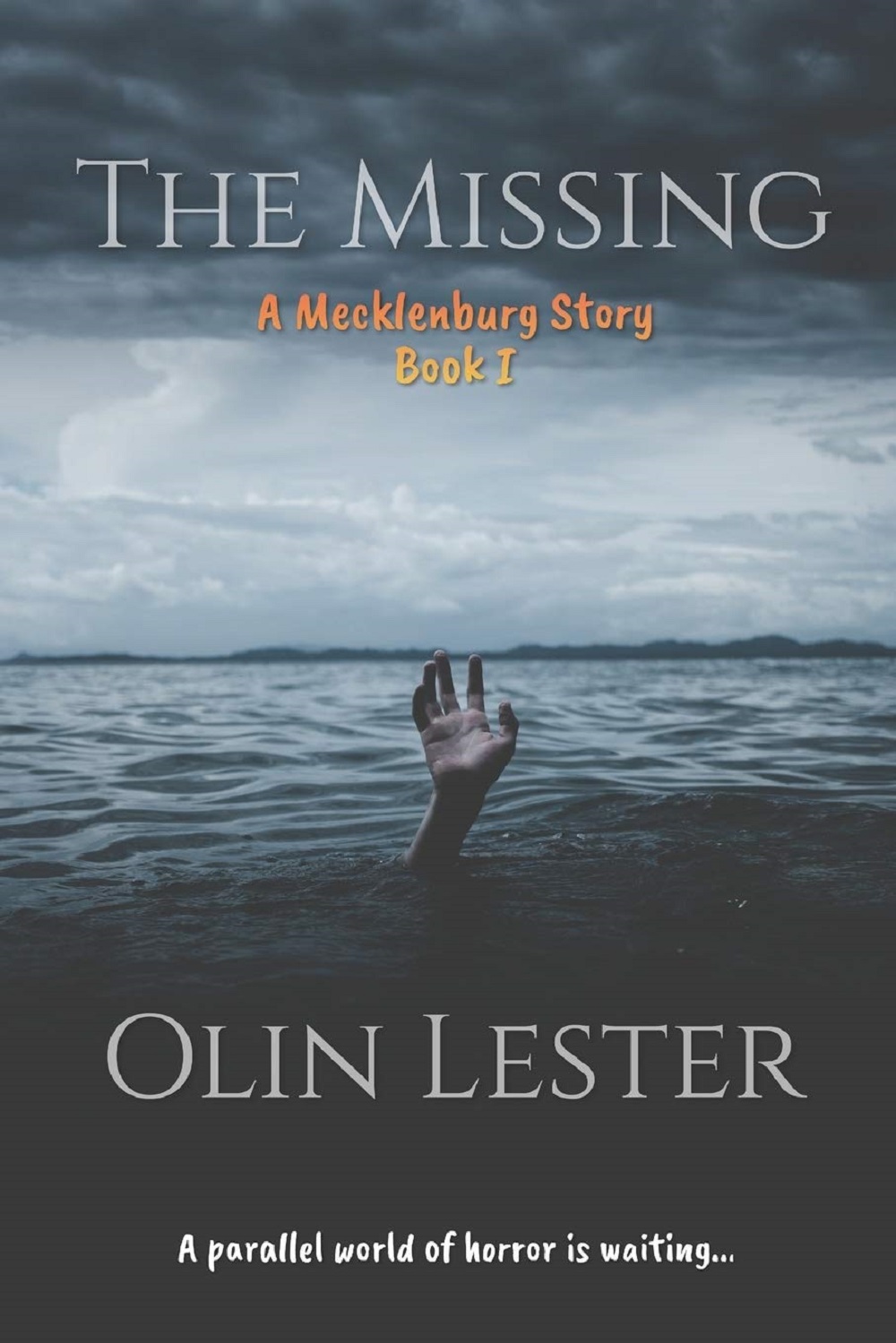
‘The Missing’ is Olin Lester’s haunting debut novel. Photo: amazon
Olin Lester served as a US Army Ranger with 1st Ranger Battalion and for the last twenty years, as a police offer in his local community of Charlotte, North Carolina. Over the decades, he has dealt with the evils of this world and writing has become a way for him to cope with them. He uses these experiences and combines them with his imagination to create unique works of fiction. In his debut novel “The Missing: a Mecklenburg Story,” the town of Mecklenburg has soured; people are missing and evil is running amuck. (amazon, 2021)
In “The Missing,” while investigating an incident 7000 feet deep inside the Duke copper mine, Tom Porter stumbles across a doorway that transports him into a parallel world of hell. He wakes up hairless, bloody, and naked in a wasteland controlled by an insidious faction of people, led by Chief Sanders, Trashman, and The Preacher. Follow Walter Pauls, Tom Porter, Charlotte Kane—her dog, Bran—and others as they discover supernatural forces eating the soul of this town, while they fight to survive. This is a haunting tale of spilled blood in a town that God has forsaken. Why are people missing, and why do so many bad things happen in Mecklenburg? Inspired by Stephen King’s novel “Under the Dome,” “The Missing” will make you think twice about visiting small towns. Read an excerpt here.






 SA Examiner