‘The Code Breaker’ by Walter Isaacson will be released on Tuesday, March 9, 2021. Photo: amazon
Walter Isaacson, University Professor of History at Tulane, has been CEO of the Aspen Institute, chairman of CNN, and editor of Time magazine. He is the author of “Leonardo da Vinci;” “Steve Jobs;” “Einstein: His Life and Universe;” “Benjamin Franklin: An American Life;” and “Kissinger: A Biography.” He is also the coauthor of “The Wise Men: Six Friends and the World They Made.” His new book “The Code Breaker: Jennifer Doudna, Gene Editing, and the Future of the Human Race,” is a gripping account of how Nobel Prize winner Jennifer Doudna and her colleagues launched a revolution that will allow us to cure diseases, fend off viruses, and have healthier babies. It will be released Tuesday, March 9, 2021. Excerpt available here. (amazon, 2021)
When Jennifer Doudna was in sixth grade, she came home one day to find that her dad had left a paperback titled “The Double Helix” on her bed. She put it aside, thinking it was one of those detective tales she loved. When she read it on a rainy Saturday, she discovered she was right, in a way. As she sped through the pages, she became enthralled by the intense drama behind the competition to discover the code of life. Even though her high school counselor told her girls did not become scientists, she decided she would.
Driven by a passion to understand how nature works and to turn discoveries into inventions, she would help to make what the book’s author, James Watson, told her was the most important biological advance since his co-discovery of the structure of DNA. She and her collaborators turned a curiosity of nature into an invention that will transform humanity: an easy-to-use tool that can edit DNA. Known as CRISPR, it opened a brave new world of medical miracles and moral questions.
The development of CRISPR and the race to create vaccines for coronavirus will hasten our transition to the next great innovation revolution. The past half-century has been a digital age, based on the microchip, computer, and internet. Now we are entering a life-science revolution. Children who study digital coding will be joined by those who study genetic code.
After helping to discover CRISPR, Doudna became a leader in wrestling with the moral issues that come along with it and, with her collaborator Emmanuelle Charpentier, won the Nobel Prize in 2020. Her story is a thrilling detective tale that involves the most profound wonders of nature, from the origins of life to the future of our species.
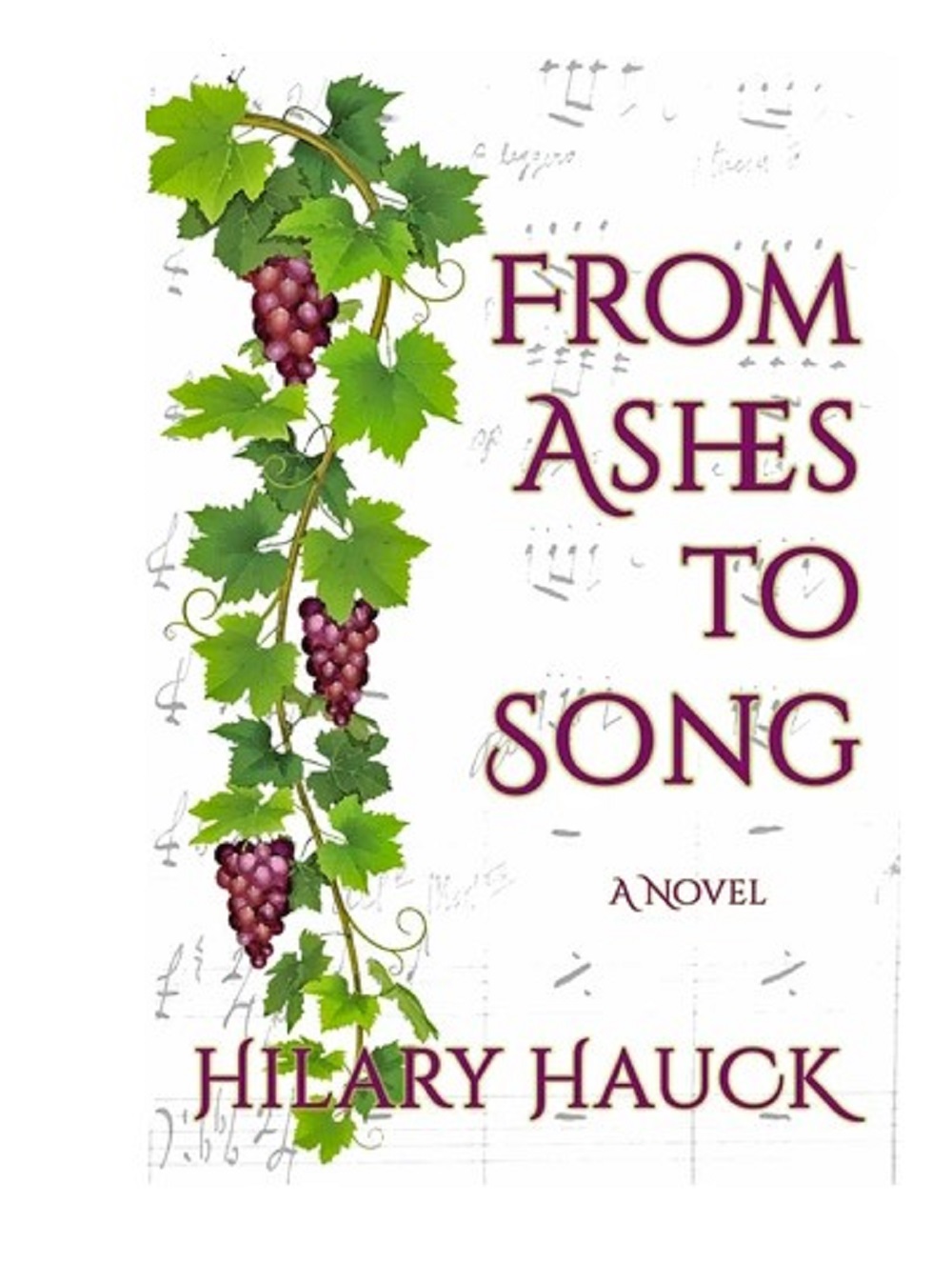
‘From Ashes to Song’ is Hilary Hauck’s debut novel out April 20, 2021. Photo: google
Hilary Hauck is the author of “From Ashes to Song,” her debut novel. A writer and translator, her work has appeared in the Mindful Writers Retreat Series anthologies, the Ekphrastic Review, Balloons Lit. Journal, and the Telepoem Booth. After meeting her husband, Hilary came to the US and drew inspiration from Pennsylvania coal history, which soon became the setting for her debut novel. Hilary is Chair of the Festival of Books in the Alleghenies, past president of Pennwriters, and a graduate of RULE. Inspired by true events, “From Ashes to Song” is a story of unconventional love, hope, and the extraordinary gifts brought to America by ordinary people in the great wave of immigration.
Synopsis: It is 1911 in Italy, and Pietro’s life on the family vineyard is idyllic. He has at last captured the melody of the grape harvest on his clarinet and cannot wait to share his composition with his grandfather, but before he can play, news arrives of a deadly disease sweeping the countryside. They have no choice but to burn the vineyard to stop its spread. The loss is too much for Pietro’s grandfather, and by morning, Pietro has lost two of the most precious things in his life—his grandfather and the vineyard. All he has left is his music, but a disastrous performance at his grandfather’s funeral suggests that music, too, now seems beyond his reach. Adrift with grief, Pietro seeks a new start in America. He goes to work in a Pennsylvania coal mine where his musician’s hands blister and his days are spent in the muffled silence of underground. When the beautiful voice and gentle heart of a friend’s wife stirs a new song in him, Pietro at last encounters a glimmer of hope. From a respectful distance and without drawing the attention of her husband, Pietro draws on Assunta for inspiration and soon his gift for music returns. But when grief strikes in Assunta’s life, Pietro is to blame. When Prohibition steals Pietro’s last pleasure, he must do something before Assunta’s grief consumes them both.
Pietro breathed lightly into his clarinet so his song would not travel the length of the grapevines that stretched like lines of music on either side of him. He didn’t want Nonno to hear it—not yet. On his oath, he’d make himself play it for him in the next week.
The song was Pietro’s first composition—not that anyone could credit him, he had simply captured the sounds of harvest, of the annual tending of plants whose roots had burrowed into the soil long before he’d been born.
Without a specific plan in mind, he had tucked away the beats and notes, adding new rifts each year until this summer, when it had all begun to spread out and rearrange in his mind. The paper-light tremble of leaves had given him the rhythm. It scampered so heartily it might have dissolved into chaos if it hadn’t been grounded by fruit held by the improbable strength of the vine. The grapes were a firm, reliable beat.
The only thing that had eluded him had been the ending, but now he had found it, he couldn’t imagine it any other way. It brought the music together, so it no longer felt like a rough sketch of a song, not telling the whole story at once as it did now.
He’d found the ending in the celebration that followed the harvest when family and friends gathered around the table heaped with a feast that had taken an entire week to prepare. The culmination of the long season that brought both relief and melancholy for the end of the summer days, even though Pietro could depend on the same cycle beginning all over again next year.
At this year’s celebration, he’d wait until the food was gone and glasses filled with last year’s wine were raised to this year’s grapes, when he, Nonno, and the others gathered their instruments to shroud the night’s sky with song—that was when Pietro would play his music.
First, though, he needed the courage to play it for Nonno. Only then would he know if his efforts were worthy.
‘A Bright Ray of Darkness’ by Ethan Hawke will be out on Tuesday, February 2, 2021. Photo: amazon.
A four-time Academy Award nominee, twice for writing and twice for acting, Ethan Hawke has starred in the films Dead Poets Society, Reality Bites, Gattaca, and Training Day, as well as Richard Linklater’s Before Sunrise trilogy and Boyhood. He is the author of “Rules for a Knight,” “The Hottest State,” and “Ash Wednesday.” His new book, “A Bright Ray of Darkness: A novel,” which will be released on Tuesday, February 2, is the blistering story of a young man making his Broadway debut in Henry IV just as his marriage implodes—an utterly transfixing book about art and love, fame, and heartbreak from the acclaimed actor/writer/director. (amazon, 2021)
“A Bright Ray of Darkness” is Hawke’s first novel in nearly twenty years and is a bracing meditation on fame and celebrity, and the redemptive, healing power of art. It is a portrait of the ravages of disappointment and divorce; a poignant consideration of the rites of fatherhood and manhood; a novel soaked in rage and sex, longing and despair; and a passionate love letter to the world of theater. Read an excerpt here.
The narrator is a young man in torment, disgusted with himself after the collapse of his marriage and still half-hoping for a reconciliation that would allow him to forgive himself and move on. What saves him is theater: in particular, the challenge of performing the role of Hotspur in a production of Henry IV under the leadership of a brilliant director, helmed by one of the most electrifying–and narcissistic–Falstaff’s of all time. Searing and raw, “A Bright Ray of Darkness” is a novel about shame, beauty, and faith as well and the moral power of art.
‘The Push’ is Ashley Audrain’s debut novel. Photo: amazon.
Ashley Audrain is a Canadian author who previously worked as the publicity director of Penguin Books Canada. She describes her debut novel, “The Push” as a “psychological drama told through the eyes of motherhood.” A January release, it is a tense, page-turning psychological drama about the making and breaking of a family, and a woman whose experience of motherhood is nothing at all what she hoped for, and everything she feared. (amazon, 2021)
In “The Push,” Blythe Connor is determined that she will be the warm, comforting mother to her new baby Violet that she herself never had. But in the thick of motherhood’s exhausting early days, Blythe becomes convinced that something is wrong with her daughter—she does not behave like most children do. Her husband, Fox, says she is imagining things. The more Fox dismisses her fears, the more Blythe begins to question her own sanity, and the more we begin to question what Blythe is telling us about her life as well. Then their son Sam is born—and with him, Blythe has the blissful connection she had always imagined with her child. Even Violet seems to love her little brother. But when life as they know it is changed in an instant, the devastating fall-out forces Blythe to face the truth. Read an excerpt here.
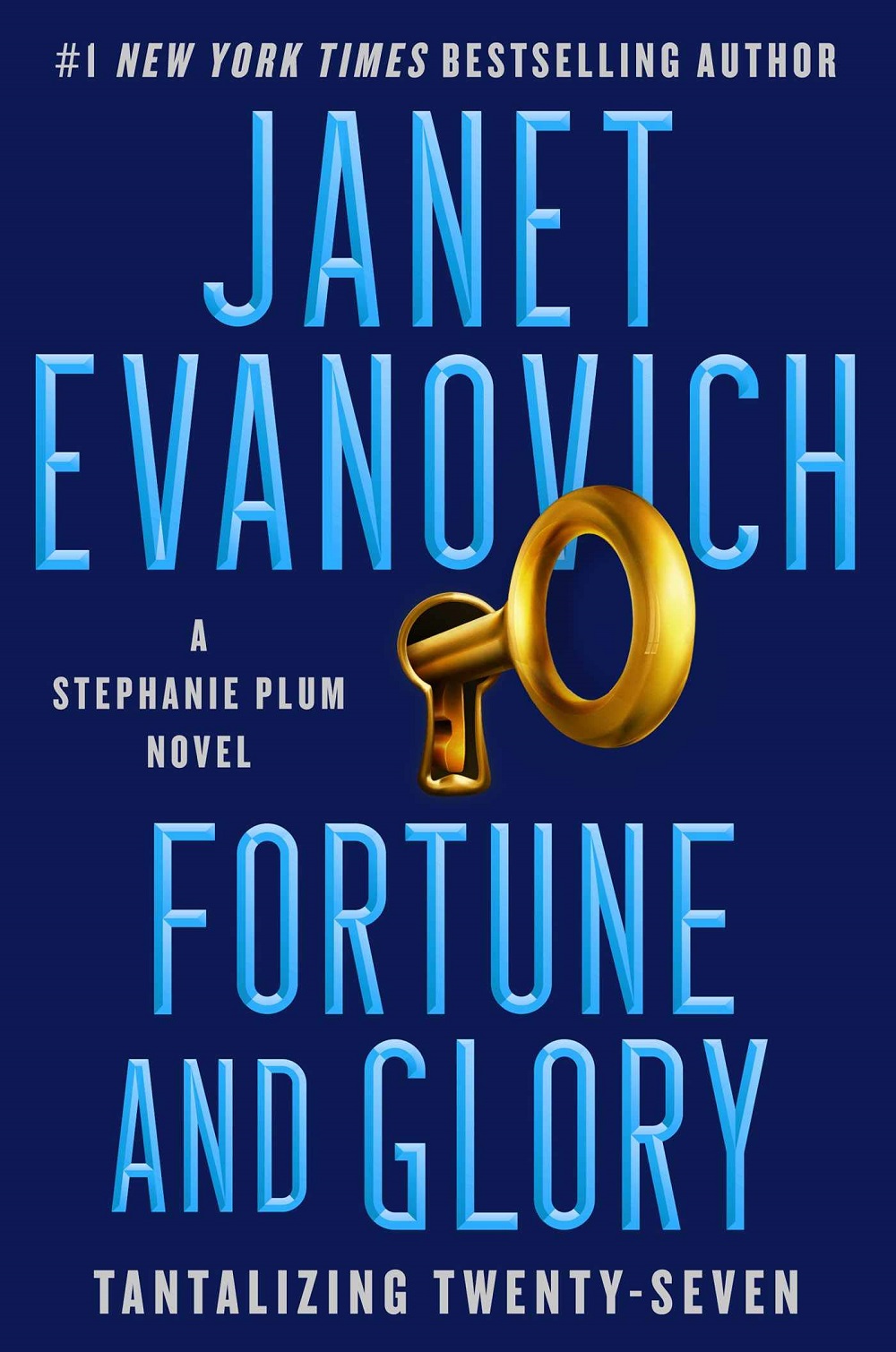
Janet Evanovich’s new novel ‘Fortune and Glory’ will be released November 3, 2020. Photo: amazon
Over the last twenty-five years, Janet Evanovich has written twenty-three #1 The New York Times bestsellers in the Stephanie Plum series. In addition to the Plum novels, Janet has coauthored The New York Times’ bestselling Fox and O’Hare series, including “The Big Kahuna” with her son, Peter Evanovich, the Knight and Moon series, the Lizzy and Diesel series, the Alexandra Barnaby novels and the graphic novel, “Troublemaker” with her daughter, Alex Evanovich. In her new book “Fortune and Glory: A Novel,” Stephanie Plum is on the biggest case of her career as she and her Grandma Mazur search for her grandmother’s late husband’s treasure. It is the twenty-seventh Stephanie Plum novel and will be released tomorrow, Tuesday November 3, 2020.
In “Fortune and Glory,” when Stephanie’s beloved Grandma Mazur’s new husband died on their wedding night, the only thing he left her was a beat-up old easy chair and the keys to a life-changing fortune. But as Stephanie and Grandma Mazur search for Jimmy Rosolli’s treasure, they discover that they are not the only ones on the hunt. Two dangerous enemies from the past stand in their way, along with a new adversary who is even more formidable: Gabriela Rose, a dark-eyed beauty from Little Havana with a taste for designer clothes. She is also a soldier of fortune, a gourmet cook, an expert in firearms and mixed martial arts and someone who is about to give Stephanie a real run for her money.
Stephanie may be in over her head, but she has two things that Gabriela does not: an unbreakable bond with her family and a stubborn streak that will never let her quit. She will need both to survive because this search for “fortune and glory” will turn into a desperate race against time with more on the line than ever before. Because even as she searches for the treasure and fights to protect her Grandma Mazur, her own deepest feelings will be tested—as Stephanie could finally be forced to choose between Joe Morelli and Ranger.
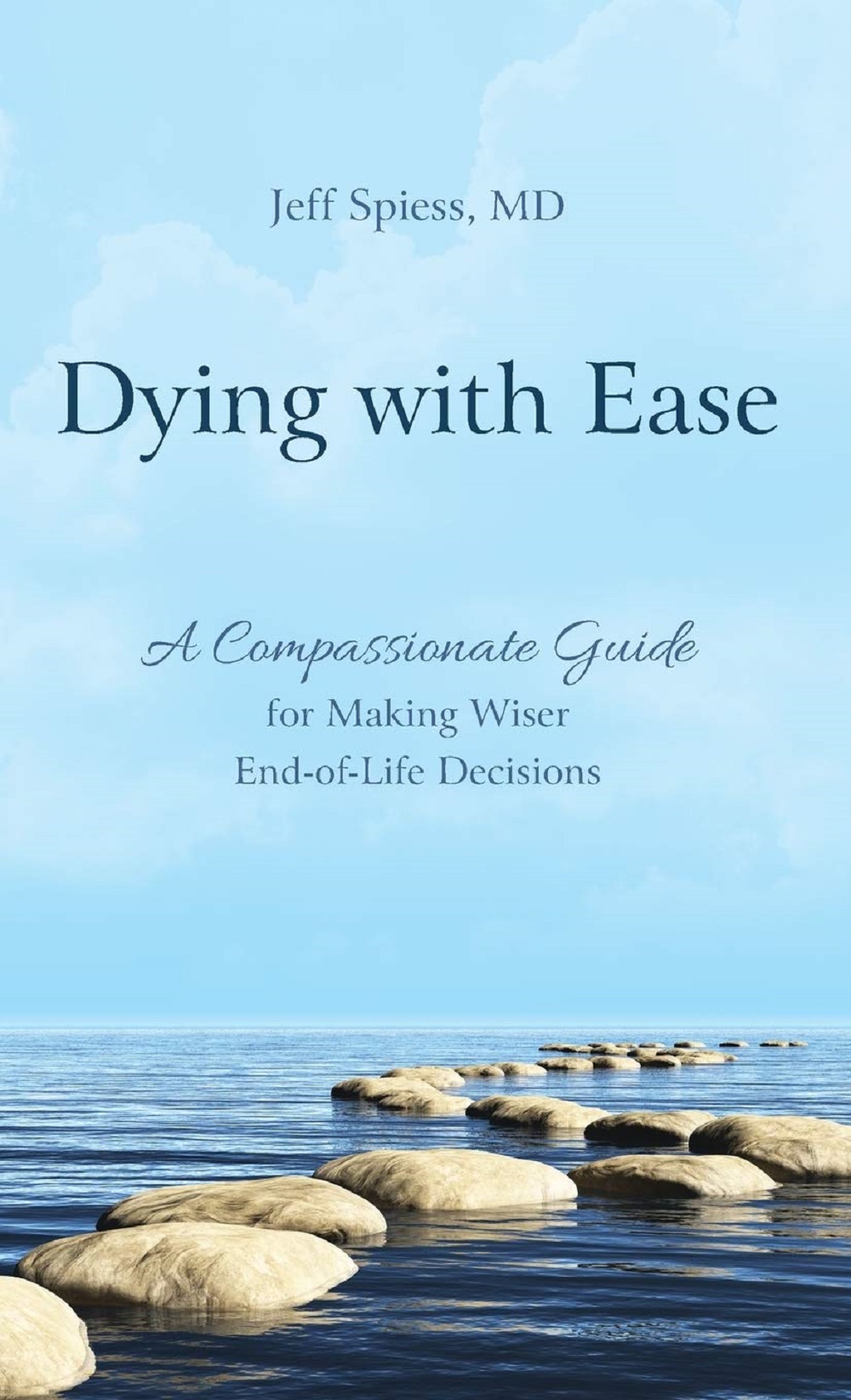
‘Dying with Ease: A Compassionate Guide for Making Wiser End-of-Life Decisions’ is the new book by Jeff Spies, MD. Courtesy photo, used with permission.
“You matter because you are you, and you matter to the last moment of your life. We will do all we can, not only to help you die peacefully, but to live until you die.”
—Dame Cicely Saunders
In 1948, Cicely Saunders met a man who would change her life. She was a thirty-year-old nurse and social worker, volunteering part time at St. Luke’s Hospital in London, an institution that had been founded a half century earlier as a home for the “dying poor.” She became captivated by a patient named David Tasma, a Polish Jewish refugee who had escaped from the Warsaw ghetto, worked as a waiter in London, and was now dying of cancer. Through her work and this relationship, she developed an awareness of the suffering and indignity experienced by dying patients, and, together with David, shared ideas as to how this could be different. When he died, David bequeathed her £500 (about $23,600 today) to be “a window in your home.” It was the beginning of an entirely new type of medical care, a care specifically focused on the needs of the dying. She called it hospice.
The word “hospice” was not new, but this meaning was. The term is derived from the same Latin root as our words “hospital,” “hostel,” and “hospitality.” This Latin term first meant “stranger,” but over time usage changed and it came to refer to a host, one who welcomes the stranger. During the medieval era, hospices were inns, boarding houses along pilgrim routes that served as places of rest and refreshment. On these long treks through Europe, many pilgrims became ill, often fatally. The hospices served then as places of care, possible recovery, often death. The word had been used since the mid-nineteenth century in Britain and Ireland for homes for the dying, places where the poor with nowhere else to go died. What Dr. Saunders did was to create a new connotation of the word “hospice,” keeping the welcoming but transforming it from a place to a model, a system of caring for the dying.
Cicely Saunders did not start out in health care. Her initial training was in politics, philosophy, and economics. In 1940, she entered nursing school, but because a back injury prevented her from doing the heavy work that nursing required, she went back to school and qualified as a medical social worker. The years she spent at St. Luke’s as part of a staff that cared deeply about the plight of those who were dying in their care demonstrated to her the impotence of the care system in the face of the patients’ ongoing pain. Knowing that the medical establishment would be resistant to hearing the ideas of an upstart social worker, she went to medical school. She then practiced for seven years at St. Joseph’s hospice in east London, listening to patients, keeping meticulous records, and monitoring the results of her treatments to relieve pain and other symptoms.
One of the first practices she challenged was the method of prescribing opioids, strong pain relievers like morphine. The prevailing practice had been to only use these drugs, given as injection, when the pain appeared severe, when it seemed to the doctor or nurse that the patient was hurting enough to “deserve” relief. The common result was that patients were either in unrelieved pain or briefly asleep after a drug dose. Then, as now, what most people “knew” about opioids was that they were addictive and dangerous. What Dr. Saunders recognized was that patients were the only ones who knew how bad their pain was and that their reports could be trusted. Since an oral dose of morphine lasts about four hours, she decided to give doses that often, by the clock, not by waiting until the pain had recurred. She also added smaller doses of analgesics between the scheduled doses if the pain “broke through.” This simple yet revolutionary idea, when put into practice, demonstrated that pain could be effectively relieved, and when this was accomplished, the patients could function more fully, engage with others more effectively, and contend with their other symptoms as well as the hopes and fears that came from the fact that they were terminally ill. In other words, they were able to live.
In 1967, Dr. Saunders opened St. Christopher’s Hospice in London, incorporating what she had learned into its structure and operations. The architecture included a sheet of glass at the entrance honoring Mr. Tasma’s bequest. She saw the mission of St. Christopher’s as providing not only excellent patient care but also a center of education and research, focusing on improving symptom relief and broadening the appreciation of this knowledge into the larger world of health care.
Dr. Saunders identified that pain was not just a physical phenomenon. Morphine was not all that was needed. She described “total pain,” the hurting that occurred in the physical body, the emotional psyche, the spiritual depths, and the surrounding family. She attacked it with a model of care aimed at all facets of life that contributed to that pain. Effective analgesia was, of course, a priority. But she recognized that it takes a team of skilled and caring professionals to do the job completely: bedside nursing to promote symptom relief and bodily integrity; social work to address financial and family concerns and to mobilize community resources; and clergy to provide empathic listening, words of comfort and advice, and insight into the realms of meaning and transcendence. She extended this care model into the community, providing services for patients dying in their homes, and she introduced family support during the patient’s illness and also after the death. Her ideas remain the bedrock of modern hospice care as well as its sister discipline, palliative care. In 1979, Queen Elizabeth II named Dr. Saunders a Dame Commander of the Order of the British Empire.
Dr. Saunders’s model of care spread across the Atlantic, finding fertile ground especially among nurses who were frustrated by the way the medical establishment seemed to be both overtreating and abandoning the dying. Florence Wald, dean of the School of Nursing at Yale University, served as the catalyst and, with a small group of colleagues, founded Connecticut Hospice in 1974, modeling their program after St. Christopher’s but adapting it to the local medical and social culture. This was two decades before the SUPPORT study would formally describe the suffering and intensive care endured by dying patients, but these visionaries and many like them recognized that a more humane way of dying was possible. Hospices began springing up around the country—small, mostly volunteer agencies, often associated with hospitals or religious institutions. As most of these relied mainly on donations and volunteers, the services offered varied widely.
A watershed moment in the care of the dying in the United States came in 1982 when the US Congress and President Reagan enacted the Medicare Hospice Benefit (MHB). This established a funding mechanism for hospice care and set standards for the organizational structures and for patient care. The MHB, as initially conceived, envisioned a “typical” hospice patient as someone with advanced cancer and no further treatment options, one whose course after hospice enrollment would be manageable, predictable, and short. In the ensuing thirty-five years, medical (e.g., AIDS epidemic, hospice for multiple other illness), financial (e.g., drug costs, federal budget deficits), and demographic (e.g., aging baby boomers) pressures have resulted in tweaks and modifications of the regulations, but the MHB continues to define how hospice care is provided in the United States.




 SA Examiner