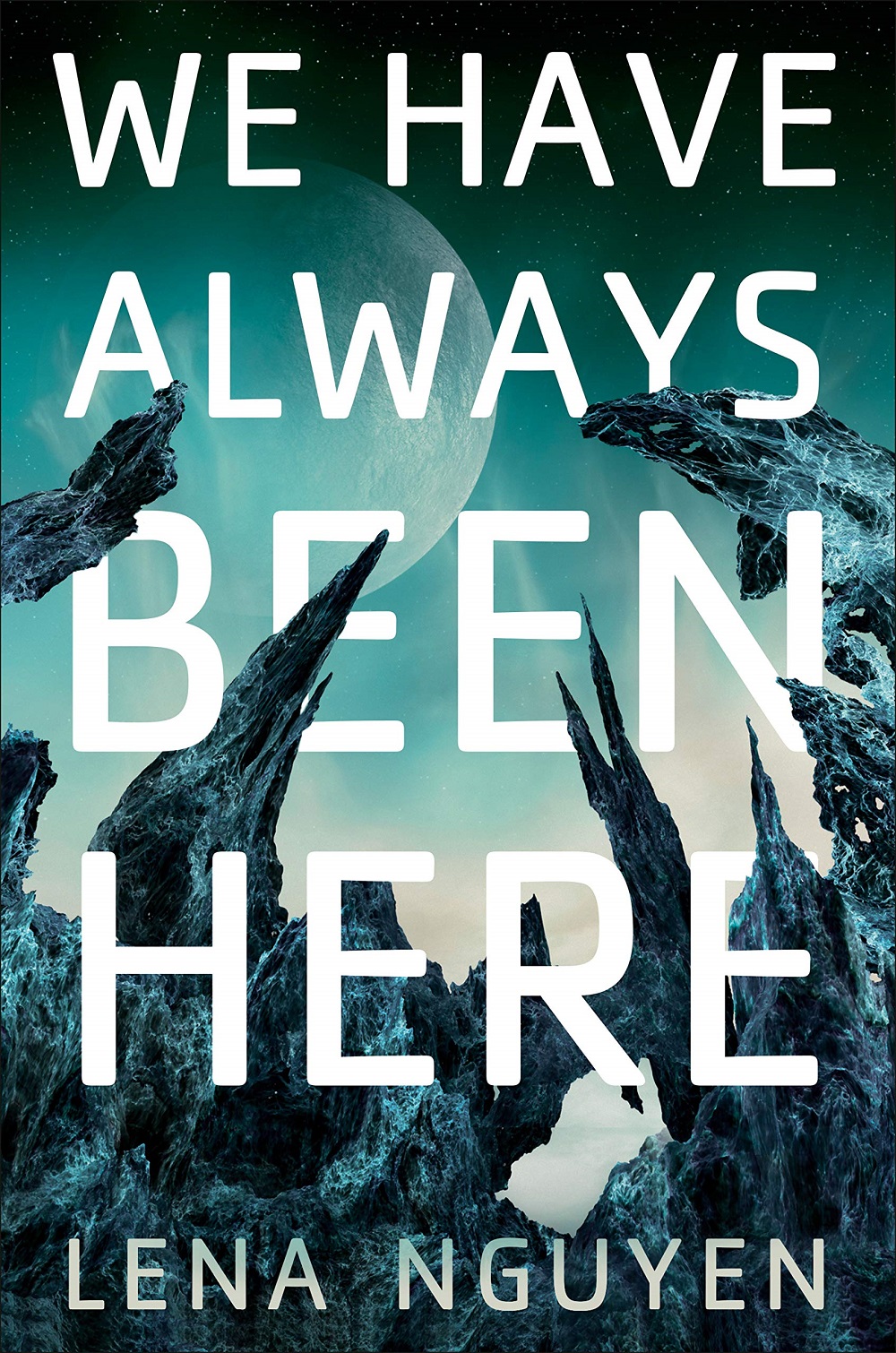
‘We Have Always Been Here’ by Lena Nguyen will be out on July 6, 2021. Photo: amazon
Lena Nguyen is a writer of speculative fiction and fantasy. She received her MFA in fiction from Cornell University, where she also taught courses in English, writing, and zombies. Her science fiction and fantasy have won several accolades, and she was a Writers of the Future finalist. “We Have Always Been Here,” a psychological sci-fi thriller that follows one doctor who must discover the source of her crew’s madness or risk succumbing to it herself, is her debut novel. It will be released on Tuesday July 6, 2021 and is available for pre-order on amazon. (amazon, 2021)
“We Have Always Been Here” – Misanthropic psychologist Dr. Grace Park is placed on the Deucalion, a survey ship headed to an icy planet in an unexplored galaxy. Her purpose is to observe the thirteen human crew members aboard the ship—all specialists in their own fields—as they assess the colonization potential of the planet, Eos. But frictions develop as Park befriends the androids of the ship, preferring their company over the baffling complexity of humans, while the rest of the crew treats them with suspicion and even outright hostility. Shortly after landing, the crew finds themselves trapped on the ship by a radiation storm, with no means of communication or escape until it passes—and that is when things begin to fall apart. Park’s patients are falling prey to waking nightmares of helpless, tongueless insanity. The androids are behaving strangely. There are no windows aboard the ship. Paranoia is closing in, and soon Park is forced to confront the fact that nothing—neither her crew, nor their mission, nor the mysterious Eos itself—is as it seems.
2021-07-06T11:37:00
days
hours minutes seconds
until
Release of ‘We Have Always Been Here’ by Lena Nguyen
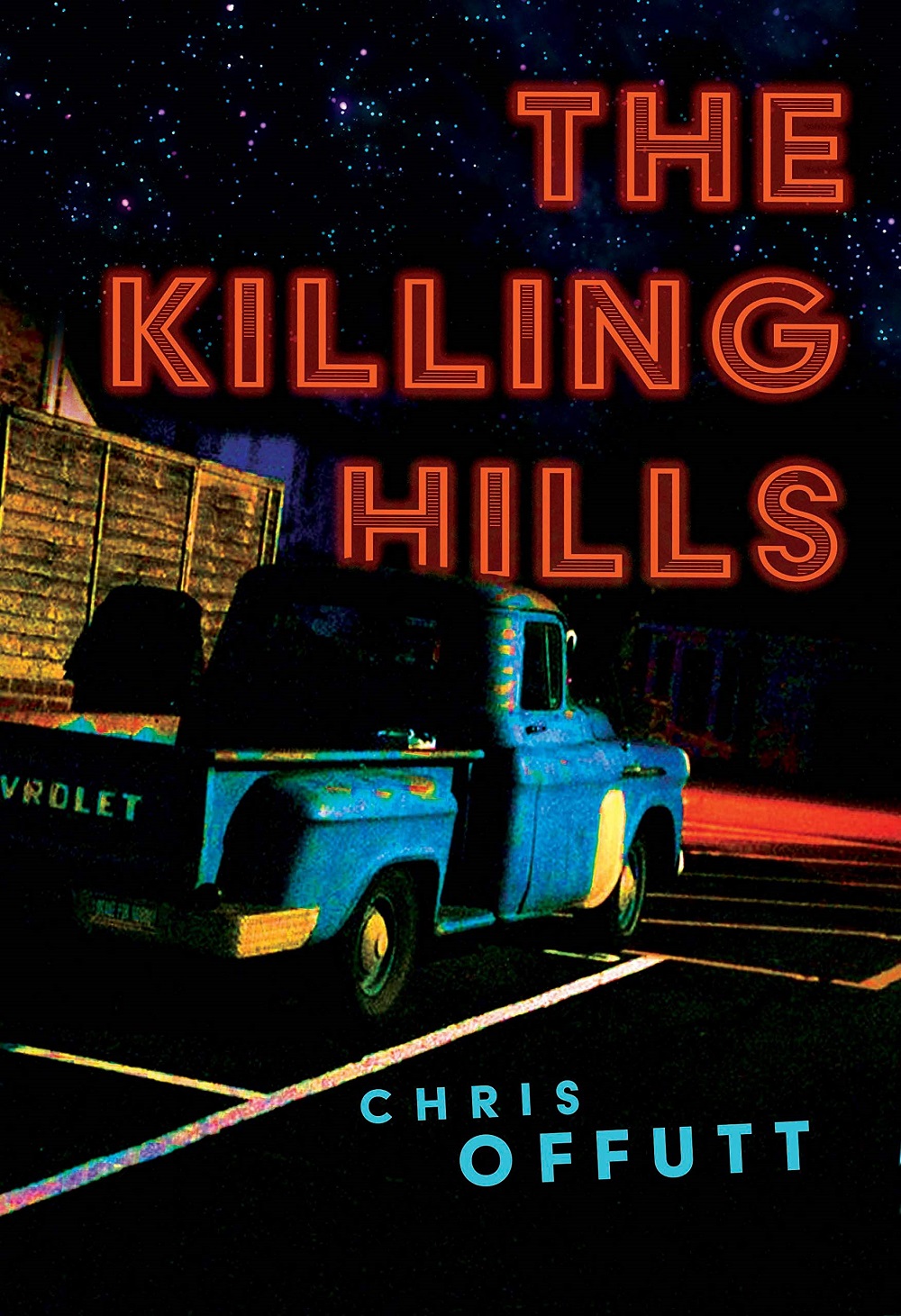
‘The Killing Hills’ is the new thriller by Chris Offutt. Photo: amazon
Chris Offutt is the author of the short-story collections “Kentucky Straight” and “Out of the Woods,” the novel “The Good Brother,” and three memoirs: “The Same River Twice,” “No Heroes,” and “My Father, the Pornographer.” His work has appeared in Best American Short Stories and Best American Essays, among many other places. He has written screenplays for Weeds, True Blood, and Treme, and has received fellowships from the Lannan and Guggenheim foundations. His new book “The Killing Hills” is a compelling, propulsive thriller in which a suspicious death exposes the loyalties and rivalries of a deep-rooted and fiercely private community in the Kentucky backwoods. (amazon, 2021)
Mick Hardin, a combat veteran now working as an Army CID agent, is home on a leave that is almost done. His wife is about to give birth, but they are not getting along. His sister, newly risen to sheriff, has just landed her first murder case, and local politicians are pushing for city police or the FBI to take the case. Are they convinced she cannot handle it, or is there something else at work? She calls on Mick who, with his homicide investigation experience and familiarity with the terrain, is well-suited to staying under the radar. As he delves into the investigation, he dodges his commanding officer’s increasingly urgent calls while attempting to head off further murders. And he needs to talk to his wife. “The Killing Hills” is a novel of betrayal―sexual, personal, within and between the clans that populate the hollers―and the way it so often shades into violence. Chris Offutt has delivered a dark, witty, and absolutely compelling novel of murder and honor, with an investigator-hero unlike any in fiction.
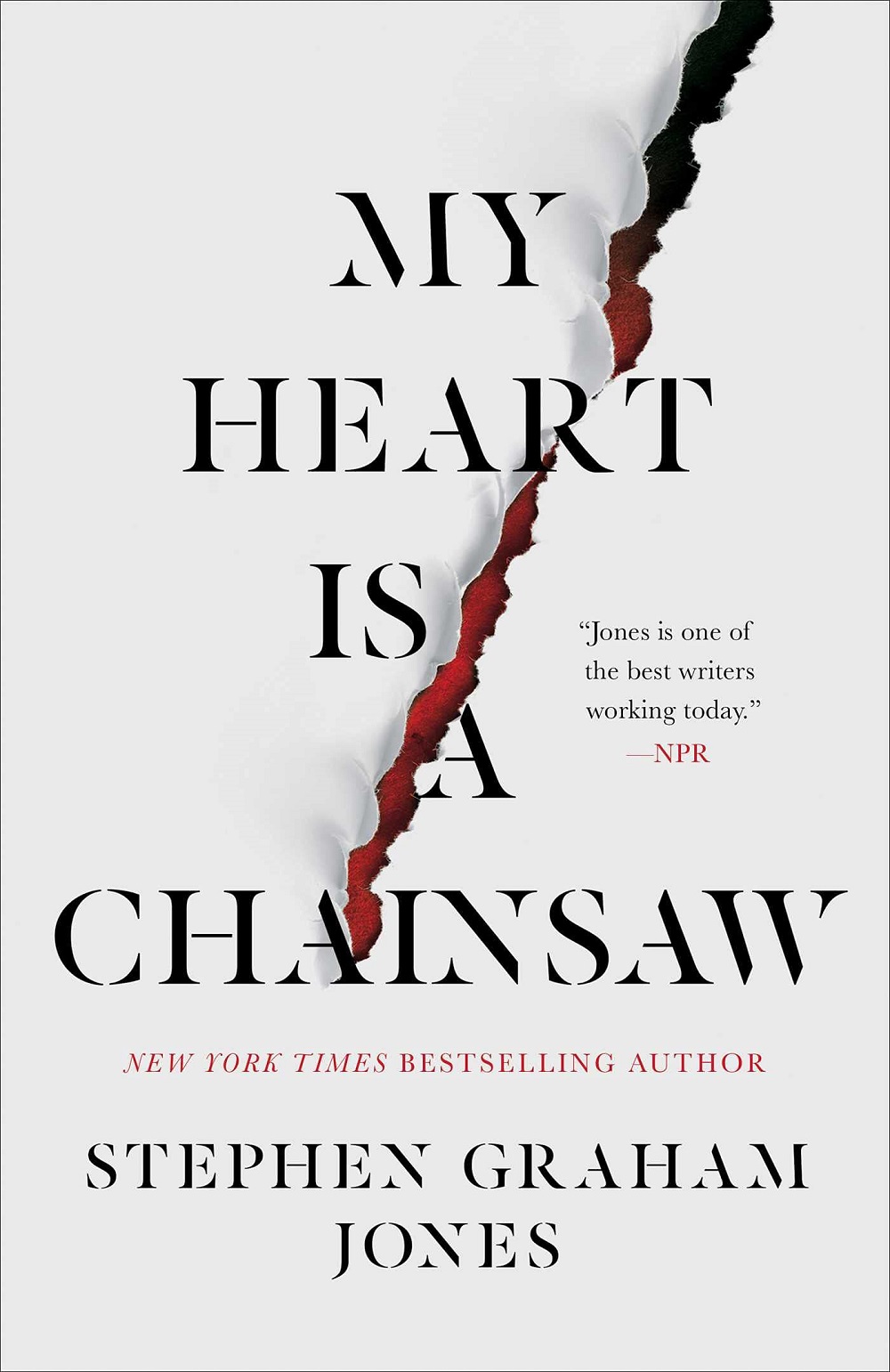
‘My Heart Is a Chainsaw’ by Stephen Graham Jones will be out August 31, 2021. Photo: amazon
Stephen Graham Jones is The New York Times bestselling author of “The Only Good Indians.” He has been an NEA fellowship recipient, has won the Jesse Jones Award for Best Work of Fiction from the Texas Institute of Letters, the Independent Publishers Award for Multicultural Fiction, a Bram Stoker Award, four This is Horror Awards; and has been a finalist for the Shirley Jackson Award and the World Fantasy Award. He is the Ivena Baldwin Professor of English at the University of Colorado Boulder. His new book “My Heart Is a Chainsaw” is due out August 31 and available for pre-order now on amazon. On the surface it is a story of murder in small-town America, but beneath is its beating heart: a biting critique of American colonialism, Indigenous displacement and gentrification, and a heartbreaking portrait of a broken young girl who uses horror movies to cope with the horror of her own life. (amazon, 2021)
“My Heart Is a Chainsaw” – Jade Daniels is an angry, half-Indian outcast with an abusive father, an absent mother, and an entire town that wants nothing to do with her. She lives in her own world, a world in which protection comes from an unusual source: horror movies…especially the ones where a masked killer seeks revenge on a world that wronged them. And Jade narrates the quirky history of Proofrock as if it is one of those movies. But when blood actually starts to spill into the waters of Indian Lake, she pulls us into her dizzying, encyclopedic mind of blood and masked murderers, and predicts exactly how the plot will unfold.
Yet, even as Jade drags us into her dark fever dream, a surprising and intimate portrait emerges…a portrait of the scared and traumatized little girl beneath the Jason Voorhees mask: angry, yes, but also a girl who easily cries, fiercely loves, and desperately wants a home. A girl whose feelings are too big for her body. “My Heart Is a Chainsaw” is her story, her homage to horror and revenge and triumph.
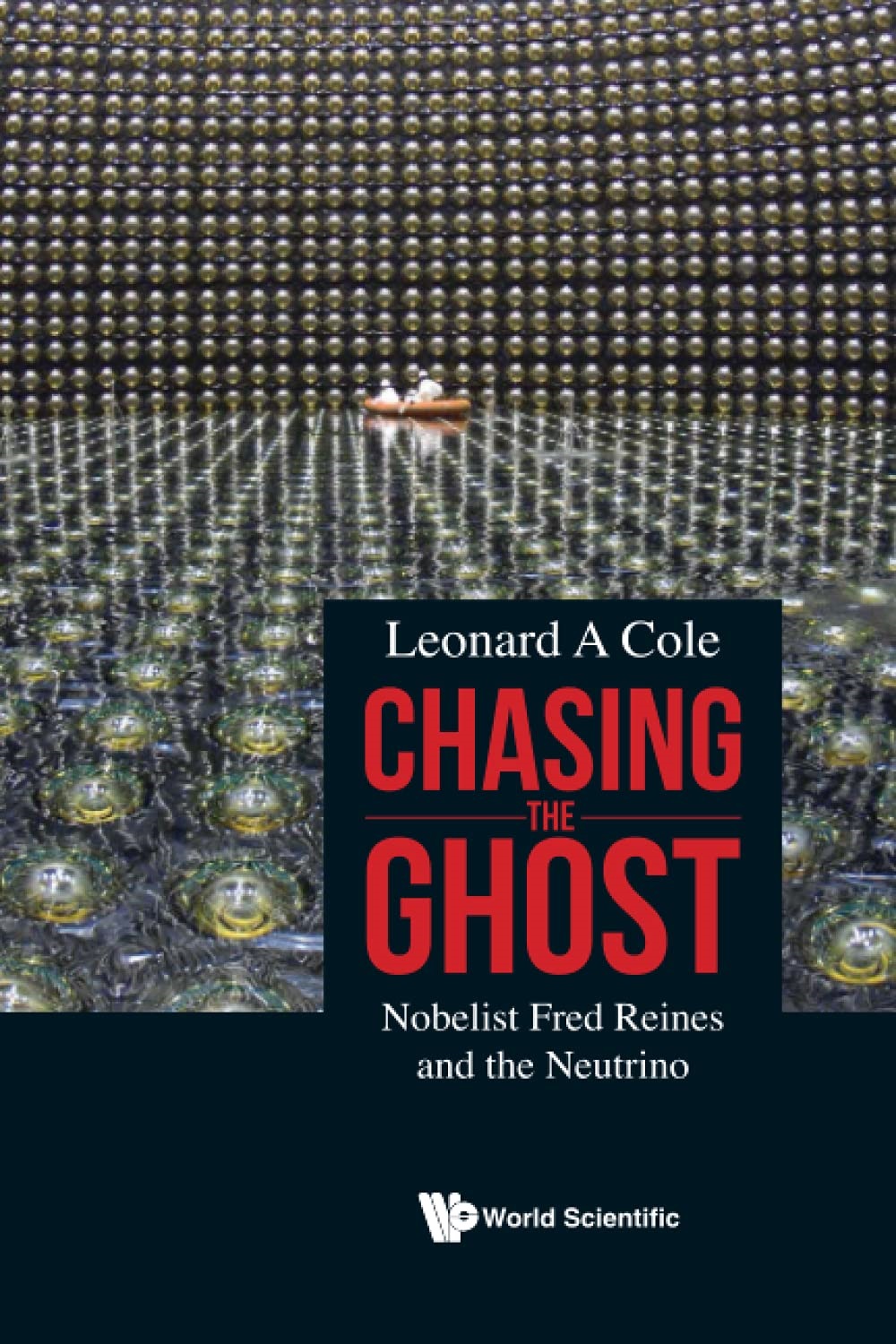
‘Chasing the Ghost’ by Leonard A. Cole Photo: google
Dr. Leonard A. Cole is the author of “Chasing the Ghost: Nobelist Fred Reines and the Neutrino.” An expert on bioterrorism and on terror medicine, he is an adjunct professor at Rutgers New Jersey Medical School (Emergency Medicine) and at Rutgers University-Newark (Political Science). At the medical school, he is director of the Program on Terror Medicine and Security. He has written for the The New York Times, The Washington Post, Los Angeles Times, Foreign Policy, Scientific American, and The Sciences. He has testified before congressional committees and made invited presentations to several government agencies including the U.S. Department of Energy, the Department of Defense, the Centers for Disease Control and Prevention, and the Office of Technology Assessment. His new book “Chasing the Ghost: Nobelist Fred Reines and the Neutrino” is a unique combination of memoir and biography and a deeply human story about Fred Reines, one of the 20th century’s true scientific pioneers.
Fred Reines is the winner of the 1995 Nobel Prize in Physics. In “Chasing the Ghost,” Cole recounts the life of one of the great scientists of our era; from the years spent on the search for the “unseeable” neutrino, to the “Project Poltergeist” experiment, and to the discovery of the mysterious neutrino. It begins with the story of how in the summer of 1963, Fred Reines, Gus Hruschka, an engineer friend, and Friedel Sellschop, a South African physics professor, entered the East Rand South African gold mine with an experiment in mind. Precautions included water-repellent high-laced shoes, hard hats, and even gas masks, in case sensors detected carbon monoxide or methane. But before continuing that story, Cole, who happens to be Reines’ cousin, goes back to 1956 when Reines and his colleague Clyde Cowan discovered the neutrino. Fun fact: “The miniscule particle is commonly described as elusive. More than half a century after its detection, the neutrino is still referred to as a ghost particle”- hence the title of the book. The book is divided into six parts: Beginnings “Language, Science, and the Ghost Particle,” Becoming “Becoming a Physicist,” Discovery “Explosive Ideas,” Moving “Transition Years at Irvine,” Expressions “Classroom Teacher,” and Validation “The Legacy Grows.” The Epilogue sums up the vast amounts of memorabilia currently in the lobby of Frederick Reines Hall at the University of California Irvine as well as how even after he won the Nobel Prize in 1995, Reines continued to learn more about the particle and how interest in neutrino studies continues to grow.
According to Scientific American, “a neutrino is a subatomic particle that is very similar to an electron, but has no electrical charge and a very small mass, which might even be zero.” Cole expertly explains the science, but understanding physics is not a requirement to read this biography because in the Preface, the author explains that the book is a combination of memoir and biography with a focus on a human story. It is mainly about Fred Reines’ personal life and not so much the science of neutrino physics. Any science described is used to support Fred’s story and is meant to appeal to a general audience, which it does. It alternates between sections explaining physics (subatomic particles), the experiments to detect the neutrino, and Reines’ personal life and career. By using pictures, letters, diagrams, and newspaper accounts, readers are offered a glimpse of this wildly accomplished scientist and teacher who became one of the twentieth century’s true pioneers in physics, all while remaining modest. Standout chapters include Chapter 14: Classroom Teacher, which details how involved he was as a teacher and Chapter 18: The Legacy Grows where it breaks down his legacy: “Interest in the ghost particle has soared, as its centrality in the workings of the cosmos has become increasingly evident.” Despite the overall physics theme, the language is easy to understand and follow. Even if the physics sections are too complicated for some readers, they are few and far between and serve to help understand the mind of Fred Reines. “Chasing the Ghost” by Leonard A. Cole is an incredibly interesting portrait of the man and his contributions to physics and is recommended for readers who appreciate biographies with some science mixed in for fun.
“The story of the neutrino is one of scarcely imaginable extremes. The particle is omnipresent yet proof of its existence had long eluded confirmation. Other than photons – particles of light – neutrinos are the most abundant particle in the universe.”
*The author received a copy of this book for an honest review. The views and opinions expressed here belong solely to her.
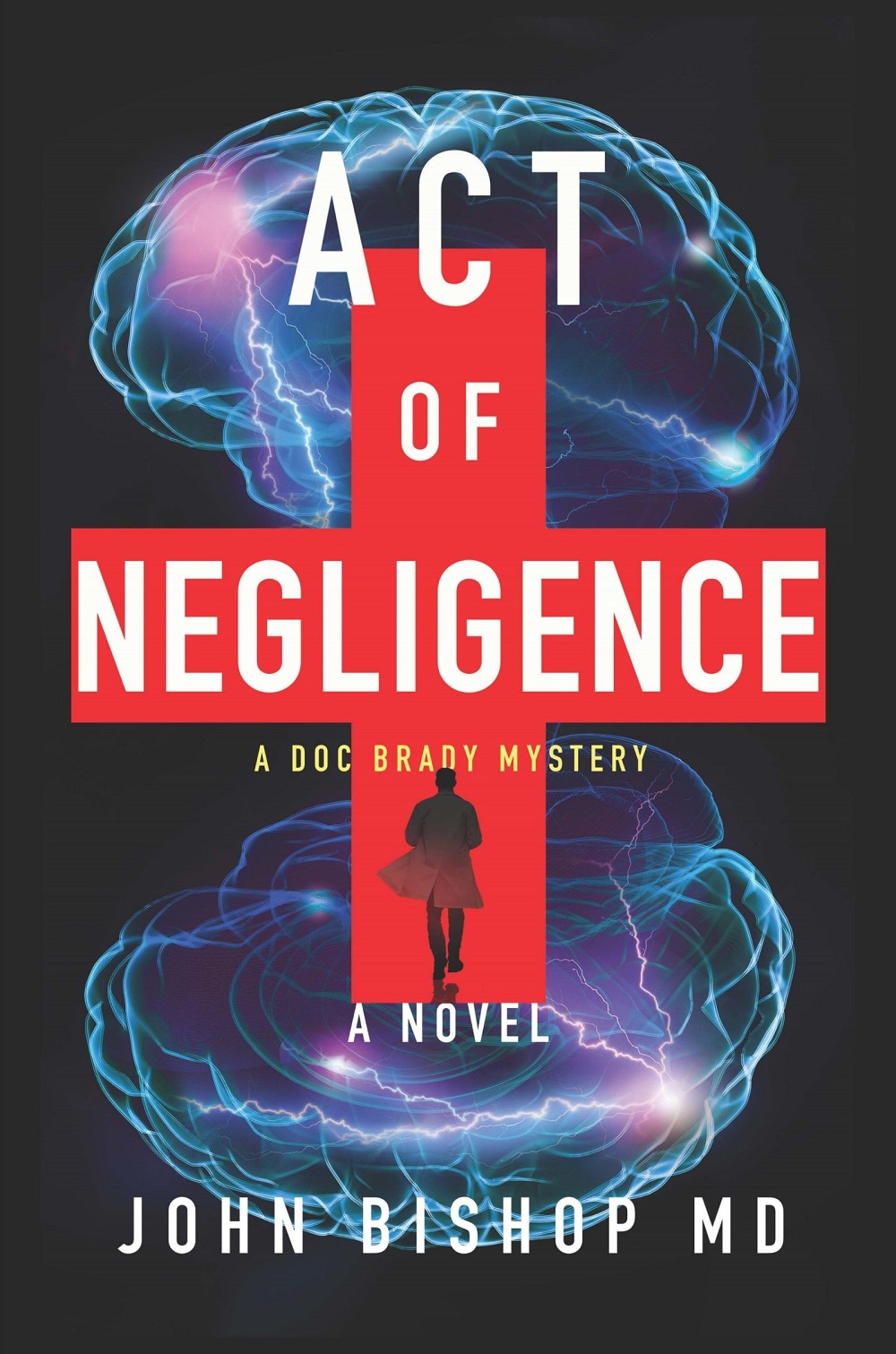
‘Act of Negligence’ will be out on Tuesday, June 15, 2021. Courtesy photo, used with permission.
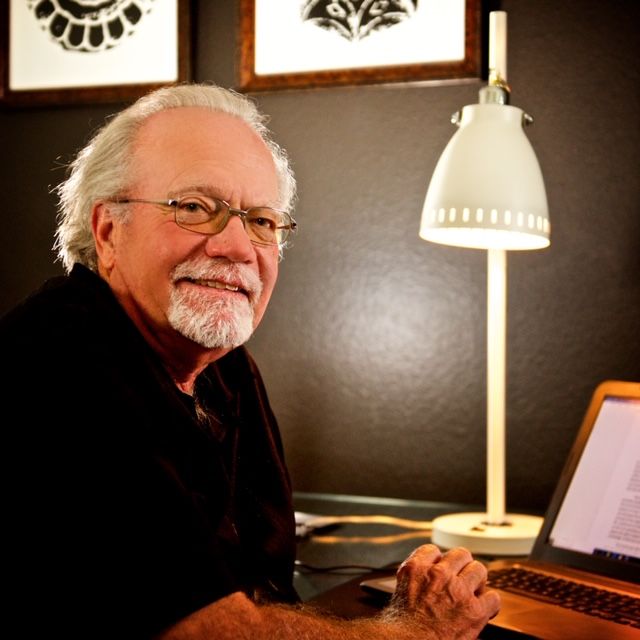
John Bishop MD is the author of “Act of Negligence: A Medical Thriller” (A Doc Brady Mystery). Dr. Bishop has led a triple life. This orthopedic surgeon and keyboard musician has combined two of his talents into a third, as the author of the beloved Doc Brady mystery series. Beyond applying his medical expertise at a relatable and comprehensible level, Dr. Bishop, through his fictional counterpart Doc Brady, also infuses his books with his love of not only Houston and Galveston, Texas, but especially with his love for his adored wife. Bishop’s talented Doc Brady is confident yet humble; brilliant, yet a genuinely nice and funny guy who happens to have a knack for solving medical mysteries. Above all, he is the doctor who will cure you of your blues and boredom. Step into his world with the first four books of the series, and you will l be clamoring for more. The following is an excerpt from “Act of Negligence” which will be released on Tuesday, June 15, 2021.
Act of Negligence: A Medical Thriller (A Doc Brady Mystery) Chapter 1 by John Bishop, MD
There was no response from the patient in Room 823 of University Hospital. She was crouched on the bed, in position to leap toward the end of the bed in the direction of yours truly. I could not determine her age, but she definitely appeared to be a wild woman. Her hair was a combination of gray and silver, long and uncombed and in total disarray. She had a deeply lined face, leathery, with no makeup. Her brown eyes were frantic, and her head moved constantly to the right and left. She was clad only in an untied hospital gown which dwarfed her small frame. My guess? She wasn’t over five feet tall.
“Ms. Adams? Dr. Morgenstern asked me to stop by and see about your knee?”
She did not move or speak; she just continued squatting there in the hospital bed, bouncing slightly on her haunches, and staring at me while her head moved slowly to and fro.
I looked around the drab private room with thin out-of-date drapes and faded green-tinted walls. There were no flowers. I judged the patient to most likely be a nursing-home transfer.
I made the safe move by backing out of the patient’s room, and I walked the twenty yards to the nurses’ station. The white-tiled floors were freshly waxed, but the medicinal smell was distinctly different from the surgical wing. There was an unpleasant pine scent in the air that could not hide the odor of decaying human beings and leaking body fluids. It was the smell of chronic illness and disease.
“Cynthia?” I asked the head nurse on the medical ward, or so announced her name tag. She was sitting at the far side of the long nursing station desk performing the primary duty of a nursing supervisor: paperwork. She was an attractive Black woman in her mid-forties, I estimated.
“Yes, sir?”
“Dr. Morgenstern asked me to see Mrs. Adams in consultation. Room 823? What’s the matter with her? She won’t answer me. She just stares, sitting up in the bed on her haunches, bouncing.”
She smiled and shook her head. “You must be a surgeon.”
“Yes, ma’am. Orthopedic. Dr. Jim Brady.”
“Cynthia Dumond. Mrs. Adams has Alzheimer’s. Sometimes she gets confused. Want me to come in the room with you? Maybe protect you?” she said with a smile.
“Well, I wouldn’t mind the company,” I said, a little sheepishly. “Not that I was afraid or anything.”
“She’s harmless, Doctor. She’s just old and confused.”
We walked back to the hospital room together. The patient seemed to relax the moment she saw the head nurse, a familiar face. “Hello, Ms. Adams,”
Cynthia said. “This is Dr. Brady. He needs to examine your . . .” She gazed at me, smiling again. “Your what?” “Her knee.”
“Dr. Brady needs to look at your knee. Okay?”
The patient had ceased shaking and bouncing, leaned back, slowly extended her legs, laid down, and became somewhat still.
“Very good, Ms. Adams. Very good,” Cynthia said, grasping the elderly woman’s hand and holding it while she looked at me. “Go ahead, Doctor.”
The woman’s right knee was quite swollen, with redness extending up and down her leg for about six inches in each direction. When I applied anything but gentle skin pressure, her leg seemed to spasm involuntarily. How in the world she had managed to crouch on the bed with her knee bent to that degree was mystifying.
“Sorry, Ms. Adams,” I said, but continued my exam. The knee looked and felt infected, but those signs could also have represented a fracture or an acute arthritic inflammation such as gout, pseudo-gout, or rheumatoid arthritis, not to mention an array of exotic diseases. I tried to flex and extend the knee, but she resisted, either due to pain—although I wasn’t certain she had a normal discomfort threshold—or from a mechanical block due to swelling or some type of joint pathology.
“What’s she in the hospital for?” I asked Nurse Cynthia.
“Dehydration, malnutrition, and failure to thrive, the usual diagnoses for folks we get from the nursing home. The doctor who runs her particular facility sent her in.”
“Who is it?”
“Dr. Frazier. Know him?”
“Nope. Should I?”
“No. It’s just that he sends his patients here in the end stages. Most of the folks that get admitted from his nursing home die soon after they arrive.”
“Most of them are old and sick, aren’t they?”
“Yes.”
I looked at her expression while she continued to hold Mrs. Adams’s hand.
“Were you trying to make a point?”
“Not really.” She glanced at her watch. “Are you about through, Doctor Brady? I have quite a bit of work to do.”
“Follow that paper trail, huh?”
“Yes. That’s about all I have time for these days. Seems to get worse every month. Some new form to fill out, some new administrative directive to analyze. Whatever.”
“I know the feeling. There isn’t much time to see the patients and take care of whatever ails them these days. If my secretary can’t justify to an insurance clerk why a patient needs an operation, then I have to waste my time on the phone explaining a revision hip replacement to someone without adequate training or experience. One of my partners told me yesterday about an insurance clerk that was giving him a bunch of—well, giving him a hard time—about performing a bunionectomy. He found out during the course of a fifteen-minute conversation that the woman didn’t know a bunion was on the foot. Her insurance code indicated it was a cyst on the back and she couldn’t find the criteria for removal in the hospital. She was insisting it had to be an office procedure, and only under a local anesthetic. Crazy, huh?”
“Yes, sir. It’s a brave new world.”
“Sounds like a good book title, Nurse Cynthia.”
“I think it’s been done, Doctor.”
“Well, thanks for your help. I do appreciate it. Not every day the head nurse on a medical floor accompanies me on a consultation.” “My pleasure. You seem to be a concerned physician, an advocate for the patient, at least. As I remember, that’s why we all went into the healing arts.”
She turned to Mrs. Adams. “I’ll see you later, dear,” she said, patting the elderly woman’s forehead. Still holding the nurse’s other hand with her own wrinkled hand, Mrs. Adams kissed Cynthia’s fingers lightly, probably holding on for her life.
I poured a cup of hospital-fresh coffee, also known as crankcase oil, and reviewed Beatrice Adams’s chart. I sat in a doctor’s dictation area behind the nursing station and looked at the face sheet first, being a curious sort. Her residence was listed as Pleasant View Nursing Home, Conroe, Texas. Conroe is a community of fifty thousand or so, about an hour north of Houston. I noticed that a Kenneth Adams was listed as next of kin and was to be notified in case of emergency. His phone number was prefixed by a “409” exchange, and I therefore assumed that he was a son or a brother and lived in Conroe as well.
Mrs. Adams was fifty-seven years old, which was young to have a flagrant case of Alzheimer’s disease, a commonly-diagnosed malady that was due to atrophy of the brain’s cortical matter. That’s the tissue that allows one to recognize friends and relatives, to know the difference between going to the bathroom in the toilet versus in your underwear, and to know when it’s appropriate to wear clothes and when it isn’t. Alzheimer’s causes a patient to gradually become a mental vegetable but doesn’t affect the vital organs until the very end stages of the disease. In other words, the disease doesn’t kill you quickly, but it makes you worse than a small child—unfortunately, a very large and unruly child.
It can, and often does, destroy the family unit, sons and daughters especially, who are caught between their own children and whichever parent is affected with the disease, which makes it in some ways worse than death. You can get over death, through grief, prayer, catharsis, and tincture of time. Taking care of an Alzheimer’s-affected parent can be a living hell, until they are bad enough that the patient must go to a nursing home. Then the abandonment guilt is hell, or so my friends and patients tell me.
Mrs. Adams had been admitted to University Hospital one week before by my friend and personal physician, Dr. James Morgenstern. I guessed that either he had taken care of the patient or a family member in the past, or that Dr. Frazier, physician-owner or medical director of Pleasant View Nursing Home, had a referral relationship with Jimmy.
Mrs. Adams’s initial blood work revealed hyponatremia (low sodium), hyperkalemia (high potassium), and a low hematocrit (anemia). Clinically, hypotension (low blood pressure), decreased skin turgor, and oliguria (reduced urine output) suggested a dehydration-like syndrome. For a nursing-home patient, that could either mean poor custodial care or failure of the patient to cooperate— refusing to drink, refusing to eat—or some combination of the two. Neither scenario was atypical of the plight of the elderly with a dementia-like illness.
According to Dr. Morgenstern’s history, the patient had been diagnosed with Alzheimer’s disease six years before, at age fifty-one, which by most standards was very young for brain deterioration without a tumor.
“Dr. Brady?” head nurse Cynthia asked, appearing beside my less-than-comfortable dictating chair.
“Yes?”
“I’m sorry to bother you, but might I have one of your business cards?”
“Sure,” I said, handing her one from the top left pocket of my white clinical jacket. “Don’t ever apologize for bothering me if you’re trying to send me a patient.”
She laughed. “It’s for my mother. She has terrible arthritis.” She paused and read the card. “You’re with the University Orthopedic Group?”
“Yes. Twenty-two years.”
“If I might ask, where did you do your training?”
“I went to med school at Baylor, then did general and orthopedic surgery training here at the University Hospital. I then traveled to New York and spent a year studying hip and knee replacement surgery, then came back to Houston to the land of the free and the home of the brave.”
“Is your practice limited to a certain area? I mean, do you just see patients with hip and knee arthritis?”
“Yes. Unless, of course, it’s an emergency situation, like one of those rare weekends when I can’t find a young, hungry surgeon with six kids to cover emergency room call for me.”
“Well, thanks,” she said, smiling. “I’ll be seeing you. I’ll bring my mother in.”
“Thank YOU, Cynthia. By the way, I’m curious. Why me? I would think you see quite a few docs up here, and I would imagine that your mother has had arthritis for years. Why now?”
Cynthia was an attractive, full-figured woman with close-cropped jet-black hair, a woman who made the required pantsuit nursing uniform look like a fashion statement. She looked me up and down as I sat there with Mrs. Adams’s chart in my lap, my legs crossed, holding the strong black cooling coffee.
“You’re wearing cowboy boots. I figure that all you need is a white hat,” she said, turning and walking away.
Not my sharp wit, nor my kind demeanor with her patient, nor my vast training and experience.
My boots.
John Bishop, M.D. Photo: Greg Moredock, used with permission.
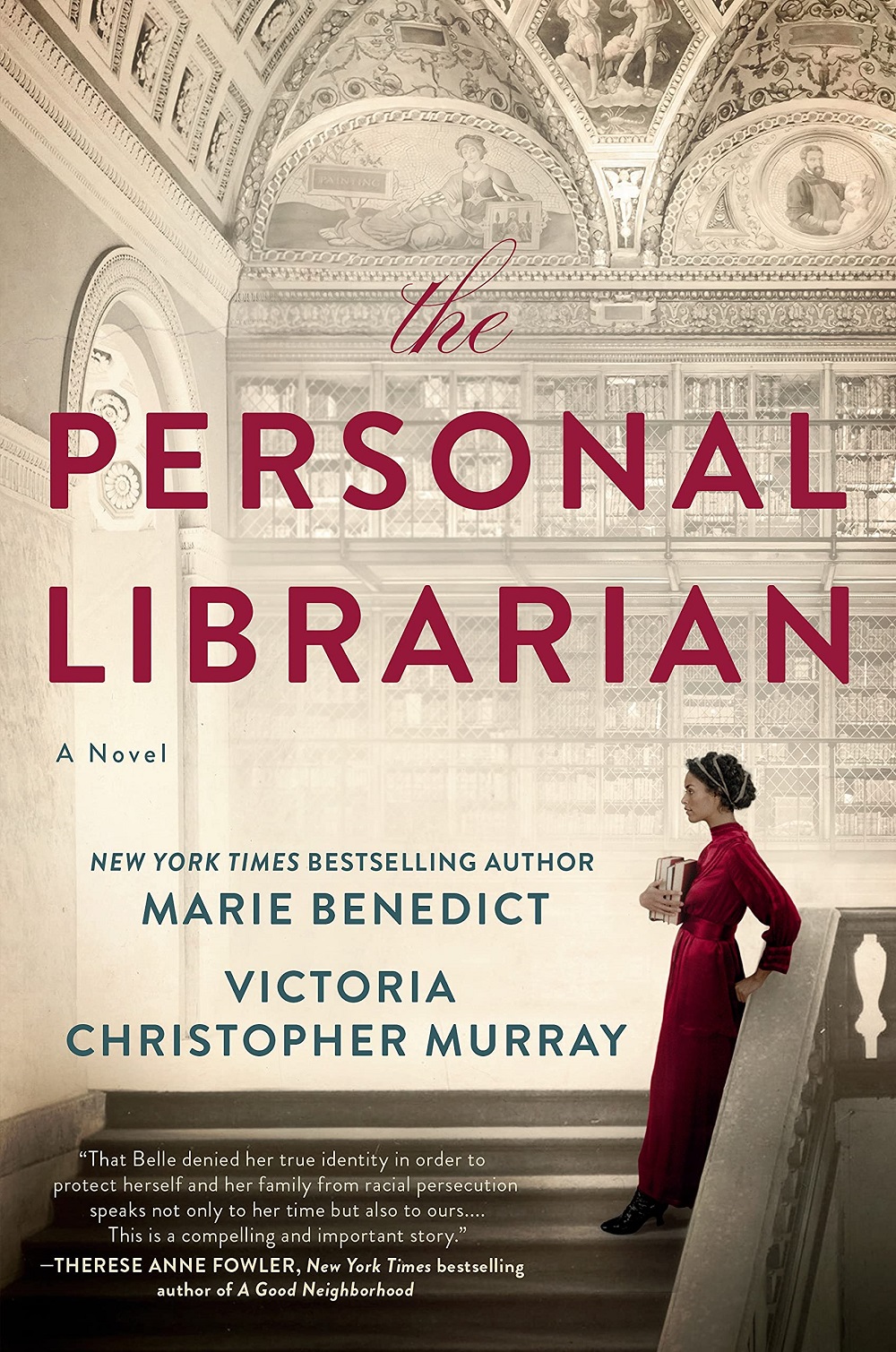
“The Personal Librarian” by Marie Benedict and Victoria Christopher Murray. Photo: amazon
A new month means new books on the horizon. These are some notable new releases for the month of June in my favorite categories: Historical Fiction, Fantasy, Science Fiction, Mystery and Thriller, and History and Biography. If I could pick just one this month, it would be “The Personal Librarian.” (amazon, Goodreads, 2021)
The remarkable story of J. P. Morgan’s personal librarian, Belle da Costa Greene, the Black American woman who was forced to hide her true identity and pass as white to leave a lasting legacy that enriched our nation, from The New York Times bestselling author Marie Benedict and acclaimed author Victoria Christopher Murray. “The Personal Librarian” tells the story of an extraordinary woman, famous for her intellect, style, and wit, and shares the lengths she must go to—for the protection of her family and her legacy—to preserve her carefully crafted white identity in the racist world in which she lives.
Fantasy: “The Hidden Palace: A Novel of the Golem and the Jinni” Book 2 of 2 by Helene Wecker Release date: June 8, 2021
This enthralling historical epic is set in New York City and the Middle East in the years leading to World War I and is the long-awaited follow-up to the acclaimed bestseller “The Golem and the Jinni.” Helene Wecker revisits her beloved characters Chava and Ahmad as they confront unexpected new challenges in a rapidly changing human world. Spanning the tumultuous years from the turn of the twentieth century to the beginning of World War I, “The Hidden Palace” follows these lives and others as they collide and interleave. Can Chava and Ahmad find their places in the human world while remaining true to each other? Or will their opposing natures and desires eventually tear them apart—especially once they encounter, thrillingly, other beings like themselves?
Science Fiction: “The Ninth Metal” (The Comet Cycle) by Benjamin Percy Release date: June 1, 2021
It began with a comet. At first, people gazed in wonder at the radiant tear in the sky. A year later, the celestial marvel became a planetary crisis when Earth spun through the comet’s debris field and the sky rained fire. The town of Northfall, Minnesota will never be the same. Meteors cratered hardwood forests and annihilated homes, and among the wreckage a new metal was discovered. This “omni metal” has properties that make it world-changing as an energy source and a weapon. In this gut-punch of a novel, the first in his Comet Cycle, Ben Percy lays bare how a modern-day goldrush has turned the middle of nowhere into the center of everything, and how one family—the Frontiers—hopes to control it all.
Mystery and Thriller: “Survive the Night: A Novel” by Riley Sager Release date: June 29, 2021
It is November 1991. Nirvana is in the tape deck, George H. W. Bush is in the White House, and movie-obsessed college student Charlie Jordan is in a car with a man who might be a serial killer. Charlie has nowhere to run and no way to call for help. Trapped in a terrifying game of cat and mouse played out on pitch-black roads and in neon-lit parking lots, Charlie knows the only way to win is to survive the night.
History and Biography: “Wake: The Hidden History of Women-Led Slave Revolts” by Rebecca Hall Release date: June 1, 2021
Part graphic novel, part memoir, “Wake” is an imaginative tour-de-force that tells the story of women-led slave revolts and chronicles scholar Rebecca Hall’s efforts to uncover the truth about these women warriors who, until now, have been left out of the historical record. Wake tells the story of Dr. Rebecca Hall, a historian, granddaughter of slaves, and a woman haunted by the legacy of slavery. The accepted history of slave revolts has always told her that enslaved women took a back seat. But Rebecca decides to look deeper, and her journey takes her through old court records, slave ship captain’s logs, crumbling correspondence, and even the forensic evidence from the bones of enslaved women from the “negro burying ground” uncovered in Manhattan. She finds women warriors everywhere.
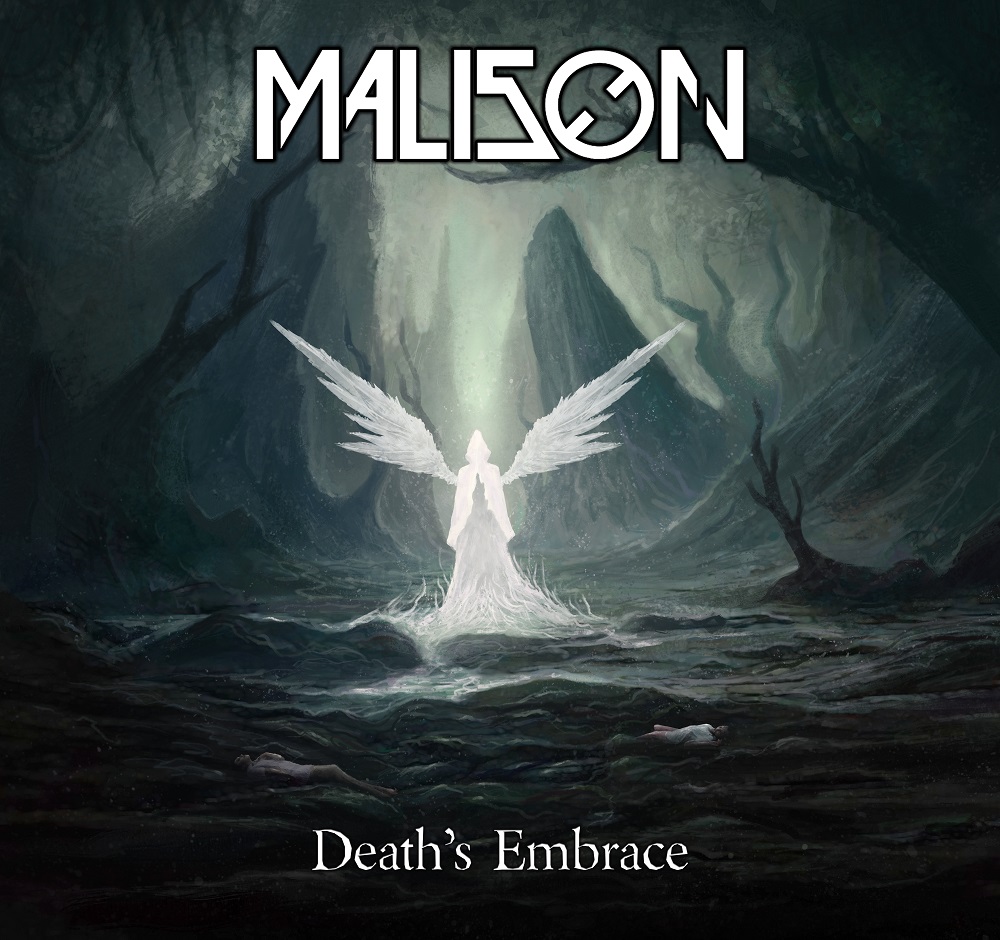
‘Death’s Embrace’ will be available on September 3, 2021. Courtesy photo, used with permission.
Created in 2014, Malison is reaching the heavy metal community with clean vocals and a unique amalgamation of speed, shred, and harmony. The band released their first, self-titled album via the legendary Combat Records and embarked on a Southwestern tour in support. Since then, they have become a staple of San Diego metal shows and have toured the Pacific Northwest and Midwest. Malison is ready to release their second album featuring a stable and hungry line-up, as well as a new set of thrashing and melodic songs. Malison is Steven Rondina (vocals, bass), Mario Lovio (guitar), Nick Mafi (drums), and Eddie Spade (guitar). The new album ‘Death’s Embrace’ is slated for release September 3, 2021 via Metal Assault Records. (Malison, 2021)
A staple of the Southern California metal scene, Malison takes their compelling talents to new heights with the full length release ofDeath’s Embrace. Recorded at San Diego based Plaudit Studios, pre-orders for the new album will launch on June 11, 2021 along with the premiere of the music video for their lead off track “Reborn.”
Blending together the best elements of traditional heavy metal, thrash, power metal, and neoclassical shred, San Diego, California quartet Malison captures the energy and fury of their live show onto their newest full length studio album, ‘Death’s Embrace.’
Bosch’s seventh and final season will premiere all eight episodes of its final season on Amazon Prime Video. Photo: google
Michael Connelly is an American author of detective novels and other crime fiction. His works include The New York Times bestsellers, “The Law of Innocence,” “Fair Warning,” and “The Night Fire.” His books, which include the Harry Bosch series, the Lincoln Lawyer series, and the Renée Ballard series, have sold more than eighty million copies worldwide. Connelly is a former newspaper reporter who has won numerous awards for his journalism and his novels. He is the executive producer of Bosch, starring Titus Welliver, and the creator and host of the podcast Murder Book. The seventh and final season of Bosch is set to premiere on Friday June 25, 2021 on Amazon Prime Video. (amazon, 2021)
Bosch is a police procedural streaming television series produced by Amazon Studios and stars Titus Welliver as Los Angeles Police detective Harry Bosch. Harry Bosch is a fictional character created by Michael Connelly. Bosch debuted as the lead character in his 1992 novel “The Black Echo,” the first in a best-selling police procedural series, which now number 21. Hieronymus “Harry” Bosch is a veteran police homicide detective with the Los Angeles Police Department and was named after the 15th-century Dutch artist Hieronymus Bosch. His mother was a prostitute who was murdered when Harry was a young boy and his father was Mickey Haller Sr., a defense attorney known for representing prominent clients. His half-brother is Mickey Haller, a Los Angeles-based defense attorney who made his first appearance in the novel “The Lincoln Lawyer,” which was made into a movie starring Matthew McConaughey as Mickey Haller.
In the books, Bosch served in Vietnam, but in the series, he is a veteran of the first Gulf War so that events can happen in the present day time, as they did in the books. I am a huge fan of Michael Connelly’s books and have read most of the Harry Bosch novels. It is always exciting to see a character you come to know and love from books on screen, whether they be movies of a series. I caught most of the first season and it stays close to the books’ storyline; I might even go back and binge them all before the final season premieres.
Fred Waitzkin is an American novelist and writer. His work has appeared in Esquire, New York magazine, the New York Times Sunday Magazine, the New York Times Book Review, Outside, Sports Illustrated, Forbes, the Huffington Post, and the Daily Beast, among other publications. His memoir, “Searching for Bobby Fischer,” about his son Josh Waitzkin, a chess prodigy, was made into a major motion picture released in 1993. His other books are “Mortal Games,” “The Last Marlin,” “The Dream Merchant,” and “Deep Water Blues.” His new book “Strange Love” is about an American tourist who finds himself obsessed with a young Costa Rican woman and tells a story of disappointments, unusual desires, and the things people will do when their dreams do not materialized in the ways they had hoped. It is illustrated by Sofia Ruiz, a Latin American artist.
“Strange Love” is narrated by a man vacationing in a remote village on the Pacific coast of Costa Rica. The story opens as he is sitting at a picnic table with Rachel, a local woman he recently met, as well as her aunt María José, a few cousins, and some other people. Rachel wanted him to meet her family and they are exchanging stories. She proceeds to tell him about how the women of Fragata are the most beautiful in the world and when men hear about the place, they arrive in their fancy cars, only to take them away. Most girls leave when they are seventeen and return when they are in their thirties. At 36, Rachel is one of the few who never left. The man is a writer who at one time imagined himself to be a novelist the likes of his heroes Philip Roth and John Updike but instead has spent thirty years working as an exterminator in filthy basements and elevator shafts after writing only one novel. Rachel grew up surrounded by poverty, loss, and trauma and has the gift of storytelling, something he lacks. She runs the Fragata Lounge, a dilapidated beach bar and tries to make a decent living, while constantly being reminded that her youth and any chance she had of escaping, are slipping away. As Rachel continues to tell her story, he becomes more involved with her, and while she thinks he will turn her story into a book, he hesitates because it might mean the end of their relationship.
Captivating works of literature do not have to be hundreds of pages long and Fred Waitzkin’s new book “Strange Love” is proof of this. This beautifully written novel is perfect for a weekend beach read and despite its small size, the bittersweet story of two similar souls lives on past the final pages. The author combines a beautiful yet melancholy seaside setting with flawed and relatable characters to create a memorable romance. Deep character development creates unforgettable characters, especially the lead couple. He is a failed novelist and when he meets Rachel, she is like a breath of fresh air, so he uses the excuse of research for a new book to keep her in his life so he can feel alive again. Rachel, who feels like her best years, like her beauty, are behind her, feels useful when she is telling him about herself and life in Fragata. Their similar stories of loss and broken dreams bind them but their fate is left uncertain. The story flows easily throughout the pages and the language is easy to understand. The illustrations brilliantly accentuate the story and make it come alive. As with most of his books, the author’s affinity for coastal living shines through and anyone who lives in such settings will attest to the beach’s allure. “Strange Love” by Fred Waitzkin is an unusual love story set by the Costa Rican shore. It is recommended for readers who appreciate complex characters and stories of embattled men and women who live in beautiful yet haunting settings.
*The author received a copy of this book for an honest review. The views and opinions expressed here belong solely to her.
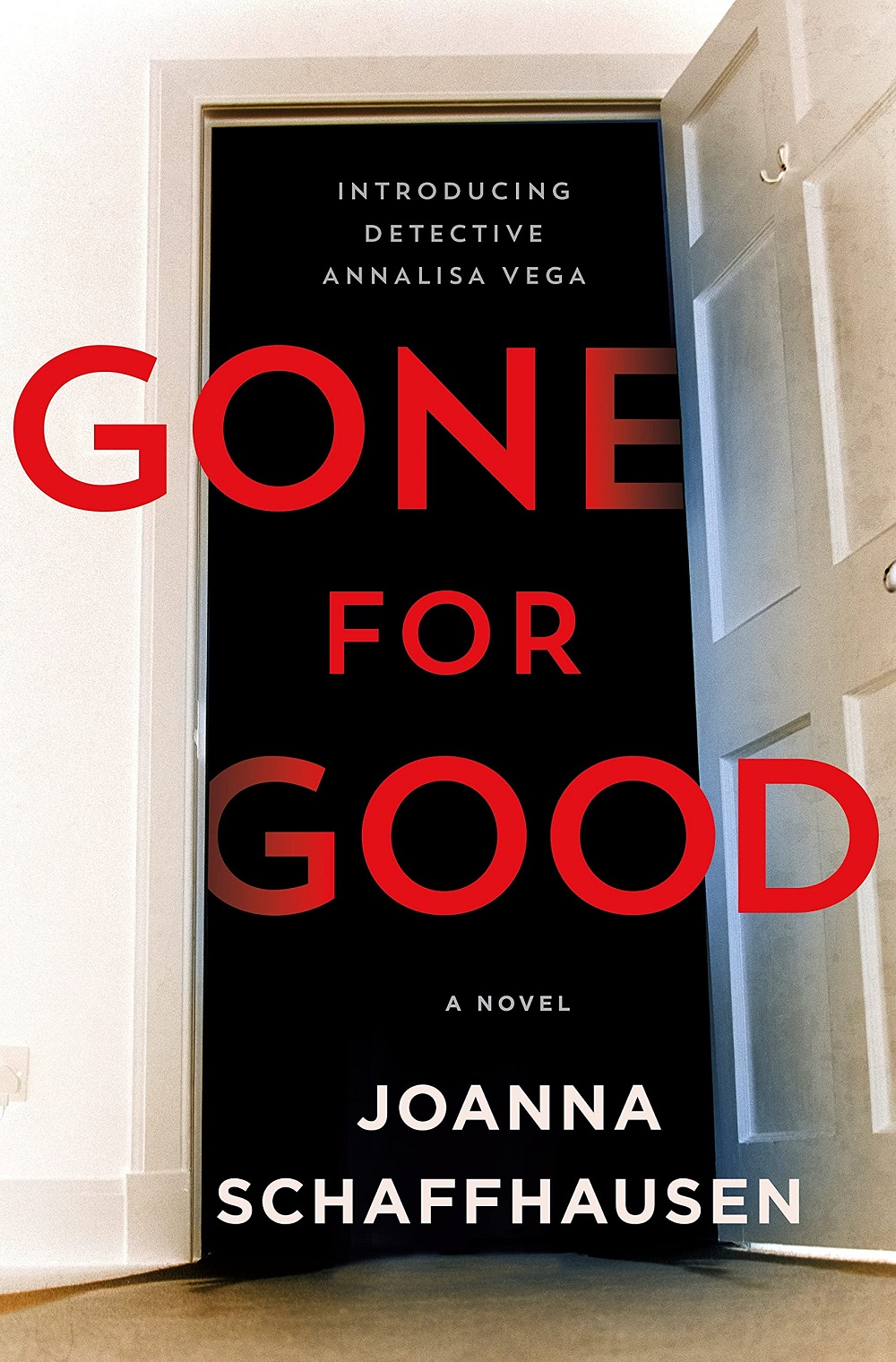
‘Gone for Good’ is the new novel by Joanna Schaffhausen, due out on August 10, 2021. Photo: amazon
Joanna Schaffhausen is a crime and mystery author. She has a doctorate in psychology, which reflects her long-standing interest in the brain―how it develops and the many ways it can go wrong. Previously, she worked for ABC News, writing for programs such as World News Tonight, Good Morning America, and 20/20. Her new novel “Gone For Good: A Novel (Detective Annalisa Vega)” is the first in a new mystery series from the award-winning author and features Detective Annalisa Vega, in which a cold case heats up. It will be released on Tuesday August 10, 2021, and is available for pre-order on amazon. (amazon, 2021)
“Gone for Good” – The Lovelorn Killer murdered seven women, ritually binding them and leaving them for dead before penning them gruesome love letters in the local papers. Then he disappeared, and after twenty years with no trace of him, many believe that he is gone for good. Not Grace Harper. A grocery store manager by day, at night Grace uses her snooping skills as part of an amateur sleuth group. She believes the Lovelorn Killer is still living in the same neighborhoods where he hunted and if she can figure out how he selected his victims, she will have the key to his identity.
Detective Annalisa Vega lost someone she loved to the killer. Now she is at a murder scene with the worst kind of déjà vu: Grace Harper lies bound and dead on the floor, surrounded by clues to the biggest murder case that Chicago homicide never solved. Annalisa has the chance to make it right and to heal her family, but first, she has to figure out what Grace knew―how to see a killer who may be standing right in front of you. This means tracing his steps back to her childhood, peering into dark corners she had not acknowledged before, and learning that despite everything the killer took, she has still so much more to lose.



 SA Examiner