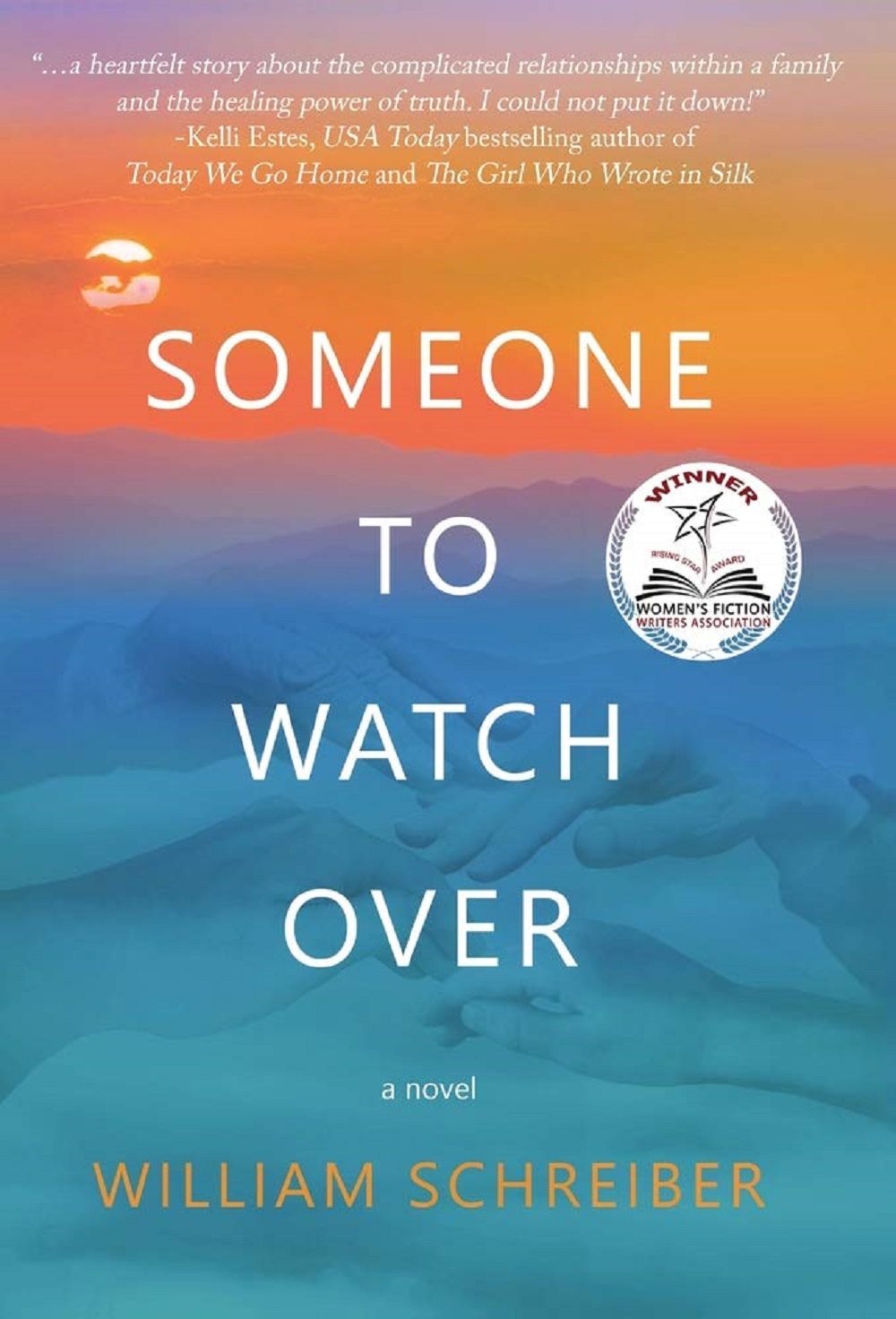
‘Someone to Watch Over’ is William Schreiber’s new novel. Photo: amazon
William Schreiber is an author and screenwriter who earned the 2019 Rising Star Award from the Women’s Fiction Writers Association for his novel “Someone to Watch Over.” The book was adapted from his original screenplay, which has won or been nominated for many competition awards, including the Academy of Motion Picture Arts and Sciences’ prestigious Nicholl Fellowship in Screenwriting, as well as numerous Best Screenplay awards at film festivals throughout the country. A life-affirming story about faith in second chances, “Someone to Watch Over” is the multi-generational story about Eleanor “Lennie” Riley’s quest to find her only child, secretly taken from her by a powerful family two decades ago; a journey that leads to a string of mysterious encounters in the Appalachian Mountains. It was inspired by the unexpected death of William’s father and his family asking him to write and deliver his eulogy.
“Someone to Watch Over” begins as Eleanor Grace Riley, aka Lennie, is returning to Mosely, Tennessee hoping to reconcile with her aging father and learn from him the fate of the now-grown child he forced her to give up as a teenager. She had a difficult childhood right from the start; her mother dies delivering her and at seventeen she leaves town with a terrible secret about her teenage pregnancy. Before she has a chance to make contact with her father, her brother John informs her that he has died. Crushed, but nevertheless determined, Lennie sets out to find answers on her own. After she learns about guardakin angels in a distant corner of the Appalachian Mountains who can connect deceased parents with their children, it renews her hope of finding her child. John has planned a road trip to recreate one of their father’s vacations when they were kids as a way to remember him but Lennie only sees the trip as a way to find a guardakin angel. John comes across as aloof and distant and his and Lennie’s relationship is strained but he hesitantly agrees to let Lennie come along. The trip is anything but a smooth ride, but along the way, Lennie learns what happened to her daughter Michelle and reconnects with her while she and John finally become a family again after being separated for twenty years.
No matter how happy and put-together families look from the outside, they all carry their share of baggage. Even though Lennie and John come from the same family, they each had different experiences growing up which included the relationship they had with their father. Because of this, they grieve in their own way without taking into consideration what the other’s memories of the father could be. This is an important point to be learned from “Someone to Watch Over,” that we should always strive to consider other people’s points of view and experiences so we can better understand them. The story is narrated in alternate points of view between Lennie and John, so the reader is always aware of their thoughts and opinions. It reads like a modern day piece of American literature, with poetic language “She set her acoustic aside and ripped up her pages of poetry, letting the shreds fall like ashes to the bed” that flows through the pages and makes the action deeper and more meaningful. This feel-good, heart warming novel is a must read and deserves a spot among literature’s best-loved works. “Someone to Watch Over,” the story of one family’s hard earned reconnection after much needed healing and forgiveness, is highly recommended for readers who appreciate reading about second chances.
“Lennie leaned out the window as the tow truck slogged up a woodsy mountain road, the night air soothing her as the moon played hide ‘n’ seek among the towering trees.”
*The author received a copy of this book for an honest review. The views and opinions expressed here belong solely to her.
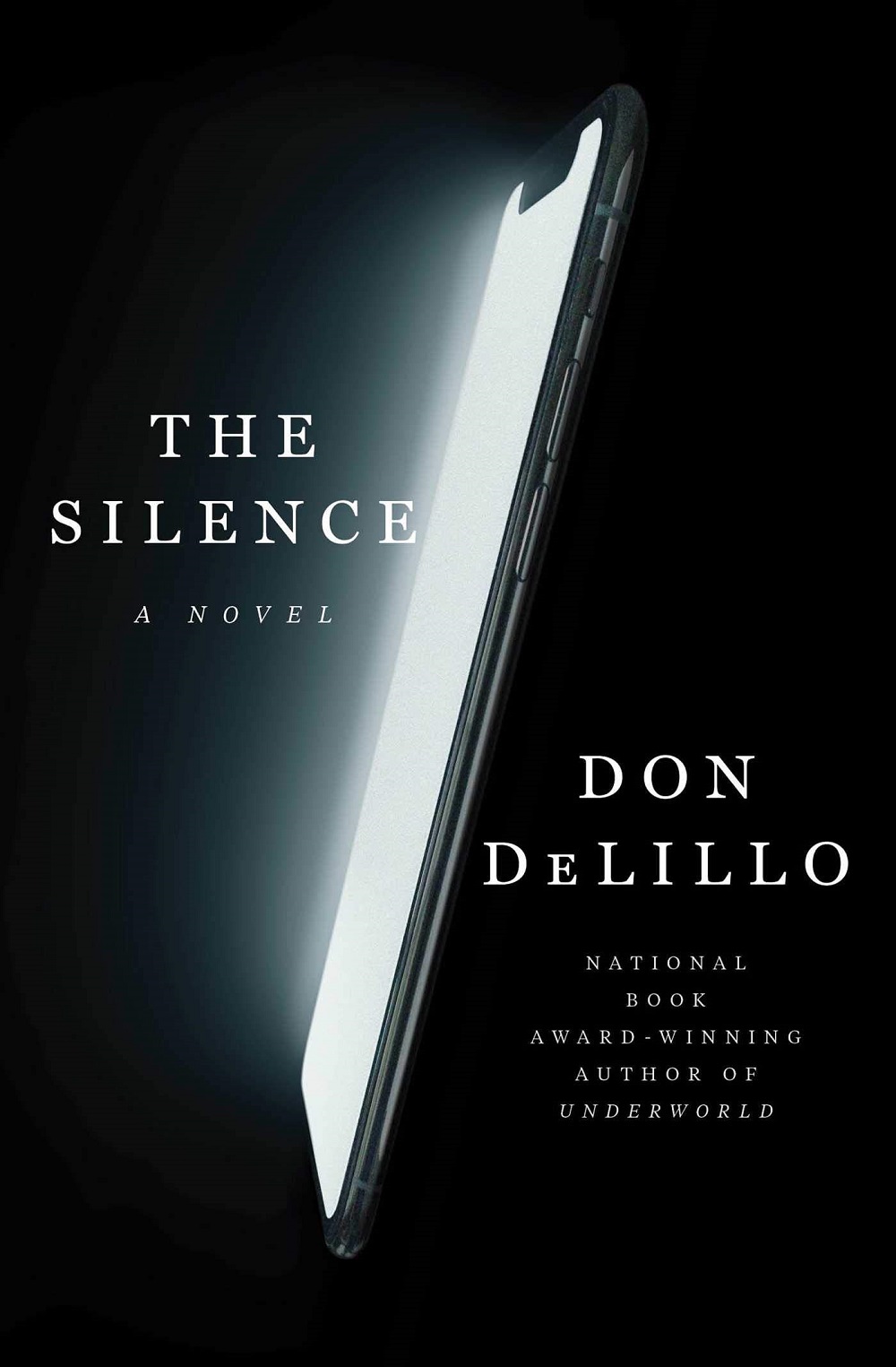
‘The Silence’ is Don DeLillo’s new novel. Photo: amazon
Don DeLillo is the author of seventeen novels including “White Noise,” “Libra,” “Underworld,” “Falling Man” and “Zero K.” He has won the National Book Award, the PEN/Faulkner Award for Fiction, the PEN/Saul Bellow Award, the Jerusalem Prize for his complete body of work and the William Dean Howells Medal from the American Academy of Arts and Letters. HIs story collection “The Angel Esmeralda” was a finalist for the Story Prize and the PEN/ Faulkner Award for Fiction. In 2013, DeLillo was awarded the Library of Congress Prize for American Fiction, and in 2015, the National Book Foundation awarded DeLillo its Medal for Distinguished Contribution to American Letters. Just released this week, “The Silence: A Novel” is atimely and compelling novel set in the near future about five people gathered together in a Manhattan apartment in the midst of a catastrophic event.
In “The Silence,” it is Super Bowl Sunday in the year 2022. Five people are having dinner in an apartment on the east side of Manhattan. The retired physics professor, along with her husband and her former student, are waiting for the couple who will join them from what becomes a dramatic flight from Paris. The conversation ranges from a survey telescope in North-central Chile to a favorite brand of bourbon to Einstein’s 1912 Manuscript on the Special Theory of Relativity. Then something happens and the digital connections that have transformed our lives are severed. What follows is a dazzling and profoundly moving conversation about what makes us human. Never has the art of fiction been such an immediate guide to our navigation of a bewildering world. Never have DeLillo’s prescience, imagination and language been more illuminating and essential.
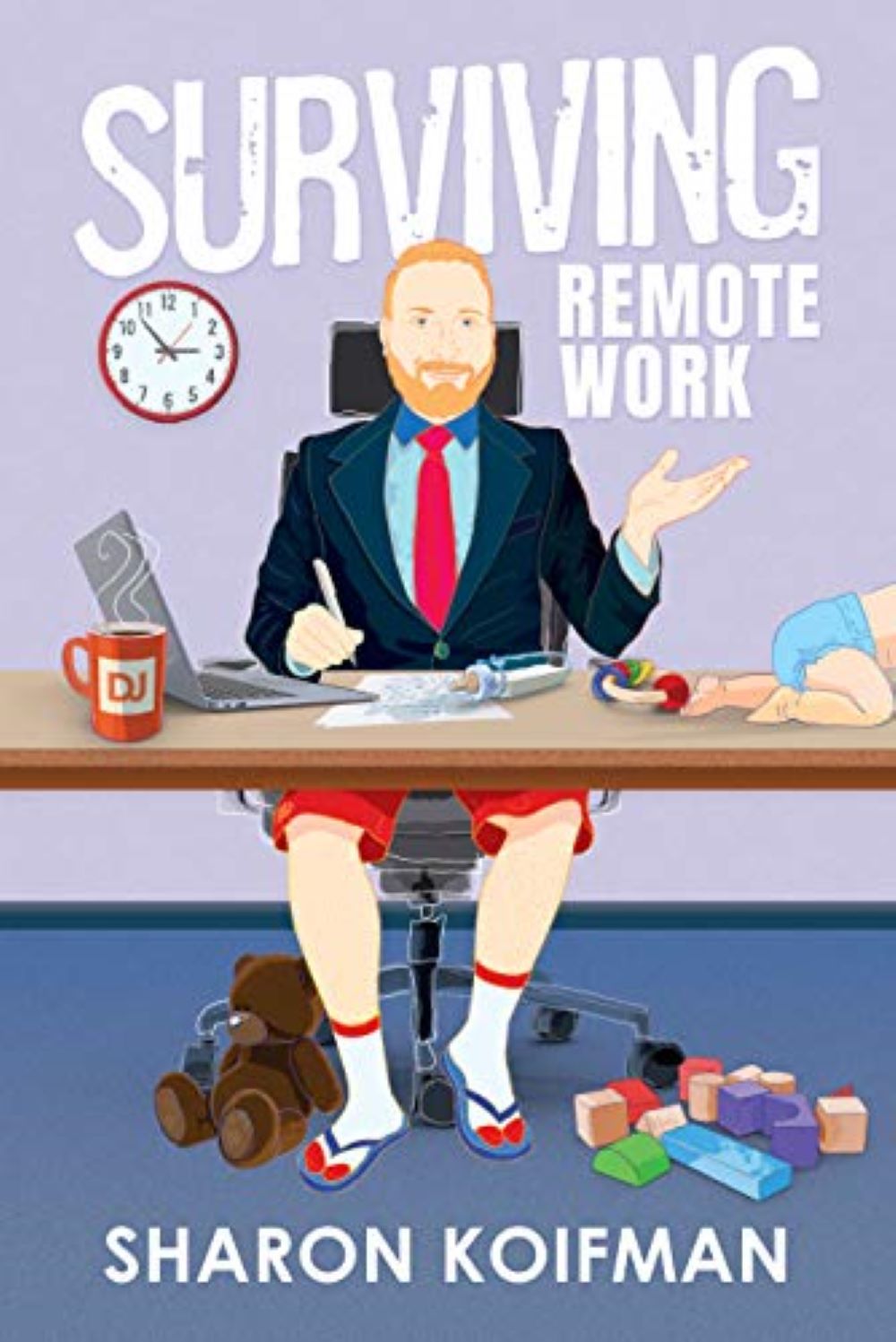
‘Surviving Remote Work’ by Sharon Koifman will be released on November 17, 2020. Photo: amazon
Sharon Koifman, a visionary and expert in building and leading remote businesses, launches his first book, “Surviving Remote Work,” on November 17, 2020. Releasing in in the midst of COVID-19 to help businesses and employees thrive in this new environment, the book is based on the author’s twenty-years of experience of running companies remotely. (Black Château, 2020)
“Surviving Remote Work” is a practical manual of tried-and-tested strategies and tools to help companies thrive with remote work while aiming to help everyone avoid costly mistakes and make working from home possible. Managers and leaders will learn practical solutions to roadblocks many face when switching over to remote work or starting from scratch. Koifman explains how to improve morale and ooze productivity while maintaining a positive working environment. Workers will find expert advice about working from home while juggling all of life’s distractions.
Sharon Koifman emphasizes the major role the company culture plays in connecting people and boosting the employees’ morale whether they are introverts or extroverts. Sharon delves into building a culture and why is it so important for a remote team. Koifman, who believes that working from home is more productive than working in an office setting, wrote his book while being a stay-at-home dad. He understands the struggles many parents face and shows how to not only get your work done with your children and significant other around, but have fun doing it.
“Surviving Remote Work” takes on a complex subject, with a fun, casual tone rare in management books—making it incredibly refreshing and easy to read. The book is available for pre-order on Amazon.
Sharon Koifman, heavily inspired by his father, built businesses from his own computer for the past 20 years. During this time, he learned how to create a work culture where people love to come to work. These days, Sharon runs DistantJob, a unique recruitment agency geared specifically for finding full-time remote employees who work from all over the world. The key difference in his approach is that he wants to show how remote work benefits businesses and how easy it is to make the transition with few proper technics. Sharon’s argument is that remote work also benefits companies and their bottom line. He believes companies who adopt remote work can be leaner, less expensive, more environmentally friendly and have access to better and more productive people, faster.
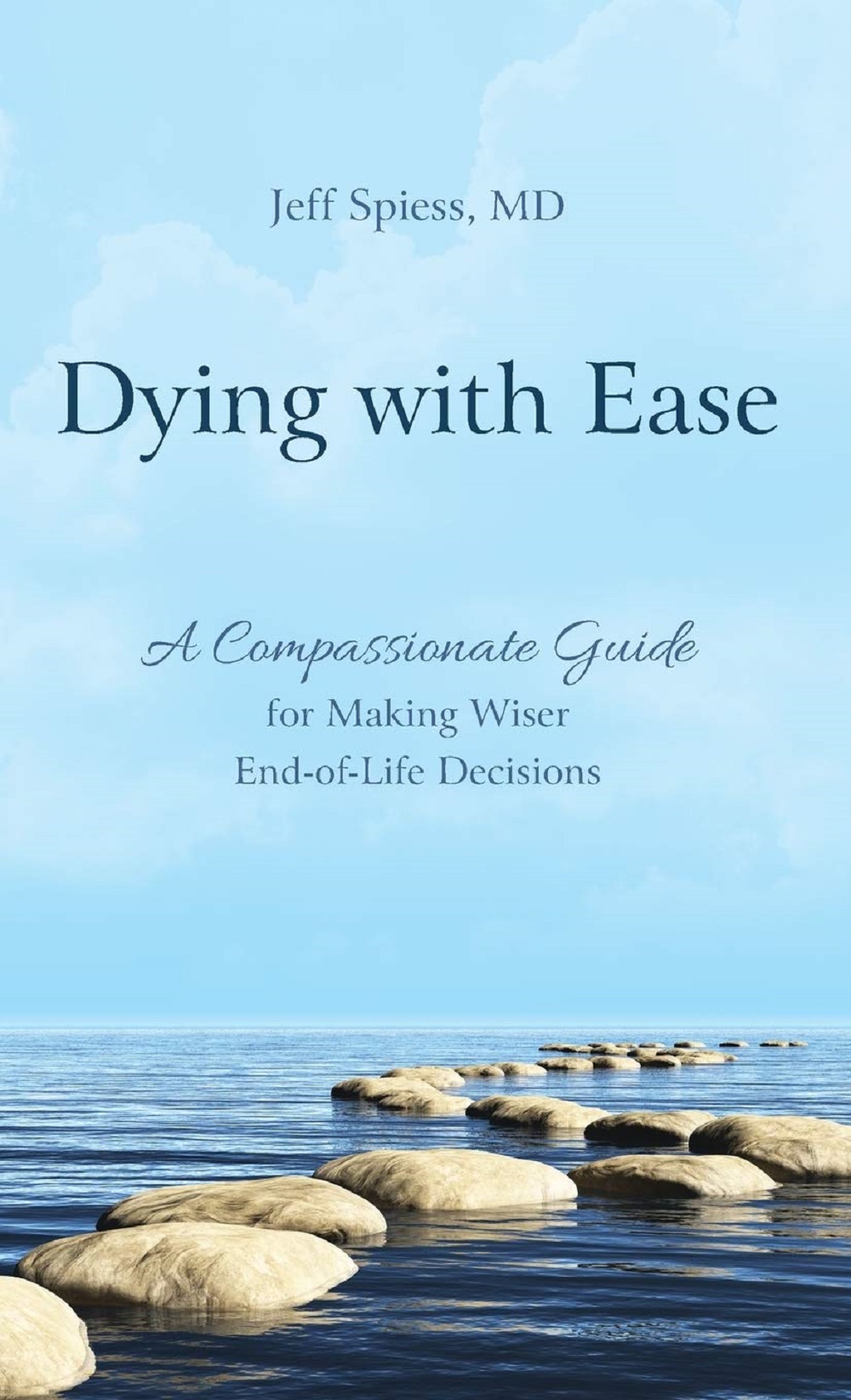
‘Dying with Ease: A Compassionate Guide for Making Wiser End-of-Life Decisions’ is the new book by Jeff Spies, MD. Courtesy photo, used with permission.
“You matter because you are you, and you matter to the last moment of your life. We will do all we can, not only to help you die peacefully, but to live until you die.”
—Dame Cicely Saunders
In 1948, Cicely Saunders met a man who would change her life. She was a thirty-year-old nurse and social worker, volunteering part time at St. Luke’s Hospital in London, an institution that had been founded a half century earlier as a home for the “dying poor.” She became captivated by a patient named David Tasma, a Polish Jewish refugee who had escaped from the Warsaw ghetto, worked as a waiter in London, and was now dying of cancer. Through her work and this relationship, she developed an awareness of the suffering and indignity experienced by dying patients, and, together with David, shared ideas as to how this could be different. When he died, David bequeathed her £500 (about $23,600 today) to be “a window in your home.” It was the beginning of an entirely new type of medical care, a care specifically focused on the needs of the dying. She called it hospice.
The word “hospice” was not new, but this meaning was. The term is derived from the same Latin root as our words “hospital,” “hostel,” and “hospitality.” This Latin term first meant “stranger,” but over time usage changed and it came to refer to a host, one who welcomes the stranger. During the medieval era, hospices were inns, boarding houses along pilgrim routes that served as places of rest and refreshment. On these long treks through Europe, many pilgrims became ill, often fatally. The hospices served then as places of care, possible recovery, often death. The word had been used since the mid-nineteenth century in Britain and Ireland for homes for the dying, places where the poor with nowhere else to go died. What Dr. Saunders did was to create a new connotation of the word “hospice,” keeping the welcoming but transforming it from a place to a model, a system of caring for the dying.
Cicely Saunders did not start out in health care. Her initial training was in politics, philosophy, and economics. In 1940, she entered nursing school, but because a back injury prevented her from doing the heavy work that nursing required, she went back to school and qualified as a medical social worker. The years she spent at St. Luke’s as part of a staff that cared deeply about the plight of those who were dying in their care demonstrated to her the impotence of the care system in the face of the patients’ ongoing pain. Knowing that the medical establishment would be resistant to hearing the ideas of an upstart social worker, she went to medical school. She then practiced for seven years at St. Joseph’s hospice in east London, listening to patients, keeping meticulous records, and monitoring the results of her treatments to relieve pain and other symptoms.
One of the first practices she challenged was the method of prescribing opioids, strong pain relievers like morphine. The prevailing practice had been to only use these drugs, given as injection, when the pain appeared severe, when it seemed to the doctor or nurse that the patient was hurting enough to “deserve” relief. The common result was that patients were either in unrelieved pain or briefly asleep after a drug dose. Then, as now, what most people “knew” about opioids was that they were addictive and dangerous. What Dr. Saunders recognized was that patients were the only ones who knew how bad their pain was and that their reports could be trusted. Since an oral dose of morphine lasts about four hours, she decided to give doses that often, by the clock, not by waiting until the pain had recurred. She also added smaller doses of analgesics between the scheduled doses if the pain “broke through.” This simple yet revolutionary idea, when put into practice, demonstrated that pain could be effectively relieved, and when this was accomplished, the patients could function more fully, engage with others more effectively, and contend with their other symptoms as well as the hopes and fears that came from the fact that they were terminally ill. In other words, they were able to live.
In 1967, Dr. Saunders opened St. Christopher’s Hospice in London, incorporating what she had learned into its structure and operations. The architecture included a sheet of glass at the entrance honoring Mr. Tasma’s bequest. She saw the mission of St. Christopher’s as providing not only excellent patient care but also a center of education and research, focusing on improving symptom relief and broadening the appreciation of this knowledge into the larger world of health care.
Dr. Saunders identified that pain was not just a physical phenomenon. Morphine was not all that was needed. She described “total pain,” the hurting that occurred in the physical body, the emotional psyche, the spiritual depths, and the surrounding family. She attacked it with a model of care aimed at all facets of life that contributed to that pain. Effective analgesia was, of course, a priority. But she recognized that it takes a team of skilled and caring professionals to do the job completely: bedside nursing to promote symptom relief and bodily integrity; social work to address financial and family concerns and to mobilize community resources; and clergy to provide empathic listening, words of comfort and advice, and insight into the realms of meaning and transcendence. She extended this care model into the community, providing services for patients dying in their homes, and she introduced family support during the patient’s illness and also after the death. Her ideas remain the bedrock of modern hospice care as well as its sister discipline, palliative care. In 1979, Queen Elizabeth II named Dr. Saunders a Dame Commander of the Order of the British Empire.
Dr. Saunders’s model of care spread across the Atlantic, finding fertile ground especially among nurses who were frustrated by the way the medical establishment seemed to be both overtreating and abandoning the dying. Florence Wald, dean of the School of Nursing at Yale University, served as the catalyst and, with a small group of colleagues, founded Connecticut Hospice in 1974, modeling their program after St. Christopher’s but adapting it to the local medical and social culture. This was two decades before the SUPPORT study would formally describe the suffering and intensive care endured by dying patients, but these visionaries and many like them recognized that a more humane way of dying was possible. Hospices began springing up around the country—small, mostly volunteer agencies, often associated with hospitals or religious institutions. As most of these relied mainly on donations and volunteers, the services offered varied widely.
A watershed moment in the care of the dying in the United States came in 1982 when the US Congress and President Reagan enacted the Medicare Hospice Benefit (MHB). This established a funding mechanism for hospice care and set standards for the organizational structures and for patient care. The MHB, as initially conceived, envisioned a “typical” hospice patient as someone with advanced cancer and no further treatment options, one whose course after hospice enrollment would be manageable, predictable, and short. In the ensuing thirty-five years, medical (e.g., AIDS epidemic, hospice for multiple other illness), financial (e.g., drug costs, federal budget deficits), and demographic (e.g., aging baby boomers) pressures have resulted in tweaks and modifications of the regulations, but the MHB continues to define how hospice care is provided in the United States.
‘Here She Is’ is Hilary Levey Friedman’s new book about American beauty pageants. Courtesy photo, used with permission.
Hilary Levey Friedman is a sociologist at Brown University, where she has taught a popular course titled ‘Beauty Pageants in American Society.’ She is a leading researcher in pageantry, merging her mother’s past experiences as Miss America 1970 with her interests as a glitz- and glamour-loving, sometime pageant judge, and a mentor to Miss America 2018. Friedman also serves as the president of the Rhode Island chapter of the National Organization for Women. Her first book, “Playing to Win,” focused on children’s competitive afterschool activities. Her latest release, “Here She Is: The Complicated Reign of the Beauty Pageant in America” offers a fresh exploration of American feminist history told through the lens of the beauty pageant world and was recently featured in the latest issue of Ms. Magazine.
In the 21st century, beauty pageants are still thriving. America’s most enduring contest, Miss America, celebrates its 100th anniversary in 2020. In “Here She Is,” Hilary Levey Friedman reveals the surprising ways pageants have been an empowering feminist tradition. She traces the role of pageants in many of the feminist movement’s signature achievements, including bringing women into the public sphere, helping them become leaders in business and politics, providing increased educational opportunities and giving them a voice in the age of #MeToo. She explores how pageants became so deeply embedded in American life from their origins as a P.T. Barnum spectacle at the birth of the suffrage movement, through Miss Universe’s bathing beauties, to the talent- and achievement-based competitions of today. The book is a look into how pageantry has morphed into culture everywhere from The Bachelor and RuPaul’s Drag Race to cheer and specialized contests like those for children, Indigenous women and contestants with disabilities. Friedman also acknowledges the damaging and unrealistic expectations pageants place on women in society and discusses the controversies, including Miss America’s ableist and racist history, Trump’s ownership of the Miss Universe Organization, and the death of child pageant-winner JonBenét Ramsey. It presents a more complex narrative than what has been previously portrayed and shows that as American women continue to evolve, so too will beauty pageants.
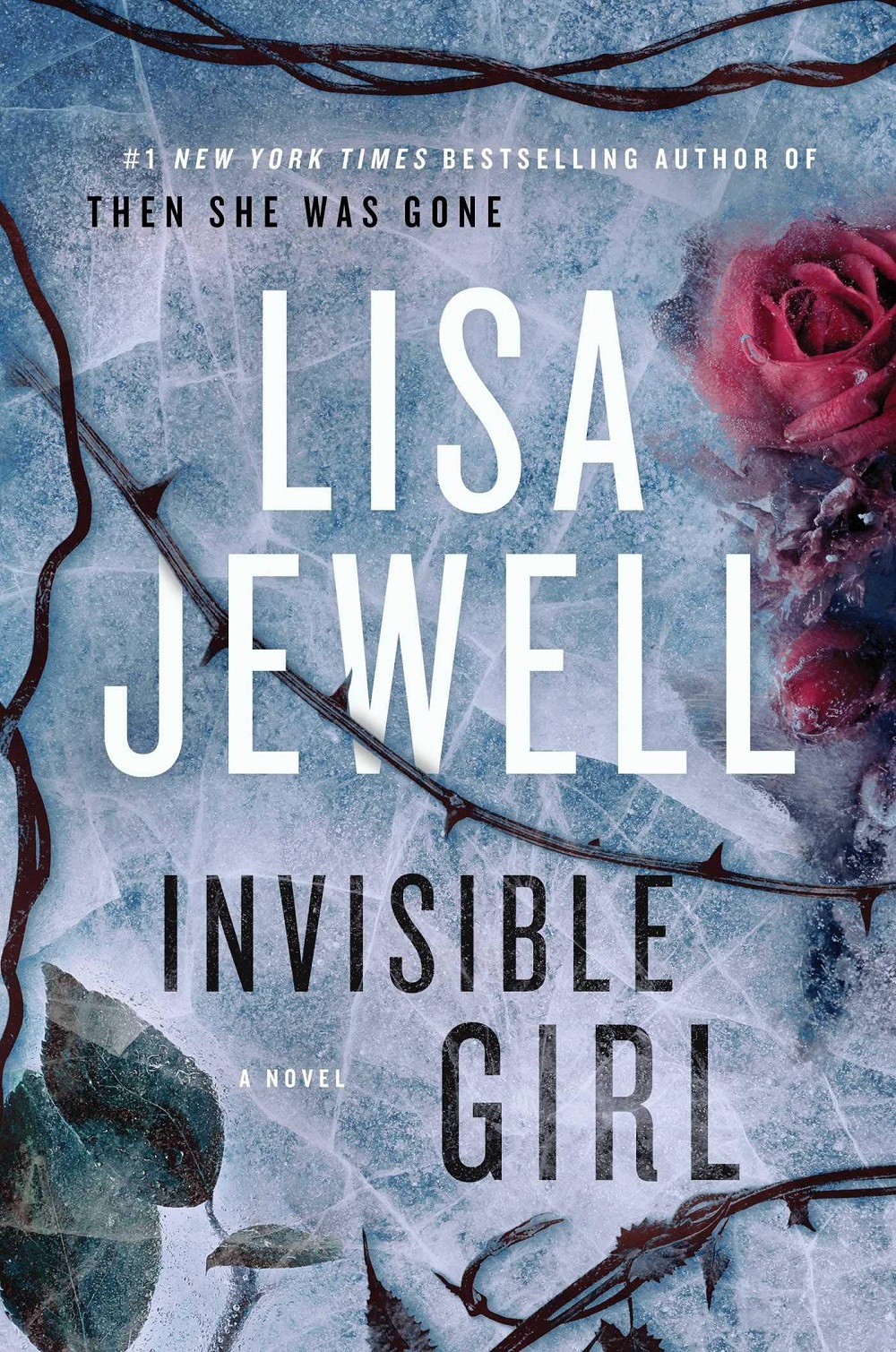
‘Invisible Girl: A Novel’ is Lisa Jewell’s new novel. Photo: amazon
Lisa Jewell is a British author of eighteen novels including “The Family Upstairs,” “Then She Was Gone” and “Watching You.” Her novels have sold more than 4.5 million copies internationally and her work has also been translated into twenty-five languages. She is one of the most popular authors writing in the UK today and in 2008 she was awarded the Melissa Nathan Award For Comedy Romance for her novel “31 Dream Street.” Her new book, “Invisible Girl: A Novel,” an obscure thriller about a young woman’s disappearance and a group of strangers whose lives intersect in its wake, was just released this week.
According to amazon, in “Invisible Girl,” Owen Pick’s life is falling apart. In his thirties and living in his aunt’s spare bedroom, he has just been suspended from his job as a teacher after accusations of sexual misconduct—accusations he strongly denies. Searching for professional advice online, he is inadvertently sucked into the dark world of incel forums, where he meets a charismatic and mysterious figure. The Fours family lives across the street. Headed by mom Cate, a physiotherapist, and dad Roan, a child psychologist, they have a bad feeling about their neighbor Owen. He is a bit creepy and their teenaged daughter swears he followed her home from the train station one night. Meanwhile, young Saffyre Maddox spent three years as a patient of Roan Fours. Feeling abandoned when their therapy ends, she searches for other ways to maintain her connection with him, following him in the shadows and learning more than she wanted to know about Roan and his family. Then, on Valentine’s night, Saffyre disappears and the last person to see her alive is Owen Pick.
Dean Koontz is the author of fourteen number one The New York Times bestsellers, including “One Door Away from Heaven,” “From the Corner of His Eye,” “Midnight” and many more; making him one of only a dozen writers ever to have achieved that milestone. He has been hailed by Rolling Stone as “America’s most popular suspense novelist” and his books have been published in thirty-eight languages and have sold over five hundred million copies worldwide to date. In his new book “Elsewhere,” released this week, the fate of the world is in the hands of a father and daughter in an epic novel of wonder and terror.
“Elsewhere” is the story of Jeffy Coltrane, whose wife Michelle left seven years ago. Since then, he has worked to maintain a normal life for himself and his eleven-year-old daughter, Amity, in Suavidad Beach. It is a quiet life, until a local eccentric known as Spooky Ed shows up on their doorstep. Ed entrusts Jeffy with hiding a strange and dangerous object, something he calls “the key to everything,” and tells Jeffy that he must never use the device. But after a visit from a group of ominous men, Jeffy and Amity find themselves accidentally activating the key and discovering an extraordinary truth. The device allows them to jump between parallel planes both familiar and bizarre, wondrous and terrifying. Jeffy and Amity cannot help but wonder if Michelle could be just a click away. They are not the only ones interested in the device. A man with a dark purpose is in pursuit, determined to use its grand potential for profound evil. Unless Amity and Jeffy can outwit him, the place they call home may never be safe again.
Amylea Murphy’s debut novel ‘Fine’ will be available starting November 17, 2020. Photo: amazon
Author AmyLea Murphy has always been passionate about helping young people mature into successful, confident, and contributing members of society. Enthusiastic about empowering others to be their most authentic and best selves in spite of the challenges life presents , her compassion and grit shines through her storytelling. Her debut novel “Fine,” is set for release on Tuesday November 17, 2020. This YA novel is an intimate glimpse into the private world of two teenage girls struggling to be themselves in a demanding and unforgiving world. Inspired by the resiliency of the human spirit, AmyLea Murphy writes about life-changing moments in the hope of empowering her readers to embrace life in all of its messiness. (Black Château, 2020)
“Fine” is the story of Anna Williams, a straight-A student, cheerleader and all-around golden child who vanished six years ago. After all these years, no one knows what happened or why. Her younger sister, Katie, has drifted through life ever since, wracked with guilt, grief and anger over Anna’s unsolved disappearance. But when her future reaches a breaking point, Katie takes the investigation into her own hands. Searching for answers in her sister’s missing person’s file, she discovers that some questions aren’t so easy to answer. Through police memos, interrogations and excerpts from Anna’s diary, Katie peaks behind the carefully crafted façade Anna left behind and uncovers the dark truths of her life in the months before she disappeared. Unsettling and surprising, “Fine” is a mystery that will break your heart and put it back together again.
“Fine” blends the mystery of “Sadie” and “Vanishing Girls” with the poignancy of Sarah Dessen. Inspired by Gayle Forman and Jennifer Niven and written for all ages, “Fine” is a reminder of the resiliency of the human spirit and brings out the inner teenager in everyone. It is currently available for pre-order on Amazon.
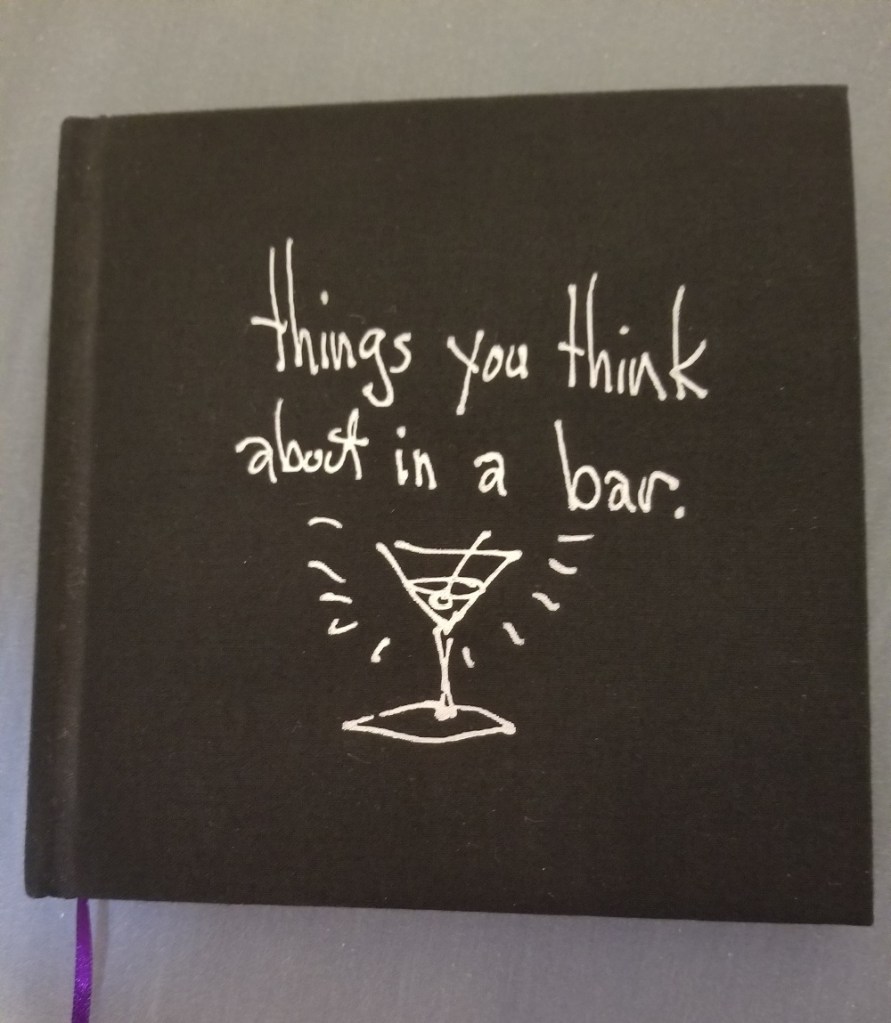
‘The Napkin Art of Tim Burton: Things You Think About in a Bar.’
Tim Burton is an American filmmaker, animator and artist who is best known for his gothic, fantasy and horror films such as Beetlejuice, Edward Scissorhands, The Nightmare Before Christmas and Sweeney Todd: The Barber of Fleet Street. He wrote and illustrated the poetry book “The Melancholy Death of Oyster Boy & Other Stories” in 1997 and “The Art of Tim Burton” in 2009, a compilation of his drawings, sketches and other artwork. He followed the latter with “The Napkin Art of Tim Burton: Things You Think About in a Bar” in 2015, which contains sketches he made on napkins at bars and restaurants he visited.
“The Napkin Art of Tim Burton” begins with a note by Tim Burton where he explains why he likes to draw on napkins. Simply put, he likes to draw on whatever surface happens to be available when he gets inspired. With all the traveling he does, he is usually in restaurants and bars and the easiest blank surfaces are napkins. He also wants to encourage others to create, “however, wherever possible” because art is mostly about the process of creating, not so much the result. Opposite that page, is a picture of a blank napkin, so the reader can draw on it if the mood strikes, along with any other surface of the book.
This being Halloween season, fans of Tim Burton might want to take notice of this art book. It is smaller than most books, about a 6 X 6 square and weighs 1.58 lbs. but for hardcore fans, it is a collectible. The artwork is typical Tim Burton, most are in black and white, but there are some colored ones. Notable napkins include those from Bar Vendôme and Hôtel Ritz and Paris and Caesars Palace in Las Vegas. Sometimes he even uses the logo as part of the drawing, which is highly inventive. One of his best drawings is that of a one-eyed green monster with a real cherry as the pupil. “The Napkin Art of Tim Burton” is a small but valuable book of art by the master of fantasy films and is recommended for genuine fans of his work.
*The author received a copy of this book for an honest review. The views and opinions expressed here belong solely to her.
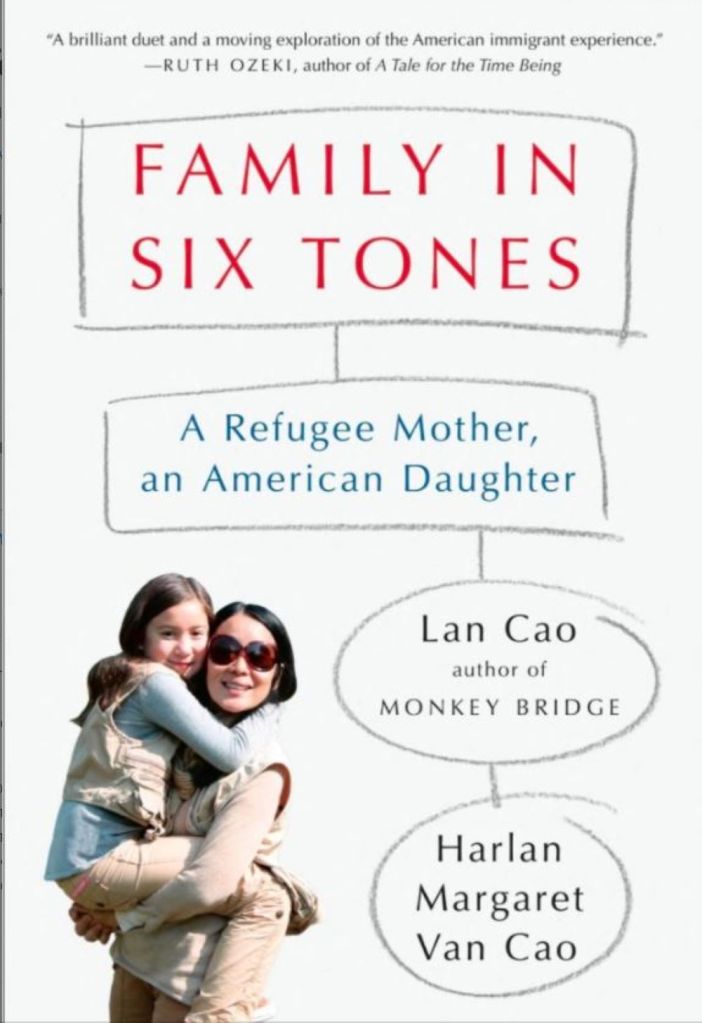
Lan Cao is the author of the novels “Monkey Bridge” and “The Lotus and the Storm” and a professor of law at the Chapman University School of Law, specializing in international business and trade, international law and development. She has taught at Brooklyn Law School, Duke Law School, Michigan Law School and William & Mary Law School. Her latest book “Family in Six Tones: A Refugee Mother, an American Daughter” is the dual first-person memoir by the acclaimed Vietnamese-American novelist and her thoroughly American teenage daughter, Harlan Margaret Van Cao, who just graduated from high school in June 2020 and will be attending UCLA.
In the Introduction, Lan Cao views motherhood and being a refugee with equal trepidation because of how uncertain she still feels about both. Even after forty years of being in the United States and seventeen years of being a parent, she still feels inadequate in both. This is the central theme throughout this memoir as she explores being a refugee and being a mother with the help of Harlan, her teenage daughter, who is half Vietnamese. In short alternating chapters, they show how different and yet how similar they really are. Lan relates her immigrant experience including war, past traumas and tragedies and the struggles and discriminations she faced while getting an education, especially in law school, while Harlan deals with culture clashes, bullying and going through life coping with synesthesia – a condition in which people often see sounds, taste word or feel a sensation on their skin when they smell certain scents – she often relates about having a purple cat following her.
Being an immigrant is never easy and too often the Vietnamese viewpoint is left out of the conversation. This is what makes this memoir unique; not only is it told through the perspective of a mother/daughter relationship, but it is told through the Vietnamese point of view, not a solider or a politician, even though it touches on the sensitive topic of the war. Readers get to witness Lan’s transition from naïve immigrant to law student, especially the moment she decides to study law – when she was working in a video store and the police questioned her regarding missing money. The insight into Vietnamese culture is interesting, especially the system of ranking people, i.e. calling relatives Father Two, Sister Three. Her shared immigrant experiences of discrimination makes her relatable: “We may have Americanness officially documented in birth certificates, passports, or naturalization papers. But despite the seductive panache of the American Dream, the message that we can never really be American has curiously been passed down from generation to generation.” Harlan also has this conflict about being too American versus not being Vietnamese enough and her writing is more poetic: “This life isn’t meant to be a race. It is meant to be a long, slow dream of perfect confusion, loneliness, deep friendships, and ambition. I’m ready.” When she writes “You can be American outside, but not in the house” it speaks to what children of immigrants sometimes deal with at home. They are expected to be Americanized outside the house, but at home they are expected to speak the native language and adhere to that culture’s expectations, leading to an emotional tug of war. Overall, “Family in Six Tones” is an impressive and poignant exploration of the mother/daughter relationship which often has the same struggles and insecurities passed on from generation to generation. It is recommended for readers who appreciate a distinctive perspective on the struggles of refugees and familial bonds.
“ I wanted to bloom wherever I was planted, in this present tense where I had found myself, like a lotus flower that grows in mud and turns to face the sunlight.” – Lan Cao
*The author received a copy of this book for an honest review. The views and opinions expressed here belong solely to her.




 SA Examiner