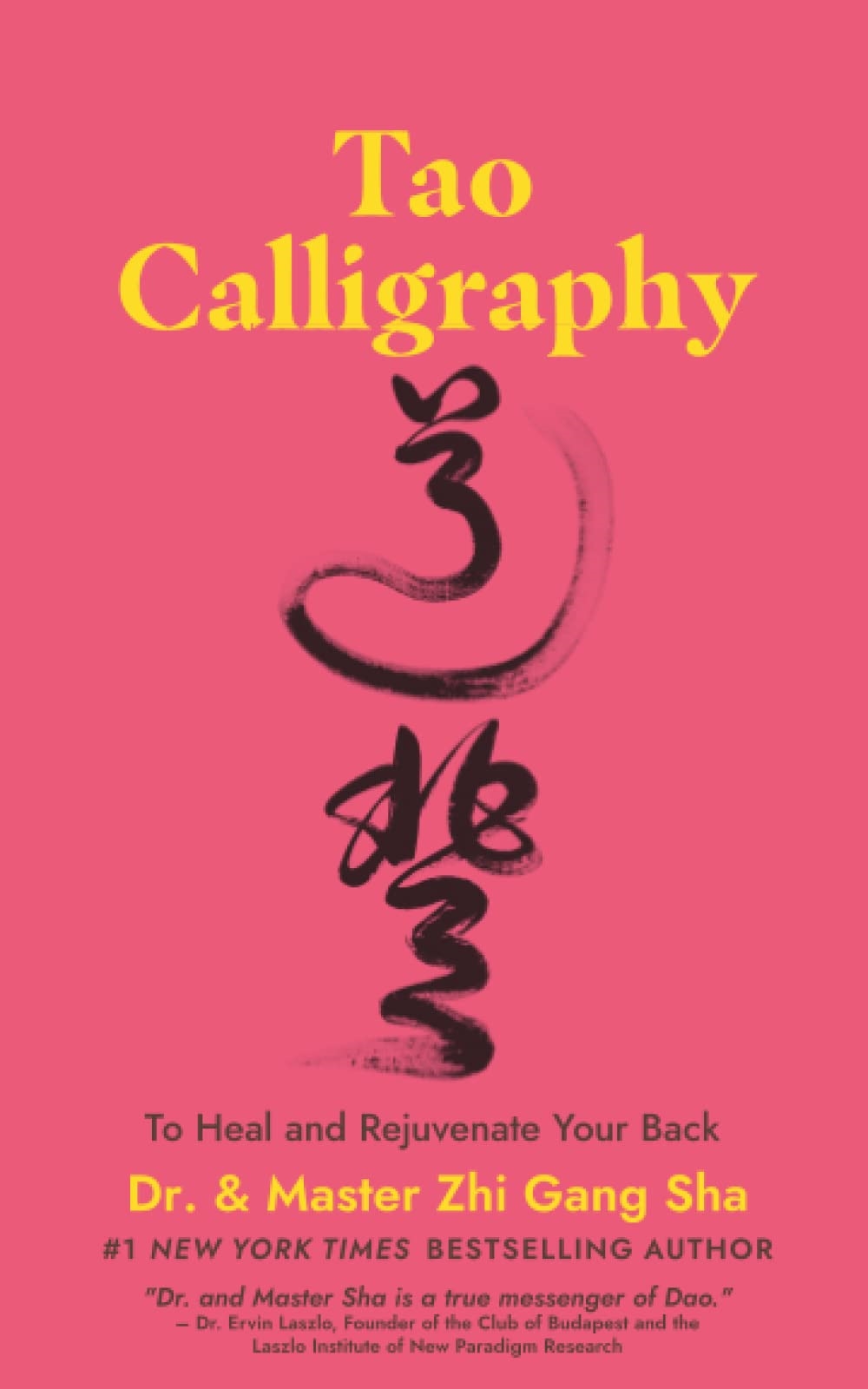
Book review: ‘Tao Calligraphy’ by Dr. & Master Zhi Gang Sha

‘Tao Calligraphy’ is the first in a series of books about the benefits of Tao Calligraphy. Photo: Amazon

Dr. & Master Zhi Gang Sha is the author of thirty-one books, including eleven New York Times bestsellers and bestsellers on the lists of the Wall Street Journal, USA Today, and Amazon. He brings ancient wisdom to modern times to help people reach optimal wellness and greater happiness. Tao Calligraphy is a revolutionary healing art based on an ancient form of one-stroke calligraphy from China. Dr. & Master Zhi Gang Sha now brings this healing frequency to everyone through a new book series. The first book in the series, “Tao Calligraphy to Heal and Rejuvenate Your Back,” offers relief from back pain, a problem all too familiar to many Americans. According to Georgetown University’s Institute for Health Care Research and Policy study, nearly 65 million Americans report a recent episode of back pain. (Tao Calligraphy, 2022)

In “Tao Calligraphy,” Dr. & Master Sha offers a guide for enhancing many aspects of life through soul secrets, wisdom, and simple, practical techniques. As a doctor of both Western and traditional Chinese medicine and acupuncture and a master of several Eastern arts, he brings decades of study and experience to help people discover their own power to heal and uplift their lives. It is divided into eleven chapters including Tao Science Explains the Universal Law of Shen Qi Jing, Why do People Have Challenges in Health, Relationships, Finances, and Every Aspect of Life?, and What is Tao Calligraphy? In the section The Importance of Practice, the author explains the importance of practicing Tao Calligraphy and explains how to access the practice videos using the QR codes. Since it addresses ways to heal back pain, In the Foreword, William Gladstone stresses that this book is not a substitute for medical treatment but that it is simply “a supplemental approach that has helped hundreds of thousands with no negative side effects.”

Almost everyone at one time or another has experienced back pain. It is a chronic condition that can disrupts people’s daily life and some pain relievers can cause side effect that can be worse than the original back pain. In his book in a series, Dr. & Master Sha shares ways to relieve this pain through Tao Calligraphy. In the first couple of chapters, he briefly explains the science and physics involved in vibrational fields but overall it is easy to understand and follow. It is a small but informative book that includes QR codes that link to videos that help further explain the information. Highlights include Chapter 3: Why Do People Have Challenges in Health, Relationships, Finances, and Every Aspect of Life? because it clarifies the fact that Tao Science states that “information, energy, and matter can be positive or negative” and that when they are negative, they cause sickness and relationship, and financial challenges and Chapter 6: Chinese Calligraphy where he explains what Chinese Calligraphy is and its importance in Chinese culture. Admittedly it is a different way to deal with physical pain but it has worked for some people. “Tao Calligraphy” is a small but helpful guide to help heal and rejuvenate your back and is recommended for readers interested in mental and spirituals healing.

“To be a person of good quality and to experience a good life, we need to have a good vibrational field. A good vibrational field is one carrying positive information, energy, and matter. Positive information, energy, and matter bring connection, order, and harmony.”

*The author received a copy of this book for an honest review. The views and opinions expressed here belong solely to her.

Rating: 4 out of 5.

An excerpt of this book is available here.

The Black Phone is an edge of your seat psychological thriller

The Black Phone is the movie adaptation of Joe Hill’s short story from ’20th Century Ghosts. Photo: google

Joe Hill is the #1 New York Times bestselling author of the novels “The Fireman,” “NOS4A2,” “Horns,” and “Heart-Shaped Box;” “Strange Weather,” a collection of novellas; and the acclaimed story collections “Full Throttle” and “20th Century Ghosts.” The Black Phone is a short story in his “20th Century Ghosts” collection and has been adapted into a major motion picture from Universal Pictures and Blumhouse Productions starring Ethan Hawke.

The Black Phone – Jack Finney is thirteen, alone, and in desperate trouble. For two years now, someone has been stalking the boys of Galesberg, stealing them away, never to be seen again. And now, Finney finds himself in danger of joining them: locked in a psychopath’s basement, a place stained with the blood of half a dozen murdered children. With him in his subterranean cell is an antique phone, long since disconnected but it rings at night anyway, with calls from the killer’s previous victims. And they are dead set on making sure that what happened to them does not happen to Finney. The movie is 1 hr. 42 min. long, is rated R and classified as horror/thriller.

I have not read many of Joe Hill’s works, just ‘NOS4A2,’ but I have seen the series NOS4A2 and the movie Horns, both are excellent. After watching The Black Phone movie on opening weekend I was curious how it compares to the original short story on “20th Century Ghosts.” I checked the book out of the library because it seemed quicker than going out to buy it or ordering it on amazon. I read it in one seating, it is, after all, a short story, no more than 30 pages long.

The movie is short, less than two hours long, and that is the way I like it. It does not go into detail with an origin story, the reason why the ‘Grabber’ is the creepy killer that he is and that is quite alright with me. It is mislabeled as a horror movie because it is not scary at all but it is a psychological suspense/thriller. There are plenty of jump scares and suspenseful moments and yes, it is hard not to compare it to IT with the balloons, the mostly young cast, the retro setting, and the yellow raincoat the sister wears. While it may have a predictable ending, it does have a false ending, where just when you think it is over…..it surprises you. Yes, it is unnerving to see children in peril but in the end, Finney takes a schoolmate’s advice “Sometimes you have to stand up for yourself.” All’s well that ends well. It gets high marks for Ethan Hawke’s performance and how about those creepy masks. I came to the conclusion that the reason the father is an abusive alcoholic is because he is still grieving his wife, who committed suicide because of the visions she was having, just like the daughter and he was scared that she would end up the same way. It is creepy, haunting, and suspenseful but it also focuses on the familial bonds between brother and sister and in the end the father is repentant. Did I need to know why the Grabber is a demented killer? Probably not. I would definitely watch it again. Need a movie recommendation for the long Fourth of July weekend? Check out The Black Phone, it is well worth a trip to the movie theater. 

The short story focuses on when Finney gests kidnapped and his trying to escape. The Grabber is obese and does not wear masks. He kills his brother just when we think he is going to save Finney, just like in the movie. It does not mention a sister or father for Finney or even anything to do with school, but both the movie and the story have the same redemptive ending. I would say that the movie is faithful to the short story version when it comes to Finney’s harrowing experience with the Grabber and that is all that matters. 

Photo: Sandra Cruz

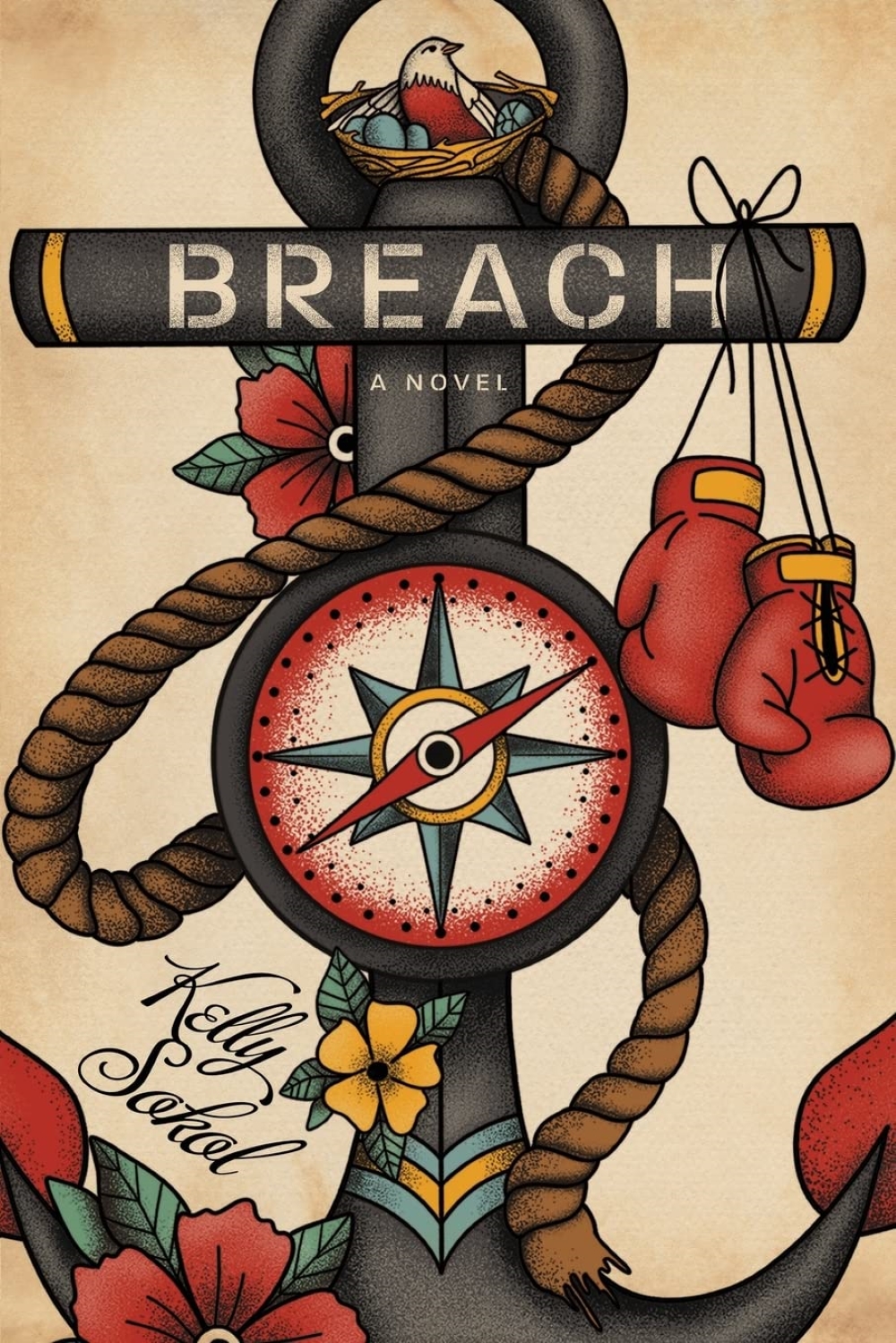
Book review: ‘Breach’ by Kelly Sokol

‘Breach’ is Kelly Sokol’s new book. Photo: amazon

Kelly Sokol is the author of “Breach” and “The Unprotected,” which was featured on NPR and named one of Book Riot’s 100 Must-Read Books of Pregnancy, Childbirth and Motherhood. She is a Pushcart Prize-nominated author and MFA creative writing graduate. Her work has appeared in Alpinist, UltraRunning Magazine, The Manifest-Station, Connotation Press, and more. She teaches creative writing at The Muse Writers Center. Her new book “Breach” is an unflinching and timely gaze into the marriage of an enlisted special operator and his wife.

“Breach” – Marleigh Mulcahy grew up in a boxing gym, the daughter of hard-drinking parents who did not keep a stable roof over her head. The story begins as she is working at her grandfather’s gym. In the cinder-block Box-n-Go, amidst the sweat and funk, she meets Explosive Ordnance Disposal specialist Jace Holt, a highly and expensively trained bomb diffuser with three successful deployments behind him. With a heady mix of hope, carelessness, and a ridiculous amount of courage, they begin a family. They have plenty in common because they both have unstable parents and they are determined to do better. In between the pressures of a growing family and responsibilities, their relationship grows strained. When Jace returns to active duty, a roadside bomb resurrects ghosts from the couple’s past and threatens the life they have built.

It is common knowledge that the life of a military wife is challenging but it is rare to read a book that chronicles these challenges. This is where ‘Breach’ comes in and not only fills the void but excels at shining the light on the ups and downs of a military family. This book is an unwavering look at the reality of what it means to be a military wife and struggling to keep it together. With down to earth language, it is fast paced and an easy read and will keep readers turning pages to find out what happens to Marleigh in the end as her life begins to unravel. The characters are relatable and well developed and the action is mostly dialogue driven. Although it contains a few graphic sex scenes, it serves to cement the couple’s relationship and does not take away from the focus of the overall story. Marleigh and Jace’s story may be heartbreaking but it ends on a hopeful note that there is always light at the end of the tunnel. ‘Breach’ by Kelly Sokol is a reminder that it takes a village to raise a family and that we all need the support of friends and family. It is easily this year’s beach read and is recommended for fans of military family life fiction as well as women’s fiction.

“Marleigh awoke in the dark, each night, a running tally of debt in her mind. Food, school for the boys, diapers for Max, gas for the car, car insurance. Did she have room on either of her credit cards? Health insurance cancellation notices.”

*The author received a copy of this book for an honest review. The views and opinions expressed here belong solely to her.

Rating: 4 out of 5.

An excerpt of ‘Breach’ is available here.

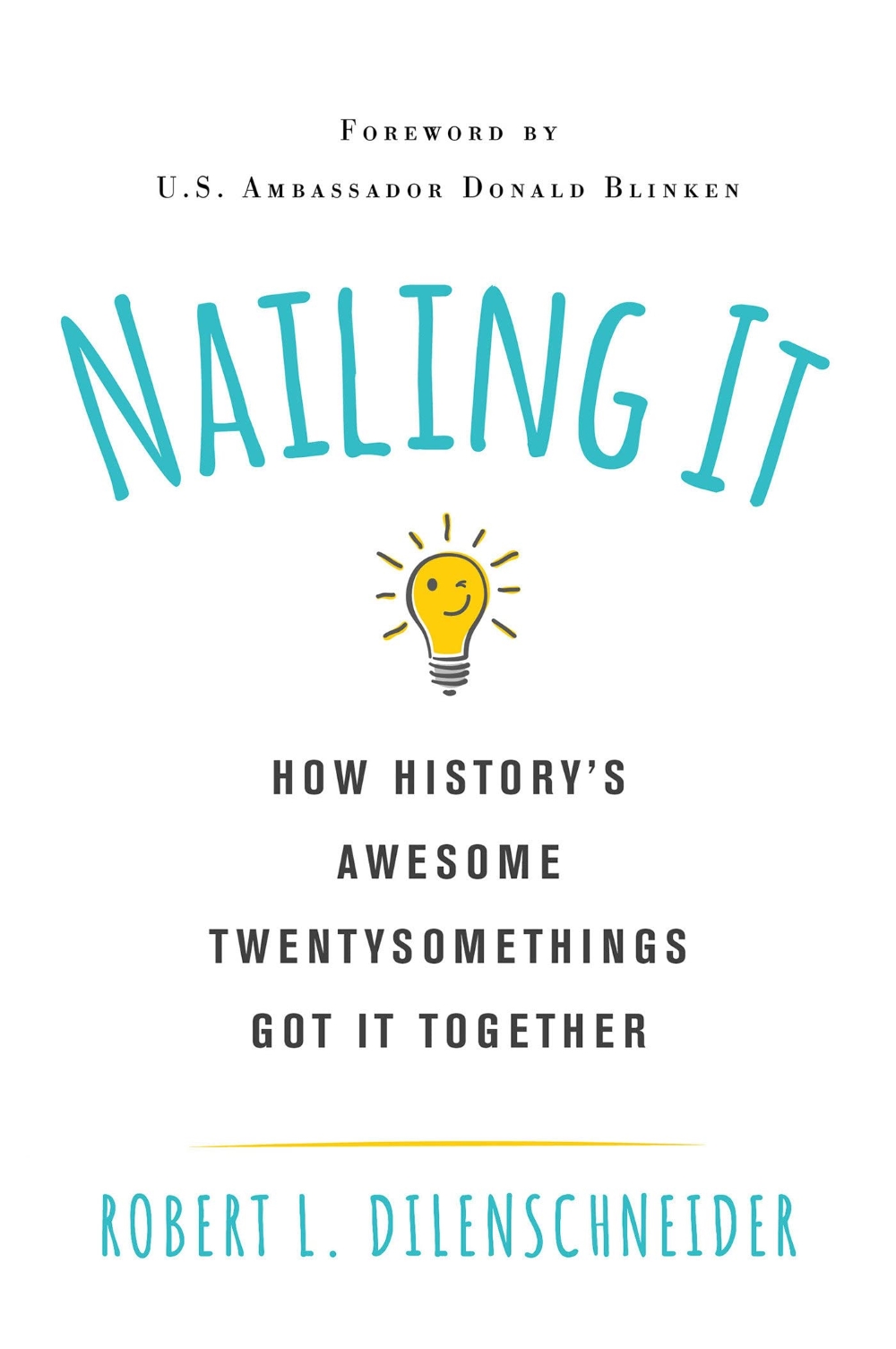
Book review: ‘Nailing It’ by Robert L. Dilenschneider

‘Nailing It: How History’s Awesome Twentysomethings Got It Together’ by Robert L. Dilenschneider. Photo: amazon

Robert L. Dilenschneider has hired more than 3,000 successful professionals and advised thousands more. He is founder of the Dilenschneider Group, a corporate strategic counseling and public relations firm based in New York City. Formerly president and CEO of Hill & Knowlton, he is the author of the bestselling books “The Critical First Years of Your Professional Life,” “Power and Influence,” “A Briefing for Leaders,” and “Nailing It: How History’s Awesome Twentysomethings Got It Together.” The latter is an inspiring and encouraging book that provides 25 fascinating and diverse profiles of iconic men and women at or near age 25 and how they built their legacies. (amazon, 2022)

‘Nailing It’ begins with a foreword from U.S. Ambassador Donald Blinken where he writes that Robert L. Dilenschneider focuses on these men and women when they were aged 25 or so, what they did to gain a spot in history, and how they did it. He also mentions that the target demographic is those coming of age right now, but also older people who care about them and want them to succeed. In the Introduction, the author shares that the idea behind the book is to inspire young people and hopes they realize that they can make a difference. In general, he wishes people realize that there are many paths to greatness and not all of them are smooth sailing. The book is made up of twenty three chapters and each focuses on one of these 25 people, including Wolfgang Amadeus Mozart, Albert Einstein, Coco Chanel, Golda Meir, and more. More than just biographies, each chapter reveals where they were in their lives in their mid-twenties and the choices that made them who they are.

At first, seeing a list of history’s greatest might be intimidating but it serves to remember that each one of them encountered and defeated their own difficulties in life. Even if you do not know every one of the people profiled in this book, all their stories are inspiring. Since each chapter is a different person, readers can take their time and even go back and re-read previous ones. With easy to understand language, the author takes readers deep into the lives of each of these individuals and shares the good and the bad in the hopes of inspiring everyone to dream big, but most of all, to put in the effort and work necessary to achieve success. Most importantly, this book is a reminder that it is ‘never too late to make an impact.’ It is hard to choose a favorite profile, but Mary Shelley (Chapter 2) stands out due to her being a notable literary figure, best known for her masterpiece Frankenstein. By the time she was 25, she had already written what could be considered a best-seller, but she had also suffered more than most young women, starting with the death of her mother when she was only ten days old. ‘Nailing It’ by Robert L. Dilenschneider is an inspiring collection of notable historical figures that would make an excellent addition to any personal library. It is recommended for readers who appreciate biographies and books on career advice and self-improvement.

“The world is full of timid souls and idle dreamers who never really go after what they want. Don’t be one of them. Work to stand out and use the lessons you’ve learned from this book. If you take that approach and stick with it, it will change your life for the better.”

*The author received a copy of this book for an honest review. The views and opinions expressed here belong solely to her.

Rating: 4 out of 5.

Book review: ‘Influence and Impact’ by Bill Berman and George Bradt

‘Influence and Impact: Discover and Excel at What Your Organization Needs From You The Most’ by Bill Berman and George Bradt. Photo: Sandra Cruz

George Bradt has led the revolution in how people start new jobs – accelerating transitions so leaders and their teams reduce their rates of failure and fulfill potential. He is Chairman of PrimeGenesis, author of ten books on onboarding and leadership, two books on back-to-school chats, 700+ columns for Forbes, and eighteen plays and musicals (book, lyrics & music). Bill Berman is a seasoned business psychologist with more than 30 years’ experience as an executive coach, senior line manager, clinician and academic. He has consulted to CEOs, C-suite leaders, and general/functional managers since founding Berman Leadership Development in 2004. He has published more than 50 articles and books on a variety of subjects. They are co-authors of “Influence and Impact: Discover and Excel at What Your Organization Needs From You The Most.” (Amazon, 2022)

“Influence and Impact” provides an easy-to-follow, common-sense approach to building influence at any level of an organization. It is divided into five parts: Part I: The Disconnect, Part II: The Solution, Part III: Plan A, Part IV: Plan B, and Part V: Helping Others Build Their Influence and Impact. In the Introduction, the authors define influence as “the indirect or intangible effect you have on others, based on what you do, how you do it, how you communicate it, and who you are.” According to them, the purpose of this book is to help readers understand themselves, their role in their job, and how to influence their organization. The section also summarizes each part and what the reader can expect. Each chapter includes tips, worksheets, and tools to help readers focus and take appropriate actions to do the job that is expected of them. There are also real life examples of workers who have benefitted from their expertise and practical advice.

Books on leadership, influence, and business advice are not a rare commodity. What makes ‘Influence and Impact’ unique is that it covers all the stages of a person’s career, ranging from preparing for an interview, to getting more recognition at work and aiming for more satisfaction from a job. Using real life stories, practical advice, and worksheets to help readers individualize the content, it is an extremely useful guide for modern business practices. The language is easy to understand which makes the reading pace steady. Highlights include Chapter 12: Make a Plan to Move On: Sometimes You Need a Fresh Start – provides insight into how to prepare to move on from a job and tips on job searching, including how to prepare for an interview and Chapter 11: Negotiate for a Better Role Inside Your Organization -helps readers create a Personal Strategic Plan to help them “find a better fit for your strengths within your current organization.” A major takeaway is that as workers, blaming the company for difficulties in job performances is just masking the reality that we all have to adapt to our environment to survive. We may have to adapt, but it is up to each individual worker to find fulfillment and the do the best job they can without casting blame on others or on the company itself. It has valuable information that everyone in an organization can use, from the workers to the managers. ‘Influence and Impact’ by Bill Berman and George Bradt contains important information for building a successful career in any stage and is recommended for readers who understand that there is always something new to learn when it comes to career advice.

“There is extensive social science research, however, that indicates that your ability to adjust to the context you live or work in is directly related to the likelihood of your success.”

*The author received a copy of this book for an honest review. The views and opinions expressed here belong solely to her.

Rating: 4 out of 5.

Book review: ‘Be Your Own Medical Intuitive: Healing Your Body and Soul’ by Tina M. Zion

‘Be Your Own Medical Intuitive: Healing Your Body and Soul’ by Tina M. Zion. Courtesy photo, used with permission.

Tina Zion is the globally acclaimed award-winning author of three medical intuitive books. “Become a Medical Intuitive” won 1st Place Gold from the Body Mind Spirit Book Awards in 2019 and “Advanced Medical Intuition” won the 2020 COVR Visionary Award along with 5 star ratings on Amazon. She is also the author of two Reiki books, “The Reiki Teacher’s Manual” and “Reiki and Your Intuition.” Tina’s books sell in over 40 countries and have been #1 in Canada and Australia. She teaches in Australia, New Zealand, UK, Europe, Canada, Mexico, and throughout the USA. She is also a contributing author in Michael Newton’s book, “Memories of the Afterlife.” Tina has taught self-development courses for 30 years and specifically has specialized in medical intuition for over 10 years, always with 100% stunning reviews by her students. Her new book, “Be You Own Medical Intuitive: Healing Your Body and Soul (Medical Intuition)” guides readers forward into their own personal healing.

After the Foreword by Shelly Frome, Professor of Dramatic Arts Emeritus, “Be Your Own Medical Intuitive: Healing Your Body and Soul” begins with Introducing This Book to You where Tina Zion explains the purpose of the book: “for your healing and transformation into a healthier body, healthier mind, and a cutting-edge intuitive awareness of the world around you.” It is meant to guide readers in their own journey towards personal healing through methods that have improved people’s lives for decades. A medical intuitive is a practitioner of alternative medicine who uses his/her intuitive abilities to find the cause of a physical or emotional condition through insight instead of modern medicine. According to the author, people are already wired to be intuitive but it is a learned skill and this book helps readers understand it in an effort to learn, heal, and master their life in exciting new levels. The book is divided into four parts: Part One: Become Powerfully Intuitive for Yourself, Part Two: Get In Charge of the Intuitive You, Part Three: Confidently Healing Yourself, and Part Four: Eight Primary Causes & Your Action Steps to Heal. The Appendix includes worksheets to print for self scans, suggested reading and resources list, and other books in the Medical Intuitive series.

Physical pain often has an underlying emotional tie. Where there is emotional trauma, there is bound to be our body’s physical reaction to it. Tina Zion’s “Be Your Own Medical Intuitive” is a practical guide to help people understand and deal with the signals that their bodies are sending in an effort to heal what is ailing them. Using examples from clients’ experiences and exercises meant to clear the mind and body of past trauma, she makes the entire process easy. The language is simple, down to earth and geared towards the everyday person. Each chapter covers a topic and at the end, there is a summary or recap of the essential points discussed. Highlights include Chapter 13: Twelve Keys to Constantly Do for Yourself (Save Yourself First, Do Not Absorb the Energy of Others) and Part Four – Eight Primary Causes & Your Action Steps to Heal which highlights main causes of physical discomfort and how to rise above them. With topics such as meditation, auras, energy fields, clairvoyance, and non-physical entities, “Be Your Own Medical Intuitive” is certainly not for everyone but readers interested in self-healing and self-awareness will find it resourceful and informative.

Intrigued? Here is an excerpt.

Rating: 3 out of 5.

*The author received a copy of this book for an honest review. The views and opinions expressed here belong solely to her.

Book review: ‘The Tao of Inner Peace’ by Diane Dreher

‘The Tao of Inner Peace’ by Diane Dreher

Diane Dreher, Ph.D., is a bestselling author, researcher, and positive psychology coach. Her books, “The Tao of Inner Peace,” “The Tao of Personal Leadership,” “The Tao of Womanhood,” “Inner Gardening,” and “Your Personal Renaissance,” have been translated into ten languages. Her work has been featured in media outlets including USA Today, Entrepreneur, Redbook, Glamour, Cosmopolitan, Science of Mind, radio and TV talk shows, and websites on leadership and personal growth. “The Tao of Inner Peace” shows how the Tao can be a powerful and calming source of growth, inspiration, and well-being in times of conflict and anxiety.

Translated more often than any other book except the Bible, the Tao Te Ching has been a spiritual guide for centuries, helping millions find peace within themselves, with each other, and with the natural world around them. Written in workbook style, complete with exercises, questionnaires, journal-keeping techniques, and affirmations, “The Tao of Inner Peace” translates the ancient Eastern philosophy into a plan for contemporary Western living. The book is divided into five sections: I The Way: Then And Now, II The Inner Way, III The Way of Nature, IV The Way of Life, and V The Way of Peace. In the Introduction, the author writes that in this book, the Tao lessons are explained with parallels and real life examples to make them more relatable to modern times. The chapters are short for a reason, to allow readers to read as many portions as time allows and then apply the lessons to his/her life. Each chapter opens with a quote from the Tao Te Ching which can be used as a meditation theme and closes with an affirmation to reinforce the lesson just covered in that chapter. The Notes and Resources section at the end has been updated as needed. Diane Dreher, Ph.D., shows the way to bring greater joy, fulfillment, and creativity to daily life, heal the body and spirit, build self-acceptance and self-esteem, resolve conflict, reverse negative cycles of emotion, and understand life as a process of changes and challenges.

“The Tao of Inner Peace” is a resourceful handbook that encourages mental wellness. It modernizes the principles of Tao and shows how to apply its lessons to everyday life to create balance and harmony. It covers every aspect of daily life, from defining peace within ourselves to becoming a citizen of the world by getting to know people of other cultures and being aware of how our actions affect the planet (nature). Diane Dreher does an admirable job of making Tao principles easy to understand by using simple and down to earth language. Readers can incorporate them into their lives by following the personal exercises listed at the end of each chapter. Highlights include Section II The Inner Way, Chapter 11: Creating Greater Joy In Life “With laughter comes the realization that all things come to pass, that life evolves through cycles of change” and Section III The Way of Nature Chapter 16: Transcending Hostiles Cycles where it stresses that “Violence begets further violence, negativity begets negativity” and the importance of not becoming hostile, fearful, or angry when faced with negativity. The most important lesson to be learned is that we are all part of a larger whole and by thinking globally while acting locally, we can “bring greater harmony to our world.” “The Tao of Inner Peace” by Diane Dreher is a practical guide as it offers advice and solutions to improve not only our personal lives but the local and global community as well. It is worth re-reading several times and is recommended for readers who appreciate books on meditation, mindfulness, self-improvement, and Taoist Philosophy.

“As the waters of a pure mountain spring slowly cleanses a stagnant pond, so by circulating loving energies we can gradually heal our world.”

*The author received a copy of this book for an honest review. The views and opinions expressed here belong solely to her.

Rating: 4 out of 5.

Book review: ‘The Still Point: The Simplicity of Spiritual Enlightenment’ by Kevin Krenitsky, MD

‘The Still Point’ is Kevin Krenitsky’s new book on spiritual enlightenment and awakening. Courtesy photo, used with permission.

Kevin Krenitsky has been, at times, a professional rock musician, a medical doctor, and a business executive. Despite leading a life deemed outwardly “successful,” he lived with a deep background of anxiety, fear, and stress that came and went since early childhood. At the age of forty, in the midst of decades of suppressing tremendous inner and outer conflict, he reasoned there must be another way. This “willingness” led to a decade of studying non-duality by way of “A Course in Miracles.” At the height of a successful business career, he turned away into relative isolation and soon found the direct path to the recognition of our true nature. One day in meditation, a thought came that a book called “The Still Point” would be written. Five years later, the first words arrived. Krenitsky’s The Still Point: The Simplicity of Spiritual Enlightenment” takes readers on a journey of self-discovery, ultimately leading to the recognition that our self-aware nature is happiness and peace itself.

“The Still Point” begins with an Introduction where the author explains that this book is about “discovering and living as your indestructible, true self, which is deeper than just the body and the mind.” He refers to our true self as the Still Point and defines it as the experience of recognizing our own awareness; simply put: “being aware of being aware.” According to him, our unconscious living has not only created stress, anxiety, wars, and famine, but our choices have brought us to the edge of mass destruction. The earth has suffered greatly from our collective human unconsciousness. With this book, he shows us how to discover and live our lives in alignment with our true self. Each chapter begins with an introduction of the subject and is followed by a question and answer discussion. Some of the questions are from people he has encountered but most of them are questions he himself has had in his journey to self-discovery. The book is divided into two parts: the first has chapters such as The Discovery of Our True Nature, The Healing of Our Relationships, and Awakening and the Limits of the Mind; the second part deals with subjects such as Taking Responsibility for Your Happiness, Be a True Student of Peace and Happiness, and The Illusion of Control.

For such an intense subject, “The Still Point” is relatively easy to read, due in part to the Q & A format that the author chose to present his ideas. It reads like an interview and the language is straightforward and down to earth. The important takeaways include the significance of living in the moment, realizing that we share a consciousness with each other and the planet, and self-awareness. When we focus on the noise of the outside world, we lose our feelings of peace and happiness. Highlight include Chapter 14: Taking Responsibility for Your Happiness, as it reminds readers that “The desire to project blame on others, the world, or past events is a universal trait of the egoic mind” and Chapter 20: Be a Seed of Light in a Desperate World where it emphasizes the importance of taking pride in your job. It is important to find a job you like but “…never diminish whatever it is you find yourself doing in the present.” These may not be new theories, but in today’s world, in the midst of all the chaos, both external and internal, it pays to slow down and re-evaluate what makes life worth living. Filled with practical life advice, “The Still Point” is recommended for readers who value concepts such as meditation and self-awareness and are searching for tips on easing the load we all sometimes have to carry.

“There is no denying the terrible injustice that has been happening for a long time, but treating people who are desperately calling out for love with hate and anger simply will not work.”

*The author received a copy of this book for an honest review. The views and opinions expressed here belong solely to her.

Read an excerpt here. 

Rating: 4 out of 5.

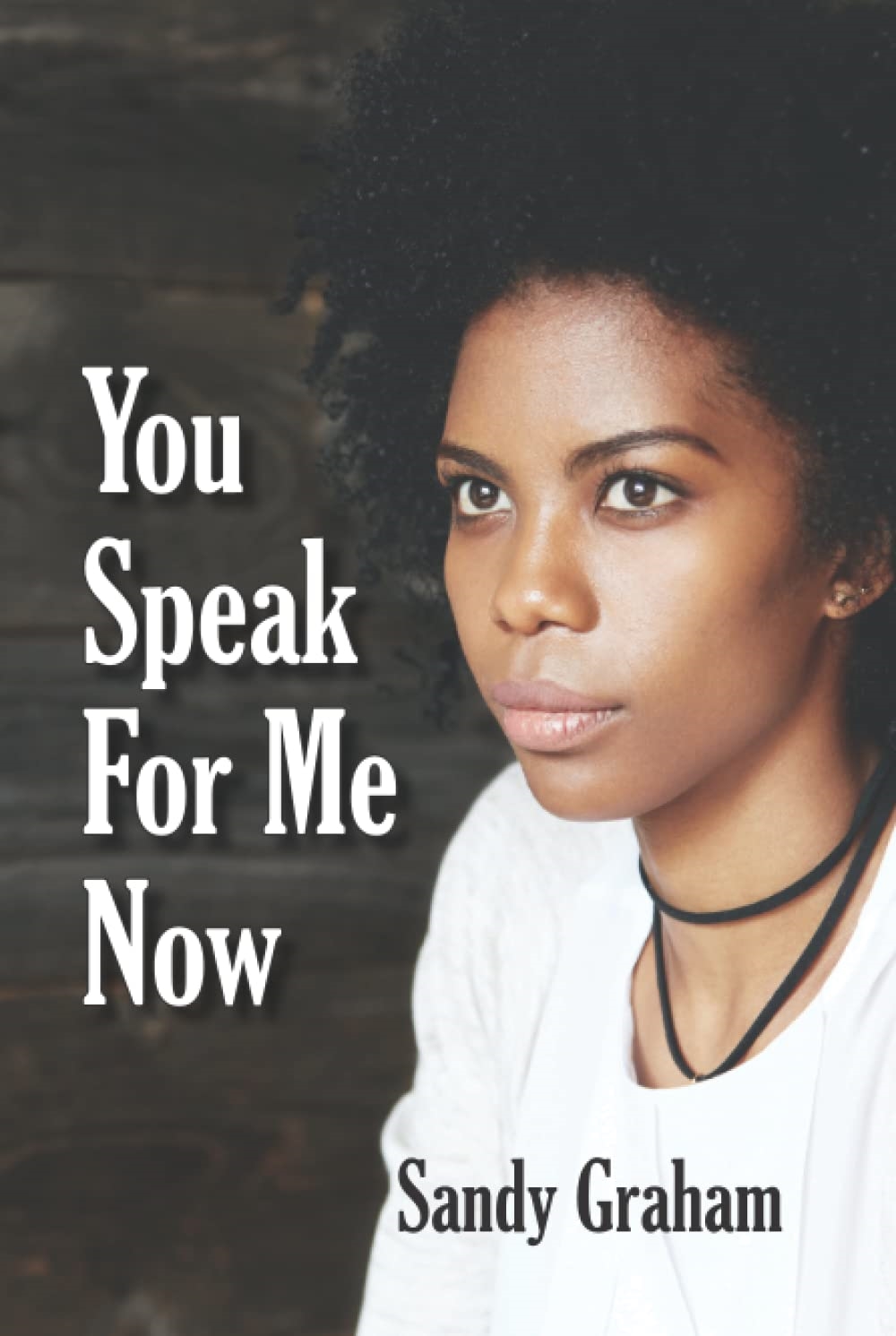
Book review: ‘You Speak For Me Now’ by Sandy Graham

‘You Speak For Me Now’ is the new novel by Sandy Graham. Photo: amazon

Sandy Graham is a dual citizen of Canada and the United States. His dual citizenship reflects a North American ancestry dating back to both sides of the American Revolutionary War. It also leads to a desire to see all North Americans find a way to embrace their multiple cultures, languages, and ethnic backgrounds in a manner that provides an opportunity for all to enjoy a full life. His previous books include the Pillage Trilogy, (“Life Shattered,” “Life Rescued,” and “Life Threatened”) “Murder – On Salt Spring?” “The Pizza Dough King,” and “A Quite Rampage.” In his new novel “You Speak For Me Now,” Emma and John, a young couple, risk their marriage, their business, and their lives to speak out against inequality, racism, and fascism.

“You Speak For Me Now” – Emma Simon is a brave but introverted deaf woman of color and John McEwan is an extrovert with a passion for politics and singing. When they meet in the seventh grade, John is immediately smitten, proving that opposites do attract. Not only do they find happiness in marriage, but as business partners. They create an app – Sign-Talk, as a way to give deaf people a way to talk to everyone. As the popularity of the app grows, so does John’s public persona. While promoting Sign-Talk on national TV, John turns the conversation into a discussion about politics. He is quickly targeted by a popular conservative commentator who uses his platform and social media following to attack John’s views and his family. John becomes embroiled in this battle and drags Emma in with him. Forces against them turn violent, driving them into seclusion, tearing them apart, and destroying their rapidly growing company. In a world torn between democracy and dictatorship, can America survive the onslaught of authoritarianism and become once again a beacon of democratic leadership? In a dramatic role reversal, Emma reveals how a strong individual can rise in the face of crises.

Romance novels usually have a happy ending when a couple finally ends up together. Rarely do they expand the narrative to include a lifetime of ups and downs and unexpected surprises that come along the way. This is what makes “You Speak For Me Now” a more realistic account of one couple’s struggles and victories. Emma and John’s story is not a typical ‘happily ever after’ account and is both heart warming and heart breaking. Mr. Graham puts readers through an emotional rollercoaster while at the same time emphasizing music’s ability to heal and bring people together. It is an easy read and the action is mostly dialogue driven and since the story spans decades, the character development is excellent. It is worth mentioning that politics and social issues, such as income and race inequalities, as well as the current state of affairs in the United States plays a big part in the story which will no doubt elicit strong reactions, depending on the reader’s political leanings. Regardless, the book’s underlying message of unity and the need for peace and understanding stands out. “You Speak For Me Now” is a must read novel of love and courage in the midst of life’s toughest moments and is recommended for readers who enjoy romance and political fiction.

“Regardless of our political leaning, liberal or conservative, we must come together to right our ship, to return to morality, integrity, and mutual respect.”

*The author received a copy of this book for an honest review. The views and opinions expressed here belong solely to her.

Rating: 4 out of 5.

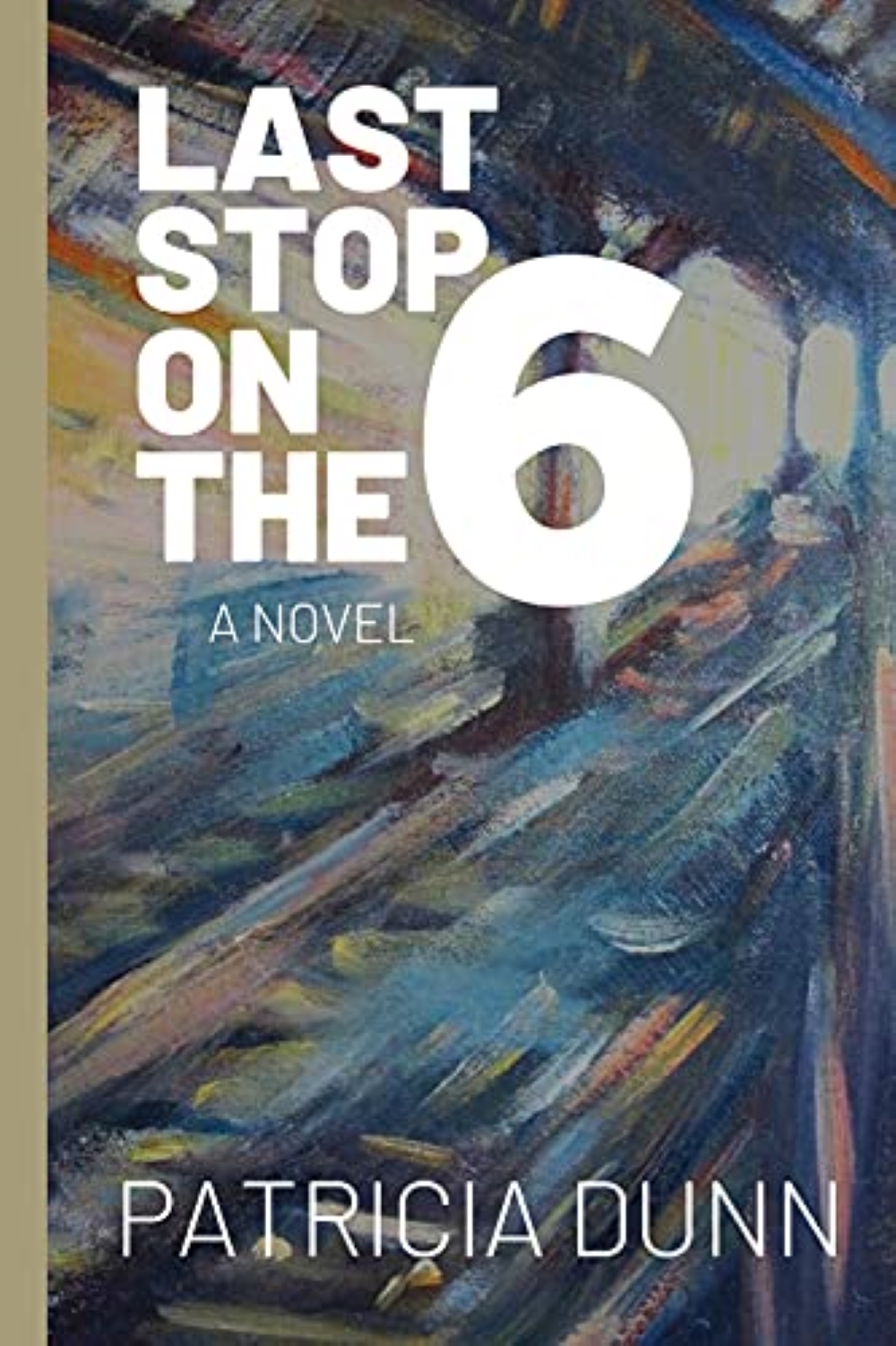
Book review: ‘Last Stop on the 6’ by Patricia Dunn

‘Last Stop on the 6’ by Patricia Dunn. Photo: google

Patricia Dunn is the author of the young adult novel “Rebels By Accident.” (Sourcebooks Fire, 2014). Her writing has appeared on Salon, in The Village Voice, The Nation, LA Weekly, The Christian Science Monitor, in the anthology Love, InshAllah: The Secret Love Lives of American Muslim Women, and more. Patricia holds an MFA in creating writing from Sarah Lawrence College. She has been Senior Director of the Writing Institute at Sarah Lawrence College and is co-founder of The Joe Papaleo Writers Workshop in Cetera, Italy. Her new book “Last Stop on the 6” is the return of the prodigal daughter to a world of long-buried hurts, political complexities, and female resiliency.

“Last Stop on the 6” begins as Theresa Angela Campanosi, or Angela, is sprung from jail after getting arrested at an anti-Gulf War protest in Los Angeles. It is set in 1991 against the backdrop of the Gulf War and the people who were against it. She left her Italian-American neighborhood of Pelham Bay, the Bronx, after an accident that left her brother, Jimmy, an up-and-coming actor, paralyzed. It is now ten years later and she receives a letter from her mother that includes a one-way ticket back to attend Jimmy’s wedding. Against her better judgement and because she blames herself for the accident, she returns to New York to deal with the guilt and secrets that make up her family. But now the groom has disappeared, leaving behind only a cryptic note and his collection of plastic patron saints on his nightstand. Angela’s asthmatic mother insists on keeping Jimmy’s fiancée in the dark; her father, three years sober, goes on a bender; Angela’s ex-boyfriend has taken over running the family exterminating business; and her stepfather just wants to feed everyone. She goes looking for Jimmy through the old neighborhood and discovers that our opinions about people—even ourselves—can be wrong, and that family is far more than blood.

Patricia Dunn presents an extraordinary picture of an Italian American family from the Bronx. Narrated in the first person point of view, readers get an insight into Angela’s conflicted personality: “In LA, I was the Bronx Girl – stubborn and tough- an activist with only three days to stop the war from happening. In the Bronx, in Pelham Bay, I was the sister who ruined her brother’s life.” Once she gets to New York, the first sign that she is not ready to return is her lack of a coat, which she had long ago donated to a homeless shelter. While she does not have a good view of her mom “Dad was the dreamer and Mommy was the sledgehammer who smashed those dreams into smithereens,” she still refers to her as ‘Mommy.’ The characters are complex, relatable, and well developed and the action flows easily from chapter to chapter. Using a combination of humor and drama, the author keeps it from being an overly depressing and dramatic tale of family bonds and obligations. Angela’s family is no doubt dysfunctional but they are also loving, supportive, and most of all, forgiving. In focusing on the life of one anti-war activist, “Last Stop on the 6” brings a Bronx neighborhood to life with all its complexities and humorous mis-adventures. It is recommended for readers who appreciate stories centered around strong families and the joys and pitfalls of growing up and growing wise.

*The author received a copy of this book for an honest review. The views and opinions expressed here belong solely to her.

Rating: 3 out of 5.