Book review: ‘The Peacekeeper’ by B.L. Blanchard

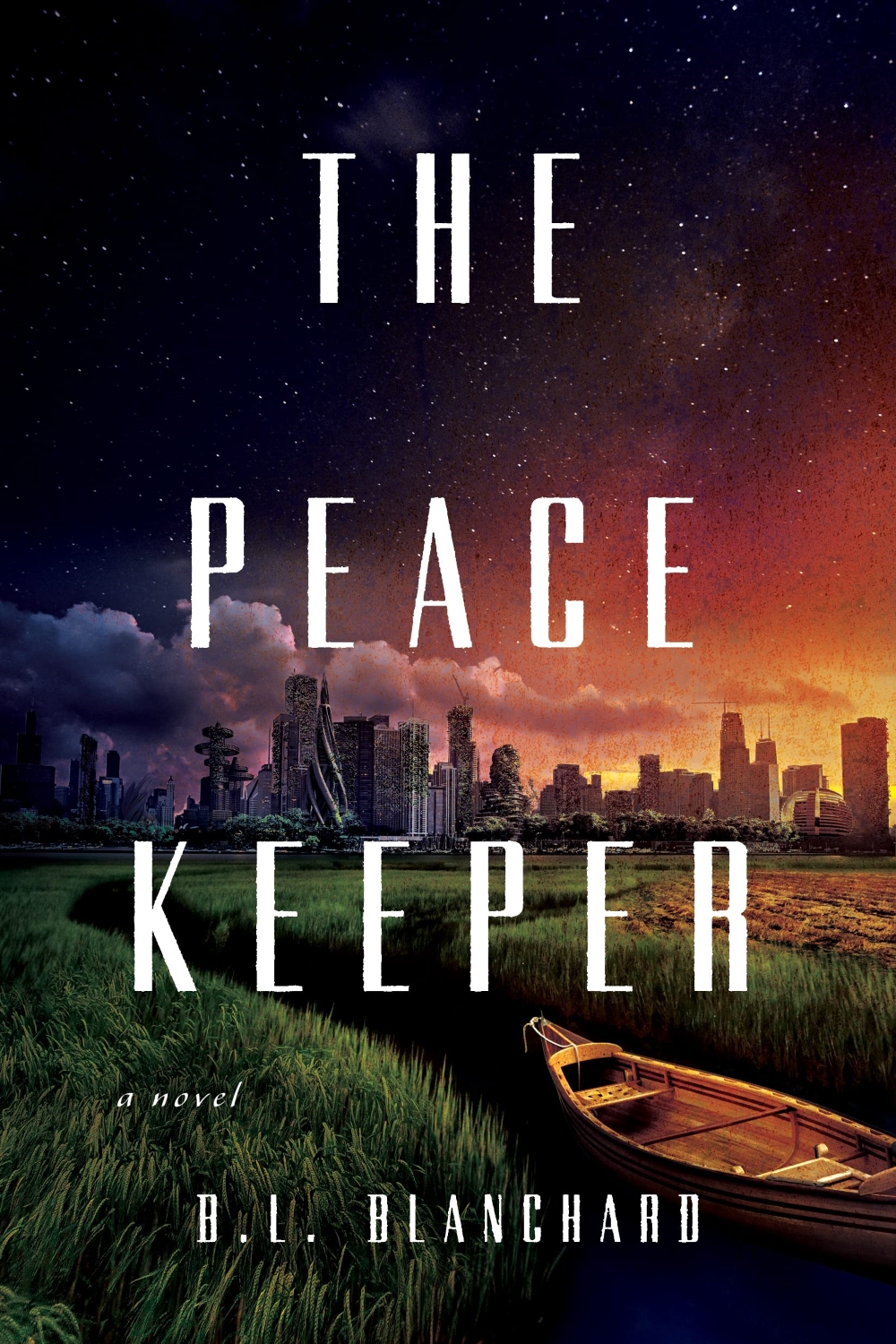
‘The Peacekeeper’ is the newest novel by B.L. Blanchard. Photo: Amazon

B.L. Blanchard is a graduate of the UC Davis creative writing honors program and was a writing fellow at Boston University School of Law. She is a lawyer and enrolled member of the Sault Ste. Marie Tribe of Chippewa Indians. She is originally from the Upper Peninsula of Michigan but has lived in California for so long that she can no longer handle cold weather. Her new novel “The Peacekeeper: A Novel” is set against the backdrop of a never-colonized North America, where a broken Ojibwe detective embarks on an emotional and twisting journey toward solving two murders, rediscovering family, and finding himself. (Amazon, 2023)

“The Peacekeeper” – North America was never colonized. The United States and Canada do not exist. The Great Lakes are surrounded by an independent Ojibwe nation and in the village of Baawitigong, a Peacekeeper confronts his devastating past. Twenty years ago to the day, Chibenashi’s mother was murdered and his father confessed. Ever since, caring for his still-traumatized younger sister has been Chibenashi’s privilege and penance. The story begins as another woman is slain on the same night of the Manoomin harvest. She is his mother’s best friend and this connection takes Chibenashi far from the only world he has ever known – to the big city of Shikaakwa. The city is home to the victim’s estranged family – two people Chibenashi never wanted to see again: his imprisoned father and the lover who broke his heart. As the questions mount, the answers will change his and his sister’s lives forever because Chibenashi is about to discover that everything about their lives has been a lie.

Regardless of location and time, there will always be family drama; such is the human condition. This story takes place in an alternate reality where North America was never colonized, the Native people live and thrive there, and Europeans are only visitors. Yet it is far from a perfect society because there is still division of the classes via a caste system and the working class is shunned. Such is the world where Chibenashi lives and as a Peacekeeper, he is tasked with investigating the small town’s newest homicide. Due to extensive character development, most characters, with the exception of Ashwiyaa (Chibenashi’s sister), who comes off as distant, cold, and childish despite being an adult, are relatable and likeable. The language is at times poetic “The watery purple light of early dawn seeped into the room” and helps move the action along at a steady pace. Some of the characters’ names are difficult to get through but that is the uniqueness of the culture. It is interesting to read about how when someone dies, his/her personal belongings are taken to “the recyclers or redistributed to the community” and about a justice system that is restorative instead of punitive. It has just enough plot twists to keep the story from becoming too predictable. “The Peacekeeper” is an excellent crime novel set in an alternate modern society where a murder mystery threatens to tear a family apart. It is recommended for fans of Native American story lines and alternate universes.

“He had slight paranoia that it [a tall skyscraper] would fall down. It reminded him of the way many of the tourists in Baawitigong would express fear that the tall trees in the woods would fall on them, which Chibenashi had always found ridiculous.”

*The author received a copy of this book for an honest review. The views and opinions expressed here belong solely to her.


Rating: 4 out of 5.

Book review: ‘Healing Begins With Us’ by Ronni Tichenor and Jennie Weaver

‘Healing Begins With Us: Breaking the Cycle of Trauma and Abuse and Rebuilding the Sibling Bond’ by Ronni Tichenor and Jennie Weaver. Photo: Amazon

Ronni Tichenor has a Ph.D. in Sociology specializing in family studies from the University of Michigan. Jennie Weaver received her degree from the Vanderbilt School of Nursing, and is a board-certified family nurse practitioner with over 25 years of experience in family practice and mental health. In their new book, “Healing Begins with Us: Breaking the Cycle of Trauma and Abuse and Rebuilding the Sibling Bond” they share their inspiring and hopeful story of healing from their painful upbringing. (Ronni Tichenor, Jennie Weaver, 2023)

“Healing Begins With Us” is the story of two sisters who were not supposed to be friends. Ronni and Jennie grew up in a home with addiction, mental illness, and abuse issues that generated unhealthy dynamics and often pitted them against each other. In this book, they tell the raw truth about their childhood experiences, including the abuse that occurred between them. As they moved toward adulthood, they managed to come together and heal their relationship and break the cycle of intergenerational trauma and abuse in creating their own families. Using their personal and professional experience, they offer advice to help others who are looking to heal from their own painful upbringings or heal their sibling relationships. As sisters and survivors who found a way to emerge from a tragic cycle of intergenerational trauma and abuse, the authors are able to share how to undo the harmful myths and patterns of dysfunction, how to recognize the family dynamics generated by abuse, addiction and mental illness, how to navigate the rocky road of healing damaged sibling relationships in a dysfunctional family, and how to find forgiveness despite the unlikelihood of reconciliation.

It is hard enough to survive abuse and trauma, but being able to recognize it can be half the battle. In Chapter One Introduction, the authors explain that they wrote this book ‘in the hopes of making our extraordinary journey commonplace’ and they only wish is ‘that others will recognize themselves in what we share and use our story….to facilitate their own healing.’ This is because they themselves did not recognize that their parents were abusive and that their home was dysfunctional until they were in their 20s, married, and trying to create stable, loving homes of their own. According to the authors, if children experience Adverse Childhood Experiences (ACEs), they can cause health problems as adults. These ACEs include physical abuse, psychological abuse, and mental illness in parents, among others and more than 60% of people experience at least one. They are handed down from generation to generation and can cause coping behaviors such as overeating, smoking, and substance abuse. Most of the information is presented in the form of conversations between them so the language is easy to understand. Their main focus is on the effects of their experiences and they emphasize that they do not see themselves as victims. The material is honest, direct, and oftentimes painful to read, but they just want to bring awareness and validation to people who experienced similar upbringing. “Healing Begins With Us” is a powerful testament to the will to rise above childhood traumas and create a better tomorrow by breaking intergenerational trauma. The title comes from the fact that oftentimes, the abuser does not acknowledge the harm done, so it is up to us to rise above it. It is recommended for readers interested in self help books that deal with dysfunctional families and breaking intergenerational trauma.

“We are here to say, ‘We see you. We are you.’ We are telling our story to give a name to what so many people experience but don’t fully understand, and to invite them into The Light where they can learn, heal, and create lives of joy.”

*The author received a copy of this book for an honest review. The views and opinions expressed here belong solely to her.
Rating: 4 out of 5.

Sponsored Post

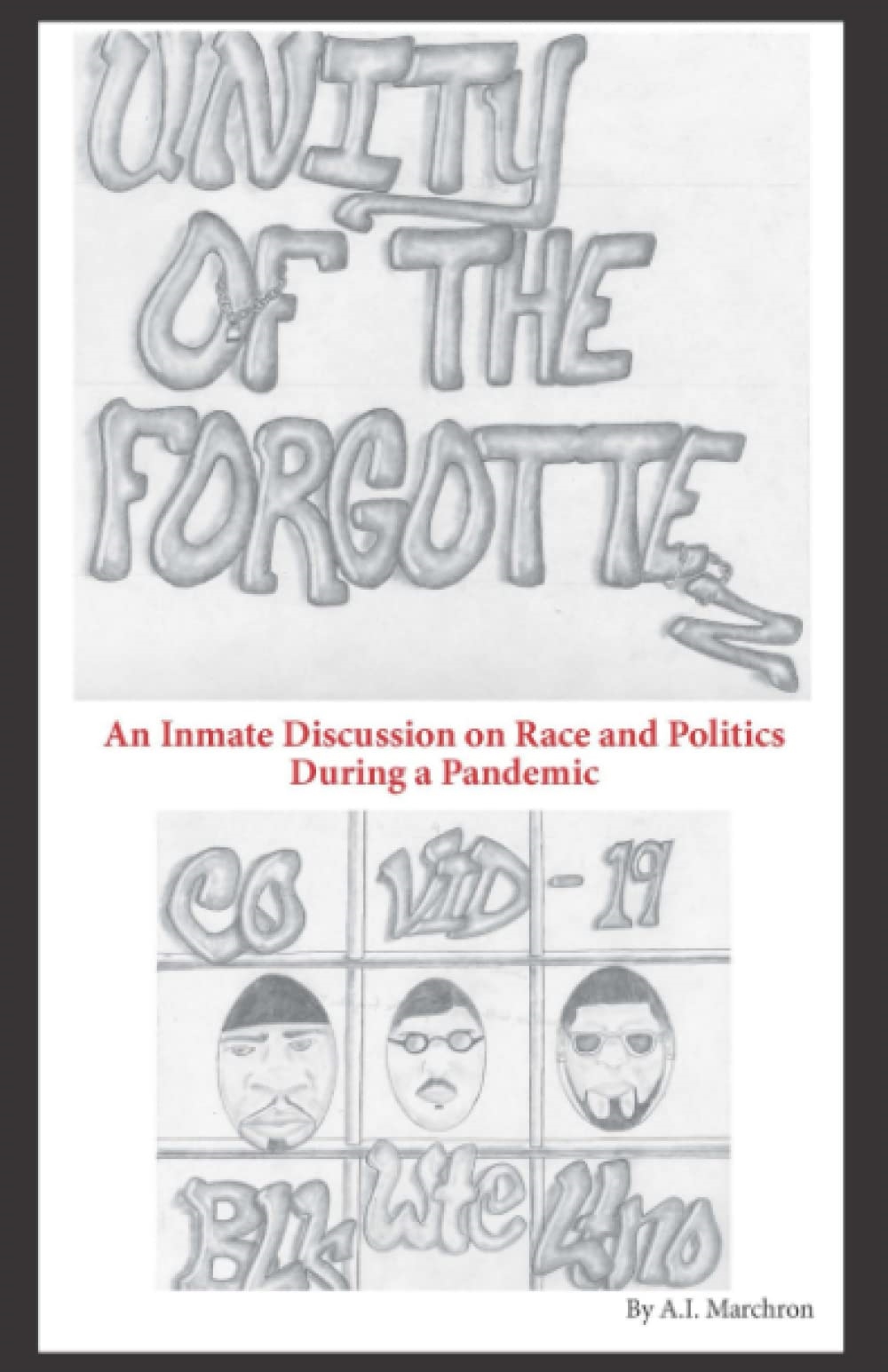
Book review: ‘Unity of the Forgotten’ by A.I. Marchron

‘Unity of the Forgotten’ was conceived, researched, authored, edited, illustrated, and published by a multiracial collaboration of actively detained Inmates. Photo: Amazon

‘Unity of the Forgotten: An Inmate Discussion on Race and Politics During a Pandemic’ is the first and only book in the 21st century to be conceived, researched, authored, edited, illustrated, and published in its entirety by a multiracial collaboration of actively detained Inmates, without any professional assistance. If you are interested in a discussion that is real, and that has the ability to make a true difference, then this pulse-pounding edge of your seat experience is a must read for you. (A.I. Marchron, 2023)

Read about the remarkably genuine, first-hand account from Inmates of Black, White, and Latino heritage, how they unified to survive difficult circumstances, and their unfiltered message about what it takes to endure while being imprisoned during a pandemic. Learn about the round table gathering where Inmates gifted each other the unusual privilege of tolerance, as they discussed racially sensitive issues such as inequality, immigration and the border, slurs, physical abuse, and gun control. This fascinating book resides in a category of its own. See book trailer for more information. 

‘Unity of the Forgotten’ – In the Prologue, A.I. Marchron, who has been designated the narrator, writes that the purpose of the book is to “help humanity to see us, and the conscientious side of our community, as what we are, people; people that have fallen, and that are trying to get back up.” The characters are real but their names have been changed to protect their identities because they are still detained. The original idea began with one person, then two, and ended up with sixteen inmates of different backgrounds, ages, economic status, and belief systems to achieve what most people would consider unfathomable: to write and publish a book while behind bars. The book is divided into four main sections: Black, White, Latino, and Unity and each has several subsections. Each of the first three sections (Black, White, Latino) has a specific ethnic historical background, and an interview with a member of this specific ethnic group which includes their personal story and point of view on current issues like politics, race, immigration, and gun control. The Unity section has a part where correction officers, one Baby Boomer, one Generation X, and one Millennial, give their thoughts on these same issues. In the Epilogue the discussion turns to environmental matters and their proposed solutions. The References section cites all sources used. 

As the narrator states, people who are in jail are often forgotten once they step into a correctional facility. While it is a sad but true statement, this does not mean that they cease to have a voice. Shirley Chisholm, the first black woman elected to the United States Congress in 1968, once said: “If they don’t give you a seat at the table, bring a folding chair.” In this case, a group of inmates went a step further and created their own table. They banded together to write and publish a book where they voice their opinions and concerns, and propose solutions to society’s ills. Narrated by A.I. Marchron, the language is easy to understand and the tone varies from formal to informal and is sprinkled with humor as comic relief “Napoleon was stripped of his title (and probably that nice hat from the pictures)…” The depth of the historical discussions is outstanding, given that he covers US history from the early settler days to the industrial revolution and politics, along with slavery, Europe, both World Wars, Mexico, South and Central America, and other interesting topics. Now more than ever we need a history lesson or two. One highlight is Part III Latino, section 11, Life In Left Latitudes, where he discusses Pre-Columbian history. The other is their proposed solutions to current issues like the climate crisis, immigration reform, police reform, and reparations for blacks, all of which include detailed plans of action. With the perfect balance of inmate profiles, history, and humor, ‘Unity of the Forgotten’ is an excellent insight into the inmate psyche. This fast paced, must read book is recommended for readers interested in memoirs from the perspective of an incarcerated person as well as history buffs who would appreciate a refresher course. 

“Our goal was to bring you where cameras can never come, and to show you a different side of possibility. We are proud of our final product; it tells our story, and provided a rare venue for us to express ourselves and thoughts to the world in an honorable manner; and most importantly, in our “own” way, with no media outlet to filter us.” – A.I. Marchron

*The author received a copy of this book for an honest review. The views and opinions expressed here belong solely to her.
Rating: 4 out of 5.

Sponsored Post

Book review: ‘Communicate with Courage’ by Michelle D. Gladieux

‘Communicate with Courage’ is the new book by communication coach Michelle D. Gladieux. Photo: Amazon

Michelle Gladieux is an author and President of Gladieux Consulting, a Midwest-based team known for top-notch design and presentation of seminars in communication and leadership topics around the U.S. She provides executive coaching and facilitates strategic planning for clients in diverse industries, in governments, at non-profits, and in academia. She has 18 years of collegiate teaching experience at three universities in her home state of Indiana, accepting her first adjunct faculty position at age 23. She has worked as a Human Resources and Training Director in the cold storage, robotics, and construction industries and enjoys visiting conferences as a keynote speaker and workshop presenter. In her new book “Communicate with Courage: Taking Risks to Overcome the Four Hidden Challenges,” she teaches readers how to become fearless and peerless communicators by confronting the psychological blocks holding them back. (Michelle Gladieux, 2023)

“Communicate with Courage” – Being a good communicator is one of the best ways to make a difference in the world, but it takes courage to open up to others and invite others to open up to you. In the Preface, Michelle D. Gladieux explains that the purpose of the book is to help with communication skills not only in the workplace, but in daily interactions with family in friends right now and in the future. As a lifelong communication coach, she has discovered four obstacles that can keep you from becoming the best communicator you can be 1) Hiding—Fear of exposing your supposed weaknesses, 2) Defining—Putting too much stock into assumptions and being quick to judge, 3) Rationalizing—Using “being realistic” to shield yourself from taking chances, engaging in conflict, or doing other  but potentially rewarding actions, and 4) Settling—Stopping at “good enough” instead of aiming for something better in your interactions. Overcoming these challenges requires taking risks—to reveal yourself, question your beliefs, take a leap of faith, or move out of your comfort zone. This book is divided into ten chapters, including one for each of these hidden challenges as well as Risks Not Worth Taking, and The Most Important Conversations to Have. Each chapter includes a real-world practice called a Pro Move and an exercise, both designed to help you overcome hang-ups and take more joy in communicating.

Being an effective communicator is an important skill yet one of the hardest to improve. It requires knowing your strengths and weaknesses, constant practice, and most of all, a genuine desire to grow. According to the author, becoming a brave communicator is “achieved by looking at potential payoffs rather than focusing on what can go wrong, and pushing past mediocre.” This is a small and easy to read book, mostly because the language is simple and down to earth. With the suggested Pro Moves and exercises, readers can practice their communication skills and put them to work in their lives. The subject matter makes this a reference guide worth circling back to re-read portions that might need refreshing over time. Highlights include Chapter 8 Risks Not Worth Taking where even though she encourages taking risks, she emphasizes that you should not risk your sanity by “engaging with manipulative or unethical people” and Chapter 7 Hidden Challenge #4: Settling for ‘Good Enough’ where she states the importance of outsmarting the urge to settle; in this case, raising your hand and letting people know what you have to say, diplomatically of course – voicing your opinion and experiences. “Communicate with Courage” is an effective guide to improving communications skills to become a braver and more effective communicator. It is recommended for readers who enjoy books on business management and personal enrichment focusing on communication and social skills.

“…there’s something waiting on the other side of courageous risk-taking for you, something good, illuminating, and life-giving. Whatever it is, it won’t come fully into view until you deviate from the safe route as a communicator.”

*The author received a copy of this book for an honest review. The views and opinions expressed here belong solely to her.
Rating: 4 out of 5.

Book review: ‘The Paper Tiger Syndrome’ by Rebecca A. Ward

‘The Paper Tiger Syndrome’ is a guidebook on the journey of healing and self-repair. Photo: Amazon

Rebecca A. Ward is an American therapist, activist, healer, author, speaker, and coach. As a trauma survivor herself, she has triumphed over extraordinary suffering and come out on other side to her joy again. As a licensed therapist in California and ICF-Certified Professional Coach, Rebecca holds a multitude of trauma-informed certifications, including Somatic Experiencing®. She is a member of the International Coaching Federation and CA Marriage and Family Therapists Association. In her new book, “The Paper Tiger Syndrome: How to Liberate Yourself from the Illusion of Fear,” Rebecca shares her personal trauma-to-resilience story and the wisdom from her own clients to help readers transform their own trauma wounds into personal growth, presence, resilience, and joy and reconnect back to the truest version of themselves—what she calls the Original Blueprint®. (Amazon, 2022)

“The Paper Tiger Syndrome” – Paper tigers are thoughts and experiences that conjure up dread but do not present any real danger, they just create the same physiological responses in the human body that our ancestors experienced when they were stalked by predators on the plains. In the modern world, however, those responses are unwarranted. They are neurological “misfires” that harm our mental, emotional, and physical wellbeing, all in an effort to keep us “safe.” In the Preface section of the Introduction, the author explains that the book is “a roadmap to guide you on that journey back home.” This is followed by the Adverse Childhood Experiences (ACEs) survey to help readers find out where to begin since ACEs are known to be linked to chronic health problems, mental illness, and substance abuse in adulthood. The book consists of examples from her clients’ lives, and her own, as well as journaling ideas and exercises/rituals to enhance the healing process. All together, she shares ways to overcome fear, stress, and trauma in your life to help regulate your physical body. Based largely on the principles of somatic therapy, it contains specific exercises and tools to help you walk the bridge from fear to safety to unconditional love. It is divided into ten chapters including The Anatomy of Fear, How We Survive Childhood, and It Takes a Village.

Now more than ever, people are struggling with anxiety and depression. Life’s hardships can create a sense of apprehension that is hard to shake but the truth is that most fears and anxieties are really just paper tigers. A paper tiger is defined as ‘something, or someone, that appears to be a threat, but in reality is powerless.’ The difficulties the author experienced and surpassed give this book an aura of authenticity; she knows what she is talking about and her tone is caring without being condescending. She even pauses every now and then to encourage readers to take a break if necessary. The language is easy to understand and the layout of the information includes diagrams, lists, and reflection opportunities. To get the full benefits, the author recommends having a personal journal to complete the written exercise and write down your thoughts or download the Companion Workbook. Highlights include Chapter Four: It Takes a Village where she stresses that a lack of connection ‘heightens fear reactions and diminishes virtually ever aspect of life, including longevity’ and Chapter Seven: Healing Childhood Wounds where she shares guidelines to help overcome harmful childhood conditionings like body shaming. “The Paper Tiger Syndrome” is a highly informative resource guide that is encouraging and therapeutic and includes the necessary tools to guide readers through their healing journey. It is recommended for readers interested in self help, personal transformation, and spirituality books.

“Fear is a cheap marketing tool to keep you in line. Fear is not the way any infinite Source wants us to feel. We’re here to discover love for all that is in us and around us.”

*The author received a copy of this book for an honest review. The views and opinions expressed here belong solely to her.
Rating: 4 out of 5.

Book review: ‘Cast No Shadow’ by Nancy Leonard

‘Cast No Shadow’ is the new psychological thriller by ‘Nancy Leonard.’ Courtesy photo, used with permission.

Nancy Leonard is an award-winning novelist who retired from a career as a physical therapist and rehabilitation clinic manager to pursue writing full time. Her focus is on psychological suspense thrillers, her specialty is in-depth character development with extensive research into Blackfeet Native American culture, wildland firefighting, and modern Middle Eastern culture and politics. She is the author of the Relentless River Series that consists of eight interconnected novels. While battling evil influences and life and death situations, characters cope with events in their pasts that have molded them while wrestling with their own morality. The series includes “Headwaters,” “Becomes A Horseman,” and “The Earth’s Backbone.” Her new novel “Cast No Shadow” involves the destructive collision between a psychopathic patriarch, Frederick Weingarten, and the two sons he dominates. (Amazon, 2022)

“Cast No Shadow” – The story begins as Bruce Weingarten and Alec Cummings are called into their father’s office. They are foster brothers who over the years have been manipulated to battle each other, especially for leadership of the family business. A woman, Eleanor, has been disrupting the father’s business interests and he wants her rattled into backing off. Fearing an innocent woman could be killed if he does not comply with Frederick’s instructions, Alec assaults her as instructed and is almost beaten to death in retribution when his identity is discovered. Tormented and in a rage of total despair and failure, his brother Bruce attempts to run two women off the road during a blizzard. They avoid serious harm but the horror of what he has become enables him to begin rebuilding his life. The young men’s attempts to free themselves from their father’s malevolent domination unleashes Frederick’s unrestrained rage at their betrayal. Alice Sanders and Tashi Long, two Blackfeet women who love and support Bruce and Alec, are caught in the crossfire as they become targets of Frederick’s quest for vengeance. They will ultimately battle for their souls and physical survival in the mountainous region and plains of northern Montana.

Psychological manipulation within the family unit has been proven to have lasting harmful effects affecting relationships for years. Such is the case between brothers Bruce and Alec. Although Alec is taken in by the family as a boy due to his abusive father and absent mother, they grow up together. What starts out as friendship develops into a cold and distant relationship brought on by the father’s caustic personality. Told in the first person point of view alternating between Bruce and Alec, readers witness their internal conflicts and their eventual redemption. The excellent character development makes them relatable, especially when Bruce and Alec’s new friends in Montana eventually welcome them as their own. With descriptive language ranging from describing a beating: “Blood is caked on the side of my face and my left eye is almost swollen shut. I have a deep crease of torn tissue under my left ear,” to the beautiful outdoor scenery: “The sapphire sky contrasts with aqua caverns, shimmering up from the glacial ice,” the reader is drawn into the story. The action is fast paced and naturally flows through the pages. Highlights include Chapter 3 which foreshadows Bruce’s change of heart, when he realizes that he is turning into his father, and not in a good way: “Suddenly I stop in horror. This has to stop. I’m becoming my father” and the action on Chapters 34 through 35 when Tashi falls in the ice while trying to rescue a little boy. “Cast No Shadow” is a fascinating story of two brothers who despite their volatile upbringing find ways to liberate themselves. It is a must read psychological thriller recommended for fans of the genre who also appreciate learning about Native American culture.

“I’m as far from all right as it’s possible to be and still be alive. I feel like I’m continually shrinking. Soon I’ll be so small I won’t even cast a shadow.”

Rating: 4 out of 5.

*The author received a copy of this book for an honest review. The views and opinions expressed here belong solely to her.
Book review: ‘Living a Committed Life’ by Lynne Twist

‘Living a Committed Life’ is the new book by Lynne Twist. Photo: Amazon

For more than 40 years, Lynne Twist has been a recognized global visionary committed to alleviating poverty,  ending world hunger and supporting social justice and environmental sustainability. From working with Mother Teresa in Calcutta to the refugee camps in Ethiopia and the threatened rainforests of the Amazon, as well as guiding the philanthropy of some of the worlds wealthiest families, Lynne’s on-the-ground work has brought her a deep understanding of  people’s relationship with money.  Her knowledge and experience has given her profound insights about the social tapestry of the world and the historical landscape of the times we are living in. What would your life be like if you committed to something larger than yourself? Find out in “Living a Committed Life: Finding Freedom and Fulfillment in a Purpose Larger Than Yourself,” the newest book from global transformation thought leader Lynne Twist. (Lynne Twist, 2022)

“Living a Committed Life” –By sharing stories and perspectives from her life, Lynne Twist reveals her unique experience as a thought leader and activist in multiple causes, from ending world hunger and protecting the Amazon rainforest to empowering women’s leadership. In the Introduction, Twist writes that although she hopes her stories inspire you, her goal in writing this book is “to inspire and motivate you to look inside yourself for your own commitments….” She starts off by sharing how, during an event called an Integrity Day, the speaker planted in her the vision that would guide her in her life’s work. She defines commitment as “an act of courage, integrity, and boldness” and that “committing oneself to an inspiring cause is what forges you into a great human being.” The book is divided into four parts: Part I The Power of Commitment, Part II The Soul of Commitment, Part III Challenges, Change, and Completion, and Part IV Creating Your Committed Life with a Discussion and Reflection Guide at the end to encourage deeper insight into the book’s topics. The Resources section lists organizations, like The Hunger Project and The Nobel Women’s Initiative, to consider if you are looking to get involved or make a difference.

Now more than ever, people are looking to make a difference in a world they see in constant conflict. Where do you start? How do you find your calling? Even though the author tries to help others in any and every way she can, she learned a powerful lesson: that somethings are not hers to do. This is a lesson we can all learn. We should know our limits and accept that we cannot do it all. We can only do so much. She has the mentality that every disappointment and every breakdown is an opportunity for growth but she admits that not everyone has the same struggles. She shows you how to make and keep commitments, engage in individual and collective action, and discover ways to connect and collaborate to make a difference. The language is easy and down to earth and her stories are engaging and inspiring. Highlights include Chapter 9 From Scarcity to Sufficiency where she lists the three toxic myths of scarcity: that ‘there is not enough,’ that ‘more is better,’ and that ‘it’s just the way it is’; and Chapter 10 Being Tested where she shares how she came to the realization that it takes a village to raise a child because even though her commitments kept her busy to the extent that she was missing out on some of her children’s lives, she was modeling a life of service to them and by her being gone sometimes, they became more independent and relied on each other and their father more, which strengthened their bond. “Living a Committed Life” is an excellent resource that teaches readers how to live a committed life to enrich their authentic self. It is a must read and recommended for fans of motivational self help books who appreciate advice on personal transformation.

“Living a committed life will bring you an experience of great freedom and profound fulfillment, as well as unimaginable joy.”

*The author received a copy of this book for an honest review. The views and opinions expressed here belong solely to her.
Rating: 4 out of 5.

Book review: ‘This Is Going To Hurt: The Truth Always Does’ by Michael Ernest

‘This Is Going To Hurt: The Truth Always Does’ is an informative and insightful book by Michael Ernest. Photo: Michael Ernest, used with permission.

Brother Michael Ernest is a graduate of Lincoln University, formerly known as Ashmun Institute, the first degree-granting Historically Black College and University (HBCU) in the United States, where he earned a B.S. Degree in Criminal Justice. Brother Michael continued his educational pursuits and acquired a Master’s Degree from Wilmington University, College of Social and Behavioral Sciences. His contributions to join several organizations to promote human welfare include being a proud brother of Iota Phi Theta Fraternity Incorporated and Member of the National Association for the Advancement of Colored People (NAACP) to continue the fight irrespective of race, religion, or political affiliation. Brother Michael has focused his study for many weeks, months, and years to compile an arsenal of knowledge and resources (writings, websites, book referrals, educators) to dispense among all people, various races, and religious groups to help promote the great humanitarian cause. His book “This Is Going To Hurt: The Truth Always Does” brings heated debate topics to the forefront of the “so-called” Black Communities throughout the United States. (Michael Ernest, 2022)

“This Is Going To Hurt: The Truth Always Does” – Written for all levels of literacy to indulge in the conversations, many of the subjects discussed in this book’s purpose are designed to rattle the heads of the afraid, complacent, and oppressed people of these “so-called” Black communities. Black Americans’ time for being apologetic for their misfortunes needs to come to an immediate cease-fire. “This Is Going To Hurt: The Truth Always Does” will do that. In the Preface, the author writes that the purpose of the book is to bring together history, research, and hard truths to Black Americans. The book begins with a conversation between two Black men that ends with the conclusion that their neighborhoods cannot be considered “Black communities” because they do not influence anything that goes on in their communities: from the banking institutions to public offices. From there, he discusses topics that should be addressed more frequently and divides them into four chapters: Chapter 1 Economic Sovereignty, Chapter 2 Child Support Hurts The So-Called “Black Community” More Than It Helps It!, Chapter 3 Black Mothers vs. Breastfeeding, and Chapter 4 The Wrap-Up Breaking The Chains of Servitude Get Conscious. Your People Depend On It!

To make effective change in our lives, first we have to face up to the uncomfortable truths. Or, as James Baldwin wrote in a 1962 essay for The New York Times, “Not everything that is faced can be changed; but nothing can be changed until it is faced.” With that said, Michael Ernest does an excellent job of touching on subjects that should be addressed head on. His tone is serious but not confrontational and the language, though sometimes slightly advanced, is easy to understand. One highlight is in the Introduction, where he states that it should be up to Black Americans themselves to strengthen the “Black race character, culture, and heritage.” That before, the slave owners were the bad element, but nowadays, it is drug dealers and gangbangers and that “the moral culpability has shifted to ourselves.” Also notable is Chapter 1 Business Sovereignty where he stresses the importance of business diversity in black neighborhoods because it “invites innovation, which ultimately benefits consumers with new and better products and services, helps drive economic growth, and increases living standards.” His advice is meant to enrich peoples lives, like the importance of surrounding ourselves with likeminded individuals and civic engagement. “This Is Going To Hurt: The Truth Always Does” is a small but informative book that should be on everyone’s to read list. It is eye opening and contains well researched topics dealing with urban life as seen through the eyes of a Black man. Even though the target readership is Black Americans, the information presented can apply to everyone, especially when he admonishes readers to “Hold yourself accountable. Don’t pass the buck!” It is recommended for readers who like motivational and self help books and can appreciate being presented with uncomfortable truths.

“Read literature from the scholars who came before you to liberate your mind of centuries of captivity. Only this will kill the roots of those weeds embedded in the dark part of your history, reversing the negative misfortunes that have been done to you and your ancestors.”

* The author received a copy of this book for an honest review. The views and opinions expressed here belong solely to her.

Rating: 4 out of 5.

Sponsored Post

New children’s book: ‘Kindness is Wonderful’ by Hanna Yameen

‘Kindness is Wonderful’ is the new children’s book by Hanna Yameen. Courtesy photo, used with permission.

Hanna Yameen is a creator of high-quality illustration books for elementary-aged children. She is a young aspiring author focused on creating easy-to-use learning resources centered around social skills, values, and difficult discussions for early-age children. Her new book “Kindness is Wonderful: A Children’s Book About Care and Empathy” teaches children the art of kindness. Kindness is powerful. Kindness is magic. It is available on paperback now and the Kindle version will be available on Thursday December 8 but is available for pre-order now. (Hanna Yameen, 2022)

“Kindness is Wonderful” – This preschool illustration book highlights the way kindness creates compassion, care, and empathy in early age children. It is designed for children ages 3 to 7 years old.

This amazing book with beautiful illustrations explains to your child in a simple and interesting way how to be kind and caring.

Guiding through characters and illustrations, the book will help your child:

  • express, empathy, and care for others
  • respect parents, friends, and classmates
  • help elderly people
  • know about nice manners
  • love nature and the environment
  • care for animals

In addition, the book contains an exercise for kids to list the acts of kindness they have done in their daily routines. This beautiful picture book shows preschoolers the way kindness, compassion and empathy help build friendship and community.

Kindness and empathy are traits best learned as young children. “Kindness is Wonderful” is an extraordinary children’s book that not only teaches children the importance of being kind, it gives them examples. It does not just “tell” them to be kind, it gives them scenarios that they may encounter “When I am dog-sitting, I make sure that I feed my little puppy. Kindness is feeding animals.” All these scenarios explain to children the meaning of kindness, like respecting others, sharing, and complimenting a friend. It also teaches them ways to be a responsible citizen, like picking up trash and recycling. The illustrations are beautiful, colorful, and professional grade. This holiday season, consider giving books as gifts, especially “Kindness is Wonderful” which helps children understand the importance of being kind with examples and an interactive page at the end where they can list ways that they can express kindness. Most importantly, it stresses the importance of parents setting an example by doing these acts of kindness with their children.

*The author received a copy of this book for an honest review. The views and opinions expressed here belong solely to her.
Sponsored Post

Book review: ‘Dissection’ by Cristina LePort, MD

‘Dissection’ is the debut suspense thriller by Cristina LePort, MD. Photo: Amazon

Dr. Cristina LePort was born in Bologna, Italy, where she attended medical school before emigrating to the USA to complete her Internal Medicine residency at Long Island College Hospital in Brooklyn and her Cardiology fellowship at West Los Angeles VA/UCLA. She has been practicing medicine for more than 30 years as Dr. Cristina Rizza. “Dissection: A Medical and Political Thriller” is her first published novel and a tense thriller with complex characters that combines cutting-edge medical technology with horrific yet still believable terrorist plots.

“Dissection” – DC heart surgeon Dr. Steven Leeds is suddenly overwhelmed by a handful of extremely complicated heart attack and stroke cases, all caused by a rare arterial injury―a dissection. The victims all have one thing in common: they receive harmless-looking cards announcing, “Your heart attack/stroke will arrive within one hour!” It all starts with Dr. Nirula receiving a card warning him of an impending fatal heart attack. At first he dismisses it because he knows his personal odds of such an episode are slim, but then he remembers that 25% of people who have heart attacks have no known risks. His heart starts pounding as his life flashes through his mind, but eventually he moves on. He is the first of many such cases but unfortunately some do not make it. When private detective Kirk Miner and FBI agent Jack Mulville start investigating, they immediately suspect Leeds’ former lover, Dr. Silvana Moretti, a brilliant research scientist who harbors a grudge against all the victims. When important people in the U.S. government begin to receive these same threatening cards and experience similar cardiac emergencies, it falls to the unlikely team of three―the headstrong FBI agent, the gifted private investigator, and the brilliant but conflicted heart surgeon―to find the actual perpetrators and to snuff out a catastrophic plot that only the medically astute can divine.

Dr. Cristina LePort has written an impressive debut novel. Her experience as a medical professional gives it an authentic voice, for example, when she describes a heart attack: “a heavy sickening pressure rose from the center of his chest and spread like an oil spill to reach his jaw.” When doctors themselves get sick, the experience tends to give them a reality check, such as when Dr. Nirula admits that it is not fun being on the other side, being the patient instead of the doctor. The thorough character development makes them relatable, flawed, but overall courageous. With her descriptive language, the author makes the story come alive: “Fear receded like a wave from the shore and crashed into anger.” The political thriller subplot gives it an extra thrill ride during the rush to find the designated survivor to avoid a catastrophe and in case the president does not make it. The chapters are short and the action is mostly dialogue driven. Highlights include Chapter 3: Dissection where Dr. LePort describes Dr. Steven Leeds preparing to perform surgery: he “slid a cap over his thinning black hair, reached for a sponge, and stepped on the pedal to switch on the water” and Chapter 31: Choices when all hell breaks loose and Kirk Miner and Jack Mulville relentlessly pursue the terrorists even though they have both been injured. “Dissection” is a must read suspenseful page turner that combines a fast paced medical thriller with white knuckle political action. It is recommended for readers who appreciate the best of Tom Clancy and Robin Cook.

“She stared at her husband for a long moment as if deciding how to best handle the possible emergency. The man flapped his hand, hurrying her to get ready. A few minutes later, man and wife sat buckled up in their car on their way to Capitol Hospital. The man’s headache and neck pain escalated with the car’s bouncing and swerving. To him, the city street lights appeared blurred. Panic set in.”

*The author received a copy of this book for an honest review. The views and opinions expressed here belong solely to her.
Rating: 4.5 out of 5.