Book review: ‘Inhuman Trafficking: A Legal Thriller’ by Mike Papantonio and Alan Russell

‘Inhuman Trafficking: A Legal Thriller’ is the new novel by Mike Papantonio and Alan Russell. Photo: amazon

Mike Papantonio is a senior partner of Levin Papantonio, one of the country’s largest plaintiffs’ law firms, and was one of the youngest inductees into the Trial Lawyer Hall of Fame. He has aggressively taken on Big Pharma, tobacco, weapon manufacturers, and the automobile industry, among other strongholds of corporate greed, and uses his own cases as springboards for his novels. Papantonio is also a well-known media presence as host of America’s Lawyer and co-host of the syndicated radio show Ring of Fire.

Alan Russell is the #1 bestselling author of seventeen mystery and suspense novels, including “Burning Man,” “Shame,” “St. Nick,” and “A Cold War.” Russell’s novels have been nominated for most of the major awards in crime fiction, and he has won a Lefty award for best comedic mystery, a USA Today Critics’ Choice Award, multiple San Diego Book Awards, and the Odin Award for Lifetime Achievement from the San Diego Writers/Editor Guild.

In their new novel “Inhuman Trafficking: A Legal Thriller,” while taking on a human trafficking case, the past comes calling with word that Nick “Deke” Deketomis’ fifteen-year-old goddaughter, Lily Reyes, is missing.

“Inhuman Trafficking” begins with Lily Reyes being set up by her boyfriend Carlos Navarro and handed off to a strange man who calls himself ‘Tío Leo’ as collateral for a planned score gone bad. Seven days after Lily disappears, her mother Sylvia contacts Deke for help in bringing her home safely. This is a sideline from his current case with Welcome Mat Hospitality.

For Deke, going head to head with some of the most dangerous cases has long been a way of life. His target this time is Welcome Mat Hospitality, a firm known for its truck stops and lodging throughout the United States. What Welcome Mat does not advertise is the human trafficking—for sex work and slave labor—going on at many of its properties. For the sake of better profits, Welcome Mat’s ownership has turned a blind eye to this lucrative enterprise. When Deke learns that Lily has fallen prey to a notorious trafficker, his personal and professional worlds converge when Lily comes in contact with Karina, a Russian woman who is one of the many victims of a madwoman’s human trafficking operations. For his goddaughter to survive, Deke must prevail not only in the legal arena but outside of it.

Mike Papantonio is the author of the Nick “Deke” Deketomis series of legal and courtroom thrillers including “Law and Addiction,” “Law and Disorder,” and “Law and Vengeance.” Even though “Inhuman Trafficking” is not a “Law and..” titled book, Deke is back in action trying to save the world from man’s inhumanity to man, in this case, human trafficking, which includes slave labor and sex traffickers.

There is not as much courtroom drama as in Papantonio’s previous books, but Deke and his team shine as they work incessantly to find Lily while trying to identify Karina and bring down the system that is taking advantage of her and countless others. The language is down to earth, easy to understand and expressive at times “Colors shimmered, appearing and disappearing like will-o’-the-wisps.”

With action that flows easily through the pages, one of the highlights is the heart-pounding action when Karina finally gets the nerve to call Deke’s office for help while looking over her shoulder to make sure no one sees her. Some of the details of human trafficking, including Lily’s survival mechanisms, are hard to read but are not overly graphic. The main takeaway is that everyone has had their challenges but nevertheless survived and are stronger because of them. Filled with relatable and well-developed characters, investigative action, and unpredictable developments, “Inhuman Trafficking” is a fast-paced thriller recommended for John Grisham fans who root for the little guy.

“Deke knew the ‘damn the torpedoes, full speed ahead’ look in Gina’s eyes. As she opened her mouth to reply, Deke surreptitiously banged the side of her chair. Gina turned his way, took a read of his eyes, and swallowed her commentary.”

Rating: 4 out of 5.

*The author received a copy of this book for an honest review. The views and opinions expressed here belong solely to her.

Read an excerpt:

Book excerpt: ‘Inhuman Trafficking’ by Mike Papantonio and Alan Russell

Book review: ‘Treachery Times Two’ by Robert McCaw

‘Treachery Times Two’ is the new mystery novel by Robert McCaw. Photo: google

Robert McCaw is an author who grew up in a military family traveling the world. He is a graduate of Georgetown University, served as a U.S. Army lieutenant, and earned a law degree from the University of Virginia. He was a partner in a major international law firm in Washington, D.C. and New York City, representing major Wall Street clients in complex civil and criminal cases. Having lived on the Big Island of Hawaii, McCaw fills his writing of the Islands with his more than 20-year love affair with this Pacific paradise. His new book “Treachery Times Two” is book four in McCaw’s Koa Kāne Hawaiian Mystery Series and follows “Death of a Messenger,” “Fire and Vengeance,” and “Off the Grid.” This new mystery novel involves secret military weapons, saboteurs, a volcanic eruption—and a probe of Chief Detective Koa Kāne’s criminal past.

“Treachery Times Two” – The action begins with a vivid description of a volcanic earthquake as “Pele, masquerading as a glassy-haired old woman,” destroys an abandoned cemetery and unearths a mystery that will shake up Hilo Hawaii’s Chief Detective Koa Kāne’s life as he knows it. The destruction brings forth the body of a woman mutilated by her killer to conceal her identity. While trying to solve this mystery, he finds himself at odds with a mysterious defense contractor with a politically connected board of directors. Defying his chief of police, Koa becomes entangled in an FBI espionage investigation of Deimos, a powerful secret military weapon. To top it off, Koa—a cop who thirty years earlier killed his father’s nemesis and covered up the murder—now faces exposure by the dead man’s grandson who mysteriously comes into town demanding answers. Koa is forced to investigate his own homicide, and step by step, his cover-up unravels until another man is falsely accused. His character is tested as he debates whether to stand by and let an innocent man pay for his crime or come clean and risk losing it all. 

Detective Koa Kāne is on the trail of another killer who thought the crime would be covered up by volcanic lava. Not only does he need to find out who killed the mysterious woman, he is constantly looking over his shoulder and dreading the day when his past crime will be revealed. It follows him constantly: “The investigation which had consumed his waking hours had now invaded his sleep.” Every time he closes a case, he visits Anthony Hazzard’s tombstone. As with the previous books, “Treachery Times Two” features highly developed, complex, and relatable characters, as well as Hawaiian terms, language, and history. Sometimes these Hawaiian terms and names slow down the pacing of the story, but it is worth it and readers are rewarded with a thrilling murder mystery filled with one plot twist after another. The author’s love of Hawaii is evident in his writing by his use of beautiful poetic language, especially when describing volcanic activity, as when the lava was “spreading thin, glassy particles of Pele’s hair like strands of cotton candy.” Koa Kāne is a deeply flawed character, comparable to Jack Reacher and Jason Bourne. He is running from his past while trying to be the best detective he can be all the while people he thought he knew disappoint him but he still struggles on. The highlight is Chapter 9, which has eye-opening historical background on Hawai’i including how in 1893, the Committee of Safety, a group of western businessmen, with the backing of US Marines, staged a coup d’état against the reigning monarch and five years later, the United States annexed the islands. The plot twists keep the reader guessing until the shocking end. “Treachery Times Two” is another remarkable murder mystery by Robert McCaw and is recommended for fans of Michael Connelly who also appreciate a historical lesson or two. The good thing about this excellent mystery series is that each novel stands on its own and can be read in any order.

*The author received a copy of this book for an honest review. The views and opinions expressed here belong solely to her.

Rating: 4 out of 5.

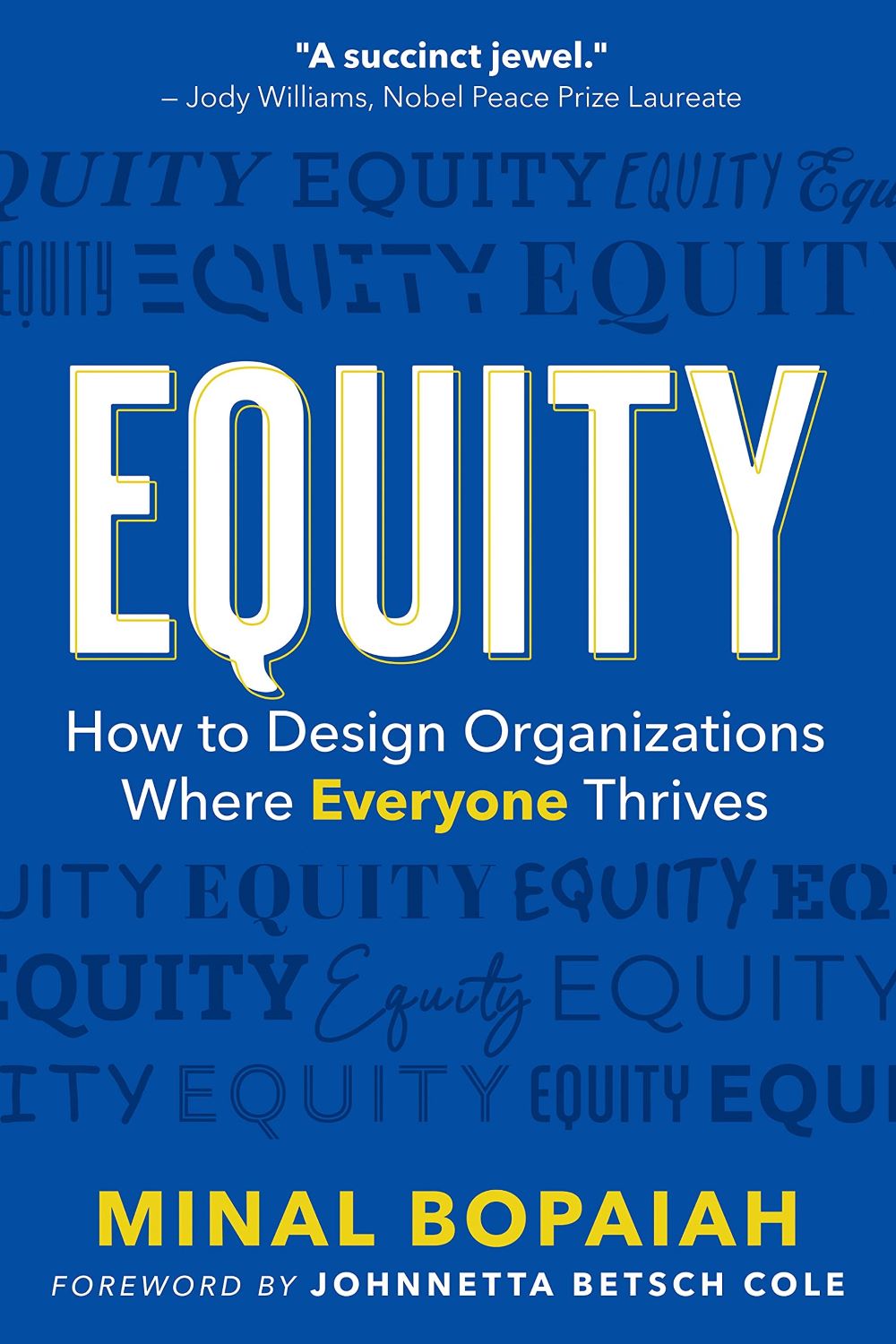
Book review: ‘Equity: How to Design Organizations Where Everyone Thrives’ by Minal Bopaiah

‘Equity: How to Design Organizations Where Everyone Thrives’ by Minal Bopaiah. Photo: amazon

Minal Bopaiah is the founder of Brevity & Wit, a strategy and design firm that helps organizations achieve the change they wish to see in the world through a unique approach that combines human-centered design, behavior change science, and the principles of inclusion, diversity, equity, and accessibility. Bopaiah has written for the Stanford Social Innovation Review and TheHill.com and has been a featured guest on numerous podcasts and shows, including the Kojo Nnamdi Show on WAMU. She has also been a keynote speaker for many conferences, inspiring thousands with her credible, authentic, and engaging talks. Her new book “Equity: How to Design Organizations Where Everyone Thrives”  helps leaders create more inclusive organizations using human-centered design and behavior change principles. (amazon, 2021)

“Equity” begins with an Introduction that delves deep into the subject of equity. Under the section Why Equity, Not Equality, Minal Bopaiah defines Equality as “when everyone has the same thing” and equity as “when everyone has what they need to thrive and participate fully.” Figure 1. Equality versus equity illustrates this as everyone having the same size bicycle versus everyone having the right bicycle to fit their needs. By sharing her family’s immigration story, she explains systemic inequality and how the system was designed this way: “the United States has an education system tied to local property taxes.” Equity allows leaders to create organizations where employees can contribute their unique strengths and collaborate better with their peers. The book is divided into chapters: 1. The Relationship between Bias, Systems, and Equity, 2. A Design Approach to IDEA, 3. Engaged and Equitable Leadership, 4. Bridging the Gap, 5. Communicating the Change, and 6. Creating Equity through Media and Marketing. In Closing Thoughts, her hope is that she has provided readers with the tools to “start designing for more equity in the corner of the world where you have influence and power.”

It may be a business centered subject, but everyone can benefit from learning more about Diversity, Equity, and Inclusion as well as Accessibility. “Equity” takes a complex topic and makes it clear and concise to everyday readers. Minal’s writing style is down to earth and the language is easy to understand. The Glossary at the end makes it easy to look up unfamiliar terms and Discussion Guide aimed at individuals, teams, and organizations will certainly keep the conversation going. One of the highlights is Chapter 6: Creating Equity through Media and Marketing which shows that even content creators can make a difference by making sure the content has proper representation and that everyone can access it. It may be a small book, but it speaks volumes about issues regarding diversity, equity, and inclusion. Far from being solely a business manual, it is also a reference guide for readers interested in creating a more equitable society. Filled with business and leadership advice, as well as interesting anecdotes and life lessons, “Equity” explains how everyone can do their part to achieve a more inclusive and diverse world and is recommended for readers interested in books about business leadership, workplace culture, and personal enrichment.

“When designing for equity, the objective is not to get everyone to think the same, have the same values, or believe the same things. The objective is to design a world where differences are valued.”

Rating: 4 out of 5.

*The author received a copy of this book for an honest review. The views and opinions expressed here belong solely to her.

Book review: ‘Lineage: Life and Love and Six Generations in California Wine’ by Steven Kent Mirassou

‘Lineage: Life and Love and Six Generations in California Wine’ by Steven Kent Mirassou. Photo: amazon

Steven Kent Mirassou is an acclaimed winemaker and a descendant of one of the oldest and most respected wine families in California. He received his BA in American Literature from the George Washington University and his MA in Literature from NYU. He started his wine career in sales but found his true passion after moving into the production side of the business in 1996. Steven has made the highest rated wines from the Livermore Valley, and he is a co-founder of the Mount Diablo Highlands Wine Quality Alliance and the President of the Livermore Valley Wine Growers Association. With his decades of winemaking expertise, and with his extraordinary gift for haunting writing, Steven takes readers straight into the heart of his calling in his first book “Lineage: Life, Love and Six Generations in California Wine.” (amazon, 2021)

Steven Kent Mirassou starts “Lineage” with a description of the critical hour at the vineyard before the harvest starts. It is a cold night and it is “wondrously lonely out now” before the workers arrive. He is alone with his thoughts as they wander to the past and he reflects on the path that brought him to the wine making business. As the narrative moves along, he takes readers deep into the art of his craft, through the six generations that the Mirassou family has been growing grapes and crafting wines in California, the last thirty years in the Livermore Valley. As with every story, there is family drama, including the highs and lows of running a business. But through it all, he loves what he does and he learns that every loss brings on new beginnings. The book is divided into two parts: Part One consists of chapters like The Deep and Simple Immensity, Making Wine is Morning Work, and Thanks You Can Never Repay and Part Two has chapters like The True North of Civilization, Imprisoned in These Barrels, and Each Dusty Sunset Observed. It is an inside look deep into the art, the craft, the passion, and the 8,000 years of history that lie inside the finest of wines. As he puts it, “I work to take care of people, to add richness and joy to their lives, to make the people who drink my wine a little happier after than than they were before, each day.”

Images of beautiful Italian vineyards often accompany thoughts of wine and the wine making business. What the general public does not see is what happens behind the scenes: the long cold nights with the only illumination coming from the lights around the perimeter which are powered by generators, the tired workers who show up to work the vineyards, and the winemakers with arms deep in crushed grapes. Told in the first person point of view, it is a deeply personal look into the history of winemaking and his family business. This is a book like no other. It is a combination of autobiography and beautiful poetic prose: “This sweaty ferment that is the wine production business is like the snake attracted to its own tail, making eternal circles.” Accentuated with hauntingly beautiful pictures that tell their own story, it is more than just a book about the history of winemaking, it an impressive work of literature. “Lineage” brings the art of winemaking to the general masses and is recommended for readers interested in books about winemaking with a genuinely personal touch as well as poetry fans.  

“To taste a wine with one’s heart is to come to know the dirt between the farmer’s fingers, the exhalations of the vineyard as it sleeps in the black night.”

*The author received a copy of this book for an honest review. The views and opinions expressed here belong solely to her.

Rating: 4 out of 5.

Book review: ‘Who Do You Want to Be When You Grow Old?’ by Richard J. Leider and David A. Shapiro

‘Who Do You Want to Be When You Grow Old?’ by Richard J. Leider and David A. Shapiro. Photo: FSB Associates

Richard J. Leider is the founder of Inventure—The Purpose Company, whose mission is to help people unlock the power of purpose. Widely viewed as a pioneer of the global purpose movement, Leider has written or co-written eleven books, including three bestsellers, which have sold over one million copies. David A. Shapiro is a philosopher, educator, and writer whose work consistently explores matters of meaning, purpose, and equity in the lives of young people and adults. He is a tenured philosophy professor at Cascadia College, a community college in the Seattle area. Their new book, “Who Do You Want to Be When You Grow Old?: The Path of Purposeful Aging” invites readers to navigate a purposeful path from adulthood to elderhood with choice, curiosity, and courage.

It is inevitable. Everyone is getting old, but not everyone grows whole while they are aging. A life well-lived contains purpose and fulfillment and while the authors do not profess to know everything, they are continuously learning and are sharing what they have learned along the way. In the Preface, they explain that this book is about “growing” old and their focus is on how to go about doing this. The topic came about when these two friends, who have known each other for years and have backgrounds in psychology and philosophy, started a conversation at a rained-out baseball game. Using inspiring stories, real-life practices, and thought provoking questions, they offer advice on how to live a purposeful life which leads to aging well. “Who Do You Want to Be When You Grow Old?” is divided into nine chapters that addresses a question most people have had at one point or another. These chapters are One: Old, Who, Me? Two: If We All End Up Dying, What’s the Purpose of Living? Three: Aren’t I Somebody? Four: Am I Living the Good Life My Whole Life? Five: How Do I Stop Living a Default Life? Six: Am I Having a Late-Life Crisis? Seven: Will I Earn a Passing Grade in Life? Eight: How Can I Grow Whole as I Grow Old? Nine: How Will My Music Play On? It ends with an Afterword: Staying on the Path that encourages readers, once they finish the book, to re-read and study the chapters that had the most impact to them.

Everyone’s life is unique and we each have a different definition of what a purposeful life means. Richard J. Leider and David A. Shapiro share their views on “growing” old with the hopes of inspiring others to look within and find their own fulfillment to become an authentic person. It is an easy book to read and the chapters are divided so as to encourage readers to concentrate on whatever topic draws their attention. The language is down to earth and the tone is non-judgmental and supportive. Highlights include chapter Nine, which emphasizes the importance of having a reason to get out of bed because otherwise “we may as well just pull the covers over our head and stay there” and chapter Five that shares that the secret to ending default living is by “choosing to be your own person, on purpose, not by default.” All this advice may seem like common sense to most, but in the midst of life’s hectic pace, sometimes we need reminders along the way. This is what “Who Do You Want to Be When You Grow Old?” accomplishes perfectly. It may not be for everyone, but for readers who are genuinely searching for a deeper meaning to life and appreciate advice from others who have been there, this is a highly recommended must-read book.

“We invite you to explore this path of purposeful aging, keeping in mind that for each of us, the path will be unique. Each of us is an experiment of one.”

*The author received a copy of this book for an honest review. The views and opinions expressed here belong solely to her.

Rating: 4 out of 5.

Book review: ‘The Space in Between’ by Signe Myers Hovem

‘The Space in Between’ by Signe Myers Hovem. Courtesy photo, used with permission.

Signe Myers Hovem has created homes on five continents over twenty years, raised four uniquely sensitive children, pursued a special education lawsuit appealed to the US Supreme Court, volunteered in a hospice in Texas and an orphanage in Azerbaijan, worked as a spiritual counselor in Houston Texas, and taught workshops and trainings in the art of being an empath and the power of language in many countries around the world. Her new book “The Space in Between: An Empath’s Field Guide” is written for people who identify as highly sensitive, as empathic, or as empaths and is a map to cultivating both self-awareness and connectivity with the greater world.

“The Space in Between” begins with an Introduction where the author shares an experience she had with a guard (she felt a stinging sensation on the back of her hand) when traveling to Angola to illustrate what it is like to be both empathic and an empath, or as she calls it, being a functional empath. Her goal in writing this book is to share her experiences in the hopes that it will help others like her manage their own experiences and understand how they influence their surroundings. She calls this book a ‘field guide’ because she sees herself as a guide whose goal is to help others create a more authentic, empowered, and empathic self. It is divided into five parts: Part I: The Field of Reflection, Part II: The Field of Definition, Part III: The Field of Sensing, Part IV: The Field of Experience and Awareness, and Part V: The Field of Mystery. Each “field” grounded her and helped her understand her empathic self. Before each one, there is an introduction that explains the themes of the chapters involved, and a “Questions for Reflection” section at the end.

For those who identify as empaths or highly sensitive people, daily life can be intimidating and overwhelming. Signe Myers Hovem does an excellent job of helping readers navigate through this often difficult journey by providing personal examples and stories. Her intimate experiences as a functional empath serve as a guide and inspiration for others to get to know themselves better. The subject matter may get confusing at times but she uses plain language that anyone can understand. A major focus is on journaling, self-discovery, and improvement. Her tone is soothing and insightful which puts readers at ease. Highlights include Chapter 9: The Sponge Factor where she defines the differences between a Highly Sensitive Person and an Empathic Person and the ‘Questions for Reflection’ sections at the end of every chapter which encourage readers to pause and reflect on what they have just read. The Resources section at the end has a list of sources she recommends for further guidance and information. It is important to note that this is not a ’how-to’ book on how to become an empath but rather a guide to help others in their path to understanding and coping with their own empathic abilities. “The Space in Between” is a valuable resource for anyone interested in understanding and developing their empathic abilities or just genuinely open to learning more about the subject.

*The author received a copy of this book for an honest review. The views and opinions expressed here belong solely to her.

Rating: 4 out of 5.
Author Signe Myers Hovem. Courtesy photo, used with permission.

Book review: ‘The Decarbonization Imperative’ by Michael Lenox and Rebecca Duff

Michael Lenox, co-author of ‘The Decarbonization Imperative.’ Photo:google

Michael Lenox is the Tayloe Murphy Professor of Business Administration at the University of Virginia’s Darden School of Business. He is the coauthor of “Can Business Save the Earth? Innovating Our Way to Sustainability” and “The Strategist’s Toolkit.” Rebecca Duff is Senior Research Associate with the Batten Institute at the University of Virginia’s Darden School of Business. She also serves as the managing director for Darden’s Business Innovation and Climate Change Initiative. They are co-authors of the new book “The Decarbonization Imperative: Transforming the Global Economy by 2050,” where they offer readers ways to effectively “decarbonize” the global economy by 2050 if we are going to avoid the worst effects of climate change.

Photo: amazon

“The Decarbonization Imperative” begins with the Preface where the authors state that the objective of the book is to examine what needs to be done to lessen the worst impacts of climate change by radically reducing our carbon footprint. One way to accomplish this is by requiring innovations across a wide number of industrial sectors that will result in cleaner industries that do not emit greenhouse gases. The main challenge lies in radically reducing net greenhouse gas emissions to zero by 2050. They analyze emerging clean technologies in five major sectors: energy, transportation, industrials, buildings, and agriculture and end by providing technology policy to get the world to this goal. The process of achieving this goal is referred to as “decarbonization.” This book is divided into chapters that individually examine each sector and what can be done to pave the way to cleaner industries. These chapters are The Path to 2050, The Energy Sector, The Transportation Sector, The Industrials Sector, The Buildings Sector, The Agriculture Sector, and The Path Forward. The Notes section at the end has notes on each individual chapter.

Over the years, climate change has become a deeper subject of conversation as we see each summer get hotter than the last. Michael Lenox and Rebecca Duff do not waste time trying to convince readers about the validity of climate change and only briefly address it in the section ‘The Looming Crisis’ in Chapter 1: “Since the beginning of the industrial age, human activity-in particular, the burning of fossil fuels-has increased the concentration of carbon dioxide and other greenhouse gases in the atmosphere.” According to them, climate change is “a malignant force that will reshape our economy and society for generations to come.” With this said, the rest of the book is concentrated on finding ways to achieve the all-elusive and radical decarbonization necessary to make a difference. Highlights include Chapter 7 The Path Forward where it states that we need all hands on board to get this done and Figure 7.3 Summary of Sector-Based Technology Policy which summarizes how each industry can make a difference. The subject matter can get complicated and the language is more advanced than usual, but Lenox and Duff manage to make it accessible to the average reader. With extensive research and knowledge of the environment and the various sectors, they provide possible solutions to what is rapidly become a major issue. “The Decarbonization Imperative” is a must-read for readers who are genuinely concerned about climate change as well as heads of industry who understand that changes must be implemented but are unsure where to start.

*The author received a copy of this book for an honest review. The views and opinions expressed here belong solely to her.

Rating: 4 out of 5.

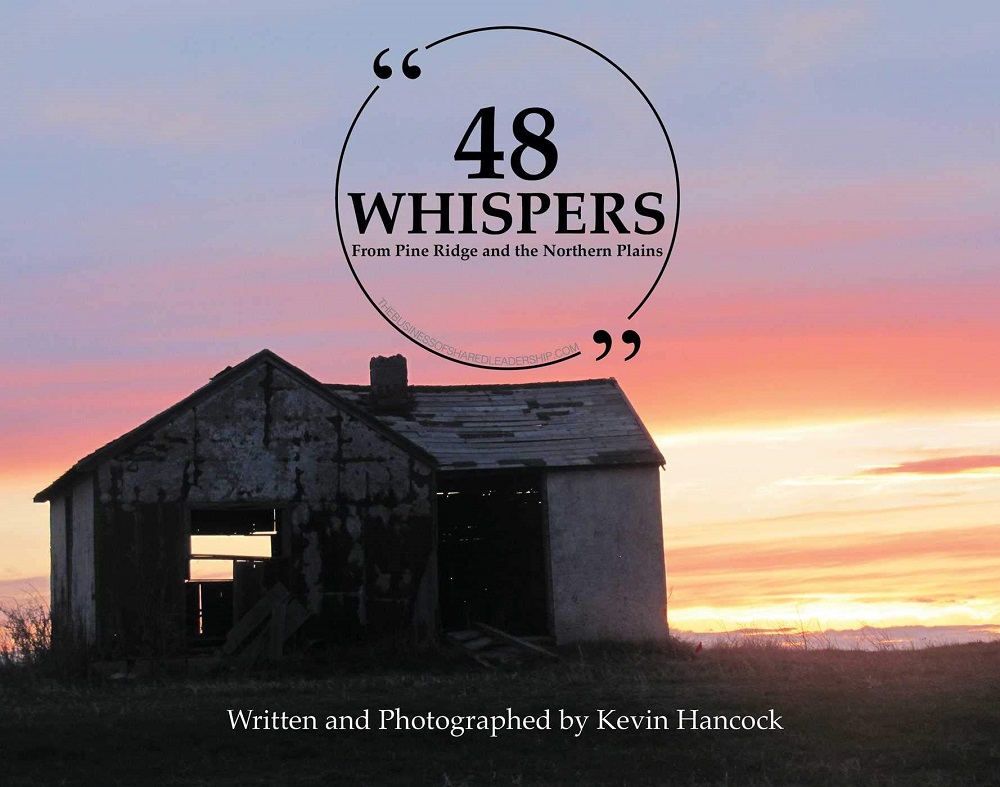
Book review: ’48 Whispers’ by Kevin Hancock

’48 Whispers’ by Kevin Hancock. Photo: amazon

Kevin Hancock is an award-winning author, speaker, and CEO. Established in 1848, Hancock Lumber Company operates ten retail stores, three sawmills, and a truss plant. The company also grows trees on 12,000 acres of timberland in Southern Maine and is led by its 550 employees. Kevin’s first book, “Not For Sale: Finding Center in the Land of Crazy Horse” won three national book awards. His second book, “The Seventh Power: One CEO’s Journey Into the Business of Shared Leadership” was released on February 25, 2020. Kevin is a frequent visitor to the Pine Ridge Indian Reservation in South Dakota and an advocate of strengthening the voices of all individuals—within a company or a community—through listening, empowering, and shared leadership. His new book “48 Whispers: From Pine Ridge and the Northern Plains” is a unique photojournalism collection of short meditations, accompanied by full-page color photographs spanning ten years of visits to the Pine Ridge Indian Reservation and the northern plains.

“48 Whispers” begins with an Introduction where Kevin Hancock explains how the book came to be, while spending time in the West and getting to know the Lakota people and their values. “This book aspires to honor that wisdom while paying respect to all inhabitants of the northern plains, past and present, two-legged and four.” After being diagnosed with a rare neurological voice disorder (spasmodic dysphonia/SD), he set out on a series of adventures to recover his voice through self-reflection and immersion in nature. This book covers a decade of over twenty visits to the Pine Ridge Indian Reservation and the surrounding northern plains. In honor of Black Elk, who was escorted on his sacred vision by the 48 horses of the four directions, this book is made up of 48 thoughts (or whispers) for the future of humanity accompanied by a full-page color photo and each is 248 words in length. Some of these whispers include Get out of your lane, The Aquarian Age has dawned, and Draw bigger circles. In the Invitation, the author presents several ways to enjoy this book: reading it all the way through once, returning once each week to reflect on a single whisper, or writing one of the whispers on a piece of paper and placing it in a visible place where you can see it throughout the day.

Inspirational books do not have to be encyclopedia sized or full of complicated psychological or religious subject matter to be effective in reaching out to people. Kevin Hancock’s musings come off as deeply spiritual and satisfying while the pictures are beautiful, calming, and tell a story all on their own. His personal journey opened his eyes to a more open minded way of living and he gladly shares those lessons with readers. Some of the best ones include Whisper #18 Get out of your lane. “Staying in one’s lane is the problem, not the solution. Switching lanes strengthens human connectivity, which, in turn, expands human capacity” and Whisper #42 – No one picks the date, time, and place of their birth – therefore, no one should be judged by the date, time, and place of their birth. The language is down to earth and easy to understand, so it is easy to finish reading this book in one sitting. “48 Whispers” may be a small book but it is bursting with life lessons and is an excellent read when needing to unwind after a long day or when life gets too complicated. It is recommended for readers who enjoy inspirational books like the Don’t Sweat the Small Stuff series and makes for an exceptional coffee table book or gift for a loved one this holiday season.

“Human progress is not linear, and not all cultures, communities, and individuals are equally safe and secure. By expanding the conditions of safety for more people, we accelerate the spiritual journey for all.”

*The author received a copy of this book for an honest review. The views and opinions expressed here belong solely to her.

Rating: 4 out of 5.

Book review: ‘The Wilkes Insurrection’ by Robbie Bach

‘The Wilkes Insurrection’ is Robbie Bach’s thrilling new novel. Courtesy photo, used with permission.

Robbie Bach is best known for founding and leading the team that created the Xbox. Today he is an entertaining storyteller and catalyzing voice who writes books and speaks to audiences on leadership, creativity, strategy, and civic issues. In 2015, he published his first book,” Xbox Revisited: A Game Plan for Corporate and Civic Renewal.”

His first novel The Wilkes Insurrection, released this week, is a contemporary thriller of anarchic obsession and heroic ambition and a perfect blend of heartless villains, complex but captivating protagonists, and political intrigue.

The Wilkes Insurrection begins with a Prologue that has an unnamed antagonist fleeing from the authorities as they are about to storm his apartment. He manages to slip by using a disguise and activates a car bomb as a distraction so he can get away.

The first chapter is then set at Newark Liberty International Airport, April 16, 2019 and John Humboldt is about to board a flight. Everything goes as planned until just outside Omaha, Nebraska, when commercial Flight 209 violently crashes onto the Offutt Air Force Base runway. While going through the wreckage, Major Tamika Smith manages to rescue a survivor who was thrown from the plane – John Humboldt. This airplane crash is just one of many acts of mayhem planned by an elusive extremist determined to destroy America at all costs.

The deadly attacks continue and are connected but there are no clear clues as to who may be to blame. A dark web hacker, Bryce Roscovitch, is just one player and he must confront his own conscience as the attacks become increasingly personal. At the center of it all is Major Tamika Smith whose own tragic past constantly haunts her and she must decide if she is willing to put it all aside for the greater good. Loved ones are lost and relationships are formed but in the end, the country is still standing.

Some of the best political thrillers take place in our current turbulent environment and The Wilkes Insurrection is no exception. Set from 2019 to the end of the past presidential election, it contains the perfect mix of villains and heroes, and even anti-heroes.

Right from the first page, the action comes at the reader full blown and does not let go. The action is fast paced and the language is easy to understand and being mostly dialogue driven, the story flows effortlessly from page to page.

While the good guys’ characters are deeply developed, complex, and relatable, Ford Wilkes, the main villain, is one dimensional with no redeeming qualities, which makes it easy for readers to dislike him. Bryce is a little more conflicted. He may understand that he is on the wrong side of the law and does not care who gets hurt, but deep down he is battling his own demons. What stands out the most is the heartbreaking moment when John Humboldt is sending his last texts to friends and family in the middle of the crash. The plane is going down but he takes the time to help and comfort the elderly couple sitting next to him.

With exciting action and interesting characters, Robbie Bach’s excellent debut novel is hard to put down until the thrilling conclusion. The Wilkes Insurrection is a classic good versus evil tale with a feel-good ending and is recommended for readers who enjoy the best of Brad Thor, David Baldacci, and Robert Ludlum. Hopefully, this will turn into a series so readers can read more about Major Tamika Smith’s heartbreaking yet heroic story.

*The author received a copy of this book for an honest review. The views and opinions expressed here belong solely to her.

Rating: 4 out of 5.

Book review: ‘Recovery from Lyme Disease’ by Daniel A. Kinderlehrer, MD

‘Recovery from Lyme Disease’ by Daniel A. Kinderlehrer, MD. Photo: amazon

Daniel Kinderlehrer, M.D. is a nationally recognized physician with expertise in the fields of nutrition, allergy, environmental medicine, Lyme disease, and the healing of mind-body-spirit as a unified whole. He co-founded The New England Center for Holistic Medicine in Newbury, Massachusetts, and has taught extensively, including practitioner training courses at the Omega Institute, The National Institute of Behavioral Medicine, and the International Lyme and Associated Diseases Society. He created and organized the Lyme Fundamentals course which is presented annually at the International Lyme and Associated Diseases conferences. He is the author of several review articles in medical journals and the Lyme Times. His integrated medical practice in Denver, Colorado, focuses on the diagnosis and treatment of tick-borne disease. His new book “Recovery from Lyme Disease: The Integrative Medicine Guide to Diagnosing and Treating Tick-Borne Illness” is an in-depth guide through the many details of tick-borne illnesses.

“Recovery from Lyme Disease” begins with a Foreword by Joseph J. Burrascano Jr., MD that summarizes what this book is all about: “It covers just about everything-the infections, diagnostic tests, treatments, and yes, the all-important terrain.” In the Preface, Dr. Kinderlehrer explains his background and how he came to specialize in infectious diseases. His career began when he opened a practiced called “Nutrition and Preventative Medicine” and thought he would mainly see patients who were struggling to control their blood pressure and other similar sicknesses, but instead, he saw people who “had fallen through the cracks” and were seeking relief from chronic illnesses like migraines, chronic fatigue syndrome, and fibromyalgia. He was able to help some of them by dealing with food insensitivities, digestive issues, and nutritional supplementation but there were still some patients who were not improving. As he started to expand his knowledge of infectious diseases, he was able to help more of his patients but admits there will always be unanswered questions and problems that will continue to evade him.

In the Introduction he writes about his defining moment when he contracted Lyme disease. Not only did he learn more about the disease, which helped him recover, but he also gained the empathy needed to help and understand patients who are in similar situations. His practice is now solely limited to treating people with tick-borne infections and by writing this book, he hopes it will help both physicians and patients address the issue of Lyme disease. The book is divided into five sections: Section One: Anatomy Lessons, Section Two: Meet the Bugs, Section Three: It’s All connected, Section Four: What Else?, Section Five: Last Thoughts. The appendixes include A. Lyme Disease Complex: Anatomy of an Illness, B. Symptom Check-off List, C. Initial Laboratory Testing on Most New Patients, D. Guidelines for Patients Taking Disulfiram, and E. Resources.

No doubt there are many books out there with information about combating Lyme Disease but what makes “Recovery from Lyme Disease” unique is that the author has first hand experience with the disease. The fact that Daniel A Kinderlehrer knows what it is like to feel sick and not being able to find relief makes him come across as both compassionate and knowledgeable as a physician. The amount of information it contains is admirable as it explains everything from the pathogens that make people sick to the known treatments that can help. Considering the topic, the language is easy to understand and follow and the chapters are short and to the point. There is a “Take-Home Points” section at the end of some chapters that summarizes the points he just covered. Highlights include Chapter 23: Alternative Treatments that lists lesser known treatments like oxidative therapies and hydrogen peroxide and Chapter 24: Frequently Asked Questions that serves as a quick tutorial. “Recovery from Lyme Disease” is an excellent and thorough reference guide about Lyme Disease. It is recommended for readers looking for more information on what may be making them sick as well as those who appreciate learning about medicine and illnesses.

“The intention of this book is to give a working knowledge of how to diagnose and treat Lyme and its co-conspirators that have made a home in blacklegged ticks (a.k.a deer ticks) across the United States.”

*The author received a copy of this book for an honest review. The views and opinions expressed here belong solely to her.

Rating: 4 out of 5.