Book review: ‘Threads of Yoga’ by Pamela Seelig

‘Threads of Yoga’ by Pamela Seelig will be released on Tuesday, September 28, 2021. Photo: amazon

Pamela Seelig is a yoga teacher based in New Jersey. She began her yoga and meditation journey in 1991 when an illness interrupted her Wall Street career. Along with helping her recovery, the impact of her meditation led to a lifelong pursuit of perceiving and sharing yogic wisdom through practice, teaching, and writing. She completed her teacher training in 2006 at Integral Yoga Institute in New York. Along with Hatha yoga, Pamela also studies Patanjali’s Yoga Sutras and is a certified Raja Yoga instructor. Her new book “Threads of Yoga: Themes, Reflections, and Meditations to Weave into Your Practice” is a guide for students and teachers inspired by the Yoga Sutras. It will be released on Tuesday, September 28, 2021.

“Threads of Yoga” begins with an Introduction that explains how to use this book, the meaning behind the movement, going beyond the postures, and how the author began her journey into yoga and meditation. “The primary aim of yoga is to quiet the mind” because once the mind quiets down, the body experiences a heightened state of being. This is more than just a how-to book on yoga poses; it does not come with illustrations or pictures. It explains yoga’s deeper spiritual teachings to help people deepen and enliven their yoga practice. Each chapter introduces a foundational yogi theme followed by ways to put the chapter’s theme into practice in daily life with rituals, meditation, physical practices, and savasana (relaxation) as well as appropriate quotes to contemplate on that chapter’s theme. For those who practice yoga, they get a more in-depth look at yoga than they would in a normal class. For yoga teachers, this book will help them bring yoga wisdoms to their students without sounding preachy. The author makes it a point to reassure that the yoga concepts are not based on a religion, so anyone can benefit from them because the sole purpose of yoga is to quiet the mind. “Threads of Yoga” is divided into three parts: Part One: Themes and Practices Inspired by the Yoga Sutras, Part Two: The Yamas and the Niyamas, and Part Three: The Chakra System. There is a Resources and Recommended Reading section at the end that lists titles for further reading if readers are interested in learning more about the subjects the author has written about.

Yoga has become more mainstream in the past few years but it has also become commercialized. It is easy to just go through the various yoga poses and gain the benefits, but there is much more to yoga than just physical exercises. Yoga practitioners keep coming back because of the sense of peace that they feel at the end of every session. In “Threads of Yoga,” Pamela Seeling shares her own journey of discovering yoga’s more spiritual assets when after a successful career in Wall Street, she developed Bell’s Palsy and had to alter her way of life. She delved further into yoga and meditation to help her body heal. After becoming a yoga instructor, she eventually opened her own studio and wholeheartedly believes in the benefits of yoga and as someone who has benefitted from it, it gives her writing an authentic voice. She does not use complicated terms so the language is easy to understand and since the ‘Parts’ are clearly divided by topic it is easy to come back and re-read whichever sections need re-visiting. Some of the highlights include Chapter 10: Meditation which focuses on meditation: “It is said that anyone can do yoga poses, but only the strong can meditate” and Chapter 8: Silence where the focus is on how beneficial silence can be in the pursuit of peace and mind. “If we slow down, get quiet, and open our hearts, beautiful states of awareness are already there.” The background on yoga’s spiritual teachings is interesting, so even if readers do not practice yoga, this alone is worth reading up on. “Threads of Yoga” is an exceptionally useful guide and is ideal for yoga teachers and practitioners who want to connect with the spiritual wisdom of yoga and deepen their yoga experience. It is recommended for readers who yearn for a closer connection with yoga or are just interested in yoga’s more spiritual teachings.

“Many people today don’t necessarily embrace silence. We are generally more comfortable talking, managing, teaching, humming, or just about anything else. Silence implies emptiness, and that can be uncomfortable or even distressing. Yoga develops our ability to quiet the mind.”

*The author received a copy of this book for an honest review. The views and opinions expressed here belong solely to her.

Rating: 4 out of 5.
2021-09-28T14:05:00

  days

  hours  minutes  seconds

until

‘Threads of Yoga’ release date
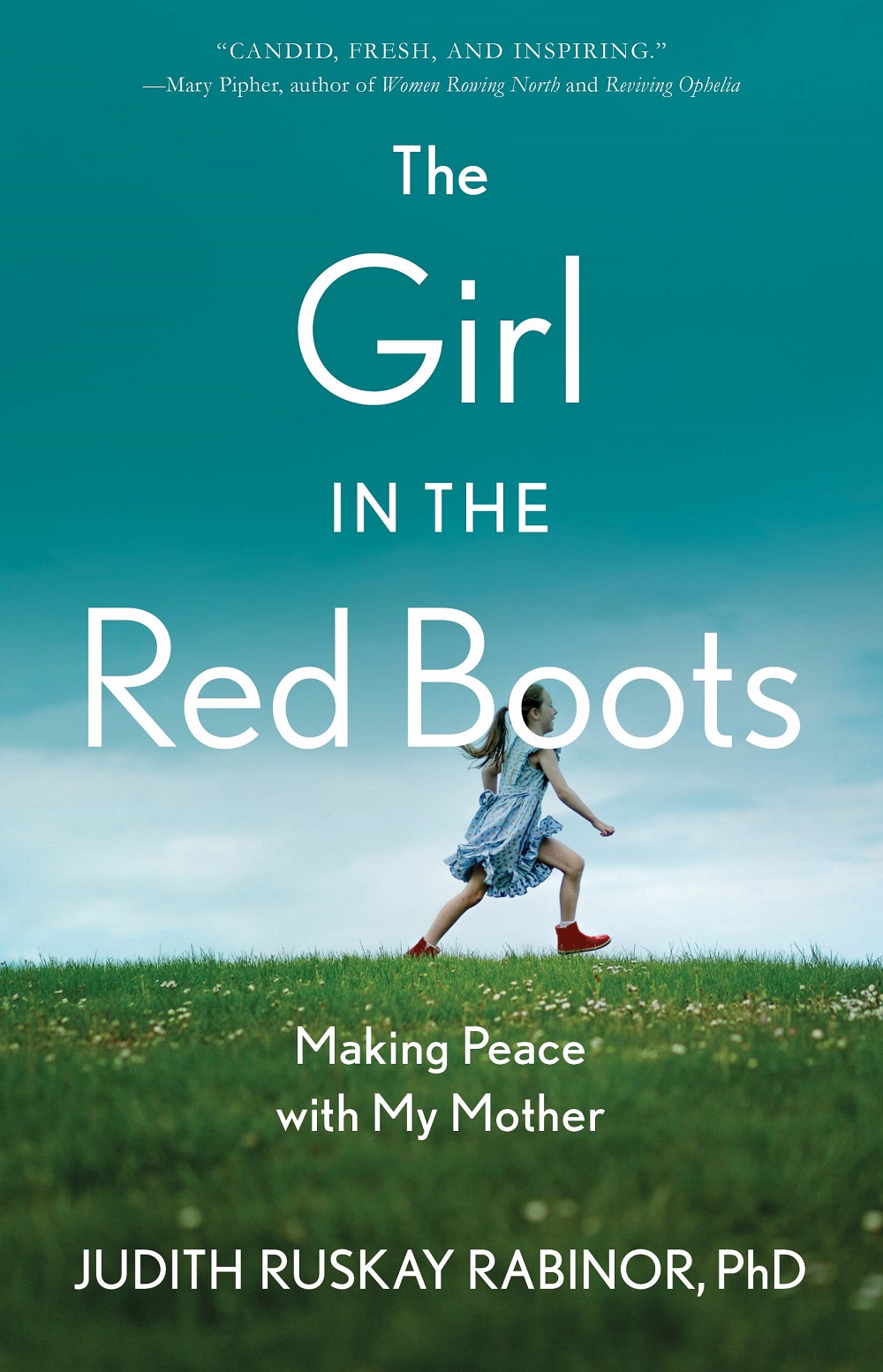
Book review: ‘The Girl in the Red Boots’ by Judith Ruskay Rabinor, PhD

‘The Girl in the Red Boots’ is the new book by Judith Ruskay Rabinor, PhD. Photo: amazon

Judith Ruskay Rabinor, PhD is a clinician, author, writing coach, speaker, and workshop leader. In addition to her New York City private psychotherapy practice, she offers remote consultations for writers, clinicians, and families. She has published dozens of articles for both the public and professionals and has authored two books, “A Starving Madness: Tales of Hunger, Hope and Healing” (Gurze Books, 2002) and “Befriending Your Ex After Divorce: Making Life Better for You, Your Ex and Yes, Your Ex!” (New Harbinger Publications, 2012). A sought-after speaker and workshop leader, Judy speaks at national and international mental health conferences and runs workshops at spas, colleges and universities, and retreat centers such as the Esalon Institute, California. Her new book “The Girl in the Red Boots: Making Peace with My Mother” weaves together tales from Rabinor’s psychotherapy practice and her life to help readers appreciate how painful childhood experiences can linger and leave emotional scars.

“The Girl in the Red Boots” begins with a Prologue where the author writes that one lesson she has learned from over forty years of specializing in mother-daughter relationships is that stories are excellent teachers. She hopes “the tales from my office and my life may help you untangle your stuck places and develop compassion for yourself and, possibly, for your mother.” While leading a seminar exploring the importance of the mother-daughter relationship, she is blindsided by a memory of a childhood trauma. As an eight year old girl, her mother tricked her by telling her that she was going to a birthday party but instead she ended up in the hospital having her tonsils removed. When she realizes that this trauma has haunted her for most of her life, she sets out to heal herself. She shares her personal journey from becoming a therapist with her own issues to eventually making peace with her mother and herself as well as stories from her psychotherapy practice. The book is divided into eight parts: Part One: Welcome to Womanhood, Part Two: The Secret, Part Three: Becoming a Therapist, Part Four: Love, Marriage, and Divorce, Part Five: Mother-Daughter Complications, Part Six: Making Peace, Part Seven: When “When” is Now, and Part Eight: Retelling Our Stories. Each chapter begins with an active imagination/guided-imagery exercise that introduces the topic and lays the ground work for the work to be done. At the end of the book, these exercises are listed together in an appendix to make them easier to access.

Therapists are usually taught not to talk about their own issues with their patients, but Judith Rabinor often shared her experiences with them in the hopes that by doing so, they might find common ground. This might seem unconventional to some, but it does help people realize that their troubles are more common than they think. In this case, she worked with mother-daughter clients and by helping them deal with their problems, she found that it is never too late to let go of her own trauma, hurt, and disappointments and learn compassion for her own mother. For readers, this memoir hits home because we all have disputes with our mothers and no mother-daughter relationship is perfect. It is not a ‘how to’ manual, but rather a series of life lessons the author learned the hard way. Her reflections are poetic sometimes: ‘A low-flying airplane flashed by, illuminating a grove of leafless maples trees swaying in the wind.’ Sometimes the flashbacks disrupt the time line, but for the most part, the narration is easy to follow, in part because she does not use complicated language or psychology terms. It is no wonder her clients trust her. “The Girl in the Red Boots” is a must-read poignant memoir about one woman’s journey from troubled little girl to an adult who learns to see her mother as a flawed but compassionate woman. It is recommended for readers who enjoy memoirs that entertain and help them grow as individuals.

*The author received a copy of this book for an honest review. The views and opinions expressed here belong solely to her.

Rating: 4 out of 5.

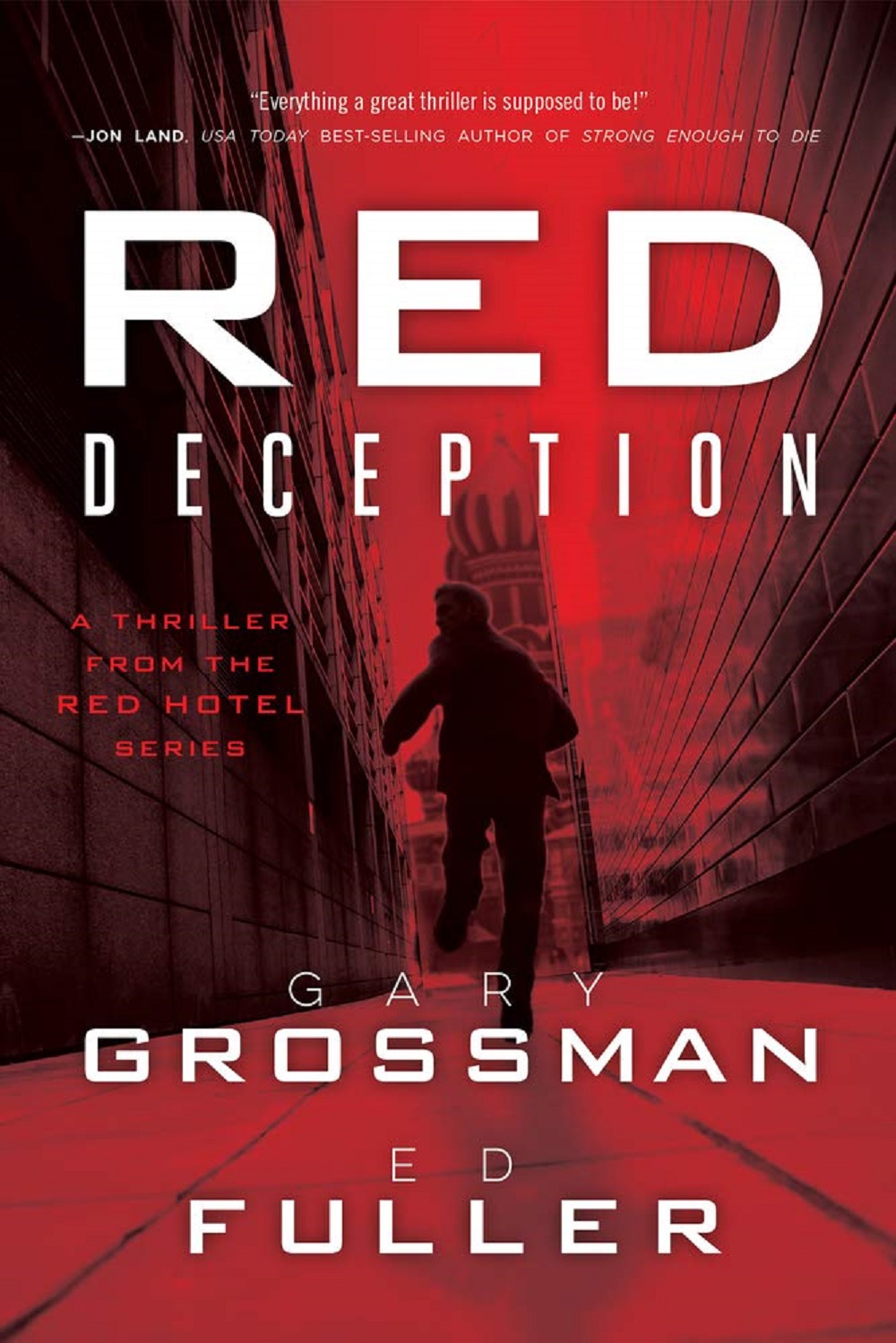
Book review: ‘Red Deception’ by Gary Grossman and Ed Fuller

‘Red Deception’ by Gary Grossman and Ed Fuller is book two in the Red Hotel series. Photo: amazon

Gary Grossman’s first novel “Executive Actions” propelled him into the world of geopolitical thrillers. “Executive Treason,” “Executive Command,” and “Executive Force” further tapped Grossman’s experience as a journalist, newspaper columnist, documentary television producer, reporter, and media historian. In addition to the bestselling Executive series, Grossman wrote the international award-winning “Old Earth,” a geological thriller that spans all of time. With “Red Hotel” and “Red Deception,” his collaborations with Ed Fuller, Grossman entered a new realm of globe-hopping thriller writing. Ed Fuller is a hospitality industry leader, educator, and bestselling author. He is also director of the FBI National Academy Associates (FBINAA). The plots for “Red Hotel” and “Red Deception” draw heavily on his experience and exploits. “Red Deception” is the second book in The Red Hotel series and the newest novel by Gary Grossman and Ed Fuller – when terrorists bomb bridges across the country and threaten the Hoover Dam, the vulnerability of America’s infrastructure becomes a matter of national security.

“Red Deception” begins with real world news headlines such as North Korean spies, Russia looking to get its former nations back, and other news-worthy world events. The Prologue consists of three separate foreign insurgents slipping into the country, one through the US/Canadian border in Maine (an eyewitness eventually calls in to a radio show (page 125), one in the Los Angeles International Airport, and the other fifteen nautical miles East of Fort Lauderdale, Florida with more to come. The rest of the novel is divided into three parts, Part One: The Long Fuse, Part Two: Trip Wire, and Part Three: Shock Waves.

Dan Reilly is a former Army intelligence officer who is on a taxi on his way to a meeting when an explosion rocks the 14th Street Bridge in Washington, D.C. He survives only because his taxi was behind an armored car and he immediately goes into crisis mode and tries to help as many people as he can. Years earlier, he predicted similar attacks in a top secret State Department report. It is practically a virtual blueprint for disaster and now that the report has been leaked and in the hands of foreign operatives, the events taking place eerily mirror this report. With Washington and the nation distracted by domestic crises, (bridges and tunnels being bombed) Russian President Nicolai Gorshkov sends troops to the borders of Ukraine and Latvia, ready to reclaim what he feels is Russia’s rightful territory. Tensions in Europe threaten to boil over as the American president balances multiple crises that threaten to upend the geopolitical order. With the US at the mercy of an egomaniacal leader, who takes over after the president ends up in the hospital after an assassination attempt, and reporters and covert agents on his tail, Reilly may be the one man who can connect the dots before an even bigger catastrophe unfolds.

If current world events are not enough drama, “Red Deception” makes for an excellent read for fans of espionage thrillers. It is the second book in the Red Hotel series but stands well on its own. Ed Fuller has a background in the hospitality industry and that gives the writing an authentic voice when Reilly, who owns hotels around the world, has to deal with hotel business. This is especially true during the heart-pounding action that begins in Chapter 63 as guests in his Kiev hotel have to be evacuated as war is breaking out. The long list of principal characters in the beginning seems irrelevant at first but it serves its purpose when trying to keep up with the different plotlines. The action is mostly dialogue driven and flows effortlessly from page to page and it is hard not to finish reading it in one sitting. Some of the best books are those that teach readers something along the way and this time it is interesting to learn about North Korean spies, who have to obey every command or they will bring shame to their families or worse, their families will be killed. They are always under suicide orders if caught by the ‘enemy.’ The highlight has to be when a quick thinking housekeeper in a Virginia motel, who actually read the employee manual about what to watch out for, calls the FBI to report that she found a significant amount of battery packaging in the trash in one of the rooms. While it is true that there are multiple storylines, it serves to prove that everything that happens is interconnected, even if it is halfway around the world. Hopefully there will be more books in this exciting series. With relatable characters and intriguing, fast paced action, “Red Deception” is a must-read thriller. It is recommended for fans of spy thrillers similar to the Robert Ludlum novels and Lee Child’s Jack Reacher series.

“Now, as President of Kensington Royal Hotels’ international division and the force behind the creation of the company’s global threat assessment program known as Red Hotel, Reilly relied on instinct. He was, after all, Army-trained and State Department-tempered. Experience drove the dark-haired, six foot, 180-pound corporate executive in this new moment of crisis.”

*The author received a copy of this book for an honest review. The views and opinions expressed here belong solely to her.

Rating: 4 out of 5.

Book review: ‘Dovetails in Tall Grass’ by Samantha Specks

‘Dovetails in Tall Grass’ is a historical fiction novel by Samantha Specks. Photo: amazon

Samantha Specks is a clinical social worker who has worked on a child/adolescent psychiatric unit, as a Dialectical Behavioral group therapist with adults and adolescents, and as an outpatient psychotherapist. She currently lives in Texas, but her heart and mind resided in Minnesota, her home state, while working on “Dovetails in Tall Grass: A Novel,” which is her debut novel. It is inspired by the true story of the thirty-eight Dakota-Sioux men hanged in Minnesota in 1862 – the largest mass execution in US history. “Dovetails in Tall Grass” is a powerful tale of two young women connected by the fate of one man. It will be released Tuesday August 24, 2021.

This being a historical fiction novel, it begins with three notes from the author about the subject matter, one being that she authored this book “because I was seeking a greater understanding of a complex and difficult past.” She goes on to encourage readers to further educate themselves on the subject and how it influences our current system. The Prologue takes place on December 26, 1862, after Emma and Oeninika, both teenagers, live through the execution of the Dakota men and describes how they were each affected. The story then goes back to May 5, 1861, leading up to the mass execution; first Oeninika’s story, then Emma Heard’s story and from there the stories alternate. Oeninika is desperately trying to hold on to her calling as a healer and follow the orders of her father, Chief Little Crow. Her people’s way of life is changing because the government is forcing them to live as farmers instead of the hunter/gatherer lifestyle that comes natural to them. Emma Heard longs to become a teacher but her family needs her help around the farm. Even though she did not have a normal education, Emma goes to work for her father, who is a lawyer. Later, she becomes the court transcriber during the Dakota’s trials.

Fueled in part by anger at the U.S. government’s delay of the Dakota’s annuity cash payments, which is causing them to be near starvation, they attack the town and eventually the Heard farm. One of the Dakota assaults Ida, Emma’s sister, but Tashunke, Oeninika’s new husband, intervenes and saves her life. Emma witnesses this and when the law arrests the Dakota, including Tashunke, who did not participate in the raids, she testifies on his behalf, saving him from execution. In the end, Oeninika and Tashunke reunite and Emma Heard leaves the family farm to attend university.

It is not easy to write about war and conflicts, especially between the government and a specific group of people. Samantha Specks does a commendable job of presenting both sides of the U.S.-Dakota War in “Dovetails in Tall Grass,” as experienced by two young females already struggling with their own growing pains. It is a fusion of a historical and a coming-of-age novel told in the first-person point of view of Emma Heard, who comes from a settler family, and Oeninika, a Dakota. The narration is well-balanced as it describes the grief, pain, and heartbreak they each experienced during this challenging time in history. Emma feels conflicted: “They weren’t as purely evil as my recollection wanted me to believe. That warrior had protected us. My urge to destroy shifted to an angry confusion” and so does Oeninika “Little Rapids had abandoned her and the children, disappearing with Brown Wing and others to continue raiding. Pointless raiding that didn’t serve the war mission or their families.” The action flows effortlessly from page to page and the chapters are short and to the point. With poetic language, “the cup steamed in the damp chill of the morning rain. Puddles rippled as raindrops splashed down in a steady stream,” the author brings beauty into an environment that sometimes seems depressing and hopeless. The characters are well-developed so when the inevitable happens, readers can empathize with both. “Dovetails in Tall Grass” is a hauntingly beautiful historical novel that reminds us that there are always two sides to each story and that actions have consequences. It is recommended for fans of the genre who appreciate reading about the human side of war.

“I questioned if I could continue working in a law office, after seeing the truth of how powerful men manipulated the implementation of the law. It seemed to me the Dakota had been willing to abide by a treaty; it was our own government’s failure to honor the treaty that was the impetus for this disaster.” – Emma Heard

*The author received a copy of this book for an honest review. The views and opinions expressed here belong solely to her.


Rating: 4 out of 5.

Book review: ‘Act of Negligence’ by John Bishop

‘Act of Negligence’ is the fourth book of the Doc Brady mystery series by John Bishop. Photo: amazon

John Bishop M.D. is an orthopedic surgeon, keyboard musician, and author of the beloved Doc Brady mystery series. The series includes “Act of Murder,” “Act of Deception,” “Act of Revenge,” “Act of Negligence,” “Act of Fate,” and “Act of Atonement.” His 30 years as a practicing orthopedic surgeon give the reader a unique glimpse into the medical world with all its problems, intricacies, and complexities, while at the same time revealing the compassion and dedication of most health care professionals. Jim Bob Brady, the series protagonist, is an accomplished orthopedic surgeon with a talent for solving medical mysteries who also moonlights as a blues musician. In “Act of Negligence,” Dr. Jim Bob Brady finds himself investigating why dementia patients with orthopedic problems are dying after surgery. It is the fourth book in the Doc Brady mystery series.

“Act of Negligence” is now set in the year 2000, whereas the previous ones take place in the 1990s. The story begins as Dr. Brady is visiting Beatrice Adams, a nursing home patient with Alzheimer’s who was transferred to University Hospital. He was sent in as a consultant because she has a bad knee but at fifty-seven years old, she is too young to have Alzheimer’s. His friend and colleague Dr. James Morgenstern refers him a series of dementia patients with orthopedic problems from Pleasant View Nursing Home. Soon, they each die, not because of Dr. Brady’s treatments, but because of irregular heart rates. This shakes him up because as a surgeon, he is not used to so many of his patients dying.  After Dr. Jeff Clarke, who performs the autopsies, finds unusual brain pathology in each patient, Dr. Brady begins investigating the nursing home and its owner and CEO, Dr. Theodore Frazier. His curiosity and tenacity have gotten him in serious trouble before, including kidnappings and beatings, but this time, his life is dangerously on the line, but thankfully, his resourceful wife Mary Louise always has his back and saves the day. Even though those he considered allies turn out to be anything but, Dr. Brady uncovers the unconscionable research that Dr. Frazier was doing on Alzheimer’s patients.

Being an orthopedic surgeon, John Bishop once again brings his knowledge of the medical field to another exciting Dr. Brady adventure. Despite being heavy in medical terminology and drama, the author makes it easy to follow along and readers end up learning more about a specific medical ailment. This time it is Alzheimer’s disease. Dr. Frazier was experimenting on his patients in the hopes of curing Alzheimer’s and even though some died, there were others who improved. This brings about the controversial question ‘do the ends justify the means?’ The overall language is easy to understand and the action flows easily from page to page. With a first person narration, the reader has a front row seat when Dr. Brady is in trouble: “So, with an unconscious Jeff Clarke and a silent, concussed Cynthia Drummond, no brakes, a stuck carburetor, a speeding car, and no way to turn off the engine, I did the only thing I knew to do. I tried to steer the vehicle.” Highlights include Chapter 5 as one of the patients coded during surgery after the epidural needle slips and her heartrate grows erratic and Chapter 27 when Dr. Brady is drugged, nearly crashes a car and almost dies. In the series, even though the good guys always win, the plot twists at the end make for excellent storytelling. With compelling characters and nail-biting action, “Act of Negligence” by John Bishop is another must-read in the Doc Brady mystery series. It is comparable to works by Robin Cook and recommended for fans of medical dramas who are open to learning more about illnesses and appreciate that in ethical matters, there are always grey areas. 

“I was interrupted by the rhythmic beeping of the pulse oximeter, showing the patient’s oxygen saturation had fallen below 50 percent. Tim Kelly and I quickly closed the skin with an unattractive continuous stitch and watched Fred Green frantically administer various drugs to increase the patient’s heart rate, and thereby increase her blood oxygen level. He had Loretta call for another anesthesiologist stat, which brought two more docs into the room.”

*The author received a copy of this book for an honest review. The views and opinions expressed here belong solely to her.

Rating: 4 out of 5.

Book review: ‘Where Do You Hang Your Hammock?’ by Bella Mahaya Carter

‘Where Do You Hang Your Hammock?’ by Bella Mahaya Carter. Photo: amazon

Bella Mahaya Carter is a creative writing teacher, empowerment coach, speaker, and author of an award-winning memoir, “Raw: My Journey from Anxiety to Joy,” and “Secrets of My Sex,” a collection of narrative poems. She has worked with hundreds of writers over the past eleven years and has degrees in literature, film production, and spiritual psychology. Her poetry, fiction, creative nonfiction, articles, and interviews have appeared in Mind, Body, Green; The Sun; Lilith; Fearless Soul; Writer’s Bone; Women Writers, Women’s Books; Chic Vegan; Bad Yogi Magazine; Jane Friedman’s Blog; Pick The Brain; Spiritual Medial Blog; Literary Mama; several anthologies, and elsewhere. In her new book “Where Do You Hang Your Hammock?: Finding Peace of Mind While You Write, Publish, and Promote Your Book” she shows writers how to use their present circumstances as stepping-stones to a successful and meaningful writing life.

“Where Do You Hang Your Hammock?” begins with an Introduction where the author shares her personal experience about how a hammock she received from her husband and daughter for Mother’s Day helped her conclude that peace and happiness come from within. She thought she had placed it in the perfect spot in her backyard but when the neighbor cut down a tree that gave her shade, she was furious about it for a month. It was not until she gave in, relocated it and found another ‘perfect spot,’ that she found that the bliss was not in the hammock itself, but in the permission she “gave myself to let go and be completely present and alive there.” Her goal is that this book will “encourage readers to lean in to their work and their lives with greater freedom, curiosity, and celebration.” It is divided into five parts: Dream (Universal Doubt, Stories That Create Suffering), Nourish (Small Adjustments, Body Breaks), Write (Journal Writing Is Good For Your Writing, The Time It Takes), Publish (Why We Write, The Dream), and Promote (Author Expectations, Hiring a Publicist). Each part stands alone and some chapters end with writing prompts to help readers dig deeper into the subject as it pertains to their lives. Throughout, she also shares her seven major crossroads moments on her path to publication, known as MYHM (move your hammock moment). This must-read resource is meant to give writers inspiration and help authors overwhelmed by the publishing process.

Writing and getting published can be intimidating and there are more than enough books out there dealing with the subject. “Where Do You Hang Your Hammock?” is not only a how-to book, it is also meant to help readers be mentally prepared for the entire process by dealing with fears and feelings of inadequacies and giving them coping skills. The book is brilliantly divided into different stages so that readers can choose what to focus on depending on their needs or just read all the way through. The chapters are short and to the point, without unnecessary ramblings, and the language is easy to understand, true attributes of an educator. Highlights include chapter 38. Craft: Six Ways to Improve Your Writing where the author gives writing tips such as avoiding general terms and writing using your natural speaking voice; chapter 69. Marketing Versus Publicity (marketing is an ongoing process while publicity is a targeted media campaign), and chapter 81. How to Plan a Successful Book Tour. An interesting concept she shares is that “readers want to see their own lives reflected in what they read;” this is why we read and why we write, to connect with others, so we should not be afraid to write about our experiences. It is updated for the modern age with the inclusion of using social media, Facebook and Zoom. “Where Do You Hang Your Hammock?” by Bella Mahaya Carter is an extremely useful and inspiring guide designed to bring out an individual’s creativity. It is recommended for readers looking for ways to improve their writing and tips for how to handle what comes after a book is published.  

“Perhaps one of the greatest skills I know in service to dreams is the understanding that growth takes place at the edges of one’s comfort zone.”

*The author received a copy of this book for an honest review. The views and opinions expressed here belong solely to her.


Book review: ‘Great American Road Trips’

‘Great American Road Trips’ by Reader’s Digest. Photo: amazon

Now that summer is here, most people will be taking vacations, including road trips. Reader’s Digest has put together a new book, the first in the Great American Road Trips series, that covers Scenic Drives. Hoping to inspire readers to travel and explore the wide-opens spaces and breathtaking views of our country, “Great American Road Trips – Scenic Drives: Discover Insider Tips, Must-See Stops, Nearby Attractions and More” is a complete guide to making road trips easier.

“Great American Road Trips” begins with a foreword by the editors that explains the purpose of this book “These trips will take you on an odyssey in your car, van or RV.” These drives range from the ones that lead to beaches to the more adventurous, like a trip along North America’s highest paved road, the Mount Evans Scenic Byway in Colorado. Each one is a firsthand experience from travelers and photographers themselves and comes with helpful added tips like length of trip, fun facts, nearby attractions, and “not to be missed” points of interest. All this is highlighted by over 140 gorgeous photos. The information is divided into five parts: West (Seward Highway in Alaska, Big Sur Coast in California), Southwest (Apache Trail in Arizona, Texas Hill Country in Texas), Midwest (Illinois River Road in Illinois, North Shore Scenic Drive in Minnesota), Southeast (Bayou Country in Louisiana, Cherokee Foothills Byway in South Carolina), and Northeast (Cape Cod’s Route 6 in Massachusetts, Vermont Route 108 in Vermont).

Whether taking a cross country trip or planning a staycation, “Great American Road Trips” is the ultimate guide to scenic drives. Even if you are not planning a road trip anytime soon, it still contains exceptional pictures and information about each scenic drive. The first person descriptions make them more realistic. Highlight: each section ends with a quote and being from Texas and having lived near Fredericksburg, I am partial to the one after ‘Southwest,’ “Where flowers bloom, so does hope” by Lady Bird Johnson because it accompanies the picture of a field of bluebonnets near Fredericksburg. Seeing all these flowers along side the road every spring is awe-inspiring.  All the pictures are colorful and they make each destination look more inviting. “Great American Road Trips” is an extremely helpful resource for anyone planning a scenic drive or two and might just inspire a bucket list altogether.

*The author received a copy of this book for an honest review. The views and opinions expressed here belong solely to her.

Rating: 4 out of 5.

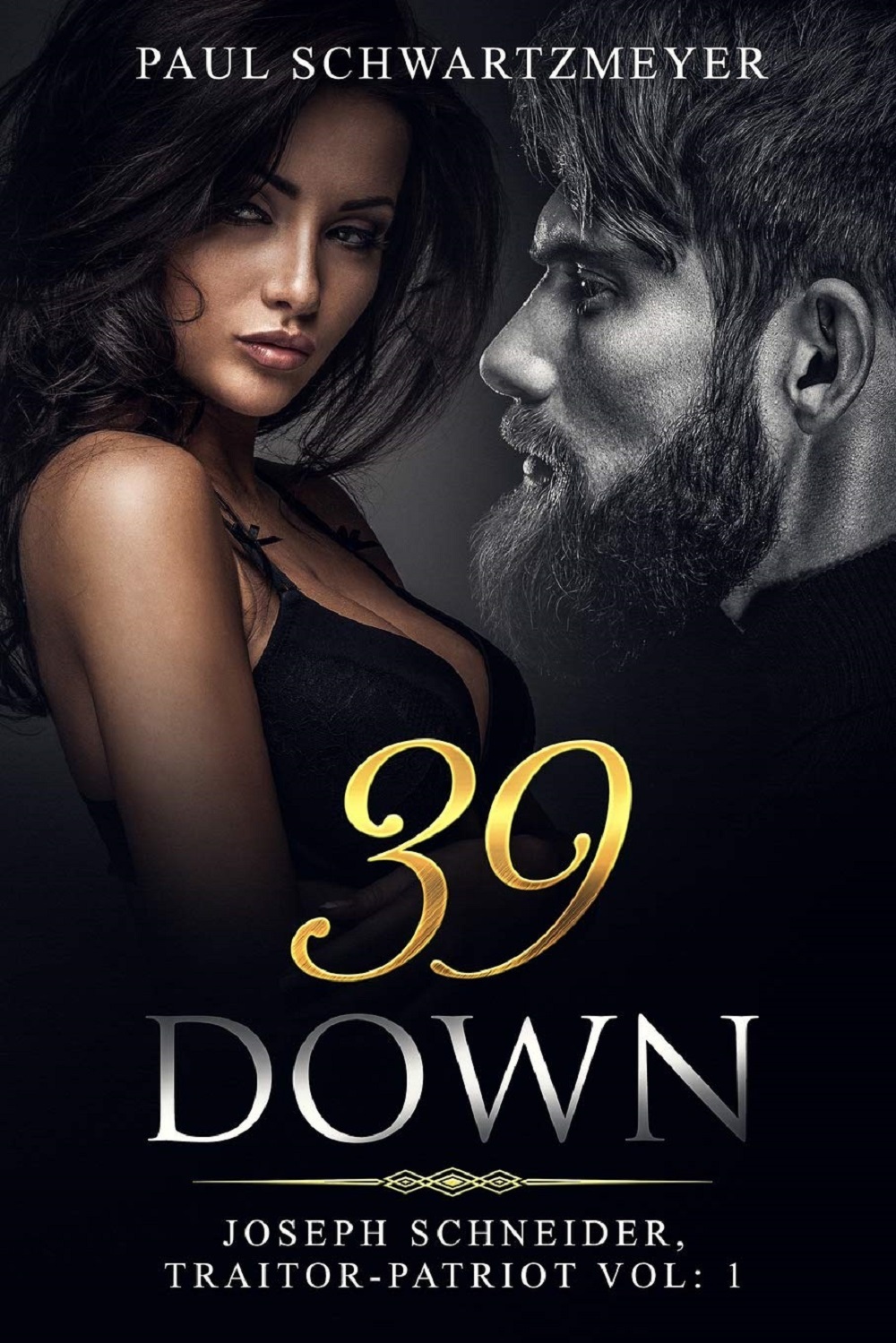
Book review: ’39 Down’ by Paul Schwartzmeyer

’39 Down’ is book one of the Joseph Schneider, Traitor-Patriot series by Paul Schwartzmeyer. Photo: amazon

Paul Schwartzmeyer is a former Marine Corp radio man. After graduating from college, he worked on oil rigs in the bayous of offshore Louisiana and in Texas. For eight years he worked as an engineer in the Saudi Desert where he was given the highest level security clearance to work with radioactivity and explosives. He also worked in Dubai as well as in the Al Rub Al Khali, one of the most desolate places on earth. His worldwide contacts include soldiers of fortune, oil industry executives, combat veterans, hostage negotiators, madams, and pub owners. He has extensive knowledge in the workings of international banks, trade cartels and the civilian military complex and his books are metaphors for a world few people ever see. He is the author of the series Joseph Schneider, Traitor-Patriot. “39 Down” is book 1 of the series and the story of Paul Trifthauser, who unknowingly inherits an espionage network from his grandfather.

“39 Down” begins with a CIA memo to the FBI director from the Intelligence Division regarding Joseph Gerhold Wendel Schneider that includes his personal information such as date of birth, occupations, and known family members: his grandson Paul Trifthauser, who is the protagonist of this series. The story starts as Arianna, Paul’s girlfriend, is grieving the death of Gregor, Paul’s best friend. He was shot coming out of Paul’s office building while wearing his jacket so Paul assumes he was the intended target, not Gregor. His death spooks them so much that when Paul’s mother calls to say she is selling the family home and that he needs to go and clean out his stuff, he and Arianna do not think twice about leaving town. Paul is newly sober and he fears that if he starts drinking again, he will lose Arianna and he has already lost too much. But Gregor’s death is only the beginning of the drama and chaos that will upend both their lives. When they find Joseph’s stack of crossword puzzles in the family home’s barn, Arianna, who is good at puzzles, goes through them. Together, they begin to unlock the mystery of Joseph’s past which leads to Paul unknowingly inheriting an espionage network so secretive and so lethal that that even the CIA was afraid to confront it. Buried in layers of code, hidden in 3,000 crossword puzzles are Joseph Schneider’s secrets. Now Paul has to figure out the code before his grandfather’s enemies, the world’s massive trading cartels, realize he does not know it. Not knowing who he can trust and armed with nothing but intuition and with the help of a twenty-nine year old Indian prostitute named Alejandra, he races against time in an attempt to stay alive.  

The Joseph Schneider, Traitor-Patriot series is based on many composite characters, including Paul Schwartzmeyer’s grandfather Joseph Reeb, who was a former tanner for the Pearce Arrow company, a decorated combat veteran in World War I, and owned a furniture store in Buffalo. “39 Down” has a feeling of authenticity since the author used some of his own background to create the Paul Trifthauser universe, including spies, cartels, and Alejandra, the prostitute/assistant. It is narrated in the first person point of view so the reader has an insight into Paul’s state of mind, especially when everything is falling apart around him. Due to Paul’s extensive character development, readers come to care about what happens to him. The language is easy to understand and poetic at times: “The Rover glided over the sand as if we were floating on a cloud.” Some chapters begin with CIA memos updating the Trifthauser/Schneider case which hints that the CIA really is following Paul, that he is not just paranoid. His grandfather’s code name was Arnus, ‘39 Down’ in correspondence with foreign agents; that is where the novel’s title comes in.  It is fascinating when Paul describes what it is like living in isolation and how traumatic it can be going back to civilization: “It takes about a month to internalize it. It’s a process. At night, the silence is so encompassing that your ears ring. The ringing keeps you awake, but when that dies down, your body takes on a calmness that’s quite profound. After just five months, I returned to ‘civilization.’ It was one of the most horrid experiences in my life. I couldn’t sleep inside, choosing to sleep on the roof of my apartment in Dhahran. I drank incessantly, I thought I’d lose my mind.” With action that flows easily through the pages, it is a definite must-read. “39 Down” by Paul Schwartzmeyer is a globe-trotting spy adventure that sometimes keeps readers guessing but does not disappoint. It is recommended for fans of spy thrillers similar to The Bourne series by Robert Ludlam and the Jack Reacher series by Lee Child.

The Kindle edition of “39 Down” appears to be the unedited version because it has numerous typos and grammatical/spelling errors. This does not take away from the quality of the story.

*The author received a copy of this book for an honest review. The views and opinions expressed here belong solely to her.

Rating: 4 out of 5.

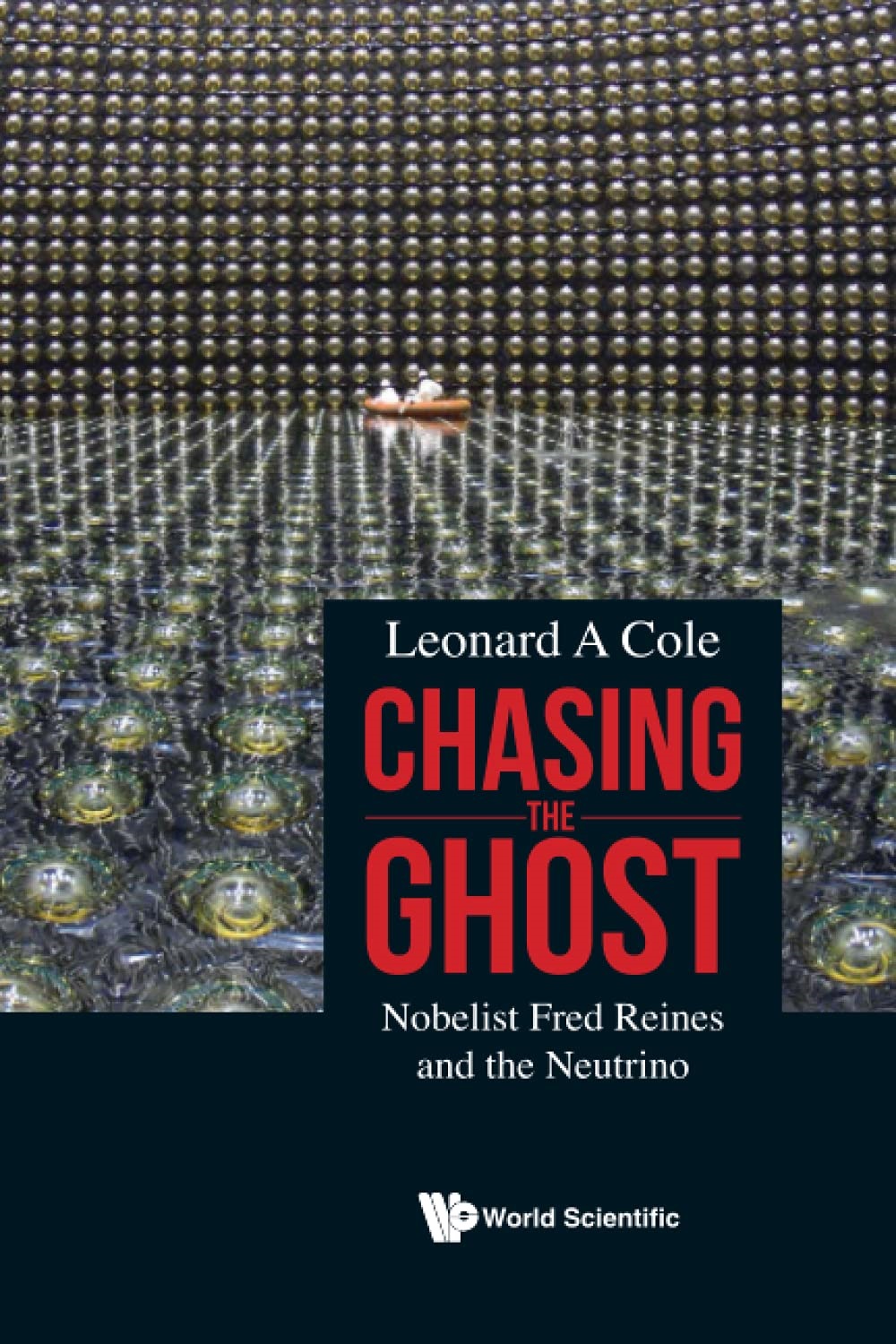
Book review: ‘Chasing the Ghost’ by Leonard A. Cole

‘Chasing the Ghost’ by Leonard A. Cole Photo: google

Dr. Leonard A. Cole is the author of “Chasing the Ghost: Nobelist Fred Reines and the Neutrino.” An expert on bioterrorism and on terror medicine, he is an adjunct professor at Rutgers New Jersey Medical School (Emergency Medicine) and at Rutgers University-Newark (Political Science). At the medical school, he is director of the Program on Terror Medicine and Security. He has written for the The New York Times, The Washington Post, Los Angeles Times, Foreign Policy, Scientific American, and The Sciences. He has testified before congressional committees and made invited presentations to several government agencies including the U.S. Department of Energy, the Department of Defense, the Centers for Disease Control and Prevention, and the Office of Technology Assessment. His new book “Chasing the Ghost: Nobelist Fred Reines and the Neutrino” is a unique combination of memoir and biography and a deeply human story about Fred Reines, one of the 20th century’s true scientific pioneers.

Fred Reines is the winner of the 1995 Nobel Prize in Physics. In “Chasing the Ghost,” Cole recounts the life of one of the great scientists of our era; from the years spent on the search for the “unseeable” neutrino, to the “Project Poltergeist” experiment, and to the discovery of the mysterious neutrino. It begins with the story of how in the summer of 1963, Fred Reines, Gus Hruschka, an engineer friend, and Friedel Sellschop, a South African physics professor, entered the East Rand South African gold mine with an experiment in mind. Precautions included water-repellent high-laced shoes, hard hats, and even gas masks, in case sensors detected carbon monoxide or methane. But before continuing that story, Cole, who happens to be Reines’ cousin, goes back to 1956 when Reines and his colleague Clyde Cowan discovered the neutrino. Fun fact: “The miniscule particle is commonly described as elusive. More than half a century after its detection, the neutrino is still referred to as a ghost particle”- hence the title of the book. The book is divided into six parts: Beginnings “Language, Science, and the Ghost Particle,” Becoming “Becoming a Physicist,” Discovery “Explosive Ideas,” Moving “Transition Years at Irvine,” Expressions “Classroom Teacher,” and Validation “The Legacy Grows.” The Epilogue sums up the vast amounts of memorabilia currently in the lobby of Frederick Reines Hall at the University of California Irvine as well as how even after he won the Nobel Prize in 1995, Reines continued to learn more about the particle and how interest in neutrino studies continues to grow.

According to Scientific American, “a neutrino is a subatomic particle that is very similar to an electron, but has no electrical charge and a very small mass, which might even be zero.” Cole expertly explains the science, but understanding physics is not a requirement to read this biography because in the Preface, the author explains that the book is a combination of memoir and biography with a focus on a human story. It is mainly about Fred Reines’ personal life and not so much the science of neutrino physics. Any science described is used to support Fred’s story and is meant to appeal to a general audience, which it does. It alternates between sections explaining physics (subatomic particles), the experiments to detect the neutrino, and Reines’ personal life and career. By using pictures, letters, diagrams, and newspaper accounts, readers are offered a glimpse of this wildly accomplished scientist and teacher who became one of the twentieth century’s true pioneers in physics, all while remaining modest. Standout chapters include Chapter 14: Classroom Teacher, which details how involved he was as a teacher and Chapter 18: The Legacy Grows where it breaks down his legacy: “Interest in the ghost particle has soared, as its centrality in the workings of the cosmos has become increasingly evident.” Despite the overall physics theme, the language is easy to understand and follow. Even if the physics sections are too complicated for some readers, they are few and far between and serve to help understand the mind of Fred Reines. “Chasing the Ghost” by Leonard A. Cole is an incredibly interesting portrait of the man and his contributions to physics and is recommended for readers who appreciate biographies with some science mixed in for fun.

“The story of the neutrino is one of scarcely imaginable extremes. The particle is omnipresent yet proof of its existence had long eluded confirmation. Other than photons – particles of light – neutrinos are the most abundant particle in the universe.”

*The author received a copy of this book for an honest review. The views and opinions expressed here belong solely to her.

Book review: ‘Strange Love’ by Fred Waitzkin

‘Strange Love’ by Fred Waitzkin. Photo: amazon

Fred Waitzkin is an American novelist and writer. His work has appeared in Esquire, New York magazine, the New York Times Sunday Magazine, the New York Times Book Review, Outside, Sports Illustrated, Forbes, the Huffington Post, and the Daily Beast, among other publications. His memoir, “Searching for Bobby Fischer,” about his son Josh Waitzkin, a chess prodigy, was made into a major motion picture released in 1993. His other books are “Mortal Games,” “The Last Marlin,” “The Dream Merchant,” and “Deep Water Blues.” His new book “Strange Love” is about an American tourist who finds himself obsessed with a young Costa Rican woman and tells a story of disappointments, unusual desires, and the things people will do when their dreams do not materialized in the ways they had hoped. It is illustrated by Sofia Ruiz, a Latin American artist.

“Strange Love” is narrated by a man vacationing in a remote village on the Pacific coast of Costa Rica. The story opens as he is sitting at a picnic table with Rachel, a local woman he recently met, as well as her aunt María José, a few cousins, and some other people. Rachel wanted him to meet her family and they are exchanging stories. She proceeds to tell him about how the women of Fragata are the most beautiful in the world and when men hear about the place, they arrive in their fancy cars, only to take them away. Most girls leave when they are seventeen and return when they are in their thirties. At 36, Rachel is one of the few who never left. The man is a writer who at one time imagined himself to be a novelist the likes of his heroes Philip Roth and John Updike but instead has spent thirty years working as an exterminator in filthy basements and elevator shafts after writing only one novel. Rachel grew up surrounded by poverty, loss, and trauma and has the gift of storytelling, something he lacks. She runs the Fragata Lounge, a dilapidated beach bar and tries to make a decent living, while constantly being reminded that her youth and any chance she had of escaping, are slipping away. As Rachel continues to tell her story, he becomes more involved with her, and while she thinks he will turn her story into a book, he hesitates because it might mean the end of their relationship.

Captivating works of literature do not have to be hundreds of pages long and Fred Waitzkin’s new book “Strange Love” is proof of this. This beautifully written novel is perfect for a weekend beach read and despite its small size, the bittersweet story of two similar souls lives on past the final pages. The author combines a beautiful yet melancholy seaside setting with flawed and relatable characters to create a memorable romance. Deep character development creates unforgettable characters, especially the lead couple. He is a failed novelist and when he meets Rachel, she is like a breath of fresh air, so he uses the excuse of research for a new book to keep her in his life so he can feel alive again. Rachel, who feels like her best years, like her beauty, are behind her, feels useful when she is telling him about herself and life in Fragata. Their similar stories of loss and broken dreams bind them but their fate is left uncertain. The story flows easily throughout the pages and the language is easy to understand. The illustrations brilliantly accentuate the story and make it come alive. As with most of his books, the author’s affinity for coastal living shines through and anyone who lives in such settings will attest to the beach’s allure. “Strange Love” by Fred Waitzkin is an unusual love story set by the Costa Rican shore. It is recommended for readers who appreciate complex characters and stories of embattled men and women who live in beautiful yet haunting settings.

*The author received a copy of this book for an honest review. The views and opinions expressed here belong solely to her.

Rating: 4 out of 5.