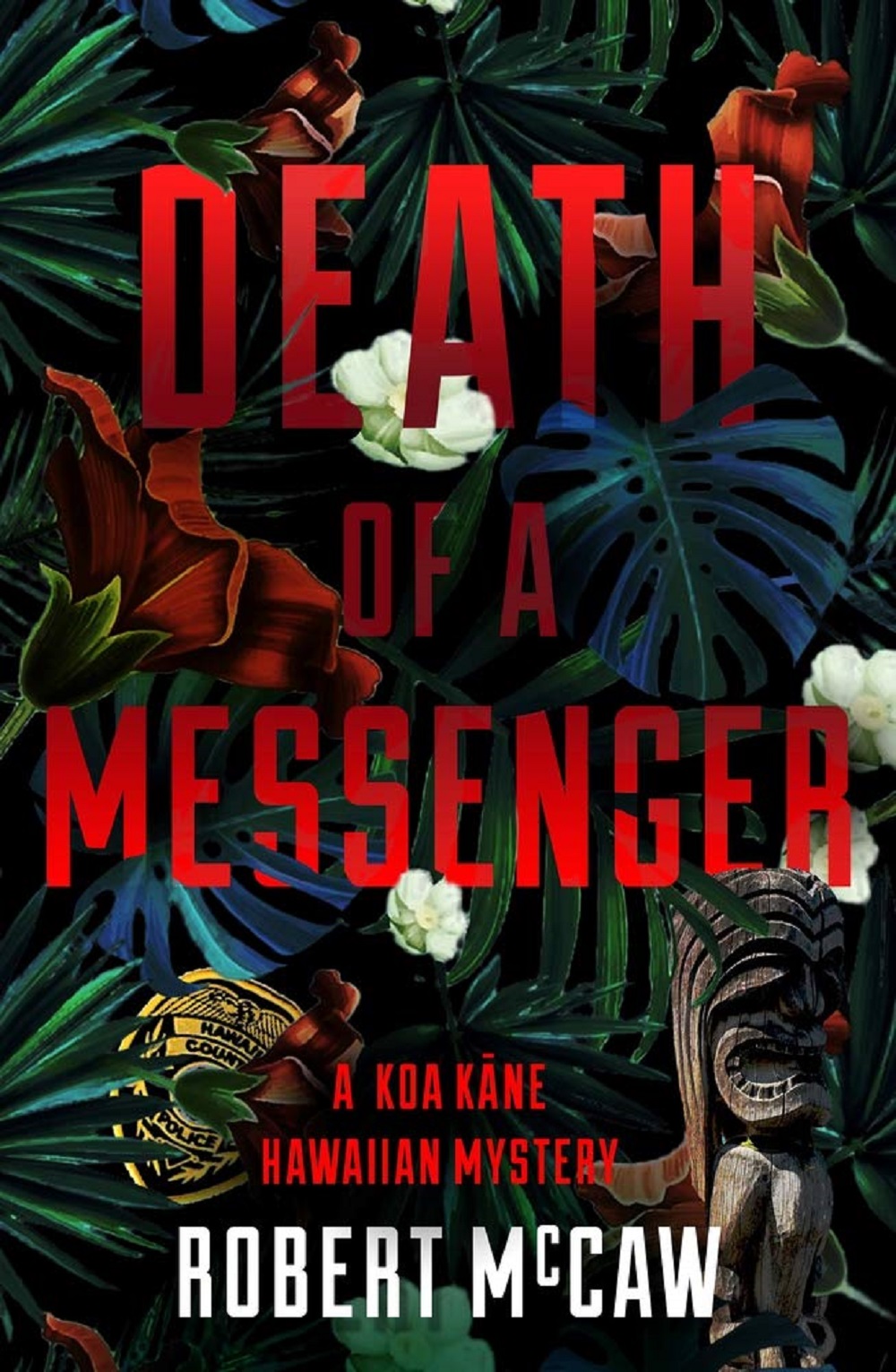
Book review: ‘Death of a Messenger’ by Robert McCaw

‘Death of a Messenger’ is Robert McCaw’s new Koa Kane Hawaiian Mystery novel. Photo: amazon

Robert McCaw is an author who grew up in a military family traveling the world. He is a graduate of Georgetown University, served as a U.S. Army lieutenant, and earned a law degree from the University of Virginia. He was a partner in a major international law firm in Washington, D.C. and New York City, representing major Wall Street clients in complex civil and criminal cases. Having lived on the Big Island of Hawaii, McCaw fills his writing of the Islands with his more than 20-year love affair with this Pacific paradise. His new book “Death of a Messenger,” is a prequel and follows “Fire and Vengeance” and “Off the Grid” in McCaw’s Koa Kane Hawaiian Mystery Series. In this new mystery, after an anonymous 911 caller reports a body at Pōhakuloa, the Army’s live-fire training area, Hilo Chief Detective Koa Kāne, a cop with his own secret criminal past, finds a mutilated corpse bearing all the hallmarks of ancient ritual sacrifice.

“Death of a Messenger” begins as Detective Koa Kāne is aboard an Army helicopter heading towards a crime scene that will haunt him throughout his investigation. Not only does he have another murder to solve, but he is also constantly troubled by a pinched nerve in his neck and no matter where he goes, he has sporadic jolts of pain that only add to his misery. Regardless, he is excited at the prospect of another mystery to solve and this one occurs in an Army live training area between two of the five volcanoes that form the Big Island of Hawaii. There, he finds a mutilated corpse just inside a lava tube and it has all the signs of a ritualistic killing. It might also be an archeological site because the site contains a stone tool, an old fire ring, and some stone chips so Kāne consults with a local archeology expert, Jimmy Hikorea. He is off-putting and rude, but he knows his material and keeps Kāne on his toes and proves to be useful in the investigation. Solving this murder will not be easy due to constant obstacles in Kāne’s way including an incompetent medical examiner, hostility from both Westerners and Hawaiian sovereignty advocates, and one lie after another. The victim turns out to be Keneke Nakano, an astronomer who worked at the local observatory and his death is linked to grave robbing and antiquities theft.

Detective Koa Kāne is back in full force in this prequel to the Koa Kāne Hawaiian Mystery series. Even though it is Robert McCaw’s newest novel, it is considered a prequel but still a stand-alone novel, like the rest of the series. This highly riveting police procedural mystery has everything: relatable characters, Hawaiian terms and language, all explained, as well as interesting history that involves the murder case. It is easy to read and though the action starts out slow, it picks up, especially at the end when Kāne is pursing the suspects. The author’s love of Hawaii is evident in his writing and through beautiful poetic language, shares that love with his readers: “The giant eyes peered deep into space and backward in time to a younger and more violent universe.” Koa Kāne is a deeply flawed character. He has physical pains and is fighting his own personal demons because he is still being haunted by the fact that he got away with killing a man. Others see him as a brilliant Detective who solves crimes, but in his mind, this case is only a small redemption. According to him, “he had much left to do before, if ever, he deserved to be hanohano [honorable].” The plot twists keep the reader guessing until the shocking end. Hopefully, there will be more Koa Kāne mysteries to come. “Death of a Messenger,” a noteworthy murder mystery that showcases both the beauty and dark side of Hawaii, is recommended for fans of the genre who also appreciate learning about Hawaii’s history and archaeology.

“Later, the two of them walked out of the observatory into perhaps the most stunning sunset in Koa’s memory. Far off to the west, trails of vaporous mist played eerily over the deeply shadowed valley where night had already fallen between the Hawaiian mountains….Hues of red, orange, yellow, and pink glorified the darkening sky. No edges separated the colors. A continuum of subtle shades simply slid softly together in the ever-shifting light of the dying day.”

*The author received a copy of this book for an honest review. The views and opinions expressed here belong solely to her.


Book review: ‘The Blonde’ by Anna Godbersen

‘The Blonde’ by Anna Godbersen

Anna Godbersen is an American writer whose debut novel was the first installment of The New York Times’ bestselling Luxe series for young adults, which includes “The Luxe,” “Rumors,” “Envy,” and Splendor.” She also wrote the Bright Young Things series and “The Blonde,” her first book for grownups. “The Blonde” takes place at the height of the Cold War when Marilyn Monroe was the most infamous woman in the world and poses the question: what if she was also a secret Soviet spy? In 1947, a young, unknown Norma Jeane Baker meets a mysterious man in Los Angeles who transforms her into Marilyn Monroe, the star. Twelve years later he demands payback, and Marilyn is given her first assignment from the KGB: uncover something about John F. Kennedy that no one else knows.

“The Blonde” begins with a Prologue that chronicles Norma Jean’s early years beginning in 1926 when she was born and then jumps to New York in 1959. This fictional account, at the height of her career, has Marilyn Monroe coming across a man named Alexei Lazarev, a Russian, who reminds her that he helped make her famous and now wants her to repay him. He claims to know her real father, that he wants to meet her, and that he can make it happen. All she must do is get close to JFK. From there, the story speculates on what Marilyn and JFK’s relationship might have been like with the added intrigue of Russian spies and the Cold War. It is divided into five parts, 1959, 1960, 1961, 1962, and 1963. The Epilogue shows Marilyn as a guilt-ridden older woman visiting JFK’s gravesite. It is also the story of the Douglass Walls, the FBI agent who spied on Marilyn, told through his point of view.

The real story behind Marilyn Monroe and JFK may never be known but it is always fun to speculate, especially when spies, murder, and double agents are concerned. An easy read, the action flows through the pages and is mostly dialogue driven. The language is simple and down to earth, and at times even poetic: “The air coming off the high desert was over a hundred degrees, the kind of heat that melts the borders of a girl’s body.” It is an interesting insight into how far people are willing to go for power, wealth, status, and love. The line between fact and fiction are blurred and readers get a glimpse into Marilyn’s thoughts and what might have driven her to make the decisions she made. Part romance, part thriller, it is a fun novel that pulls the reader into the the lifestyle of that era. “The Blonde” is recommended for fans of Marilyn Monroe and Cold War era novels who appreciate fictional spins on real people.

“They forget that vulnerability can be itself, and it can also be a shield, and also a knife. Any old thing can be a weapon, so long as you know how to use it right.”

*The author received a copy of this book for an honest review. The views and opinions expressed here belong solely to her.
 

Book review: ‘Primal Calling’ by Barry Eisenberg

‘Primal Calling’ is Barry Eisenberg’s debut novel about a young man searching for his father. Photo: google

Barry Eisenberg is an associate professor of health care management in the School for Graduate Studies at the State University of New York Empire State College, a health care management consultant, and a former hospital administrator. During the years he has spent in health care, he has met a wide variety of people who have inspired him and helped him to understand how caring and courageous some can be.  Most of his writing has been fiction, with a focus on the future of health care and higher education. “Primal Calling” is his first novel and centers around Jack, a twenty-year old whose search for his father becomes an all-consuming mission.

“Primal Calling” begins as Jack is finishing another day of college. As he drives out of the parking lot, a mysterious car follows him out and the man and woman force him into their car. When Jack questions their motive they tell him that they are taking him to meet his father. From there, the action goes back in time to Jack’s life with his mother Linda. He discovers the truth about his father one day when he is home sick from school and, because he is feeling better but bored, he is rummaging through the attic and finds his birth certificate. Curiosity gets the better of him and he uncovers his father’s name. This goes against what his mother always told him, that his father was an anonymous donor because she claims she was artificially inseminated. Rather than tell his mother and risk her stopping him from digging deeper, he continues on his own. All his probing triggers an FBI alert and it turns out his father, whose real name is Stewart Jacobson, works for the government and has different identities to protect his work and life. Jack persists in his search even though he runs into one obstacle after another. In the end, he gets to know his father and Linda reconnects with Stewart since he never knew he has a son. To protect Stewart, his employer fakes his death and he is given a new identity, but Jack and Linda remain a part of his life.

It is hard to pin down what genre of book “Primal Calling” is because it has touches of everything: a coming-of-age story because in the process of finding his father, Jack finds himself; a love story because of the budding romance between Jack and Cathy, the young lady who is helping him in his search; and an international spy thriller when Stewart’s job is the focus, including a suicide bomber plot twist. In all cases, it is an intriguing debut novel by Barry Eisenberg that has potential for becoming a series. The character development is extensive, so they become familiar and relatable without an obvious villain standing out. In an interesting plot development, before Abdel, Rafiq’s son, who is Stewart’s ally, blows himself up along with others, the reader gets to know the victims. Their description begins with “He never looked at the faces of the people near him.” This is important because it reinforces the fact that actions have consequences, affecting other people who have their own lives and that they are not just objects: “The cafeteria became a cathedral to blood, smoke, death, and chaos. Body parts were strewn about in a catastrophic human mauling.” The language level begins as intermediate: “There was no shortage of pursuits to which his interest could be applied, and, in the meantime, he vowed to savor this indoctrination into the next stage of his life” but becomes easier halfway through, which helps the pacing of the story. It also has its poetic moments: “Trees were frosted with ice, its weight tugging at the branches, creating a vastness of luminescent archways.” A one-of-a-kind novel, “Primal Calling” is recommended for fans of mysteries that are wrapped up in family drama with a touch of international spy intrigue.

*The author received a copy of this book for an honest review. The views and opinions expressed here belong solely to her.

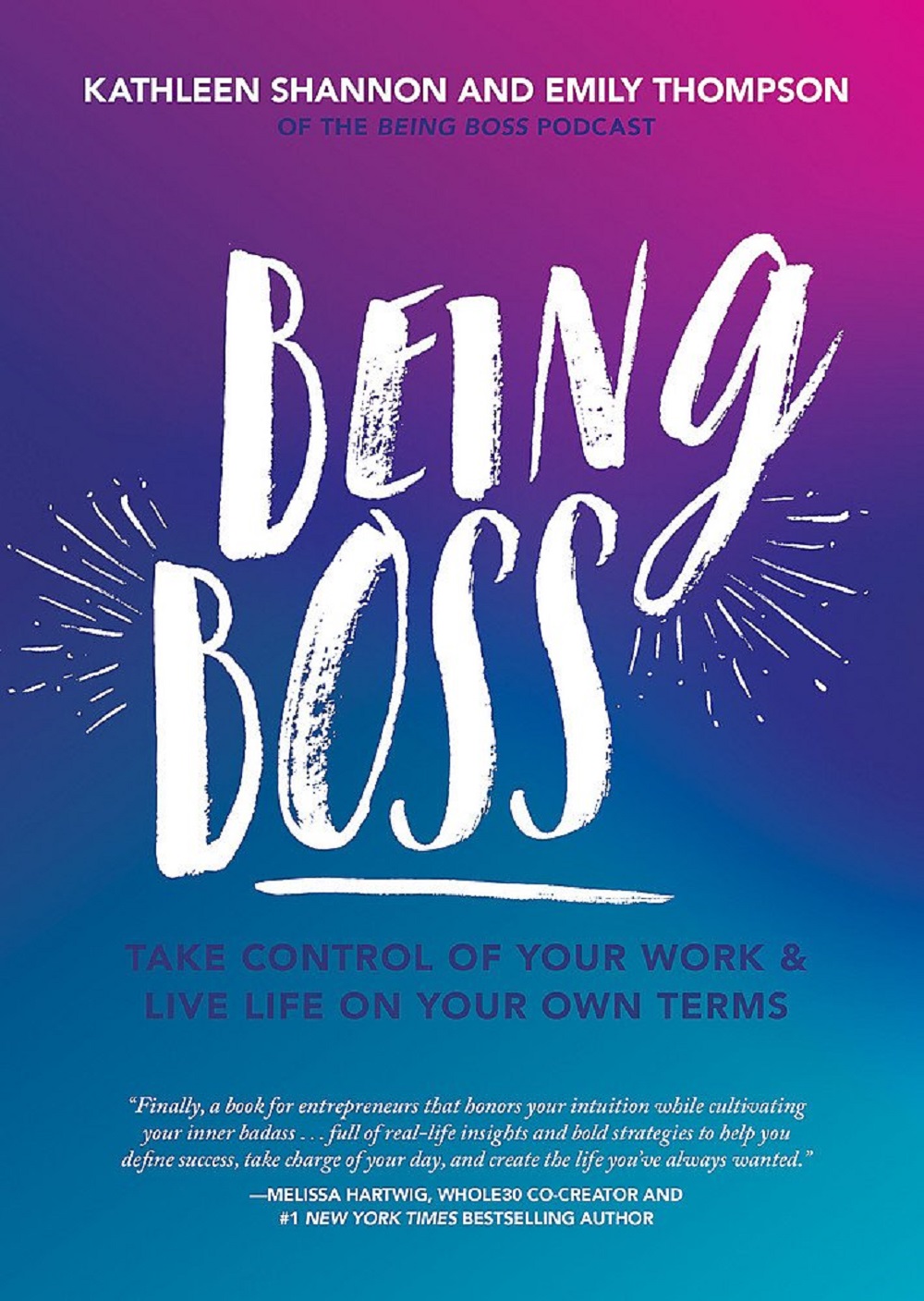
Book review: ‘Being Boss’ by Kathleen Shannon and Emily Thompson

‘Being Boss’ by Kathleen Shannon and Emily Thompson. Photo: amazon

Kathleen Shannon and Emily Thompson are self-proclaimed “business besties” and hosts of the top-ranked podcast Being Boss, where they talk shop and share their combined expertise with other creative entrepreneurs. In 2009, Emily Thompson founded Indie Shopography, a design and strategy studio for online entrepreneurs. She has worked to help makers, coaches, and designers develop an online business model, strategize, and launch websites, and grow their online business. Kathleen Shannon is the founder of Braid Creative and Consulting, a boutique branding agency and consultancy she co-owns with her sister. Together they have helped thousands of creative entrepreneurs authentically brand and position themselves as creative experts. Kathleen also does creative coaching and is regularly invited to speak on personal branding at design conferences and retreats. Their book “Being Boss: Take Control of Your Work & Live Life On Your Own Terms” is an interactive self-help guide for creative entrepreneurs where they share their best tools and tactics on “being boss” in both business and life.

“Being Boss” begins with the Introduction where the authors describe that their goal in writing this book is to help readers reach their business goals of being an entrepreneur: “We’re here to share our own experience, advice, stories, tactics, and to-dos that will help you make money doing what you love while being who you are 100 percent of the time in work and life.” They do this by sharing stories and tips along with quotes, excerpts and Q&As from experts in the business field. There are exercises, worksheets to fill out such as “Your Dream Day,” “A Tea Ritual,” and “Monthly Income Goals” all meant to help readers and aspiring bosses “dig deep, dream big, and take action.” It is divided into six chapters: Chapter 1: What It Means To Be Boss, Chapter 2: Boss Mindset, Chapter 3: Establishing Boss Boundaries, Chapter 4: Habits and Routines, Chapter 5: Do the Work, and Chapter 6: Live Your Life.

The subject of business and entrepreneurship can be tedious, but in this case, the authors make it easy to understand and follow without using complicated terms. It is a business book for the average person who wishes to get a better sense of what it takes to be a successful business owner. Even for non-entrepreneurs, it has tips and advice on how to be more productive, especially Chapter 4: Habits and Routines. These include taking care of yourself, listening to your body, and being kind to yourself with the overall idea that it is important to have a proper work/life balance.  Highlight is Chapter 5: Do the Work that covers personal branding, a simple business plan, finding your voice, and the importance of being consistent in your business. It is not a book on how to launch your own business, instead, it shows readers how to get in the “boss” mindset to be able to create success, deal with failures, and “take responsibility for creating the life you want to live.” Far from being an intimidating business book, it has inspirational quotes, personal stories, and advice and tips anyone can use. “Being Boss” is an excellent reference guide and is recommended for readers who appreciate advice on how to create a more meaningful work/life experience.

“The core of the boss mindset is your values and your intentions. When your values and intentions are aligned, your work and life will feel efficient, effective, and meaningful.”

*The author received a copy of this book for an honest review. The views and opinions expressed here belong solely to her.

Book review: ‘Greatest Love’ by Dr. & Master Zhi Gang Sha

‘Greatest Love’ by Dr. & Master Zhi Gang Sha with Master Maya Mackie.

Dr. and Master Zhi Gang Sha is a world-renowned healer, Tao Grandmaster, philanthropist, humanitarian, creator of Tao Calligraphy and an eleven-time The New York Times bestselling author.  In 2016 Master Sha received rare and prestigious appointments as Shu Fa Jia (National Chinese Calligrapher Master) and Yan Jiu Yuan (Honorable Researcher Professor), the highest titles a Chinese calligrapher can receive, by the State Ethnic of Academy of Painting in China.  A Master Teacher personally trained by Master Sha, Master Maya Mackie is dedicated to empowering humanity.  As one of the top trainers at the Tao Academy, Master Maya teaches people how to apply soul power to every aspect of life, including health, relationships, finances, business, pets, and more.  In “Greatest Love: Unblock Your Life in 30 Minutes a Day with the Power of Unconditional Love,” they show readers how to use unconditional love to receive blessings and melt all blockages to enrichen their lives.

“Greatest Love” begins with an Introduction that explains the purpose of the book: “to share with you sacred wisdom and powerful yet simple practices that can empower you to help your loved ones, humanity, and Mother Earth through this challenging period of time.”  These include simple ancient techniques such as chanting powerful mantras and revolutionary new techniques using Tao Source Calligraphies to empower readers to enhance and transform all life. Chapter 1 defines greatest love as unlimited and unconditional.  The top ten qualifies of this love are ‘greatest’: love, forgiveness, compassion, light, humility, harmony, flourishing, gratitude, service, and enlightenment. Chapters include: The Power and Significance of Greatest Love (Da Ai), What is Tao Source Calligraphy?, Apply Tao Source Calligraphy to Enrich and Bless Your Life, and Chant and Trace Tao Calligraphy to Serve Humanity and Mother Earth.

One school of thought states that we create our own karma, whether good or bad, depending on our actions. “Greatest Love” makes that point when describing “Shen,” which includes the soul, heart, and mind, which can become polluted or blocked. Simply put, bad karma blocks the soul, good karma unblocks it: “Karma is the root cause of success and failure in every aspect of life.” This is the underlying message that the authors successfully are putting out there and the exercises, chants and meditation techniques all strive to help create good karma and positive flow to help readers change their lives.  It is a small book, made to be carried everywhere as a source of constant enrichment. The language is simple to understand and whenever necessary, the terms and practices used are defined, since it references spiritualism and Taoist philosophy. “Greatest Love” contains positive messages of self-healing and improvement and is recommended for readers who appreciate alternative methods of self-help and spiritual guidance.

“Currently, Heaven and human beings are not joined as one. They are not in alignment. We believe this is why we are seeing so many natural disasters, economic and political challenges, war, diseases, and more.”

*The author received a copy of this book for an honest review. The views and opinions expressed here belong solely to her.
Book review: ‘Act of Revenge’ by John Bishop, M.D.

‘Act of Revenge’ is the third book in the Doc Brady series. Courtesy photo, used with permission.

John Bishop M.D. is an orthopedic surgeon, keyboard musician and author of the beloved Doc Brady mystery series. The series includes “Act of Murder,” “Act of Deception,” “Act of Revenge,” “Act of Negligence,” “Act of Fate” and “Act of Atonement.” Jim Bob Brady, the protagonist, is an accomplished orthopedic surgeon with a talent for solving medical mysteries who also moonlights as a blues musician. The series is set in the 1990s and features Houston and Galveston locales. In “Act of Revenge,” Jim Bob Brady is once again helping in an investigation, this time in regards to Lou Edwards, one of his colleagues, who is the prime suspect in the murder of Paul Thompson, the CEO of an insurance company.

In “Act of Revenge,” Doc Brady and his wife Mary Louise are in Colorado for a combined continuing education conference and ski getaway when he crashes into another skier. That skier turns out to be Lou Edwards, a plastic surgeon from Houston and a colleague of Jim Bob Brady. Once back in Texas, Lou has knee surgery and while he is in the hospital, Mary Louise spends time with Mimi, Lou’s wife.  As it turns out, Mimi has lupus along with other health issues brought on by leakage of her breast implants, which were inserted by Lou.  Lou is being sued multiple times for other faulty silicone breast implants and because of that, his medical malpractice insurance has been cancelled.  Days later, he shows up at a protest downtown at the office of that insurance company and while being interviewed, he threatens Paul Thompson live on the air.  Later that same day, Paul is found murdered in his luxury penthouse and Lou, being the main suspect, disappears. Since he has successfully helped before, Jim Bob is brought into the investigation and with the help of his son J.J., he follows the paper trail to uncover the real killer.

In “Act of Revenge,” John Bishop M.D. once again takes his real-life knowledge as an orthopedic surgeon to give his writing an authentic voice even though the medical aspect of the story is not the mystery. Jim Bob Brady is once more lured into an investigation that puts him in the crosshairs and this time he is trying to find out who killed Paul Thompson. He is almost run off the road: “As I slammed on the brake and ducked down into the seat, the sound of a sonic explosion, followed by shattering glass, deafened me” and towards the end, he is held captive at gunpoint. Descriptions of the author’s native Texas are spot on, especially Houston and the characters are familiar, believable, and relatable. Except for the sections explaining plastic surgery and medical insurance, it is an easy read and the story is entertaining and light-hearted. The language is poetic at times: “The evening was spectacular, an unusually clear, starlit night with a half-moon shining through the cloudless sky” and acts as a transition between the dialogue. The extensive backstory on Felicia Edwards (Lou Edwards’ daughter) and Annie Harrison makes it seem it seem like revenge was a motive in Paul’s murder so the plot twist at the end came as a surprise. Even though this is the third in the Doc Brady series, it stands perfectly fine on its own and should not dissuade readers who have not read the previous books. A definite page-turner, “Act of Revenge” is a must-read for fans of murder mysteries who appreciate the intricacies of the medical profession as background and want to learn more about the different types of plastic surgeries.

*The author received a copy of this book for an honest review. The views and opinions expressed here belong solely to her.

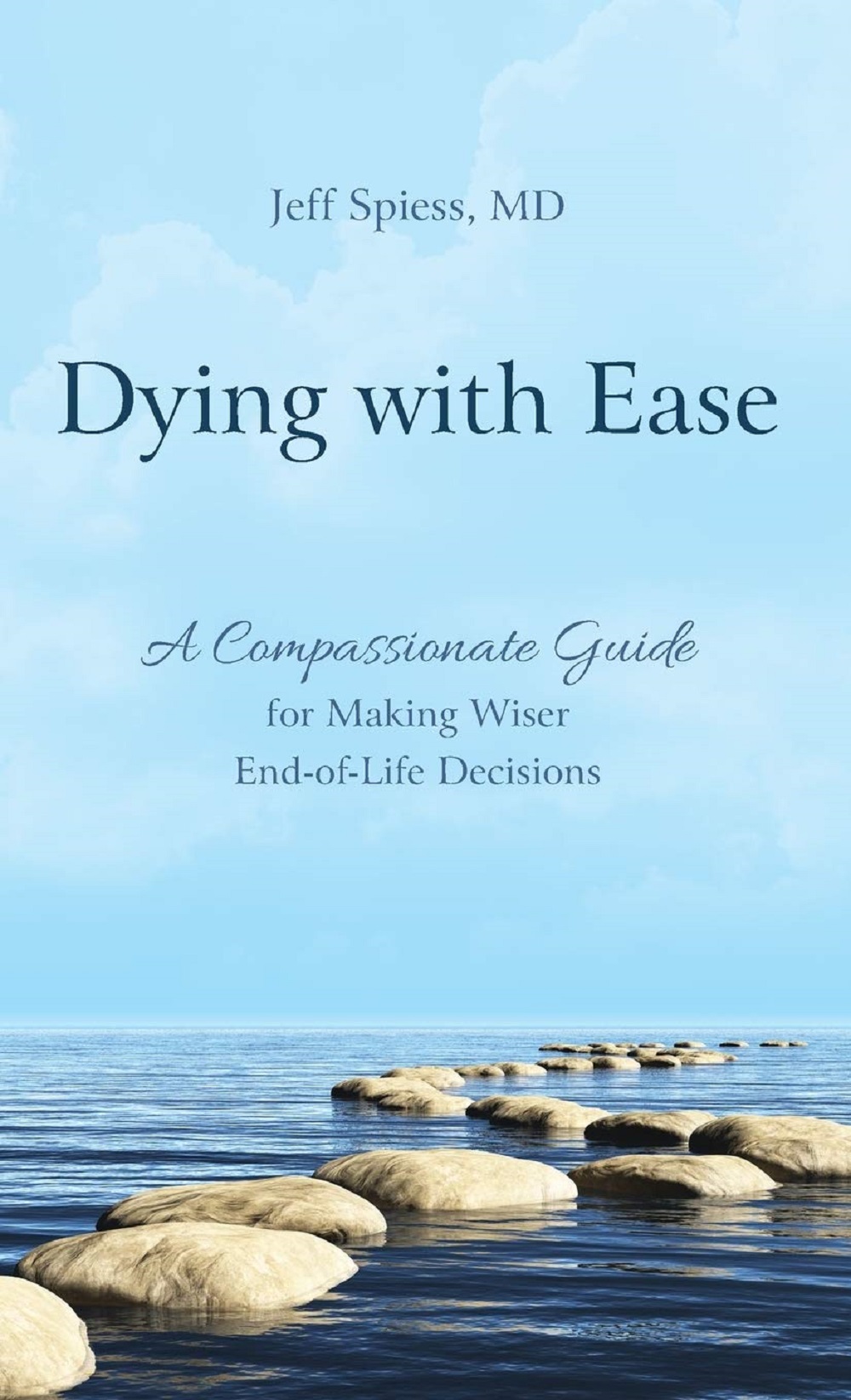
Book review: ‘Dying With Ease’ by Jeff Spiess, M.D.

‘Dying With Ease’ by Jeff Spies, M.D. Photo: amazon

Jeff Spiess, M.D. has spent his medical career caring for those facing serious illness and death, first as an oncologist, then as a hospice physician.  He is ‘mostly’ retired as associate medical director of Hospice of the Western Reserve and has been recognized as a leader in his field. Believing that death may be inevitable but fearing the end-of-life is avoidable, in his new book “Dying With Ease: A Compassionate Guide for Making Wiser End-of-Life Decisions,” he gives readers thorough information about advance care planning, hospice, palliative care, and ethical and legal issues surrounding dying in America to help them learn how to put their fear of their final days to rest.

“Dying With Ease” begins with an Introduction where Jeff Spiess recounts the life of Socrates and how in his “seventy years of his life, he had killed no one, betrayed no one, robbed no one, lied to no one, yet he faced capital punishment.” His crime? In short, corrupting the youth by failing to adhere to the religious norms of the day because he admitted that death is a mystery – that one one knows what it is all about.  After years of caring for terminally ill patients, the biggest lesson the author learned is that just like his patients, he will also one day die. Most Americans fail to accept death because conversations and decisions about the end-of-life topic are “unknown territory.” He quotes surgeon Atul Gawande, who in his book “Being Mortal,” writes “Death may be the enemy, but it is also the natural order of things.” Spiess’ focus is to present death as a personal process that everyone will experience eventually.  The book is divided into nine chapters, including, among others, Dying in America, Suffering, and Envisioning Your Own Death.  At the end, there are Notes and a Bibliography as well as a Discussion Questions section, by chapter, to help readers reflect on what they just read. For the braver ones, Chapter 7 contains a guided exercise to help them get an idea of what it may feel like to die; it may be too emotional for some. His hope is for everyone “to become more informed and at peace regarding your own dying.”

While most people agree that death is an inevitable part of life, not everyone has seriously thought about it, much less planned for it.  It is a scary thought, but in “Dying With Ease,” Jeff Spiess attempts to arm readers with what they need to know about death, dying, and how to adequately prepare to lessen the pain and grief for themselves and for those who will be left behind.  He successfully does this by using language that is easy to understand, the exception being Chapter 3: Hospice, but the material it contains is invaluable.  The book is not too long and can easily be read within a couple of days and is also useful as a future reference guide. Some of the details of the case studies presented (like the infamous Terri Schiavo case) are heartbreaking but overall, it is a balanced work that includes examples of people who experienced death as well information on how to choose a hospice, religious/spiritual/cultural views regarding death and dying and what documents to have in place to prepare for the inevitable. Highlights include the three basic anxieties surrounding death: fear of what dying will be like, fear of loss and fear of the unknown; and Chapter 2: I’m Going to Die? What Can I Do? – an eye-opening account of what to expect when your health declines and how to plan for it. Chapter 4: Suffering contains options for how to deal with unbearable suffering: increased treatment intensity, palliative sedation, and voluntary shortening life, which includes Medical Aid in Dying. This highly practical guide is recommended for readers who appreciate a perspective on death from someone who has seen his share and therefore has the resources and credibility to educate others on the subject.

“…for the highest likelihood of your wishes being carried out, you should not only execute advance directive documents but also communicate their presence, location, and content to your family and friends, and care providers. A living will form lying in a file drawer with your other estate documents might get noticed, but most likely only when you are dead, and then it is too late.”

*The author received a copy of this book for an honest review. The views and opinions expressed here belong solely to her.

Book review: ‘Here She Is’ by Hilary Levey Friedman

‘Here She Is’ by Hilary Levey Friedman. Courtesy photo, used with permission.

Hilary Levey Friedman is a sociologist at Brown University, where she has taught a popular course titled ‘Beauty Pageants in American Society.’ She is an expert on beauty pageants, childhood and parenting, competitive afterschool activities and popular culture. As a leading researcher in pageantry, she merges her mother’s past experiences as Miss America 1970 with her interests as a glitz-and glamour-loving sometime pageant judge. Friedman serves as the president of the Rhode Island chapter of the National Organization for Women and was a mentor to Miss America 2018. Her first book, “Playing to Win: Raising Children in a Competitive Culture” focused on children’s competitive afterschool activities. “Here She Is: The Complicated Reign of the Beauty Pageant in America” is her newest book and it uses beauty pageants to trace the arc of American feminism from the 1840s to the present.

“Here She Is” begins with the author admitting that she “can’t remember ever not knowing what a beauty pageant was.”  In the Preface, she explains that as the only child of a divorced beauty queen, her mother is Miss America 1970, Pamela Eldred, her childhood was immersed in the beauty pageant world. Her home was filled with memorabilia and from a young age she instinctively knew that to win a pageant, women had to be beautiful and thin, aside from also being a good public speaker and performer.  With this much firsthand knowledge of the beauty pageant world and through thorough research, she explains the history of beauty pageants and how they became acceptable and mainstream. This was due in part to P.T. Barnum’s baby shows, which he popularized at a time when women could not appear in public, but in his shows, they could take the stage while carrying said babies. The book is divided into three parts: Part I: The birth of American Pageantry and the Feminist Movement, Part II: The (Second) wave of Bras and Beliefs, and Part III: Tabloids, Trump, and tits. Her notes appear at the end of the book, which shows the amount of research that went into writing this book.

This year, America’s most popular beauty pageant celebrates its 100th anniversary. Due to ever changing attitudes and codes of morality, many people thought beauty pageants would eventually go away. While admitting that beauty pageants objectify women because they were first invented in 1921 by male businessmen to use women’s bodies to entice a crowd to stay longer in Atlantic City so that businesses could make more money, the author brings up the argument that they have helped bring women into the public sphere, helped them become leaders in business and politics and given them a path to higher education. Besides giving a background on beauty pageants, Hilary Levey Friedman provides historical tidbits including how Barbie came out in the 1950s, not coincidentally at the height of beauty pageants and how Girl Scouts, and beauty pageants, use sashes influenced by early suffragettes. Highlights include the idea that there are different pageants for different groups and ethnicities because when people feel excluded from pageants, they will make their own: pageants exist for Blacks, Asians, Latinas, Natives, disabled, petites, full figured women, seniors, etc. and that for the most part, conservative femininity is the dominant trait of pageants – they insist on a purity trait. The language is down to earth, making this an easy to read and hard to put down insight into pageants. “Here She Is” is not a how-to guide for becoming a pageant queen, nor is it a salacious behind-the-scenes look at beauty pageants. It is an impressively in-depth look at the positive and negative aspects of beauty pageants and is recommended for readers who want to learn about the historical background of pageants, including its controversies and dark past.

“Overall, it is neither an indictment of beauty pageants nor a paean instead showing that beauty pageants have never been all bad or all good – for participants, for women, or for feminism.”

*The author received a copy of this book for an honest review. The views and opinions expressed here belong solely to her.


Book review: ‘You Were Not Born to Suffer’ by Blake D. Bauer

‘You Were Not Born to Suffer’ by Blake D. Bauer. Photo: amazon

Blake D. Bauer is a wisdom teacher with an extensive background in psychology, alternative medicine, nutrition, traditional healing, and mindfulness meditation. Based on both his personal experience overcoming deep suffering, addiction and adversity, as well as his professional success with thousands of people worldwide, his work combines what he has found to be the most effective approaches to optimal mental, emotional and physical health. He is the author of the international bestselling book “You Were Not Born to Suffer: Overcome Fear, Insecurity and Depression and Love Yourself Back to Happiness, Confidence and Peace.” In this life-changing book, Blake Bauer explains why depression, addiction, physical illness, unfulfilling work and relationship problems are caused by years of hiding true emotions, denying a life purpose and living in fear.

First published in 2012, “You Were Not Born to Suffer” begins with an author Preface where he states that this updated edition contains insights that have helped thousands of people around the world improve their personal and professional lives. He faced his own battles with depression and now sees his purpose as sharing what he learned from his own suffering so that others can enjoy their lives as fully as possible. He acknowledges that life is short and people often take it for granted but assures readers that their happiness lies in their own hands and is “a daily choice we each need to make to overcome fear, negativity and guilt.” In the Introduction, he explains how the material in the book came from his search for freedom from his personal suffering, mental, emotional and physical, and a desire for the truth about life, himself and life’s purpose. The book is divided into thirty-three chapters ranging from Healing Guilt, Shame and Insecurity, Healthy Self-Esteem, Confidence and Trust in Life and Live Fully Before You Die. Each one begins with an inspirational quote and a reminder to take deep breaths and some end with “Practical Questions” and “Key Affirmations” to summarize key elements.

More than a self-help book, “You Were Not Born to Suffer” is a gentle reminder that even though our childhoods might have been difficult, it is time to move on and take charge of our lives.  Blake D. Bauer has gone through these challenges and is more than eager to share what he learned: plainly put, you alone are responsible for your own happiness, stop blaming others and take control of your own destiny/purpose. To do that, it is important to heal the past to affect the present. He includes inspirational quotes, mindfulness and breathing exercises as well as personal exercises such as writing letters to your younger self. The language is simple and easy to understand and he does not come across as preachy or condescending. Some of the topics dealing with spirituality and how the universe works may not be for everyone, but the overall guidance and advice is universal. Regarding self-esteem “Anyone who judges or rejects us only does so because they are still judging and rejecting themselves, so their reaction to us actually has little to do with us.” Standout chapters: Chapter 24: Practical Nutrition and Lifestyle Guidance – contains nutrition advice (drinking plenty of water and avoiding highly processed foods) and lifestyle tips (mindfulness, meditation, journaling); and Chapter 15: Inhale Life Deeply and Slowly – focuses on the importance of slowing down and deep breathing. “You Were Not Born to Suffer” is a practical guide filled with positive messages on how to effectively handle financial worries, loneliness, guilt and self-doubt, among other issues. It is recommended for readers who appreciate advice on learning to take better care of themselves, heal old pain and live life to the fullest.   

“Because the purpose of human life is to enjoy it fully, while learning what it means to love unconditionally, filing our days with the small things that make us feel great is vital to creating a fulfilling life.”

*The author received a copy of this book for an honest review. The views and opinions expressed here belong solely to her.

Book review: ‘Code 7: Cracking the Code for an Epic Life’ by Bryan R. Johnson

‘Code 7: Cracking the Code for an Epic Life’ by Bryan R. Johnson. Photo: google

Bryan R. Johnson is an American entrepreneur, venture capitalist and author.  He is the founder and CEO of Kernel, a company that has developed devices that can monitor and record brain activity and OS Fund, a venture capital firm that invests in early-stage science and technology companies.  His published works include “Code 7: Cracking the Code for an Epic Life” and “The Proto Project: A Sci-Fi Adventure of the Mind.” “Code 7” is the story of life at Flint Hill Elementary School, where life may seem normal, but seven friends find themselves on a path to crack the code for an epic life.  It has received Wishing Shelf Book, Royal Dragonfly Book and Mom’s Choice Awards.

“Code 7” begins with an Introduction by the author, made to look handwritten, where he invites his readers to “crack the code” that will lead them to an epic life.  It is divided into seven chapters, each a different child’s story where they each learn a life lesson: A World of Possibilities – Jefferson is given the job at school to paint a mural that represents the community; Smash Mouth Taffy – Sebastian opens a successful taffy business, but it is based on a lie; Handle With Care – Genevieve, an aspiring veterinarian, is given an egg to take care of for seven days; The Monster – Talmage helps his father in an epic effort to catch a “monster” fish that likes in a lake; Break a Leg – Samantha, a shy singer, who wants to try out for her school’s musical; Oh Rats! – Alec is a constant battle with his parents regarding cleaning his room and Code 7 – Kaitlyn, who wants to be a film maker and brings all six characters together for one final story.  

These short stories all revolve around different students who each have their own life experience with a lesson learned: from lessons in caring, to having a strong work ethic and learning to work together as a group for a common goal. The chapters are short and the language is easy and simple enough for the youngest of readers to follow and enjoy. Even if sometimes the characters come across as bratty and the stories may be hard to believe, they serve the purpose of teaching a lesson and promoting discussions. At the end, there is a reference website that includes a discussion guide and insights into the Code 7 Challenges. It is a children’s book recommended for age level 6 and up and grade Level 1 and up.

*The author received a copy of this book for an honest review. The views and opinions expressed here belong solely to her.