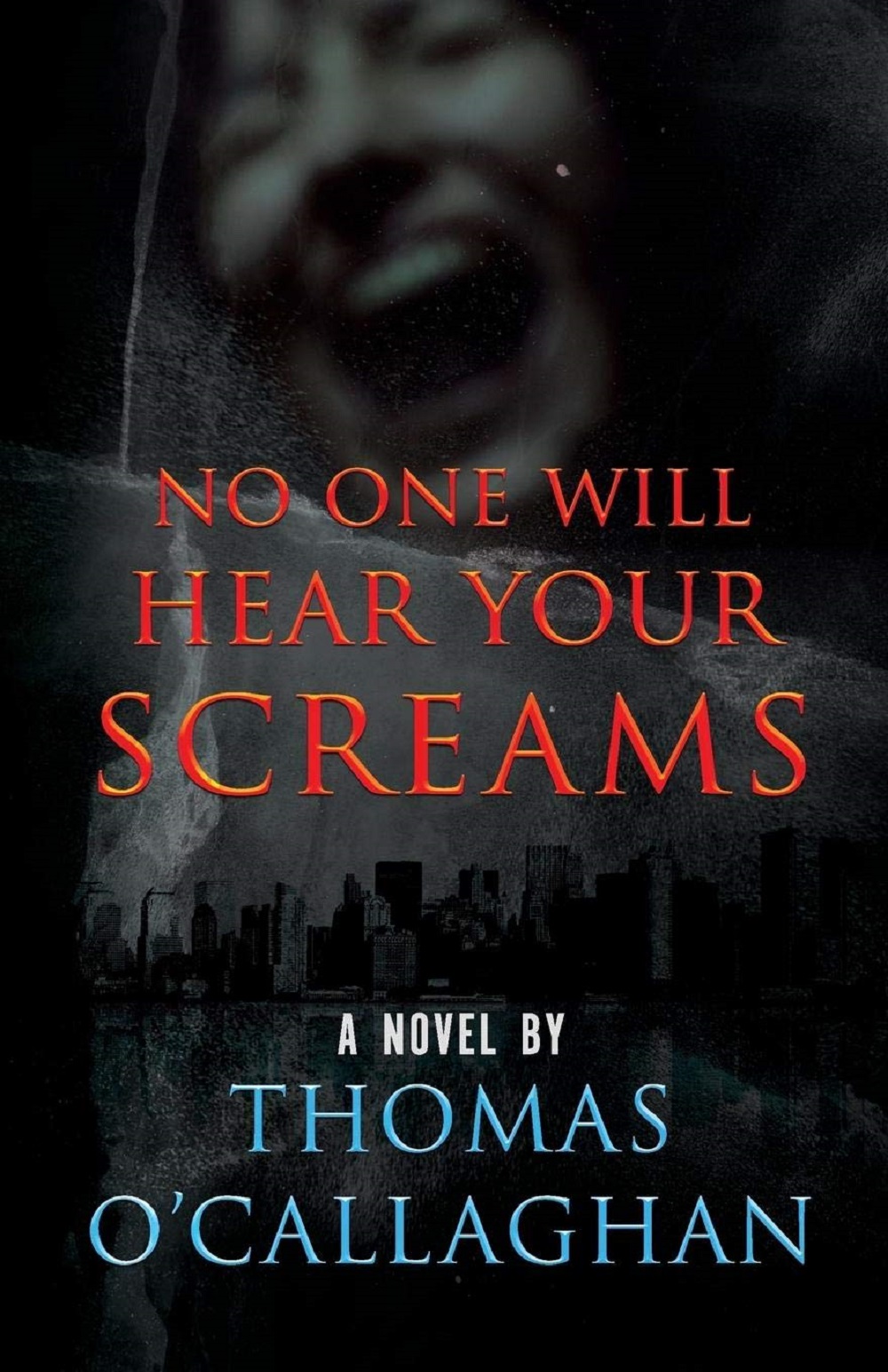
Book review: ‘No One Will Hear Your Screams’ by Thomas O’Callaghan

‘No One Will Hear Your Screams’ by Thomas O’Callaghan is the third in the John Driscoll series.

New York City native and graduate of Richmond College, internationally acclaimed author Thomas O’Callaghan is a member of both the Mystery Writers of America and the International Thriller Writers associations. His work has been translated for publication in Germany, Slovakia, Indonesia, the Czech Republic, China and Italy. “Bone Thief,” his debut novel, introduces NYPD Homicide Commander Lieutenant John W. Driscoll. “The Screaming Room,” is the second in the John Driscoll series and the third, “No One Will Hear Your Screams” was released on May 9, 2020.  In “No One Will Hear Your Screams,” Lt. John Driscoll is on the case involving a sociopathic killer who is on the loose and murdering prostitutes in New York City.

“No One Will Hear Your Screams” is set in the dark and violent streets of New York City and begins as a woman helplessly calls out for help when she realizes that she is being held captive.  Her head, wrists and ankles are bound with rope and when she lets out a “bestial scream,” there are only trees outside her grave, but they are “deaf to her howling. Indifferent to her plight.” That is where the book’s title comes into play and the serial killer, only known as Tilden, keeps killing prostitutes, embalming them alive. He claims to have been sexually abused as a child by this mother’s john, but that is only one of the reasons why he focuses on prostitutes; he is also viciously attacked by one in the present . Lieutenant Driscoll, together with Sergeant Margaret Aligante and Detective Cedric Thomlinson, who each have their own issues to deal with, team up to stop the killings and bring Tilden to justice.  They stop the killings, but justice evades them because Tilden gets away too easily. He is taken down by ‘suicide by cop’ and does not get his due punishment.  Even though they stop the killings, “The Lieutenant knew the public sighs of relief would be temporary because evil always metastases. So, closure eluded him.” He will always be haunted by his inadequacies to stop evil in general. It ends with Driscoll’s final thoughts on the matter:  “Would he ever find reconciliation? He doubted he would.”

The most interesting characters are those who are flawed but still manage to help others.  In “No One Will Hear Your Screams,” every character is damaged or flawed in some way, but the detectives are still out there, catching the bad guys. They might be temporarily distracted, but they have a goal, something to keep them grounded. In Driscoll’s case, he had a rough childhood and is still haunted by the loss of his wife and daughter on a regular basis and that is what makes him relatable. The third person point of view narrative gives the reader an insight into the characters’ minds.  This is especially true with Tilden, who just before he is shot down, ponders: “If this was the end, and it appeared it was, he’d go out in a blast.”  Aided by short chapters, the dialogue driven-action is fast paced and captivating.  The character development is excellent all around, including Tilden’s traumatic childhood experiences, particularly in Catholic school, which is what partially fuels his violent tendencies.  With descriptive language such as: “Tilden moaned as shards of metal bored through his lungs, ripped tears through his tendons, lacerated muscle, sliced thorough viscera, shattered bone,” it is easy to envision the goriest parts. Because of this, it is not for the squeamish, since some of the details are too graphic, especially his last victim, whom he intended to consume. Even though it is disappointing that the last victim was not saved in time, “No One Will Hear Your Screams” is an impressive work of crime fiction and is recommended for readers who appreciate the hauntingly darker side of storytelling.

“The relevance, Cedric, is in the motive.  The ex-soldier confronts and kills his brother’s tormentors. Remember, nothing fuels murderous tenacity like revenge.” – NYPD Homicide Commander Lieutenant John W. Driscoll

*The author received a copy of this book for an honest review. The views and opinions expressed here belong solely to her.
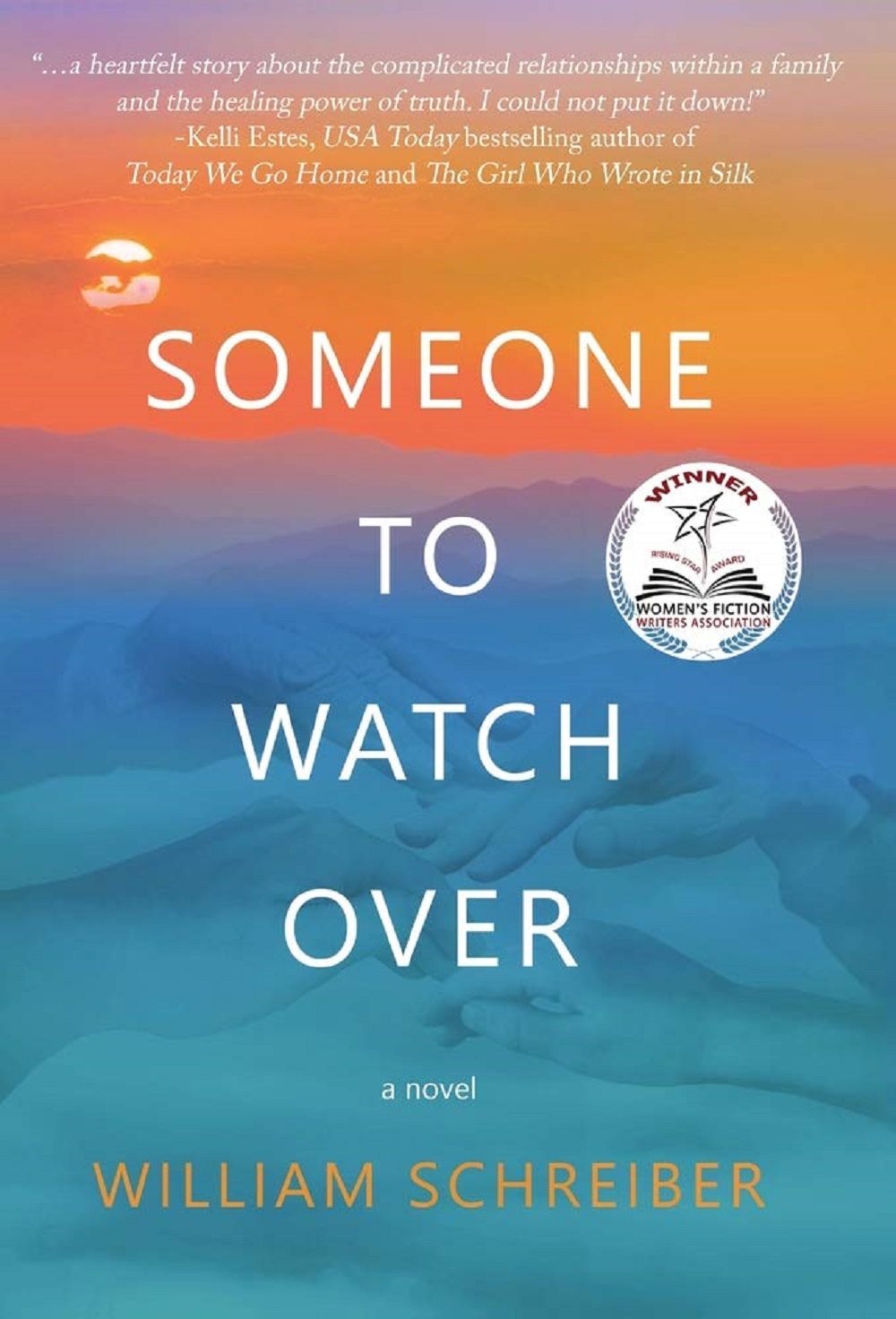
Book review: ‘Someone to Watch Over’ by William Schreiber

‘Someone to Watch Over’ is William Schreiber’s new novel. Photo: amazon

William Schreiber is an author and screenwriter who earned the 2019 Rising Star Award from the Women’s Fiction Writers Association for his novel “Someone to Watch Over.” The book was adapted from his original screenplay, which has won or been nominated for many competition awards, including the Academy of Motion Picture Arts and Sciences’ prestigious Nicholl Fellowship in Screenwriting, as well as numerous Best Screenplay awards at film festivals throughout the country. A life-affirming story about faith in second chances, “Someone to Watch Over” is the multi-generational story about Eleanor “Lennie” Riley’s quest to find her only child, secretly taken from her by a powerful family two decades ago; a journey that leads to a string of mysterious encounters in the Appalachian Mountains. It was inspired by the unexpected death of William’s father and his family asking him to write and deliver his eulogy.

“Someone to Watch Over” begins as Eleanor Grace Riley, aka Lennie, is returning to Mosely, Tennessee hoping to reconcile with her aging father and learn from him the fate of the now-grown child he forced her to give up as a teenager. She had a difficult childhood right from the start; her mother dies delivering her and at seventeen she leaves town with a terrible secret about her teenage pregnancy.  Before she has a chance to make contact with her father, her brother John informs her that he has died. Crushed, but nevertheless determined, Lennie sets out to find answers on her own.  After she learns about guardakin angels in a distant corner of the Appalachian Mountains who can connect deceased parents with their children, it renews her hope of finding her child. John has planned a road trip to recreate one of their father’s vacations when they were kids as a way to remember him but Lennie only sees the trip as a way to find a guardakin angel. John comes across as aloof and distant and his and Lennie’s relationship is strained but he hesitantly agrees to let Lennie come along. The trip is anything but a smooth ride, but along the way, Lennie learns what happened to her daughter Michelle and reconnects with her while she and John finally become a family again after being separated for twenty years.

No matter how happy and put-together families look from the outside, they all carry their share of baggage. Even though Lennie and John come from the same family, they each had different experiences growing up which included the relationship they had with their father.  Because of this, they grieve in their own way without taking into consideration what the other’s memories of the father could be. This is an important point to be learned from “Someone to Watch Over,” that we should always strive to consider other people’s points of view and experiences so we can better understand them. The story is narrated in alternate points of view between Lennie and John, so the reader is always aware of their thoughts and opinions. It reads like a modern day piece of American literature, with poetic language “She set her acoustic aside and ripped up her pages of poetry, letting the shreds fall like ashes to the bed” that flows through the pages and makes the action deeper and more meaningful. This feel-good, heart warming novel is a must read and deserves a spot among literature’s best-loved works. “Someone to Watch Over,” the story of one family’s hard earned reconnection after much needed healing and forgiveness, is highly recommended for readers who appreciate reading about second chances.

“Lennie leaned out the window as the tow truck slogged up a woodsy mountain road, the night air soothing her as the moon played hide ‘n’ seek among the towering trees.”

*The author received a copy of this book for an honest review. The views and opinions expressed here belong solely to her.

Book review: ‘The Book of Ceremony’ by Sandra Ingerman

‘The Book of Ceremony’ by Sandra Ingerman. Photo: amazon

Sandra Ingerman, MA, is an award-winning author of 12 books, including “Soul Retrieval: Mending the Fragmented Self,” “Medicine for the Earth: How to Transform Personal and Environmental Toxins” and “Walking in Light: The Everyday Empowerment of a Shamanic Life.” Sandra is a world-renowned teacher of shamanism and has been teaching for close to 40 years. She has taught workshops internationally on shamanic journeying, healing and reversing environmental pollution using spiritual methods. Sandra is recognized for bridging ancient cross-cultural healing methods to our modern culture, addressing the needs of our times.  In her book “The Book of Ceremony: Shamanic Wisdom for Invoking the Sacred in Everyday Life,” Sandra Ingerman presents a rich and practical resource for creating ceremonies filled with joy, purpose and magic.

According to the author, her purpose in writing this book is to share what she has learned over the years, hoping to inspire others to lead healing and blessing ceremonies. Starting with the Introduction, Sandra Ingerman defines a ceremony: “Every shamanic journey a shaman takes, every healing method a shaman works with, is considered a ceremony.” She goes on to briefly describe the history of ceremonies and look back at the first ceremony she performed in 1982. The book is divided into for parts: Part One: The Power of Ceremony, it clarifies the basics of what constitutes a ceremony, how to prepare and perform one, Part Two: Sacred Transitions, Part Three: Ceremonies to Create Energetic Balance and Part Four: Life as a Ceremony, it includes examples of blessing and healing ceremonies for people and places, as well the community as a whole. The final part of the book includes other resources for further information on the practice of shamanic journeying.

Shamanism has been around for tens of thousands of years and has been a serious practice with the sole purpose of helping the community thrive. Today’s ceremonies are used to improve health and the quality of life and with so much negativity going on in the world, for serious practitioners, shamanic ceremonies are now more important than ever. The author connects ancient shamanic practices with modern culture and makes them relevant to today’s issues. The book touches on all topics related to ceremonies, including how choose the space, preparing ceremonial items and the types of ceremonies: for weddings, births and new beginnings.  Some of the ceremonies are familiar ones while others include newer adaptations of known ceremonies, the most poignant being the ones to honor death: burying a pet, plant ceremony, honoring trees and honoring environmental losses. All this information is given in plain and easy to understand language without being condescending to possible newcomers. While it may not be for everyone, “The Book of Ceremony” has resourceful guidance for readers who are genuinely interested in shamanic ceremonies.

“Once we wake up and recognize that other spectacular dimensions of reality exist, we experience a new sense of awareness about how to connect with nature, the flow of life, and the web of life.”

*The author received a copy of this book for an honest review. The views and opinions expressed here belong solely to her.

Book review: ‘The Body Is Not An Apology’ by Sonya Renee Taylor

‘The Body Is Not An Apology” by Sonya Renee Taylor

Sonya Renee Taylor is the Founder and Radical Executive Officer of The Body Is Not An Apology, a digital media and education company committed to radical self-love and body empowerment .Founded in 2011, it began as an online community to cultivate radical self-love and body empowerment. The Body Is Not An Apology now reaches over 1 million people each month in 140 countries with their articles and content focused on the intersection of bodies, personal transformation and social justice. Sonya is also an International award winning Performance Poet, activist, speaker and transformational leader whose work continues to have global reach. She has a B.A. in Sociology and an M.S.A. in Organizational Management and continues to be a fierce activist for global justice using the lens of intersectional Black Feminism and radical self-love. In her book “The Body Is Not An Apology: The Power of Radical Self-Love” Sonya invites readers to reconnect with the radical origins of their minds and bodies and celebrate their collective, enduring strength.

“The Body Is Not An Apology” begins with a Prologue that explains where the phrase for the radical self-love movement, also the name of the book, started.  It goes back to 2010 at a Southern Fried Poetry Slam where the author uttered the words “your body is not an apology.” She reminded herself of the phrase whenever she felt a discouraging thought coming on and used it as the basis for the organization she founded to help others overcome body shame and its destructive effects. The book is divided into five sections: Making Self-Love Radical; Shame, Guilt and Apology-Then and Now; Building a Radical Self-Love Practice in an Age of Loathing; A New Way Ordered by Love and Your Radical Self-Love Toolkit.  They all contain Unapologetic Inquiries and Radical Reflections that help further explain that ideas that she is trying to convey. At the end, she includes extensive notes by chapter and resources for further readings on feminism, racial justice and LBTQIAA issues.

Having a positive self-image is important for the individual as well as the community and world as a whole. Sonya Renee Taylor’s encouraging messages involve having to put aside any toxic upbringings and changing the way we interact with others. It touches on subjects like body-shaming, body terrorism and homophobia. Readers should note that she touches on politics both to emphasize her points and to explain how she has been personally affected by other people’s racist and homophobic actions. A standout chapter is ‘Chapter 4: A New Way Ordered by Love’ section ‘Unapologetic Agreements’ that focuses on how radical self-love and communication can foster global change: “Have compassion for and honor people’s varied journey. Our journeys are unique and varied. Compassion births patience.”  It is a small book and thankfully, written in a down to earth and easy-to understand language.  This is important because her message of self-love, confidence and the importance of stopping body shaming and thinking we are not “good enough” is one that more people should take to heart. “The Body Is Not An Apology” is an impactful and empowering guide for readers who appreciate a book that challenges the status quo and arms them with compelling and life-changing advice.

“To be fear facing is to learn the distinction between fear and danger. It is to look directly at the source of the fear and assess if we are truly in peril or if we are simply afraid of the unknown.”

*The author received a copy of this book for an honest review. The views and opinions expressed here belong solely to her.
Book review: ‘The Napkin Art of Tim Burton’ by Tim Burton

‘The Napkin Art of Tim Burton: Things You Think About in a Bar.’

Tim Burton is an American filmmaker, animator and artist who is best known for his gothic, fantasy and horror films such as Beetlejuice, Edward Scissorhands, The Nightmare Before Christmas and Sweeney Todd: The Barber of Fleet Street. He wrote and illustrated the poetry book “The Melancholy Death of Oyster Boy & Other Stories” in 1997 and “The Art of Tim Burton” in 2009, a compilation of his drawings, sketches and other artwork.  He followed the latter with “The Napkin Art of Tim Burton: Things You Think About in a Bar” in 2015, which contains sketches he made on napkins at bars and restaurants he visited.

“The Napkin Art of Tim Burton” begins with a note by Tim Burton where he explains why he likes to draw on napkins.  Simply put, he likes to draw on whatever surface happens to be available when he gets inspired. With all the traveling he does, he is usually in restaurants and bars and the easiest blank surfaces are napkins. He also wants to encourage others to create, “however, wherever possible” because art is mostly about the process of creating, not so much the result. Opposite that page, is a picture of a blank napkin, so the reader can draw on it if the mood strikes, along with any other surface of the book.

This being Halloween season, fans of Tim Burton might want to take notice of this art book.  It is smaller than most books, about a 6 X 6 square and weighs 1.58 lbs. but for hardcore fans, it is a collectible.  The artwork is typical Tim Burton, most are in black and white, but there are some colored ones. Notable napkins include those from Bar Vendôme and Hôtel Ritz and Paris and Caesars Palace in Las Vegas.  Sometimes he even uses the logo as part of the drawing, which is highly inventive.  One of his best drawings is that of a one-eyed green monster with a real cherry as the pupil. “The Napkin Art of Tim Burton” is a small but valuable book of art by the master of fantasy films and is recommended for genuine fans of his work.

*The author received a copy of this book for an honest review. The views and opinions expressed here belong solely to her.
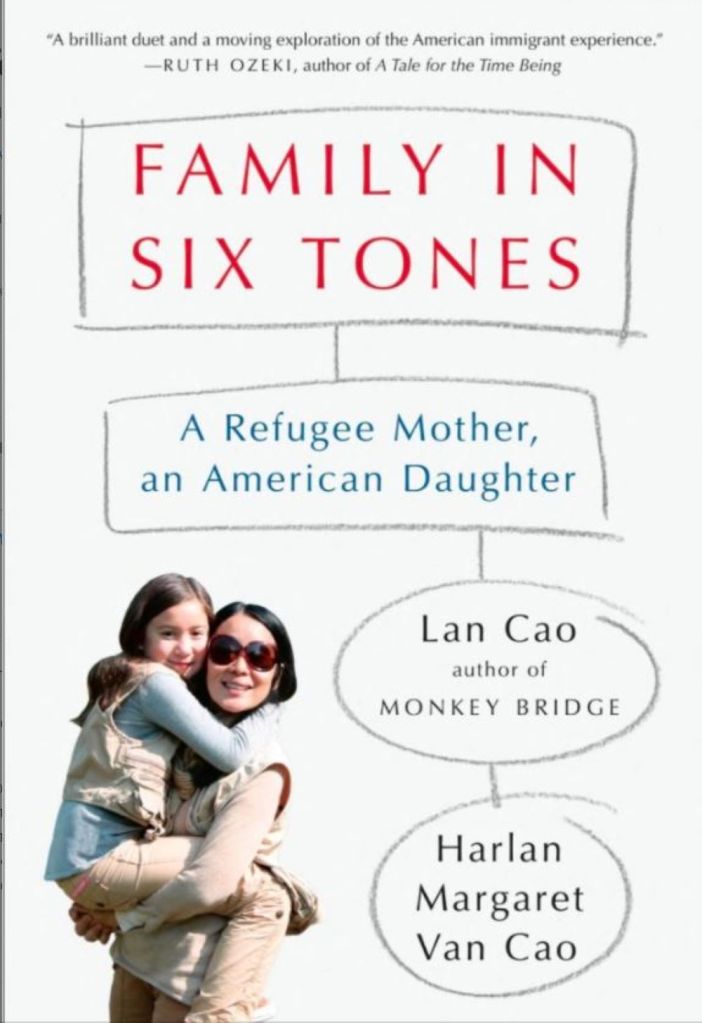
Book review: ‘Family in Six Tones’ by Lan Cao and Harlan Margaret Van Cao

Photo: google

Lan Cao is the author of the novels “Monkey Bridge” and “The Lotus and the Storm” and a professor of law at the Chapman University School of Law, specializing in international business and trade, international law and development. She has taught at Brooklyn Law School, Duke Law School, Michigan Law School and William & Mary Law School. Her latest book “Family in Six Tones: A Refugee Mother, an American Daughter” is the dual first-person memoir by the acclaimed Vietnamese-American novelist and her thoroughly American teenage daughter, Harlan Margaret Van Cao, who just graduated from high school in June 2020 and will be attending UCLA.

In the Introduction, Lan Cao views motherhood and being a refugee with equal trepidation because of how uncertain she still feels about both. Even after forty years of being in the United States and seventeen years of being a parent, she still feels inadequate in both. This is the central theme throughout this memoir as she explores being a refugee and being a mother with the help of Harlan, her teenage daughter, who is half Vietnamese. In short alternating chapters, they show how different and yet how similar they really are.  Lan relates her immigrant experience including war, past traumas and tragedies and the struggles and discriminations she faced while getting an education, especially in law school, while Harlan deals with culture clashes, bullying and going through life coping with synesthesia – a condition in which people often see sounds, taste word or feel a sensation on their skin when they smell certain scents – she often relates about having a purple cat following her.

Being an immigrant is never easy and too often the Vietnamese viewpoint is left out of the conversation.  This is what makes this memoir unique; not only is it told through the perspective of a mother/daughter relationship, but it is told through the Vietnamese point of view, not a solider or a politician, even though it touches on the sensitive topic of the war. Readers get to witness Lan’s transition from naïve immigrant to law student, especially the moment she decides to study law – when she was working in a video store and the police questioned her regarding missing money. The insight into Vietnamese culture is interesting, especially the system of ranking people, i.e. calling relatives Father Two, Sister Three. Her shared immigrant experiences of discrimination makes her relatable: “We may have Americanness officially documented in birth certificates, passports, or naturalization papers. But despite the seductive panache of the American Dream, the message that we can never really be American has curiously been passed down from generation to generation.”  Harlan also has this conflict about being too American versus not being Vietnamese enough and her writing is more poetic: “This life isn’t meant to be a race. It is meant to be a long, slow dream of perfect confusion, loneliness, deep friendships, and ambition. I’m ready.” When she writes “You can be American outside, but not in the house” it speaks to what children of immigrants sometimes deal with at home. They are expected to be Americanized outside the house, but at home they are expected to speak the native language and adhere to that culture’s expectations, leading to an emotional tug of war.  Overall, “Family in Six Tones” is an impressive and poignant exploration of the mother/daughter relationship which often has the same struggles and insecurities passed on from generation to generation. It is recommended for readers who appreciate a distinctive perspective on the struggles of refugees and familial bonds.

“ I wanted to bloom wherever I was planted, in this present tense where I had found myself, like a lotus flower that grows in mud and turns to face the sunlight.”  – Lan Cao

*The author received a copy of this book for an honest review. The views and opinions expressed here belong solely to her.

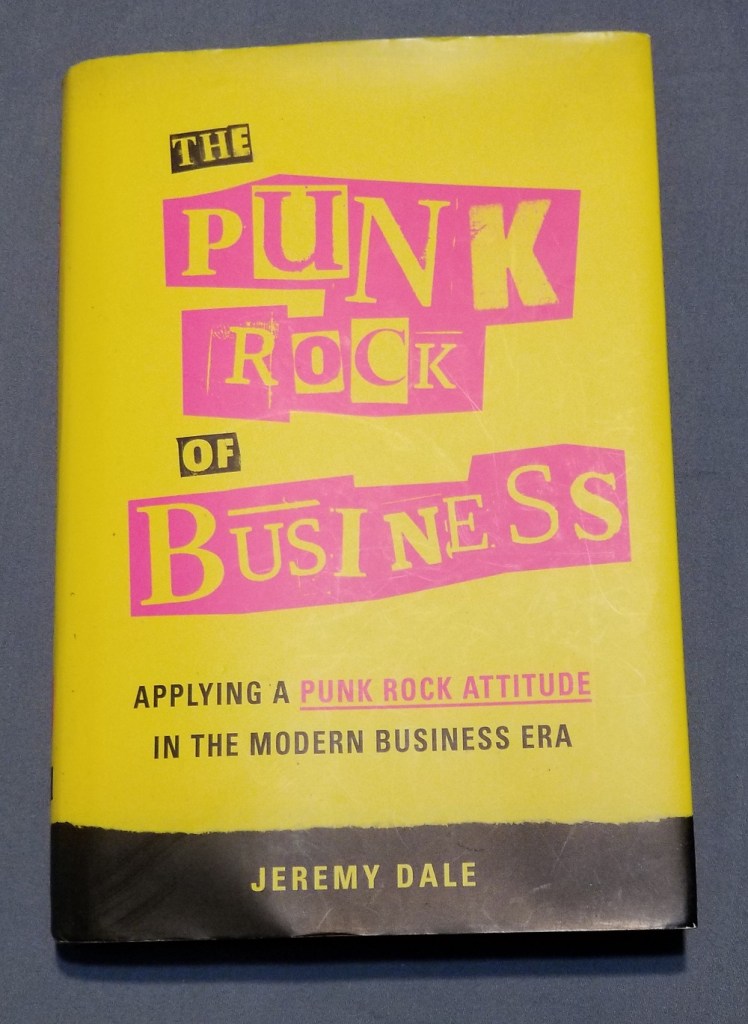
Book review: ‘The Punk Rock of Business’ by Jeremy Dale

Jeremy Dale has over 20 years’ experience in the consumer electronics industry and until 2017, he was Corporate Vice President of Microsoft’s worldwide retail channel. Prior to that, he was CMO at Motorola during the RAZR heyday. Jeremy is now CEO of an exciting start-up business in the global football and entertainment sector where he is applying his philosophy. Jeremy owns a BAFTA for the launch of Pokémon, he was named 35th in the UK’s Marketing Power 100 and he was listed in Total Films 100 Most Influential People in the Movies. In his book “The Punk Rock of Business: Applying a Punk Rock Attitude in the Modern Business Era,” Dale offers guidelines to transform business from average to innovation through a mindset rooted in punk rock principles.

In the Foreword, “The Punk Rock of Business” Jeremy Dale explains how punk rock attitude can save the mediocrity of business.  According to him, what society needs is pure, unadulterated business leadership which echoes many of the attributes of punk. Punk rockers had a cause – they wanted authenticity and refused to conform. Because of this, they created a dramatic change that shook society to its core. The author wants readers to apply this concept to the business world.  “Applying a punk rock attitude in business is for those who want to make a difference, who love to dare greatly, who strive for excellence-characteristics that are far too rare.” His goal is to motivate like-minded businesspeople to be more punk. The book is divided into: The Eight Elements of Punk Rock Business: Element 1: Have a Cause, Element 2: Build a Movement, Element 3: Create New and Radically Different Ideas, Element 4: Drive Speed and Action, Element 5: Say It as It Is, Element 6: Be Authentic, Element 7: Put Yourself Out There, Element 8: Reject Conformity and The Key Requirements to Implementing a Punk Rock Attitude in Business. At the end of each element, there is a ‘Key Lessons’ section that summarizes the section’s ideas, a ‘So What Are You Going to Do About It’ section where readers can write down any thoughts and a final section that gives one more viewpoint on the element.

Business manuals are easy to come by nowadays, but “The Punk Rock of Business” is geared towards the modern thinker. It inspires businesspeople to achieve incredible things and not settle for the status quo, regardless of where they are in their careers.  Written in plain and easy to understand language, the topics are informative and straightforward.  The interactive portions have the reader jot down thoughts, ideas and actions to be taken, making the book easy to navigate. The stories keep the lessons fresh and entertaining. Standout chapter is Element 8: Reject Conformity, the section titled ‘It’s Okay to Ruffle a Few Feathers’ which includes the concept of standing up for what you believe in and not caring about keeping everyone happy because that is not your job. Most of the advice is useful for any age but will resonate with the younger generation who is familiar with punk and its no nonsense, in your face attitude.  “The Punk Rock of Business” is a modern business guide that will challenge all types of businesspeople to reassess their goals and their approach to business in general and is recommended for readers who strive for a more meaningful career.

“….this book is primarily for people of action, passionate people who aren’t prepared to accept the status quo, who want to change the world-or at least their world.”

*The author received a copy of this book for an honest review. The views and opinions expressed here belong solely to her.

Book review: ‘How to Write Anything: A Complete Guide’ by Laura Brown

‘How to Write Anything’ by Laura Brown

Laura Brown, has taught writing to everyone from corporate executives to high school students. Her expertise includes instructor-led training, individual coaching, classroom teaching and e-learning development. She has more than twenty-five years of experience providing training and coaching in business writing and she has also taught composition and literature at Columbia University. Her book “How to Write Anything: A Complete Guide” is a practical guide to writing at work, home or at school.

“How to Write Anything” begins with an Introduction by the author where she explains that in all her years of helping people to write, she has never met anyone who “can’t write.” In reality, everyone can write, they just need to understand the process of writing and the exact situation they are writing about. This is where she comes in. The book is divided into three sections: Section I gives guidance about the writing process and techniques to use based on the writing task, Section II is devoted to “e-writing,” writing done on a computer, a smartphone, an iPad or any other device connected to the Internet and Section III is an encyclopedia of nearly two thousand different writing tasks and how to write for each. The Table of Contents divides the writing tasks according to topics to make them easy to find.

Even though writing has evolved from exclusively pen and paper to e-writing, it is still necessary to know how to properly express an idea or thought.  “How to Write Anything” is Internet-savvy for the modern age and has helpful advice on a wide range of topics from writing for personal life (holiday family newsletter, birth announcement) to writing at work (business letter, termination letter). The language is easy to understand and the writing advice is effective regardless of topic.  Each section begins with a background of the task, has a list of Dos and Don’ts to summarize the guidelines and the ‘Not Like This…’ ‘…..Like This’ sections give appropriate writing examples.  It covers a wide range of writing tasks, making it an essential guide for the whole family, particularly the sections on Social Media, page 210 – 219 and The Job Search and Human Resources, page 442-494. The helpful Index makes it even easy to look up a writing task. Overall, “How to Write Anything” is a how-to, a reference book and an essential writing resource that anyone can use.

*The author received a copy of this book for an honest review. The views and opinions expressed here belong solely to her.

Book review: ‘Everyone Dies Famous’ by Len Joy

‘Everyone Dies Famous’ is Len Joy’s new novel. Courtesy photo, used with permission.

Len Joy is a nationally ranked triathlete who competes internationally representing the United States as part of TEAM USA. He is also the author of “Letting Go: Stories,” “American Past Time: After the Cheering Stops” and “Better Days: In This World Heroes Don’t Get Parades.” His fourth novel “Everyone Dies Famous,” released last month, is the story of a stubborn old man, who, as a tornado threatens their town, teams up with a troubled young soldier to deliver a jukebox to the wealthy developer having an affair with the soldier’s wife.

In the Prologue set on July 18, 2003 at 7p.m. Zeke Mesirow, one of Maple Springs, Missouri residents, leaves his apartment after a tornado and surveys the devastation left behind. He eerily witnesses “….a man, his dark business suit turned gray with grit, standing in his front lawn clutching an open briefcase and staring down the road like he was waiting for the bus.” After the Prologue, the first chapter begins fourteen hours earlier and the last chapter, set at 6:40p.m. ends the tragic story.  The chapters in between track the residents’ lives before the tornado hits and sets the stage for the damage left behind by the storm. The small town is going through a drought, so many of the residents are unprepared for the approaching storm. Dancer Stonemason, an aging and long-forgotten hometown hero, is still grieving the death of his oldest son Clayton. He is liquidating his late son’s jukebox business so he hires Wayne Mesirow, an Iraqi war veteran, to help him transport two jukeboxes. Wayne is also dealing with grief: one of his fellow soldiers, Sonny, killed himself and Wayne feels he should have done more to help.  His wife’s infidelity is also weighing heavily on his mind. Together, Dancer and Wayne navigate through their own family drama while the storm brings its own disaster that will leave one of them dead.

For those familiar with Len Joy’s work, “Everyone Dies Famous” is the sequel to “American Past Time” where Dancer Stonemason’s story continues. Years later, his son Clayton is dead and Dancer is trying to move on. The aftermath of the tornado is set at the beginning, so there is no surprise ending.  The fun is in trying to find out how the different characters end up after the storm. Due to the extensive character build up, by the time the storm hits, the reader has spent time getting to know them and is eagerly flipping pages to find out their fate. The tornado action is just as exciting as the family drama taking place within the small town. Throughout the story, the storm is lurking in the background until it comes roaring into the picture starting on Chapter 33.  From there the action shifts as the residents have to rely on each other to survive. Len Joy has an excellent grasp on the human condition and uses it to create brilliant storytelling. “Everyone Dies Famous” is an easy read, with relatable characters that spotlight the heart of everyday American life. It is a definite must-read and is recommended for fans of character-driven small town dramas.

“This is a small town, Dancer. Everyone dies famous here.”

*The author received a copy of this book for an honest review. The views and opinions expressed here belong solely to her.

Book review: ‘Gumbo Love’ by Lucy Buffett

Photo: google

Lucy “LuLu” Buffett is a Southern businesswoman, author and entrepreneur best known for her Gulf Shores restaurant Lulu’s. She began by cooking her way from coast to coast before returning home to Alabama to open a modest little bayside gumbo and burger joint that doubled as a bait shop. Now she is a successful restaurateur with three locations: Gulf Shores, Alabama; Destin, Florida and North Myrtle Beach, South Carolina where she serves over a million guests a year. Her adventures, culinary and otherwise, inspired her to write “Gumbo Love: Recipes for Gulf Coast Cooking, Entertaining, and Savoring the Good Life,” a cookbook that includes recipes from all over the Gulf Coast and incorporates Caribbean, Cajun, Cuban, Mexican, Old Florida and Creole influences.

In “Gumbo Love,” Lucy Buffett begins with a letter to readers where she explains that the book is a love letter to the northern coast of the Gulf of Mexico.  Her mission is to pay homage to the coastal Southern food culture and continue the conversation she began with her first book “Lulu’s Kitchen.” Along with over 100 recipes, she shares stories of her childhood growing up in Mobile, Alabama as well as the adventures she has had traveling as a cook, the times she spent working as a chef in New Orleans and her attitudes on life, which includes relaxation, gratitude and seizing the day. She shares her mother’s philosophy of “Life is short-east dessert first” so she begins with Chapter 1: Life Is Sweet: Eat Dessert First.  Each subsequent chapter is a category of delicious recipes accompanied by colorful pictures: Starters and Snacks, Gumbo Love and other Heartwarming Soups, Main Dishes, Vegetables and Sides, Deep-Fried Favorites: A Southern Must, Salads, Sandwiches, Vacation Libations and Mocktails and Coasting the Gulf Party Menus.

Lucy Buffett’s love of cooking and appreciation for the Gulf Coast shines throughout the pages of “Gumbo Love.” More than a cookbook, it is a collection of stories, background on food and dishes and recipes that have shaped her life and livelihood. The gorgeous pictures make the food and locales come alive. It is understandable that she wants to share the recipes she loves to make, but a handful of them are restaurant quality with too many ingredients and too complicated for the average cook. Some of the easier ones are for Salads, Starters and Snacks and Sandwiches as well as the cocktail recipes. Standouts include Cuban Yellow Rice, page 181 and Watermelon and Feta Cheese Salad page 229. In the Introduction, her ‘Ten Grateful Ingredients for a Bright Life and a Happy Kitchen’ is worth reading as is ‘How to Gumbo Lulu: A few notes on Gulf Coast Cooking Essentials.’ It also includes valuable ‘how to’ tutorials, such as ‘How to Shuck an Oyster’ on page 55.  Overall, “Gumbo Love” is an impressive cookbook that will appeal to reads who appreciate excellent recipes and entertaining stories.

*The author received a copy of this book for an honest review. The views and opinions expressed here belong solely to her.