Book review: ‘Family in Six Tones’ by Lan Cao and Harlan Margaret Van Cao

Photo: google

Lan Cao is the author of the novels “Monkey Bridge” and “The Lotus and the Storm” and a professor of law at the Chapman University School of Law, specializing in international business and trade, international law and development. She has taught at Brooklyn Law School, Duke Law School, Michigan Law School and William & Mary Law School. Her latest book “Family in Six Tones: A Refugee Mother, an American Daughter” is the dual first-person memoir by the acclaimed Vietnamese-American novelist and her thoroughly American teenage daughter, Harlan Margaret Van Cao, who just graduated from high school in June 2020 and will be attending UCLA.

In the Introduction, Lan Cao views motherhood and being a refugee with equal trepidation because of how uncertain she still feels about both. Even after forty years of being in the United States and seventeen years of being a parent, she still feels inadequate in both. This is the central theme throughout this memoir as she explores being a refugee and being a mother with the help of Harlan, her teenage daughter, who is half Vietnamese. In short alternating chapters, they show how different and yet how similar they really are.  Lan relates her immigrant experience including war, past traumas and tragedies and the struggles and discriminations she faced while getting an education, especially in law school, while Harlan deals with culture clashes, bullying and going through life coping with synesthesia – a condition in which people often see sounds, taste word or feel a sensation on their skin when they smell certain scents – she often relates about having a purple cat following her.

Being an immigrant is never easy and too often the Vietnamese viewpoint is left out of the conversation.  This is what makes this memoir unique; not only is it told through the perspective of a mother/daughter relationship, but it is told through the Vietnamese point of view, not a solider or a politician, even though it touches on the sensitive topic of the war. Readers get to witness Lan’s transition from naïve immigrant to law student, especially the moment she decides to study law – when she was working in a video store and the police questioned her regarding missing money. The insight into Vietnamese culture is interesting, especially the system of ranking people, i.e. calling relatives Father Two, Sister Three. Her shared immigrant experiences of discrimination makes her relatable: “We may have Americanness officially documented in birth certificates, passports, or naturalization papers. But despite the seductive panache of the American Dream, the message that we can never really be American has curiously been passed down from generation to generation.”  Harlan also has this conflict about being too American versus not being Vietnamese enough and her writing is more poetic: “This life isn’t meant to be a race. It is meant to be a long, slow dream of perfect confusion, loneliness, deep friendships, and ambition. I’m ready.” When she writes “You can be American outside, but not in the house” it speaks to what children of immigrants sometimes deal with at home. They are expected to be Americanized outside the house, but at home they are expected to speak the native language and adhere to that culture’s expectations, leading to an emotional tug of war.  Overall, “Family in Six Tones” is an impressive and poignant exploration of the mother/daughter relationship which often has the same struggles and insecurities passed on from generation to generation. It is recommended for readers who appreciate a distinctive perspective on the struggles of refugees and familial bonds.

“ I wanted to bloom wherever I was planted, in this present tense where I had found myself, like a lotus flower that grows in mud and turns to face the sunlight.”  – Lan Cao

*The author received a copy of this book for an honest review. The views and opinions expressed here belong solely to her.

Book review: ‘The Punk Rock of Business’ by Jeremy Dale

Jeremy Dale has over 20 years’ experience in the consumer electronics industry and until 2017, he was Corporate Vice President of Microsoft’s worldwide retail channel. Prior to that, he was CMO at Motorola during the RAZR heyday. Jeremy is now CEO of an exciting start-up business in the global football and entertainment sector where he is applying his philosophy. Jeremy owns a BAFTA for the launch of Pokémon, he was named 35th in the UK’s Marketing Power 100 and he was listed in Total Films 100 Most Influential People in the Movies. In his book “The Punk Rock of Business: Applying a Punk Rock Attitude in the Modern Business Era,” Dale offers guidelines to transform business from average to innovation through a mindset rooted in punk rock principles.

In the Foreword, “The Punk Rock of Business” Jeremy Dale explains how punk rock attitude can save the mediocrity of business.  According to him, what society needs is pure, unadulterated business leadership which echoes many of the attributes of punk. Punk rockers had a cause – they wanted authenticity and refused to conform. Because of this, they created a dramatic change that shook society to its core. The author wants readers to apply this concept to the business world.  “Applying a punk rock attitude in business is for those who want to make a difference, who love to dare greatly, who strive for excellence-characteristics that are far too rare.” His goal is to motivate like-minded businesspeople to be more punk. The book is divided into: The Eight Elements of Punk Rock Business: Element 1: Have a Cause, Element 2: Build a Movement, Element 3: Create New and Radically Different Ideas, Element 4: Drive Speed and Action, Element 5: Say It as It Is, Element 6: Be Authentic, Element 7: Put Yourself Out There, Element 8: Reject Conformity and The Key Requirements to Implementing a Punk Rock Attitude in Business. At the end of each element, there is a ‘Key Lessons’ section that summarizes the section’s ideas, a ‘So What Are You Going to Do About It’ section where readers can write down any thoughts and a final section that gives one more viewpoint on the element.

Business manuals are easy to come by nowadays, but “The Punk Rock of Business” is geared towards the modern thinker. It inspires businesspeople to achieve incredible things and not settle for the status quo, regardless of where they are in their careers.  Written in plain and easy to understand language, the topics are informative and straightforward.  The interactive portions have the reader jot down thoughts, ideas and actions to be taken, making the book easy to navigate. The stories keep the lessons fresh and entertaining. Standout chapter is Element 8: Reject Conformity, the section titled ‘It’s Okay to Ruffle a Few Feathers’ which includes the concept of standing up for what you believe in and not caring about keeping everyone happy because that is not your job. Most of the advice is useful for any age but will resonate with the younger generation who is familiar with punk and its no nonsense, in your face attitude.  “The Punk Rock of Business” is a modern business guide that will challenge all types of businesspeople to reassess their goals and their approach to business in general and is recommended for readers who strive for a more meaningful career.

“….this book is primarily for people of action, passionate people who aren’t prepared to accept the status quo, who want to change the world-or at least their world.”

*The author received a copy of this book for an honest review. The views and opinions expressed here belong solely to her.

Book review: ‘How to Write Anything: A Complete Guide’ by Laura Brown

‘How to Write Anything’ by Laura Brown

Laura Brown, has taught writing to everyone from corporate executives to high school students. Her expertise includes instructor-led training, individual coaching, classroom teaching and e-learning development. She has more than twenty-five years of experience providing training and coaching in business writing and she has also taught composition and literature at Columbia University. Her book “How to Write Anything: A Complete Guide” is a practical guide to writing at work, home or at school.

“How to Write Anything” begins with an Introduction by the author where she explains that in all her years of helping people to write, she has never met anyone who “can’t write.” In reality, everyone can write, they just need to understand the process of writing and the exact situation they are writing about. This is where she comes in. The book is divided into three sections: Section I gives guidance about the writing process and techniques to use based on the writing task, Section II is devoted to “e-writing,” writing done on a computer, a smartphone, an iPad or any other device connected to the Internet and Section III is an encyclopedia of nearly two thousand different writing tasks and how to write for each. The Table of Contents divides the writing tasks according to topics to make them easy to find.

Even though writing has evolved from exclusively pen and paper to e-writing, it is still necessary to know how to properly express an idea or thought.  “How to Write Anything” is Internet-savvy for the modern age and has helpful advice on a wide range of topics from writing for personal life (holiday family newsletter, birth announcement) to writing at work (business letter, termination letter). The language is easy to understand and the writing advice is effective regardless of topic.  Each section begins with a background of the task, has a list of Dos and Don’ts to summarize the guidelines and the ‘Not Like This…’ ‘…..Like This’ sections give appropriate writing examples.  It covers a wide range of writing tasks, making it an essential guide for the whole family, particularly the sections on Social Media, page 210 – 219 and The Job Search and Human Resources, page 442-494. The helpful Index makes it even easy to look up a writing task. Overall, “How to Write Anything” is a how-to, a reference book and an essential writing resource that anyone can use.

*The author received a copy of this book for an honest review. The views and opinions expressed here belong solely to her.
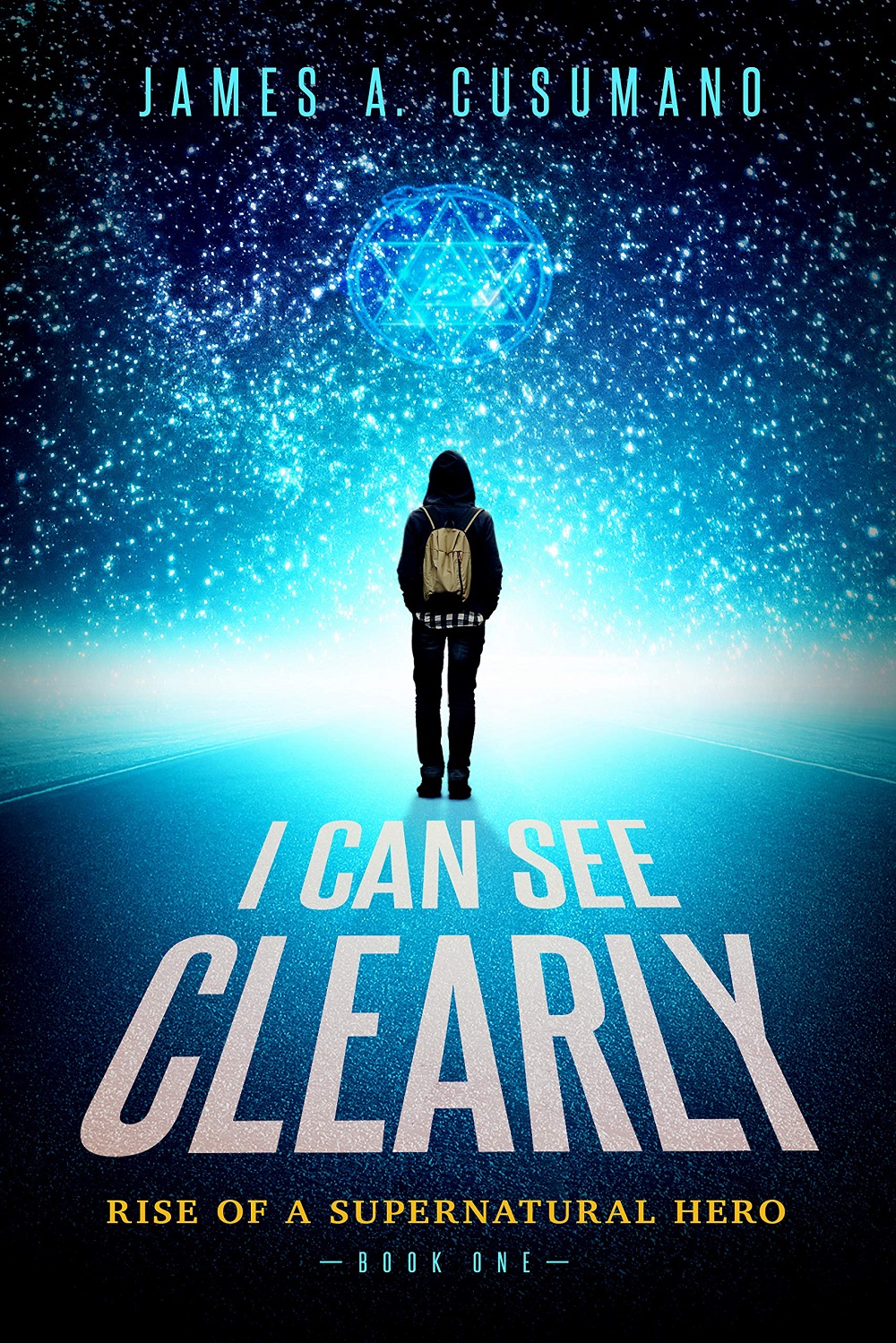
Book review: ‘Everyone Dies Famous’ by Len Joy

‘Everyone Dies Famous’ is Len Joy’s new novel. Courtesy photo, used with permission.

Len Joy is a nationally ranked triathlete who competes internationally representing the United States as part of TEAM USA. He is also the author of “Letting Go: Stories,” “American Past Time: After the Cheering Stops” and “Better Days: In This World Heroes Don’t Get Parades.” His fourth novel “Everyone Dies Famous,” released last month, is the story of a stubborn old man, who, as a tornado threatens their town, teams up with a troubled young soldier to deliver a jukebox to the wealthy developer having an affair with the soldier’s wife.

In the Prologue set on July 18, 2003 at 7p.m. Zeke Mesirow, one of Maple Springs, Missouri residents, leaves his apartment after a tornado and surveys the devastation left behind. He eerily witnesses “….a man, his dark business suit turned gray with grit, standing in his front lawn clutching an open briefcase and staring down the road like he was waiting for the bus.” After the Prologue, the first chapter begins fourteen hours earlier and the last chapter, set at 6:40p.m. ends the tragic story.  The chapters in between track the residents’ lives before the tornado hits and sets the stage for the damage left behind by the storm. The small town is going through a drought, so many of the residents are unprepared for the approaching storm. Dancer Stonemason, an aging and long-forgotten hometown hero, is still grieving the death of his oldest son Clayton. He is liquidating his late son’s jukebox business so he hires Wayne Mesirow, an Iraqi war veteran, to help him transport two jukeboxes. Wayne is also dealing with grief: one of his fellow soldiers, Sonny, killed himself and Wayne feels he should have done more to help.  His wife’s infidelity is also weighing heavily on his mind. Together, Dancer and Wayne navigate through their own family drama while the storm brings its own disaster that will leave one of them dead.

For those familiar with Len Joy’s work, “Everyone Dies Famous” is the sequel to “American Past Time” where Dancer Stonemason’s story continues. Years later, his son Clayton is dead and Dancer is trying to move on. The aftermath of the tornado is set at the beginning, so there is no surprise ending.  The fun is in trying to find out how the different characters end up after the storm. Due to the extensive character build up, by the time the storm hits, the reader has spent time getting to know them and is eagerly flipping pages to find out their fate. The tornado action is just as exciting as the family drama taking place within the small town. Throughout the story, the storm is lurking in the background until it comes roaring into the picture starting on Chapter 33.  From there the action shifts as the residents have to rely on each other to survive. Len Joy has an excellent grasp on the human condition and uses it to create brilliant storytelling. “Everyone Dies Famous” is an easy read, with relatable characters that spotlight the heart of everyday American life. It is a definite must-read and is recommended for fans of character-driven small town dramas.

“This is a small town, Dancer. Everyone dies famous here.”

*The author received a copy of this book for an honest review. The views and opinions expressed here belong solely to her.

Book review: ‘Gumbo Love’ by Lucy Buffett

Photo: google

Lucy “LuLu” Buffett is a Southern businesswoman, author and entrepreneur best known for her Gulf Shores restaurant Lulu’s. She began by cooking her way from coast to coast before returning home to Alabama to open a modest little bayside gumbo and burger joint that doubled as a bait shop. Now she is a successful restaurateur with three locations: Gulf Shores, Alabama; Destin, Florida and North Myrtle Beach, South Carolina where she serves over a million guests a year. Her adventures, culinary and otherwise, inspired her to write “Gumbo Love: Recipes for Gulf Coast Cooking, Entertaining, and Savoring the Good Life,” a cookbook that includes recipes from all over the Gulf Coast and incorporates Caribbean, Cajun, Cuban, Mexican, Old Florida and Creole influences.

In “Gumbo Love,” Lucy Buffett begins with a letter to readers where she explains that the book is a love letter to the northern coast of the Gulf of Mexico.  Her mission is to pay homage to the coastal Southern food culture and continue the conversation she began with her first book “Lulu’s Kitchen.” Along with over 100 recipes, she shares stories of her childhood growing up in Mobile, Alabama as well as the adventures she has had traveling as a cook, the times she spent working as a chef in New Orleans and her attitudes on life, which includes relaxation, gratitude and seizing the day. She shares her mother’s philosophy of “Life is short-east dessert first” so she begins with Chapter 1: Life Is Sweet: Eat Dessert First.  Each subsequent chapter is a category of delicious recipes accompanied by colorful pictures: Starters and Snacks, Gumbo Love and other Heartwarming Soups, Main Dishes, Vegetables and Sides, Deep-Fried Favorites: A Southern Must, Salads, Sandwiches, Vacation Libations and Mocktails and Coasting the Gulf Party Menus.

Lucy Buffett’s love of cooking and appreciation for the Gulf Coast shines throughout the pages of “Gumbo Love.” More than a cookbook, it is a collection of stories, background on food and dishes and recipes that have shaped her life and livelihood. The gorgeous pictures make the food and locales come alive. It is understandable that she wants to share the recipes she loves to make, but a handful of them are restaurant quality with too many ingredients and too complicated for the average cook. Some of the easier ones are for Salads, Starters and Snacks and Sandwiches as well as the cocktail recipes. Standouts include Cuban Yellow Rice, page 181 and Watermelon and Feta Cheese Salad page 229. In the Introduction, her ‘Ten Grateful Ingredients for a Bright Life and a Happy Kitchen’ is worth reading as is ‘How to Gumbo Lulu: A few notes on Gulf Coast Cooking Essentials.’ It also includes valuable ‘how to’ tutorials, such as ‘How to Shuck an Oyster’ on page 55.  Overall, “Gumbo Love” is an impressive cookbook that will appeal to reads who appreciate excellent recipes and entertaining stories.

*The author received a copy of this book for an honest review. The views and opinions expressed here belong solely to her.

Book review: ‘The Final Gift of the Beloved’ by Barron Steffen

'The Final Gift of the Beloved' by Barron Steffen
‘The Final Gift of the Beloved’ by Barron Steffen. Courtesy photo, used with permission.

Barron Steffen is a student on the spiritual path of Siddha Yoga, a big band crooner and a widower. He has also been a big wave surfer, a 1980s Italian pop singer and an award-winning elementary school teacher. He has transitioned from the elementary school classroom to his company, The Yoga of Mindset, where he teaches children and adults how to use their thoughts. Dr. Seana Steffen, his late wife, founded the Restorative Leadership Institute – her life’s work in service to the possibility of a just and sustainable world continues there. His new book, “The Final Gift of the Beloved: Her Disappearance – 13 Days,” is the story of one man’s sudden and astonishing brush with devastation after his wife dies in a car accident.

In the Preface, Barron Steffen describes “The Final Gift of the Beloved” as a love story disguised as a tragedy. Because Siddha Yoga is a big part of the book, he explains that it is a spiritual path; “a philosophy, not a religion, and it includes people from many different faiths.” It is not his intent to promote any specific spiritual path, because everyone’s journey is different, but for him, it is a significant part of his experience because without it, he would have never met Seana, let alone had gotten through the aftermath of her death. In Hindu tradition, a person is mourned for thirteen days and on the thirteenth, during a ceremony and celebration of life, the blessings invoked serve as a final release for anything that may be holding that person to the physical world. The book is divided into these thirteen days, with subsections, and consists of his experiences and revelations during those painful first days as well as what he learns along the way.

Regardless of faith or personal beliefs, grief is universal – this is one of the main themes present in “The Final Gift of the Beloved.” This book is one man’s experience in dealing with his wife’s death and how Siddha Yoga helped him through the most painful moments. Using beautiful poetic language,  “…my sense of ‘I’ drifted through my awareness as aimlessly as the sunlight that was filtering through the branches of the trees outside the parking lot in front of me,” the reader is witness to his grief and his healing. The story starts off as  an examination of their relationship, as told through flashbacks, and the narrative finally moves along during Days Five and Six: The Mortuary, when he finally goes in to identify her body. In the end, he just wants to share the most important lesson he learned, what Seana would want for him and everyone :“May you remember your purpose for being alive.” One of the standout chapters is Day One: The Drive, when reality hits him and he describes the moment as grief being an emotion that all creatures share. He was in excruciating pain, which included howls and cries: “From this vantage point, I saw myself to be simply another living thing grieving the loss of its life-mate.” Learning about other cultures and beliefs regarding mourning and grieving rituals is important because it unites us as human beings. It reminds us that we are more similar than we realize because we share in the human experience. “The Final Gift of the Beloved” is a thought-provoking and inspiring memoir of one man’s tragic loss and recovery and is recommended for readers who appreciate honest and insightful spiritual guidance.

“So then, I wonder, which is it? What is more real-appearing or disappearing, birth or death? Who can possibly say for sure which one is the truer reality and which is the dream?”

*The author received a copy of this book for an honest review. The views and opinions expressed here belong solely to her.
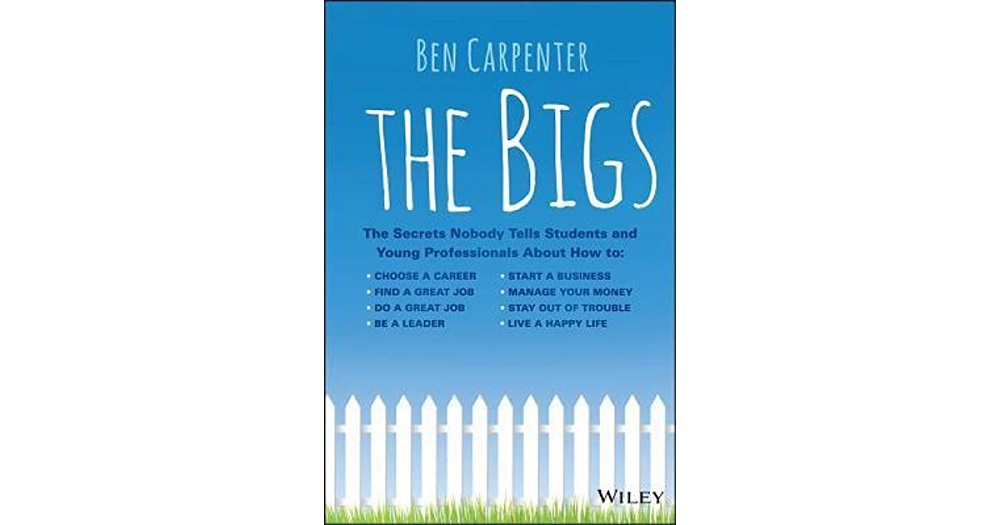
Book review: ‘Act of Deception’ by John Bishop, M.D.

‘Act of Deception’ is the second novel in the Doc Brady mystery series by John Bishop, M.D. Courtesy photo, used with permission.

John Bishop M.D. is an orthopedic surgeon, keyboard musician and author of the beloved Doc Brady mystery series.  The series includes “Act of Murder,” “Act of Deception,” “Act of Revenge,” “Act of Negligence,” “Act of Fate” and “Act of Atonement.” Doc Brady is the protagonist and his fictional counterpart – an accomplished orthopedic surgeon with a talent for solving medical mysteries who moonlights as a blues musician. The series is set in the 1990s and features Houston and Galveston locales. In “Act of Deception,” Doc Brady, a Houston orthopedic surgeon, is being sued for medical malpractice because a mysterious infection caused a knee replacement to end up as an amputation.

In the second book in the Doc Brady mystery series, “Act of Deception,” the story takes place in 1995 and begins with Doc Brady waking up with the sweats again.  He is preoccupied with his impeding lawsuit even though it is not the first time he has been sued. Nothing in his notes or recollection of the event backs up the malpractice claim but he is determined not to settle even though everyone from his lawyer to his co-workers tell him it is the best thing to do. The case involves William Jones, a farmer whose treatment for severe arthritis in his right knee joint ended with an amputation.  Preparations for the trial begin to take a toll on him until he ends up in a coma after he is assaulted in a parking garage. There is also an ambulance chaser on the loose and no one knows where he is getting his information. As it turns out, Mr. Jones received treatment from a doctor covering for his usual doctor while he was out on vacation but the page that notated this in Mr. Jones’ medical record was missing, which is why no one was able to figure out what went wrong. In the end, after all the sleuthing and help from his family and friends, Doc Brady is exonerated and the hospital worker responsible for the medical records leak is fired.

This is another excellent medical novel from John Bishop M.D. and this time he combines legal drama and medical mystery. In this case, the mystery involves how one of his patients could have developed an infection that required an amputation. He almost gives away the ending when he mentions the missing medical records page, but not until the end does the reader find out why it was missing and who took it. The story is told in first person narrative which gives the reader an in-depth look into Doc Brady’s mind and the character development makes the characters real. With detailed explanations of the medical and legal issues, the balance between his personal and professional lives makes for fascinating storytelling. The final courtroom scene when Don Shaw, the plaintiff’s attorney, attempts to attack the witness when he realizes he is about to lose the case, is an exciting conclusion to the case:  “At the same time, Judge Barbara Woods deftly jumped out of her chair, hopped down to the witness stand, and got in front of the doctor. In the second or two it took for Shaw to reach the stand, she reached inside her robe and stood there, waiting for him, with the biggest handgun I had ever seen.” Even though it stands perfectly well on its own,  it would be best to read the first one in the series, “Act of Murder,” to get to know the characters better. As a big plus, there is a sneak peek at the third novel in the series: “Act of Revenge” at the end of this one.  “Act of Deception” is recommended for readers who appreciate an exciting mystery novel involving down to earth characters and intriguing plots.

*The author received a copy of this book for an honest review. The views and opinions expressed here belong solely to her.

winterofthewolf
‘Winter of the Wolf’ by Martha Hunt Handler is the coming of age novel of a young girl coping with her brother’s suicide.

Martha Hunt Handler is an environmental consultant and author who grew up in Northern Illinois dreaming about wolves and understanding that her role is to tell stories and be a voice for nature.  After she and her family relocated from Los Angeles to South Salem, New York, she began to hear wolves in her backyard and for the next twenty plus years, she has been an advocate for wolves at the Wolf Conservation Center, where she currently serves as Board President. Her first novel, “Winter of the Wolf” is an exploration in grief, suicide, spiritualism and Inuit culture told through the perspective of Bean, a fifteen year old girl.  All books sales from this novel will go to the Wolf Conservation Center.

“Winter of the Wolf” begins as Bean wakes up feeling cold, stiff and covered with a sheet and her first instinct is to believe she is dead.  Instead, she is in her northern Minnesota room in the middle of winter with her bedroom window open. She is still recuperating from the trauma of the previous night, when she, her best friend Julie and older brother Sam were in an automobile accident. The night ended in tragedy with the discovery of Sam’s dead body in his room from an apparent suicide by hanging. With the entire family in shock, the household is in disarray and Bean makes it her mission to find out the truth surrounding Sam’s death, since they were extremely close and she knows in her heart that he would never commit suicide. He loved life and nature and admired the Innuit culture, who do not believe in suicide. With Julie’s help, they review Sam’s life, his last days alive and his deeply held beliefs and in the process, reconnect with their own spiritual beliefs to get to the truth, no matter how painful.  In the end, they discover that he was a victim of auto asphyxiation, also known as ‘the choking game,” but in knowing what really happened, the family is finally at peace and Bean experiences her own spiritual growth, which includes accepting that souls never really die, they just move on to other forms.

In a note after the last chapter, Martha Hunt Handler explains that she was inspired by the death of her best friend’s 12 year old son, of what at first appeared to be suicide, to write this book. She combines this experience with her work as an environmentalist, her love of wolves and spiritual beliefs to tell a young girl’s inspirational coming of age story.  Narrated in the first person point of view, it is classified as a Young Adult novel but the themes of grief and spiritualism appeal to any age group.  It tactfully approaches the topic of teen suicide without making it just another depressing teen angst novel. The positive spiritual angle is refreshing, including the thought that ‘we are energy, and as such, according to the first law of thermodynamics, we cannot be created or destroyed but can only be transferred or changed from one form to another’ –  death only means that a person’s time in a human body is over, but their soul lives on, becoming part of the world around us. The extensive character development creates relatable characters and because it is written in language that is easy to understand, the story flows easily from page to page, making it an exciting page-turner. There is an-author-recommended list of sources for further reading on spiritualism, life after death and the Innuit culture. “Winter of the Wolf” is a must-read and recommended for anyone dealing with grief and in need of comfort, spiritual guidance and one viewpoint surrounding the mystery of life after death.

*The author received a copy of this book for an honest review. The views and opinions expressed here belong solely to her.

Book review: ‘In Service to Love: Book 1: Love Remembered’ by Darlene Green

inservicetolove
‘In Service to Love: Book 1: Love Remembered’ is the first in a series of three books by Darlene Green. Courtesy photo, used with permission. 

A healer, teacher and empath, Darlene Green began studying vibrational healing in 1992 and has written and led programs on living consciously beginning in 1998 in Seattle, Washington. She left her practice as a massage therapist in 2012 to answer a deeper calling and at a sacred site in Southern France, she connected powerfully with her Council of Light and returned to her ancient heritage as a Scribe. On December 26, 2017, Darlene received an invitation by the Council of Light for divine collaboration in a body of work title “In Service to Love.” It began as a journal for her own spiritual journey and includes daily entries for Day 1 through Day 366 and as a whole is divided into three books: “Book 1: Love Remembered,” “Book 2: Love Elevated” and “Book 3: Love Now.” “In Service to Love Book 1: Love Remembered: A Dynamic Experience of Consciousness, Transformation and Enlightenment” ‘offers a pathway for shifting your awareness from the de-stabilizing chaos of the external world to the ever-present, potent, multi-dimensional, innovative expression of Love this is your authentic nature.’

“In Service to Love” is Darlene Green’s deeply personal guide that helped her to realize and live her divine nature.  When she deducted  that it is also an invitation for other people to live up to their potential in a way that makes a difference in how they live their lives, she started sharing the daily writings with a close group of friends and family. It is the collaboration between Darlene, the Scribe and the Council of Light. Composed of Masters, the Council of Light includes the voices of Jesus, Mary Magdalene, Archangel Michael, Archangel Gabriel, Melchizadek, Infinite Oneness, Isis, the Elohim, Buddha, Sanat Kumara, Metatron, the Hathors, Gaia, the Grandmothers, the Grandfathers, St. Germain, Legions of Light, and many more. The speaker in charge shifts, depending on the subject, and the Egyptian god Thoth, the “Patron of the Scribe” is the mediator of frequency in light.  It begins with a Welcome from the author where she explains the purpose of this project: [it] ‘provides a rich environment where your frequency will increase, your perspective will broaden and your next steps become illuminated.’ Book 1: Love Remembered includes Day 1 through Day 122 and is divided as such and is a collection of daily affirmations complete with mental exercises and meditations to help readers live an authentic and fulfilling life.

While it is easy to dismiss books written by healers or new age masters, “In Service to Love” is basically a self-help guide filled with positive affirmations, meditation guides and helpful visualizations meant to enrichen lives. Regardless of where the advice comes from, its intent is to help readers become the best self they can be. Every reader is different, so each will get something different from these daily writings. It can be read all at once and then return to specific days to reexamine important topics or it can be read a day at a time, similar to a ‘reflection of the day’ series. Standouts include Day 15: Presence and Conscious Choice where the emphasis is on being fully present in the day’s daily tasks, one at a time, giving each full attention and then moving on to the next one; and Day 6: From Past and Future to Now where it stresses the importance of not getting stuck living in the past; that if you are getting out of life what you have always gotten it is because you keep doing the same thing. Written in easy to understand language, it is filled with positive and encouraging messages that, considering how divisive and hate-filled our world can be, it does not hurt to take these messages to heart. “In Service to Love: Book 1: Love Remembered” offers readers a way to connect with their authentic self and live a more meaningful life and is recommended for anyone honestly looking to create a more positive vibe in their lives.

*The author received a copy of this book for an honest review. The views and opinions expressed here belong solely to her.

Book review: ‘Touching the Jaguar’ by John Perkins

touchingjaguar
‘Touching the Jaguar’ is the new book by author and activist John Perkins. Photo: google

John Perkins is an author and activist who has written books on global intrigue, shamanism and transformation including “Shapeshifting” “Confessions of an Economic Hit Man” and “Touching the Jaguar.” His books have been on The New York Times’ bestseller list for more than 70 weeks, have sold over 2 million copies and are published in at least 35 languages. As chief economist at a major consulting firm, John advised the World Bank, United Nations, Fortune 500 corporations, US and other governments. He regularly speaks at universities, economic forums and shamanic gatherings around the world and is a founder and board member of the Pachamama Alliance and Dream Change, nonprofit organizations that partner with indigenous people to protect environments and that offer global programs to change the destructive ways of industrial societies. In his latest book “Touching the Jaguar: Transforming Fear into Action to Change Your Life and the World” Perkins details how his experiences in the Amazon converted him from an Economic Hit Man to a crusader for transforming our failing Death Economy that destroys its own resources and nature itself into a flourishing Life Economy that renews itself.

“Touching the Jaguar,” begins with an Introduction by the author that defines the phrase touching the jaguar – [it] ‘means that you can identify your fears and barriers, confront them, alter your perceptions about them, accept their energy, and take actions to change yourself and the world.’ His goal in writing this book was for it to serve as a connection between his previous books on Indigenous cultures and those on global economics. In the Prologue, he defines EHMs, or Economic Hit Men as ‘highly paid professionals who cheat countries around the globe out of trillions of dollars…Their tools include fraudulent financial reports, rigged elections, payoffs, extortion, sex, and murder.’ These terms are found throughout his story which starts in the summer of 1968 when he was a young Peace Corps volunteer and an Amazonian shaman saved  his life by teaching him to “touch the jaguar.” From there he went on to become an EHM and sincerely thought this was the best model for economic development but soon realized it was merely a new form of colonialism.  Eventually he takes his experiences in the Amazon and uses them to transform our Death Economy into a Life Economy.  In this book, he shares his strategies for transforming personal lives and defending the earth against destructive policies and systems. It is divided into eight parts that start with The Perception Trap 1968 -1970 and end with Decolonization 2017 – Present.

There is so much to learn from this incredibly eye-opening book: history, personal fulfillment and earth consciousness. It combines John Perkins’ experiences as an Economic Hit Man, expertise on indigenous cultures and shamanism and knowledge of ecology and economics. All of this is told in a down to earth tone with a narrative  that pulls the reader into the jungles of the Amazon, among other places. The chapters are short, the action flows easily from page to page and the language is easy to understand. Standout sections include ‘Chapter 2 Ayahuasca’ when he got sick while in the Amazon and the local shaman gave him ayahuasca, a plant used for healing, which resulted in his first vision of touching the jaguar; and the explanations on colonialism and how the United States has affected countries and economies worldwide. The Resources section at the end has ideas to help readers discover what they can do to change themselves and the world.  Every reader will get something out of it: in the least, become aware of the dangers of economic hit men and how truly harmful colonialism can be and at most, inspire them to get involved and become a better citizen of the world. “Touching the Jaguar” is not only a lesson in personal empowerment but a wake-up call about the true influence of American politics and economy. A definite must-read.

“It is time to end our fear of change and instead embrace the powers for change the jaguar offers, break through the mind-sets that have burdened us with failing systems, and apply the human and natural resources to create systems that will be successful for generations to come.”

*The author received a copy of this book for an honest review. The views and opinions expressed here belong solely to her.