Book review: ‘Act of Murder’ by John Bishop, M.D.

actofmurder
‘Act of Murder’ by John Bishop, M.D. is the exciting first book in the Doc Brady mystery series. Courtesy photo, used with permission.

John Bishop M.D. is an orthopedic surgeon, keyboard musician and author of the beloved Doc Brady mystery series. The series includes “Act of Murder,” “Act of Deception,” “Act of Revenge,” “Act of Negligence,” “Act of Fate” and “Act of Atonement.” Doc Brady, the protagonist and his fictional counterpart, is an accomplished orthopedic surgeon with a talent for solving mysteries who moonlights as a blues musician. The series is set in the 1990s and features Houston and Galveston locales. In “Act of Murder,” Doc Brady witnesses his neighbor’s ten-year-old son killed by a hit-and-run driver and is prompted to investigate whether it was truly an accident or an act or murder.

“Act of Murder” begins in the spring of 1994 when Doc Brady hears the sounds of an accident in front of his house. At the scene, his neighbor Bobbie is kneeling down over a small blue lump that turns out to be her son Stevie. The distraught mother begs him to do something to help but by the looks of it, it is too late. When Detective Susan Beeson with the Houston Police Department starts investigating the case, details about Stevie surface, including that he had osteogenesis imperfecta, a genetic disorder that affects the bones. At first it looks like a random accident, until days later when another boy with a similar genetic disease and similar looks dies after surgery. Sensing that the two cases are more than just coincidence, Doc Brady starts digging for clues and together with his twenty-year old son J.J. and wife Mary Louise they uncover a sinister plot. The two boys were twins, one given up for adoption under the guise of helping out a family member but with the ultimate plan to gain money and power.

The most original authors are those who write from their own experiences and in this case, John Bishop M.D. successfully takes his real-life knowledge as an orthopedic surgeon to give his writing an authentic voice. The story is a combination hospital drama and murder mystery that draws the reader in right from the first sentence: “What I remember first about that day was the sound of a sickening thud.” It would be a mistake to call it a medical thriller because the case does not exactly involve any kind of medical issues but it centers around a doctor’s daily adventures. The language is easy to understand and does not include complicated medical jargon. Since it takes place in the 1990s, there are pop culture references like Seinfeld and Dave’s World that anyone who remembers those years can chuckle along with the author. Descriptions of his native Texas are spot one, especially Houston and Galveston and the character development makes them believable and relatable. It is a strong beginning for the series. A sure page-turner, “Act of Murder” is a must-read for fans of murder mysteries that center around the medical community and appreciate a behind the scenes look at hospitals and doctors.

*The author received a copy of this book for an honest review. The views and opinions expressed here belong solely to her.
Book review: ‘Gaijin’ by Sarah Z. Sleeper

gaijin
‘Gaijin’ is Sarah Z. Sleeper’s debut novel about a woman who moves to Okinawa looking for answers after her boyfriend disappears.  It is scheduled for release on Saturday, August 1, 2020. 

Sarah Z. Sleeper is a former journalist with an MFA in creative writing.  Previously, she was an editor at New Rivers Press and editor-in-chief of the literary journal Mason’s Road. She completed her MFA at Fairfield University in 2012. Prior to that she had a twenty-five-year career as a business writer and technology reporter and won three journalism awards and a fellowship at the National Press Foundation. Her short story, “A Few Innocuous Lines,” won an award from Writer’s Digest and her non-fiction essay, “On Getting Vivian,” was published in The Shanghai Literary Review. Her poetry was published in A Year in Ink, San Diego Poetry Annual and Painters & Poets and exhibited at the Bellarmine Museum. “Gaijin,” a coming of age novel about a budding journalist who sets off to Okinawa in search of answers when her college boyfriend mysteriously disappears, is her first novel and will be released on Saturday, August 1, 2020.

In Japanese, the word gaijin means ‘unwelcome foreigner’ and it is often used as a slur directed at non-Japanese people in Japan.  “Gaijin” centers around Lucy, a college student at Northwestern University who is obsessed with an exotic new student, Owen Ota, who becomes her lover and sensei.  When he disappears without explanation, she moves to Okinawa in hopes of tracking him down.  The story is told in the first person point of view and begins with a Prologue where Lucy recounts how she ends up in Japan and how her experience with Owen motivates her to seek answers in a foreign land. It all goes back to Japan in 2016 and begins as Lucy arrives at Okinawa’s Naha International Airport.  For the next three months, instead of the glamorous culture that Owen described, she is confronted with, among other surprises, anti-American protests fueled by the rape case involving an American military man and a young Japanese girl.  She also meets Hisashi, Owen’s  brother, who helps her come to terms with Owen’s tumultuous private life that culminates at the base of Mount Fuji and the infamous Suicide Forest. With the biggest mystery solved, Lucy is now content to stay in Japan and enjoy the country and culture she admired for so long.

Sometimes it is easy for foreigners to get wrapped up in the fantasy of an unfamiliar culture and once it hits home, reality can be disappointing. Such is the case with Lucy in “Gaijin,” Sarah Z Sleeper’s superb debut novel.  The author has penned a poetic and charming story filled similes and metaphors “His energy was warm, like a favorite oversize blanket” and peppered with poems and haikus. Despite being a small, easy to read book, the reader is immersed in Japanese culture, terms and traditions like tea ceremonies, all of which make the narrative come alive throughout the pages. Impressive character development and descriptions makes them relatable, “As the snow drifts piled shoulder-high on the edges of Northwestern’s campus, I dug myself into a cave of loneliness, busying myself while keeping social interactions at bay.” Of special interest is the background on Aokigahara, a forest on the northwestern flank of Japan’s Mount Fiji.  It has a historical reputation as a home to yūrei: ghosts of the dead in Japanese mythology. Also known as “the Suicide Forest”, one of the world’s most-used suicide sites; signs at the head of some trails urge suicidal visitors to think of their families and contact a suicide prevention association. History fans will appreciate the section on the conflict between Okinawa and Japan. “Gaijin” is the chronicle of one woman’s journey from idealistic college student in love with an image to an adult who learns to accept life’s disappointments and build a life on her own terms.

“A culture so beautiful that taking tea was a memorable occasion and yet so dark it contained a forest devoted to suicide.”

*The author received a copy of this book for an honest review. The views and opinions expressed here belong solely to her.

Book review: ‘The Last Sword Maker’ by Brian Nelson

lastswordmaker
‘The Last Sword Maker’ is Brian Nelson’s exciting novel about the future of warfare. Photo: google

Brian Nelson is a former Fulbright Scholar who holds degrees in international relations, economics and creative writing (fiction).  His first book “The Silence and the Scorpion: The Coup against Chávez and the Making of Modern Venezuela” was named one of the Best Books of 2009 by the Economist.  His work has appeared in the Virginia Quarterly Review, Christian Science Monitor and the Southern Humanities Review, among others. “The Last Sword Maker” is his second book and an action packed thriller about a high-tech arms race between the United States and China as they both strive to create the next-generation of weapons using a mixture of artificial intelligence, genetic engineering and nanotechnology.

“The Last Sword Maker” takes place in the not-too-distant future, between January 2025 and May 2026 as each chapter is given a time and place. The action begins with a prologue titled The Letter which informs of a letter written by Nobel laureate and biochemist Bill Eastman after he hosts a conference at the Millennium Institute in San Francisco in August 2018 for some of the greatest minds in science.  The letter is modeled after Albert Einstein’s 1939 letter warning President Roosevelt about the possibility of an atomic bomb, but this one warns the current president of the possible dangers from emerging technology and is signed by Eastman and twenty-seven other leading scientists. The novel is divided into three parts: Part One: The Ends of Peace, Part Two: The Race and Part Three: Red Dragon Rising. Part One begins seven years after that infamous letter and has Admiral James Curtiss being called to the Pentagon for an emergency meeting about a massive genocide taking place in the high mountains of Tibet.  This is not a disease, but a weapons test.  Chinese scientists have developed a way to kill based on a person’s genetic traits. The real danger will come if they achieve “Replication” – the breakthrough that will tip the global balance of power. To try and beat the Chinese, Admiral James Curtiss assembles the nation’s top scientists, which include a promising young graduate student named Eric Hill, who could provide the missing piece to the replication puzzle.  Sensing that the Americans have a leg up, the Chinese will stop at nothing, including kidnapping Eric, to force him to help them win this arms race.

Part techno-thriller, part political suspense novel, “The Last Sword Maker” is a thrill ride of a story. It starts off slow, but thankfully the action in the second half takes off and rewards readers for their persistence.  The history of the conflict between the Chinese and Tibetan people is eye-opening and serves as back story for Sonam Paljor, a member of the Tibetan resistance who is kidnapped, fed propaganda and converted into an elite solider for the Chinese. The language is descriptive “From here, they could see the top floors of other tech giants—silver-and-glass towers jutting above the trees like Mayan temples above the rain forest” and the deep character building is impressive which makes them relatable. Sometimes the torture scenes can get too graphic and violent but luckily there are not too many of them. Standout moments include ‘Chapter 17: Replication’ during the artificial intelligence final test and replication testing: “They worked silently, like peasant farmers tending to row after row of computer code” and when Eric, Bryan Ying and Mei finally escape the Chinese facility. The programming drama should appeal to programmers who understand the satisfaction of successful programming.  Hopefully, since it is advertised as the Course of Empire Series, Book 1, the Inventor, a cryptic ‘observer’ who seems to be a powerful and immortal being, comes back in subsequent books. There is something for everyone, from science, to politics, history and romance and that makes “The Last Sword Maker” a must-read page turner to rival the best from Tom Clancy and David Baldacci.

“You can’t know what it’s like until you’ve felt it. That was what he’d tell them. Bill, Jane, the admiral. When it was all over, he’d make them understand why he did it.  Why he had helped the enemy.”

*The author received a copy of this book for an honest review. The views and opinions expressed here belong solely to her.
Book review: ‘Scars in Time’ by Ryan Gutierrez

scarsintime
‘Scars in Time’ is Ryan Gutierrez’ exciting debut novel. Photo: google

Ryan Gutierrez is an American author born and raised in Texas and currently resides in the small South Texas town of Los Fresnos. He graduated from The University of Texas – Brownsville with a bachelor’s degree in Criminal Justice and worked as a Child Abuse Investigator with the state of Texas for five years. His debut novel, “Scars in Time: A Novel (The Nowhen Stories)” is about Brennan Ramirez, a man determined to change his wife’s traumatic past by going back in time.  As Brennan test drives The Machine, he begins to experience true power, true control, or so he thinks. With every trip, every choice, Brennan realizes that his newfound control may be an illusion.

“Scars in Time” begins with a Twilight Zone-like introduction of the main character Brennan “Like all people, we could describe Brennan Ramirez in many ways. …Any time he wasn’t expressing some positive emotion, he looked furious with the world. He had a few decent reasons to be, but we’ll get to that later.” The first part introduces readers to his wife Deidre and her traumatic childhood in the hands of her mother’s boyfriend and an emotionally distant mother. He test drives The Machine a couple of times before he realizes that he can use it to change the past. After quitting his job as a Child Abuse Investigator due to his debilitating anxiety and panic disorder, he feels useless.  He is constantly haunted by one of his past cases: Kaylee, a young girl who ends up dead because he failed to help her. The first time he travels to the past is to fix Kaylee’s life but what he wants more than anything is to go back and prevent Deidre’s traumatic abuse. At first it seems to work and he thinks he is in control, but it turns out to be just an illusion and he is reminded that life is unpredictable and not subject to manipulation. It is divided into four parts: Part I – The Present, Part II – 1994 (when he goes back to help Deidre) Part III – The New Present (includes the consequences of his time meddling) and Part IV – Nowhen (the new normal).

With his impressive debut novel, Ryan Gutierrez does an excellent job of introducing readers to Brennan, a complex and flawed character who ultimately just wants to do the right thing. Due to his anxiety and panic disorder, he feels out of control and the only way to regain some of that control is to go back in time to fix other people’s lives. Through it all, he undergoes a transformation because with each person he kills, it bothers him less and less and justifies it by telling himself that they deserved it. The focus is not so much the science of time traveling, but rather in using it to fix life’s “mistakes” and its consequences. He is constantly popping anti-anxiety pills and the vivid descriptions of his panic and anxiety attacks, especially when driving, are hauntingly realistic. The story flows naturally from page to page and the language is easy to understand, even though there is some sporadic Spanish. It has deep character development and is an emotional roller coaster ride, especially when he realizes how his time travelling is changing the “present” and it turns out that he created two timelines by initially jumping back to 1994. The author’s background in Criminal Justice gives the story an authentic voice as Brennan deals with the fall out of being a Child Abuse Investigator and when he is a Detective in the new present. Despite some Christian themes and scripture quotes, it does not come across as preachy. Hopefully, this is just the beginning of Brennan’s adventures. “Scars in Time” is a must-read page turner filled with action, drama and romance centered around a deeply troubled main character.  It is recommended for science fiction fans who appreciate time travel stories, Hispanic characters and culture and an abundance of pop-culture references.

“Though the memories of all the changes he’d made, all the rips and stitches in time, were crystalline in his mind, all other memories were as they usually were. Blurrier, murkier, and more likely to be inventions of a mind trying to fill gaps the farther back you go.”

*The author received a copy of this book for an honest review. The views and opinions expressed here belong solely to her.


Book review: ‘Moving Beyond Trauma’ by Ilene Smith

movingbeyondtrauma
‘Moving Beyond Trauma’ by Ilene Smith. Photo: google

Ilene Smith is a certified professional coach and Somatic Experiencing practitioner with master’s degrees in exercise physiology and mental health counseling.  Her research into Somatic Experiencing and eating disorders has contributed to the importance of Somatic Experiencing and body-based therapies in recovery.  With master’s degrees in exercise physiology and mental health counseling, Ilene blends talking, touch work and movement to create synergy between a client’s body and mind.  In her first book “Moving Beyond Trauma: The Roadmap to Healing from Your Past and Living with Ease and Vitality,” Ilene Smith introduces readers to Somatic Experiencing, a body-based therapy capable of healing the damage done to the nervous system by trauma.  She breaks down the way in which trauma impacts the nervous system and presents a program designed to process trauma in a non-threatening way.

It is important to note that, as the disclaimer at the beginning states, “This book is not intended as a substitute for medical or psychological advice from professionals.”  “Moving Beyond Trauma” is divided into two parts: Part One: Understanding the Mind-Body Connection which consists of chapters like ‘My Journey to Healing’ and ‘What Healing Looks Like’ and Part Two: Creating Change where in Chapter 5 the reader can assess his or her problem behaviors by taking a series of quizzes and in subsequent chapters, apply healing exercises and get tips for living a healthy lifestyle. In the Introduction, the author emphasizes that because the body and mind are connected, “psychological stress is held and manifests in our physical body.”  Even though she believes in talk therapy up to a point because it does have its benefits, most of the time it dredges up past experiences, which are often traumatic. Due to this, some people end up re-traumatizing themselves instead of healing. What she offers in Somatic Experiencing is a way to track and notice body sensations and experiences so that the body can begin to heal.

Since not all human beings are the same, not everyone experiences healing the same way so it is natural that not all methods of therapy work for everyone.  While some do benefit from talk therapy, for some, retelling their story can reactive the trauma and therefore they can not move past it. This is where “Moving Beyond Trauma” can help by defining the different types of trauma: developmental, collective and generational and providing healthy ways of coping. Through case stories about her past clients that dealt with anxiety, trauma, depression and eating disorders the author successfully presents her case that by confronting the body’s pain reactions, particularly to the nervous system, people can push past and begin the healing process. The language is not overly clinical so it is easy to comprehend the material. Readers will be able to understand their own trauma and, by doing the self-assessments, hopefully learn more about themselves and what triggers their anxiety and stress. It is an easy read and recommended for anyone looking for self-enrichment or for healthy living tips.

“I believe that it is when we are placed right in the middle of the most adverse experiences life has to present us with that we have the opportunity to build the most resilience for ourselves.”

*The author received a copy of this book for an honest review. The views and opinions expressed here belong solely to her.

Book review: ‘Fire and Vengeance’ by Robert McCaw

fireandvengeance
The e-version of ‘Fire and Vengeance’ is now available. Photo: google

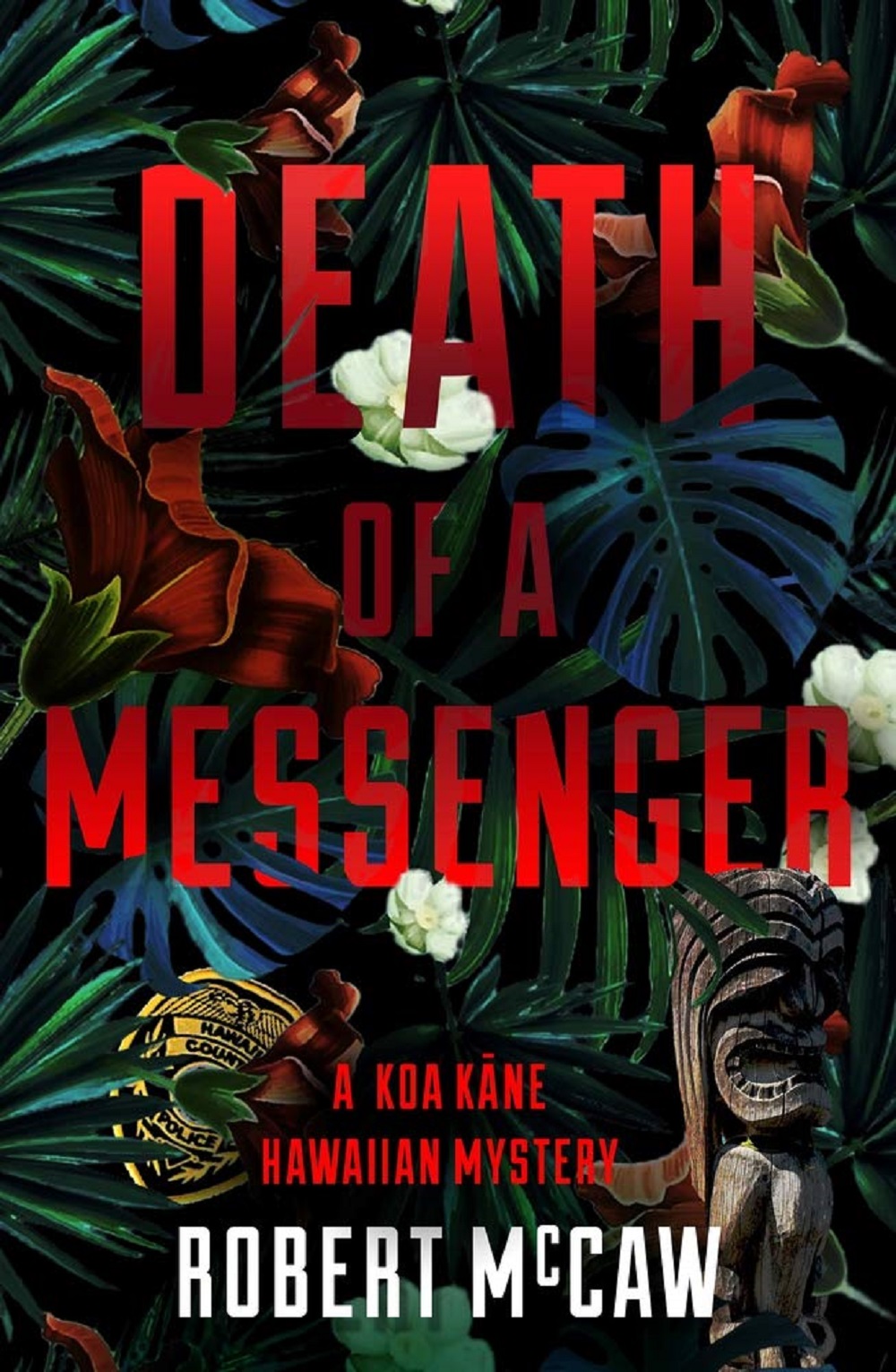
Robert McCaw is an American author who graduated from Georgetown University and served as a lieutenant in the US Army before earning his law degree from the University of Virginia.  He was a partner in a major international law firm with offices in Washington, DC and New York City and maintained a home on the Big Island of Hawai’i.  This allows him to bring a unique authenticity to his Koa Kāne Hawaiian mystery novels in both his law enforcement expertise and his ability to portray the richness of Hawai’i’s history, culture and people. His Koa Kāne Hawaiian Mystery Series includes “Death of a Messenger” and “Off the Grid.” In “Fire and Vengeance,” the third book in the series, police Detective Koa Kāne new case revolves around an elementary school that was placed atop a volcanic vent, which has now exploded. The ebook was released on Tuesday May 26.

The story begins with a brief description of past disasters that have befallen the Big Island of Hawai’i and the surrounding areas: “Ferocious gusts felled century-old trees….Torrential rains pounded the mountains, filling gulches, and gathering into flash floods…..” The latest catastrophe is taking place at the KonaWili School on Hualālai Mountain and the victims this time are children and teachers. As it turns out, the school was built atop a volcanic vent and with the police chief currently in California due to a medical emergency, Chief Detective Koa Kāne is now the senior officer at the horrendous scene. When the school’s contractor and architect are murdered, Koa becomes even more determined to find out the truth. To make matters worse, his estranged brother Ikaika, who is in jail, collapses from a previously undiagnosed brain tumor. This condition might explain his past anti-social behavior and could get him early parole. The investigation into the school explosion uncovers a conspiracy years in the making and it might affect Ikaika’s future when Koa has to decide between justice for the victims and his brother’s freedom.

Robert McCaw is back in full force with his third Koa Kāne Hawaiian Mystery novel. “Fire and Vengeance” starts off strong with the shocking details of the aftermath of the school explosion and with Koa collapsing after rescuing one of the children. Since the mystery involves greed and power grabs decades in the making, the characters are well-developed. The language is easy to folloow and understand and when he uses Hawaiian terms, the author explains them: “He owed it to his mother…to his family…to his ancestors….and to himself as the hiapo, the oldest Kāne male.” It is a fascinating read, with the action flowing effortlessly through the pages, aided in part by down to earth dialogue. The investigation is  sidelined because of family drama that is predictably solved, but it gives the story an added touch of humanity. “Fire and Vengeance” is recommended for fans of mystery/crime novels with a flawed leading man whose past continues to haunt him even while he solves difficult crimes. Learning about Hawai’i’s culture and its people is an added bonus. This page turner is the perfect summer read – pack it in your beach bag.

*The author received a copy of this book for an honest review. The views and opinions expressed here belong solely to her.
Book review: ‘Decisions’ by Robert L. Dilenschneider

decisions
‘Decisions’ is one of Robert L. Dilenschneider’s best selling books about business and professional advice. Courtesy photo, used with permission.

Robert L. Dilenschneider has hired more than 3,000 successful professionals and advised thousands more. He is the founder of The Dilenschneider Group, a corporate strategic counseling and public relations firm based in New York City. Formerly president and CEO of Hill & Knowlton, he is the author of the bestselling books “A Briefing for Leaders,” “The Critical First Years of Your Professional Life,” “50 Plus! Critical Career Decisions for the Rest of Your Life,” “Decisions: Practical Advice from 23 Men and Women Who Shaped the World” and others. They all offer readers practical life and business advice for whatever stage in life they happen to be experiencing.

“Decisions: Practical Advice from 23 Men and Women Who Shaped the World” begins with a catchy sentence: ‘This book is intended to make your life better’ and it certainly delivers on its promise. Decisions are a part of everyday life for everyone, regardless of background. How people make decisions is critical to their future. This remarkable book focuses on twenty-three individual who made decisions that shaped the world and their stories stretch from 218 B.C to the present. It is divided into four parts which are in turn divided into individual chapters about a particular person and the most important decision he/she made. These are: Part One: War and Peace (Harry Truman, Elie Wiesel) Part Two: Commerce and Invention (Johann Gutenberg, Henry Ford) Part Three: Science (Marie Curie, Rachel Carson) and Part Four: Breaking Boundaries (Julius Caesar, Abraham Lincoln).

As a whole it analyzes not just the decision but provides background and history regarding the subject matter. The one major lesson to be learned is that many advances in civilization were made because most inventions, like the printing press, the automobile and general banking, were designed to reach everyone, not just the rich. This is turn made room for advances in society which is beneficial to growth. At the end of each chapter there is a decision section that summarizes the lessons readers can use in their own lives.

“The Critical First Years of Your Professional Life” is targeted to young people about to enter the real world of business and professional careers but the advice in these pages is invaluable to anyone, regardless of age or expertise. The Introduction gives a chapter by chapter synopsis to help readers focus on a specific topic. First off, it explains why the book is so important: because it is the paper or electronic version of a mentor in a world increasingly without any generous men and women who at one time would have helped young people entering the workforce. It also emphasizes the five goals in reading this helpful guide: 1)gaining self-knowledge 2)feeling empathy 3)presenting yourself well 4)retrieving information effectively and being informed and 5)solving problems. Standout chapters include: Networking, Making Allies of Your Elders and Image. The best part about this guide is that depending on what advice readers need, they can go back and re-read chapters on their own or if need be, read the whole book more than once because the information contained is ageless.

Lastly, “50 Plus! Critical Career Decisions for the Rest of Your Life” strives to help the more mature worker navigate the everchanging workforce rules. It emphasizes the importance of refreshing skillsets to meet the challenges of competing in today’s job market. The target audience “includes people who are highly accomplished and economically secure but intellectually bored or emotionally dissatisfied.” Some of the chapters include: The New Rules, Time to Change, On Your Own and Becoming a Consultant. Readers may be at a crossroads or unsure of how to proceed with the rest of their lives and this book gives helpful advise on finding a new career direction, growing within their current field, starting their own business or finally realizing a dream. Regardless of what they decide, the author ends by stating that retiring to just play golf or lay around the house is synonymous with giving up and that is never a good thing.

“Be ready to take criticism, and even ridicule and derision. Think about this as part of your decision process. Rather than turning away, be prepared to develop a thick hide.” – from “Decisions”

*The author received a copy of these books for an honest review. The views and opinions expressed here belong solely to her.

Book review: ‘Flying Alone’ by Beth Ruggiero York

flyingalone
Photo: google

Beth Ruggiero York is a former airline pilot for Trans World Airlines. She entered the world of civil aviation in 1984 shortly after graduating from college and, for the next five years, climbed the ladder to her ultimate goal of flying for a major airline. Now she has dual careers–Chinese translator and professional photographer. She teaches photography workshops for Arizona Highways PhotoScapes and her own company, Ruggiero Images LLC. Her popular instructional book on night photography, “Fun in the Dark: A Guide to Successful Night Photography” has worldwide sales and she also co-wrote “Everglades National Park: A Photographic Destination.” She originally wrote “Flying Alone: A Memoir” in the early 1990s, shortly after her career as a pilot ended and the memories were fresh. It relives the struggles and the challenges of civil aviation that she faced thirty years ago.

“Flying Alone” begins with a prologue titled ‘The Promise’ where Beth recalls the moment she knew she would someday learn to fly. She is fourteen and traveling alone for the first time to visit relatives in Colorado when she first experiences the thrill and excitement of flying in an airplane. From there the story picks up with a grown up Beth fueling airplanes for New England Flyers, a tiny flight school in Beverly, Massachusetts. She is working from the ground up to fulfill her dream of flying for the airlines, but the road ahead is a long one. Before any major airline will even look at her, she has to go through ground school, many hours of flight time, instrument rating, she has to get her pilot license and she must have up to three thousand hours of flying experience. It takes her five years and along the way, her dream of making it “in a man’s world” is complicated with a “probable” Multiple Sclerosis diagnosis, a romantic relationship with her flight instructor, having to fly run-down airplanes and working for shady businesses whose only concern is making money. She finally makes it to the majors and begins working as Flight Engineer, or Second Officer, in the cockpit of a Boeing 727 for Trans World Airlines. In the Epilogue, she recounts how, after only a year, she is officially diagnosed with MS and can no longer qualify for the certification needed to keep her job. She goes back to school and graduates from Harvard and after completing the master’s program for Chinese Studies, she begins working as a Chinese to English translator.

Beth Ruggiero York’s “Flying Alone” is not only a memoir of her experiences while trying to become a commercial pilot, it is also an intriguing glimpse at the aviation world, including all the necessary regulations, the widespread problem of drunk pilots and what it takes to keep a business afloat. Aside from Chapter 5, ‘Instruments,’ where she describes the inner workings of an airplane, the language is easy to understand and the action flows easily. It is refreshing to read about how hard she worked and her determination to achieve her goals despite what must have felt like one disappointment after another. Even when she could not continue after her MS diagnosis, it is inspiring to read about how she turned that around and still managed to find a fulfilling job “I have continued to live the life I wanted, albeit a struggle.” The most exciting parts are when she is flying , her experiences with faulty equipment and, as in Chapter 26, ‘New Year’s Eve’ in icy and foggy conditions: “Halfway through the turn, Paul panicked. ‘What’re you doing?’ he yelled and grabbed the controls, putting the plane in an even steeper bank. Before I could grab it back from him, we were at a near stall, nose up.” “Flying Alone” is an inspiring story of one woman’s courage and determination to achieve her dreams despite overwhelming odds. It is recommended for readers who appreciate exciting first person accounts of personal struggles and victories.

*The author received a copy of this book for an honest review. The views and opinions expressed here belong solely to her.


Book review: ‘No Truth Left to Tell’ by Michael McAuliffe

notruthlefttotellcover
‘No Truth Left to Tell’ is the exciting debut novel by attorney Michael McAuliffe.  Courtesy photo, used with permission.

Michael McAuliffe has practiced law for over 30 years, including as a federal prosecutor, a trial attorney for the civil rights division of the Department of Justice and an elected state attorney in Florida.  In his debut novel, “No Truth Left to Tell,” federal civil rights prosecutor Adrien Rush travels to small town Lynwood Louisiana to investigate an incident of four flaming crosses by the Ku Klux Klan meant to terrorize the southern town and start a new race war.  He joins forces with Lee Mercer, a seasoned local FBI special agent and their partnership is tested as they clash over how far to go to catch the racists before the violence escalates.

“No Truth Left to Tell” begins with a Prologue set in Lynwood, Louisiana in July 1920 where a young black girl, Nettie Wynn,  witnesses the horror of a lynching. In present day Lynwood, 1994, the quiet little town is about to be shattered by the resurgence of the Ku Klux Klan.  They want to start a new race war and proceed to carry out a series of cross burnings at the local NAACP office, the courthouse, a home in the black neighborhood of Mooretown, a synagogue and an Islamic center.  An elderly Nettie Wynn is the unfortunate victim in Mooretown and as a lifelong resident, these hate crimes bring back dreadful memories of her youth and unfortunately she suffers a heart attack. Her granddaughter Nicole DuBose, a successful journalist in New York City, returns to Lynwood to take care of her grandmother. Federal prosecutor Adrien Rush and Lee Mercer, a local FBI agent lead the investigation into the cross burnings without much luck until a local detective, Jimmy Batiste, arrests the Klan’s new grand dragon Frank Daniels and coerces a confession out of him.  Frank is convicted but years later the truth surfaces about how Batiste got the confession and now the town is faced with an ethical dilemma: seeking justice for victims of hate crimes versus who truly deserves a “fair” trial.

Some of the best legal thrillers revolve around ethical dilemmas that make an easy conviction hard to obtain.  Such is the case with “No Truth Left to Tell,” Michael McAuliffe’s excellent debut novel about a civil rights case in the Deep South. The courtroom drama is interesting and written without any complicated legal terms so it is easy to follow.  Being himself a climber, the author uses plenty of climbing metaphors throughout: “A climber who’s given an extra bottle of oxygen in the death zone on Everest gratefully makes use of it” and regular metaphors as well “The Klansman’s strained breaths dissipated through the car’s interior like the smoky remains of a cheap cigar” both of which make the story really come alive. Foreshadowing is rarely used in modern novels but here it successfully builds the climax “Gill and Mercer both laughed, oblivious to the land mine that awaited.” The characters are relatable and well developed, especially Adrien Rush. This is a fascinating page-turner recommended for John Grisham fans. Hopefully this will turn into a series of novels featuring federal civil rights prosecutor Adrien Rush; he is an intriguing character and readers deserve more of his stories.

“It can’t be some truth you’re selling; it has to be the only truth with nothing left to tell.”

*The author received a copy of this book for an honest review. The views and opinions expressed here belong solely to her.

Book review: ‘Fly, Butterfly’ by Annicken R. Day

flybutterfly1
‘Fly, Butterfly’ is Annicken R. Day’s debut novel. Photo: google

Annicken R. Day is the founder and CEO of Corporate Spring, co-author of the book “Creative Superpowers,” public speaker, executive advisor and a passionate maverick for new ways of thinking, working and leading in the new world of work. After fifteen years as a leader and executive in the IT industry, Annicken jumped off the corporate treadmill in 2012 to start her own company, Corporate Spring, with a mission to make the corporate world a happier place. Since then she and her team have helped and trained thousands of leaders around the world on how to build thriving corporate cultures, high performing teams and successful businesses. “Fly, Butterfly,” Annicken R. Day’s debut novel, is the personal and professional metamorphosis story about Maya Williams, an ambitious, stressed-out New York businesswoman who is stymied on her way up the corporate ladder by sexist executives.

“Fly, Butterfly” begins as New York businesswoman Maya Williams, Vice President of sales, is getting ready to board a plane to Honolulu to give her monthly presentation to Technoguard, Inc.’s executive team. Her team sells cybersecurity to several companies but when she gets intel that there is a bug in their system, she is forced to share the information with her boss. Instead of taking the information and trying to fix the bug before the big meeting, her boss insists she disregard the information. During the presentation, she does the unthinkable and admits to prospective investors that they should hold off until the bug is fixed. Confident that she has committed career suicide, she decides to stay on the island a while longer. During this time, she learns to chill and meets people who open her eyes to different ways of thinking, being, living and ultimately, working. When she goes back to New York as a transformed person, she decides to apply the lessons she learned to the company she leads. Her goal is to make it into a kind of utopia that is actually normal in other developed nations that have healthy, happy and productive citizens.

Annicken R. Day’s debut novel combines motivational and inspirational lessons with one woman’s journey from burnt out executive to enlightened leader who transforms her workplace culture. The author brings her message across in an easy to read manner that makes this a definite page-turner. In beautiful descriptive language: “Large, colorful bushes separated the intensely green lawn from the sand, and behind it was the crystal blue ocean for as far as I could see. It looked like diamonds were dancing in its waves” she successfully paints a picture of Hawaii’s magnificence. The characters are well developed but there is no real background information on the father, who pops up every now and then; this would help readers better understand his influence on Maya, just like her mother influenced her. One has to wonder why someone so supposedly put together and intelligent would be sloppy with her love life, i.e. not very confident, but luckily she gets her happily ever after. Among the many people she meets along her journey, the standout is Josh, the surfer dude she first meets after that disastrous meeting. “I glanced over at Josh. I couldn’t help thinking that he was one of the most beautiful men I had ever seen, like a blond Greek god. He looked very young, maybe twenty-seven. Yet something about him felt very old.” He is the first of many who teach her life lessons but at the end she finds out through the locals that he died the previous year in a surfing accident. It is rare for a book to elicit such an emotional response but considering the world’s current situation, it serves as a reminder to set priorities and strive for a well-balanced life. “Fly, Butterfly” is an inspirational story about how lives can be transformed when people learn to follow their passion and heart to enrichen their personal and professional lives.

*The author received a copy of this book for an honest review. The views and opinions expressed here belong solely to her.