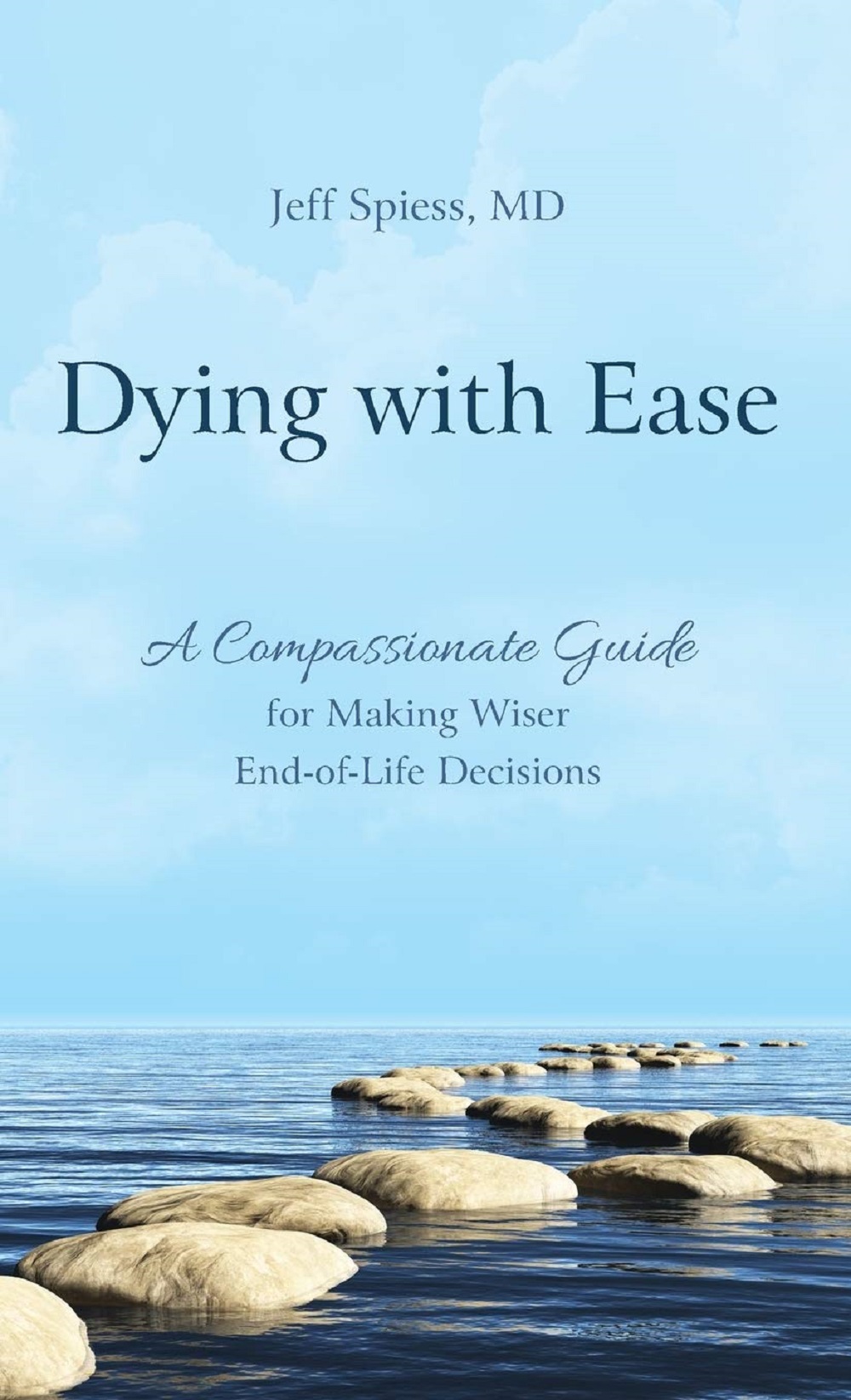
Book review: ‘Dying With Ease’ by Jeff Spiess, M.D.

‘Dying With Ease’ by Jeff Spies, M.D. Photo: amazon

Jeff Spiess, M.D. has spent his medical career caring for those facing serious illness and death, first as an oncologist, then as a hospice physician.  He is ‘mostly’ retired as associate medical director of Hospice of the Western Reserve and has been recognized as a leader in his field. Believing that death may be inevitable but fearing the end-of-life is avoidable, in his new book “Dying With Ease: A Compassionate Guide for Making Wiser End-of-Life Decisions,” he gives readers thorough information about advance care planning, hospice, palliative care, and ethical and legal issues surrounding dying in America to help them learn how to put their fear of their final days to rest.

“Dying With Ease” begins with an Introduction where Jeff Spiess recounts the life of Socrates and how in his “seventy years of his life, he had killed no one, betrayed no one, robbed no one, lied to no one, yet he faced capital punishment.” His crime? In short, corrupting the youth by failing to adhere to the religious norms of the day because he admitted that death is a mystery – that one one knows what it is all about.  After years of caring for terminally ill patients, the biggest lesson the author learned is that just like his patients, he will also one day die. Most Americans fail to accept death because conversations and decisions about the end-of-life topic are “unknown territory.” He quotes surgeon Atul Gawande, who in his book “Being Mortal,” writes “Death may be the enemy, but it is also the natural order of things.” Spiess’ focus is to present death as a personal process that everyone will experience eventually.  The book is divided into nine chapters, including, among others, Dying in America, Suffering, and Envisioning Your Own Death.  At the end, there are Notes and a Bibliography as well as a Discussion Questions section, by chapter, to help readers reflect on what they just read. For the braver ones, Chapter 7 contains a guided exercise to help them get an idea of what it may feel like to die; it may be too emotional for some. His hope is for everyone “to become more informed and at peace regarding your own dying.”

While most people agree that death is an inevitable part of life, not everyone has seriously thought about it, much less planned for it.  It is a scary thought, but in “Dying With Ease,” Jeff Spiess attempts to arm readers with what they need to know about death, dying, and how to adequately prepare to lessen the pain and grief for themselves and for those who will be left behind.  He successfully does this by using language that is easy to understand, the exception being Chapter 3: Hospice, but the material it contains is invaluable.  The book is not too long and can easily be read within a couple of days and is also useful as a future reference guide. Some of the details of the case studies presented (like the infamous Terri Schiavo case) are heartbreaking but overall, it is a balanced work that includes examples of people who experienced death as well information on how to choose a hospice, religious/spiritual/cultural views regarding death and dying and what documents to have in place to prepare for the inevitable. Highlights include the three basic anxieties surrounding death: fear of what dying will be like, fear of loss and fear of the unknown; and Chapter 2: I’m Going to Die? What Can I Do? – an eye-opening account of what to expect when your health declines and how to plan for it. Chapter 4: Suffering contains options for how to deal with unbearable suffering: increased treatment intensity, palliative sedation, and voluntary shortening life, which includes Medical Aid in Dying. This highly practical guide is recommended for readers who appreciate a perspective on death from someone who has seen his share and therefore has the resources and credibility to educate others on the subject.

“…for the highest likelihood of your wishes being carried out, you should not only execute advance directive documents but also communicate their presence, location, and content to your family and friends, and care providers. A living will form lying in a file drawer with your other estate documents might get noticed, but most likely only when you are dead, and then it is too late.”

*The author received a copy of this book for an honest review. The views and opinions expressed here belong solely to her.
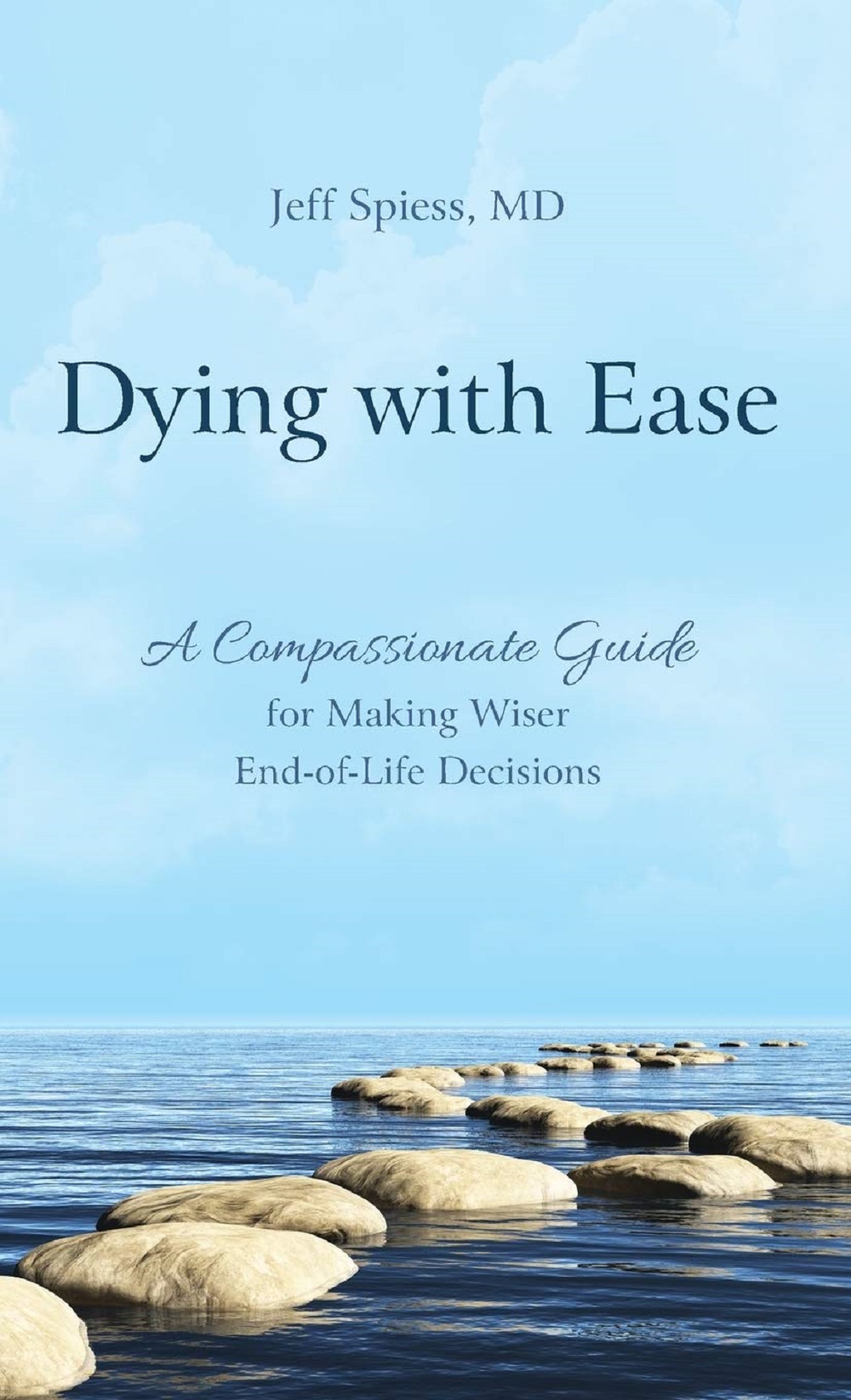
Book excerpt: ‘Dying with Ease’ by Jeff Spiess, MD

‘Dying with Ease: A Compassionate Guide for Making Wiser End-of-Life Decisions’ is the new book by Jeff Spies, MD. Courtesy photo, used with permission.

“You matter because you are you, and you matter to the last moment of your life. We will do all we can, not only to help you die peacefully, but to live until you die.”

—Dame Cicely Saunders

In 1948, Cicely Saunders met a man who would change her life. She was a thirty-year-old nurse and social worker, volunteering part time at St. Luke’s Hospital in London, an institution that had been founded a half century earlier as a home for the “dying poor.” She became captivated by a patient named David Tasma, a Polish Jewish refugee who had escaped from the Warsaw ghetto, worked as a waiter in London, and was now dying of cancer. Through her work and this relationship, she developed an awareness of the suffering and indignity experienced by dying patients, and, together with David, shared ideas as to how this could be different. When he died, David bequeathed her £500 (about $23,600 today) to be “a window in your home.” It was the beginning of an entirely new type of medical care, a care specifically focused on the needs of the dying. She called it hospice.

The word “hospice” was not new, but this meaning was. The term is derived from the same Latin root as our words “hospital,” “hostel,” and “hospitality.” This Latin term first meant “stranger,” but over time usage changed and it came to refer to a host, one who welcomes the stranger. During the medieval era, hospices were inns, boarding houses along pilgrim routes that served as places of rest and refreshment. On these long treks through Europe, many pilgrims became ill, often fatally. The hospices served then as places of care, possible recovery, often death. The word had been used since the mid-nineteenth century in Britain and Ireland for homes for the dying, places where the poor with nowhere else to go died. What Dr. Saunders did was to create a new connotation of the word “hospice,” keeping the welcoming but transforming it from a place to a model, a system of caring for the dying.

Cicely Saunders did not start out in health care. Her initial training was in politics, philosophy, and economics. In 1940, she entered nursing school, but because a back injury prevented her from doing the heavy work that nursing required, she went back to school and qualified as a medical social worker. The years she spent at St. Luke’s as part of a staff that cared deeply about the plight of those who were dying in their care demonstrated to her the impotence of the care system in the face of the patients’ ongoing pain. Knowing that the medical establishment would be resistant to hearing the ideas of an upstart social worker, she went to medical school. She then practiced for seven years at St. Joseph’s hospice in east London, listening to patients, keeping meticulous records, and monitoring the results of her treatments to relieve pain and other symptoms.

One of the first practices she challenged was the method of prescribing opioids, strong pain relievers like morphine. The prevailing practice had been to only use these drugs, given as injection, when the pain appeared severe, when it seemed to the doctor or nurse that the patient was hurting enough to “deserve” relief. The common result was that patients were either in unrelieved pain or briefly asleep after a drug dose. Then, as now, what most people “knew” about opioids was that they were addictive and dangerous. What Dr. Saunders recognized was that patients were the only ones who knew how bad their pain was and that their reports could be trusted. Since an oral dose of morphine lasts about four hours, she decided to give doses that often, by the clock, not by waiting until the pain had recurred. She also added smaller doses of analgesics between the scheduled doses if the pain “broke through.” This simple yet revolutionary idea, when put into practice, demonstrated that pain could be effectively relieved, and when this was accomplished, the patients could function more fully, engage with others more effectively, and contend with their other symptoms as well as the hopes and fears that came from the fact that they were terminally ill. In other words, they were able to live.

In 1967, Dr. Saunders opened St. Christopher’s Hospice in London, incorporating what she had learned into its structure and operations. The architecture included a sheet of glass at the entrance honoring Mr. Tasma’s bequest. She saw the mission of St. Christopher’s as providing not only excellent patient care but also a center of education and research, focusing on improving symptom relief and broadening the appreciation of this knowledge into the larger world of health care.

Dr. Saunders identified that pain was not just a physical phenomenon. Morphine was not all that was needed. She described “total pain,” the hurting that occurred in the physical body, the emotional psyche, the spiritual depths, and the surrounding family. She attacked it with a model of care aimed at all facets of life that contributed to that pain. Effective analgesia was, of course, a priority. But she recognized that it takes a team of skilled and caring professionals to do the job completely: bedside nursing to promote symptom relief and bodily integrity; social work to address financial and family concerns and to mobilize community resources; and clergy to provide empathic listening, words of comfort and advice, and insight into the realms of meaning and transcendence. She extended this care model into the community, providing services for patients dying in their homes, and she introduced family support during the patient’s illness and also after the death. Her ideas remain the bedrock of modern hospice care as well as its sister discipline, palliative care. In 1979, Queen Elizabeth II named Dr. Saunders a Dame Commander of the Order of the British Empire.

Dr. Saunders’s model of care spread across the Atlantic, finding fertile ground especially among nurses who were frustrated by the way the medical establishment seemed to be both overtreating and abandoning the dying. Florence Wald, dean of the School of Nursing at Yale University, served as the catalyst and, with a small group of colleagues, founded Connecticut Hospice in 1974, modeling their program after St. Christopher’s but adapting it to the local medical and social culture. This was two decades before the SUPPORT study would formally describe the suffering and intensive care endured by dying patients, but these visionaries and many like them recognized that a more humane way of dying was possible. Hospices began springing up around the country—small, mostly volunteer agencies, often associated with hospitals or religious institutions. As most of these relied mainly on donations and volunteers, the services offered varied widely.

A watershed moment in the care of the dying in the United States came in 1982 when the US Congress and President Reagan enacted the Medicare Hospice Benefit (MHB). This established a funding mechanism for hospice care and set standards for the organizational structures and for patient care. The MHB, as initially conceived, envisioned a “typical” hospice patient as someone with advanced cancer and no further treatment options, one whose course after hospice enrollment would be manageable, predictable, and short. In the ensuing thirty-five years, medical (e.g., AIDS epidemic, hospice for multiple other illness), financial (e.g., drug costs, federal budget deficits), and demographic (e.g., aging baby boomers) pressures have resulted in tweaks and modifications of the regulations, but the MHB continues to define how hospice care is provided in the United States.

Excerpt from the bookDying with Ease: A Compassionate Guide for Making Wiser End-of-Life Decisions by Jeff Spiess. Used by permission of the publisher Rowman & Littlefield. All rights reserved.