

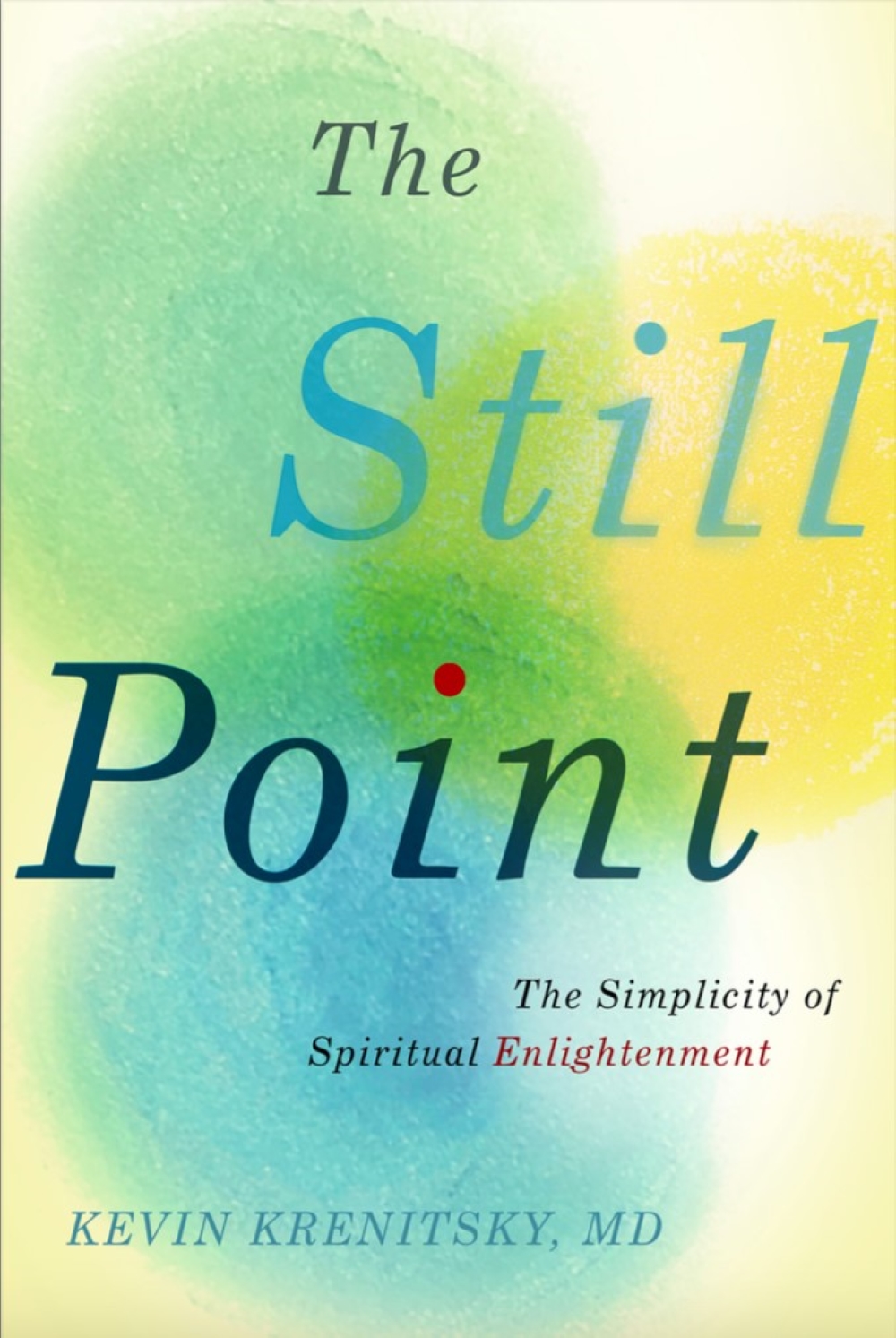
Kevin Krenitsky has been, at times, a professional rock musician, a medical doctor, and a business executive. Despite leading a life deemed outwardly “successful,” he lived with a deep background of anxiety, fear, and stress that came and went since early childhood. At the age of forty, in the midst of decades of suppressing tremendous inner and outer conflict, he reasoned there must be another way. This “willingness” led to a decade of studying non-duality by way of “A Course in Miracles.” At the height of a successful business career, he turned away into relative isolation and soon found the direct path to the recognition of our true nature. One day in meditation, a thought came that a book called “The Still Point” would be written. Five years later, the first words arrived. Krenitsky’s “The Still Point: The Simplicity of Spiritual Enlightenment” takes readers on a journey of self-discovery, ultimately leading to the recognition that our self-aware nature is happiness and peace itself.
“The Still Point” begins with an Introduction where the author explains that this book is about “discovering and living as your indestructible, true self, which is deeper than just the body and the mind.” He refers to our true self as the Still Point and defines it as the experience of recognizing our own awareness; simply put: “being aware of being aware.” According to him, our unconscious living has not only created stress, anxiety, wars, and famine, but our choices have brought us to the edge of mass destruction. The earth has suffered greatly from our collective human unconsciousness. With this book, he shows us how to discover and live our lives in alignment with our true self. Each chapter begins with an introduction of the subject and is followed by a question and answer discussion. Some of the questions are from people he has encountered but most of them are questions he himself has had in his journey to self-discovery. The book is divided into two parts: the first has chapters such as The Discovery of Our True Nature, The Healing of Our Relationships, and Awakening and the Limits of the Mind; the second part deals with subjects such as Taking Responsibility for Your Happiness, Be a True Student of Peace and Happiness, and The Illusion of Control.
For such an intense subject, “The Still Point” is relatively easy to read, due in part to the Q & A format that the author chose to present his ideas. It reads like an interview and the language is straightforward and down to earth. The important takeaways include the significance of living in the moment, realizing that we share a consciousness with each other and the planet, and self-awareness. When we focus on the noise of the outside world, we lose our feelings of peace and happiness. Highlight include Chapter 14: Taking Responsibility for Your Happiness, as it reminds readers that “The desire to project blame on others, the world, or past events is a universal trait of the egoic mind” and Chapter 20: Be a Seed of Light in a Desperate World where it emphasizes the importance of taking pride in your job. It is important to find a job you like but “…never diminish whatever it is you find yourself doing in the present.” These may not be new theories, but in today’s world, in the midst of all the chaos, both external and internal, it pays to slow down and re-evaluate what makes life worth living. Filled with practical life advice, “The Still Point” is recommended for readers who value concepts such as meditation and self-awareness and are searching for tips on easing the load we all sometimes have to carry.
“There is no denying the terrible injustice that has been happening for a long time, but treating people who are desperately calling out for love with hate and anger simply will not work.”
*The author received a copy of this book for an honest review. The views and opinions expressed here belong solely to her.
Read an excerpt here.
 SA Examiner