
Part of the Partners in Crime Tours Virtual Book Tours
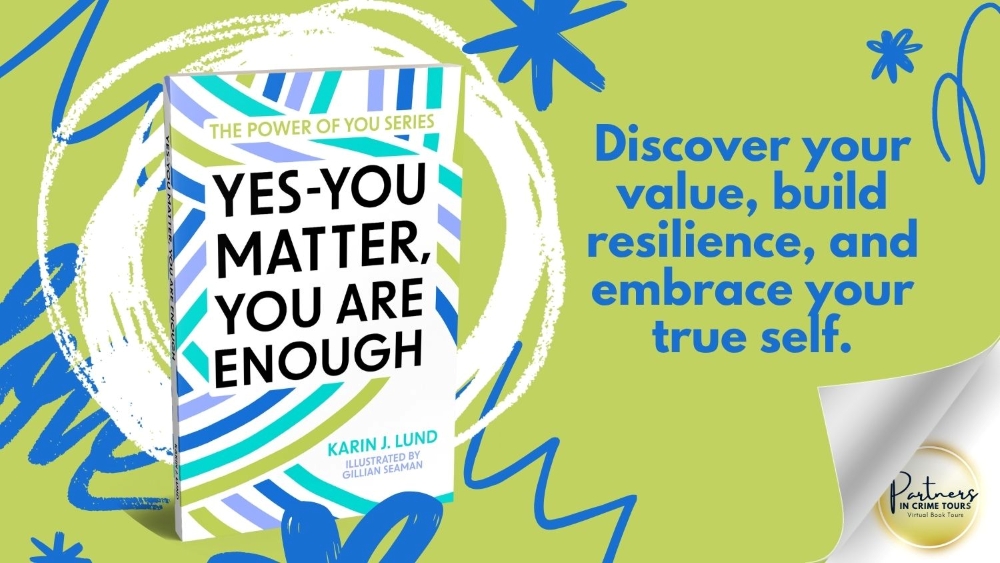
Yes – YOU Matter, YOU Are Enough by Karin J. Lund
Theme: Celebrating your life, understanding and creating your value, and building confidence and resilience. (Partners in Crime Tours, 2025)
This is the book that will always remind you: YES – I MATTER, I AM ENOUGH.

Review
Karin J. Lund’s Yes – YOU Matter, YOU Are Enough is a heartfelt and empowering guide to self-discovery, confidence, and resilience. Written with warmth and clarity, Lund invites readers to celebrate their lives and recognize the unique value each person holds.
It’s less a traditional self-help book and more a compassionate conversation, one that encourages reflection and personal growth.
Lund’s message is simple yet profound: self-worth isn’t something we earn; it’s something we uncover and nurture. Through thoughtful exercises and gentle affirmations, she helps readers navigate life’s complexities with grace and self-trust. Her emphasis on creating one’s own value and building inner strength makes this book both inspiring and practical.
Interactive exercises include:
- Writing down what you could change and how it might impact your situation.
- Write a challenge you want to achieve and have an accountability partner to help you.
Even the cover design, featuring interlocking, layered lines, beautifully mirrors the book’s message. It symbolizes life’s many intersecting paths and the freedom to change direction, reinforcing the idea that resilience is born from flexibility and self-awareness.
Ultimately, Yes – YOU Matter, YOU Are Enough is a compassionate reminder that our worth is inherent and our journeys are ever-evolving. It’s an uplifting read for anyone seeking to reconnect with their inner power and embrace the full richness of who they are.
“Keep seeking truth and honesty in your life. Don’t ever be afraid to choose a new path.”
About the Author
Karin J. Lund, Founder of G-Power Global Enterprises, partners with corporations, universities, and non-profit organizations to create compassionate, empowered workplace cultures. Her work fosters environments where employees and management actively support shared values, inclusivity, and community impact.
Her online program, Your Journey through the Islands of Grief and Loss, encourages individuals and teams to navigate personal and professional challenges with empathy and resilience. Corporate comfort gifts, journals, and other resources support this meaningful initiative.

To celebrate the release of Karin J. Lund’s new book Yes – YOU Matter, YOU Are Enough, Partners in Crime Tours is having a giveaway. Enter for a chance to win an Amazon.com gift card.





 SA Examiner