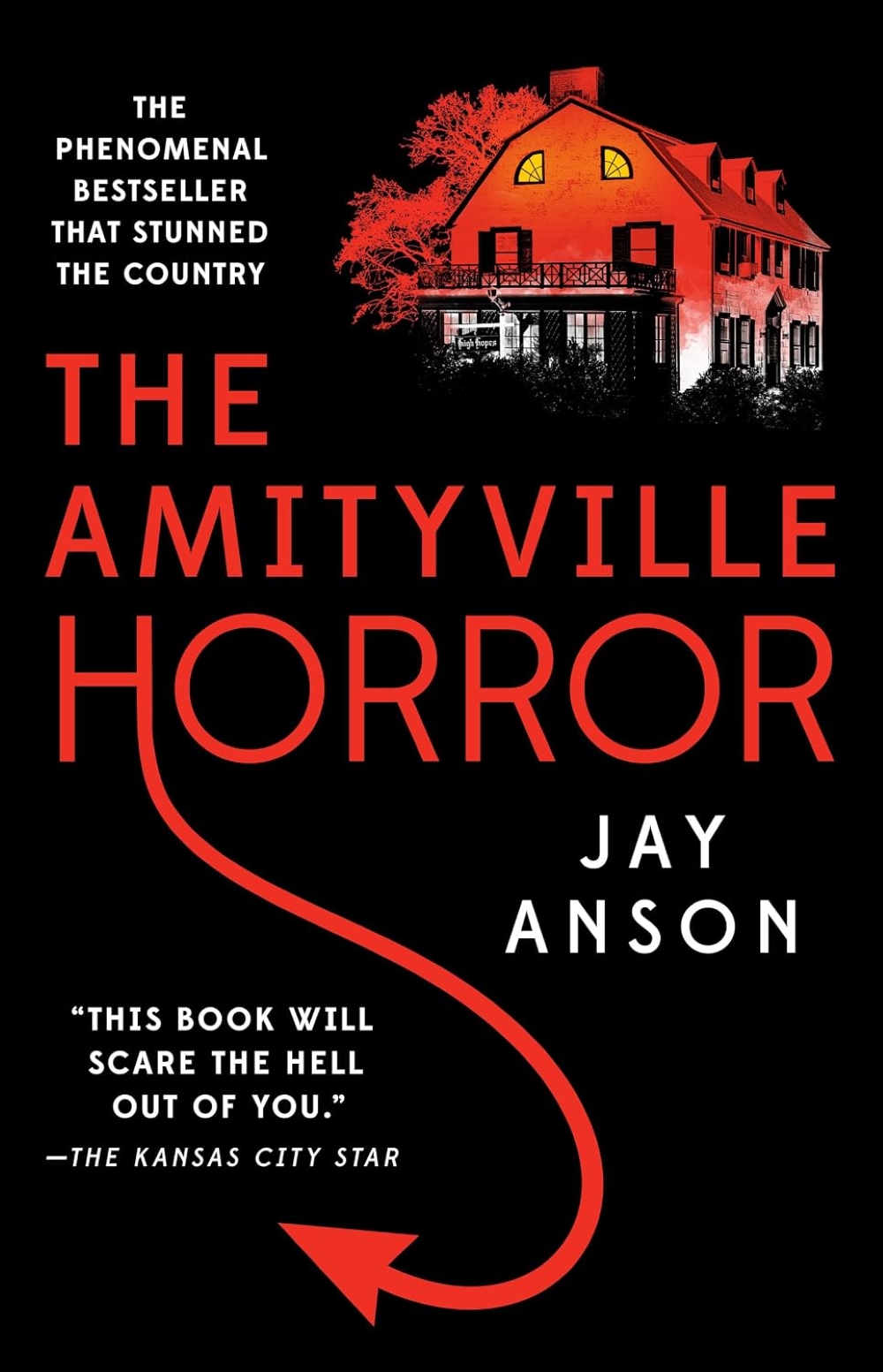
📚 Book Review: The Amityville Horror by Jay Anson
Synopsis
In December 1975, the Lutz family moved into their new home in suburban Long Island. George and Kathleen Lutz knew that one year earlier, Ronald DeFeo had murdered his family in the house, but the property, complete with a boathouse and swimming pool, and the price were too good to pass up.
Twenty-eight days later, the entire Lutz family fled in terror.
Review
The Amityville Horror remains one of the most chilling entries in paranormal literature, chronicling the 28 days George and Kathleen Lutz spent in their dream home. The narrative blurs the line between documentary reporting and visceral horror and the idea that an ordinary suburban house could conceal something horrifying gives the story much of its power.
Character Dynamics
- George Lutz: Positioned as the pragmatic patriarch, George’s descent from a stable family man to an uncharacteristic, brooding recluse forms the novel’s emotional core. His gradual personality shift highlights the insidious influence of the house.
- Kathleen Lutz: Serving as the perceptive counterweight, Kathy’s emotional anguish and instinct to protect her three children anchor the story’s human stakes amid chaotic spectral events.
- Father Mancuso: The troubled priest introduces a theological dimension, acting as a spiritual guide whose physical illness reinforces the dark forces at play.
Anson’s background in documentary writing shapes the book’s character dynamics. Rather than making them over-the-top heroes, George and Kathleen are portrayed as grounded, everyday parents unraveling under inexplicable stress. Their vulnerability makes the escalation, from strange odors and cold spots to severe levitation and demonic infestation, profoundly unsettling. Whether readers accept the events as supernatural or approach them skeptically, the characters create a strong emotional center for the story.
Core Themes
- The Violation of Domestic Sanctuary: The narrative weaponizes the American Dream, transforming a dream suburban home into a site of claustrophobic dread.
- Economic Vulnerability: The financial pressure of buying a bargain home amplifies the family’s stress, blending real-world anxieties with the supernatural.
- Good vs. Evil: A traditional moral conflict underpins the story, questioning whether human faith can withstand an ancient, malicious presence.
Enduring Appeal
Decades after publication, the book retains its hold on readers by capitalizing on journalistic realism and the simple, terrifying prompt: “Based on a true story.” Anson’s clinical, day-by-day structure creates an immersive documentarian tone that keeps true-crime and horror enthusiasts fascinated by its eerie legacy.
Book vs. 1979 Movie Adaptation
While Jay Anson’s 1977 book and Stuart Rosenberg’s 1979 film adaptation share the same core narrative, the Lutz family fleeing their home after 28 days of supernatural terror, the two versions diverge significantly in their storytelling approach, character execution, and thematic emphasis.
| Feature | Jay Anson’s Book (1977) | 1979 Film Adaptation |
| Narrative Tone | Clinical, investigative, and documentary-style; presents events as a straightforward log of facts. | Dramatic, cinematic, and melodramatic; relies on visceral jump scares and atmosphere. |
| George Lutz’ Arc | Portrayed as a fatigued, cold-sensitive man suffering mood swings and physical decline. | Features a full transformation into a threatening, axe-wielding figure resembling Ronald DeFeo Jr. |
| Religious Subplot | Father Mancuso suffers from afar after being instructed by the house to “get out.” | Expanded into a theatrical battle between Father Delaney (Rod Steiger) and systemic church bureaucracy. |
| Supernatural Elements | Relies heavily on lingering dread, foul odors, subtle physical coldness, and eerie sounds. | Features overt physical manifestations, such as black ooze from toilets and red-eyed demonic pig projections. |
Key Plot Differences
The book operates like an eerie non-fiction diary, emphasizing small, increasing stresses, financial burdens, broken locks, and bad weather that wears down the family piece by piece. The film dramatizes these events, escalating George’s hostility much faster and turning his obsession with chopping firewood into an explicit signal of imminent physical danger toward his family. Additionally, the movie gives Father Delaney (renamed from Mancuso) a much larger on screen presence, including scenes where he loses his sight and sanity while attempting to warn the family.
Thematic Shifts
- Journalistic Realism vs. Cinematic Spectacle: The novel’s power comes from its plain, “true story” journalistic layout. The film abandons this understated documentarian tone in favor of traditional Hollywood tropes, utilizing Lalo Schifrin’s Oscar-nominated score and visual horror cues to drive the narrative.
- Domestic Ruin vs. Economic Anxiety: While the book focuses heavily on spiritual violation, it’s mostly seen as an exercise in financial anxiety. The movie leans heavily into the terror of the American Dream turning into a financial trap, highlighting unpaid bills, lost money down the drain, and a house that destroys the family’s equity along with their sanity.
Final Book Verdict
I hadn’t read the book previously and opted for the audiobook instead. To my surprise, it’s not as scary as I thought going in, though it does have its occasional jump scares. The final chapters, where the family prepares to leave while the house refuses to let them go, deliver some intense action. The overall day-by-day tone that breaks down the Lutz’ experience in the house is intriguing, and fans of real-crime stories will definitely find it an interesting read.
“When he flicked the first holy water and uttered the words that accompany the gesture, Father Mancuso heard a masculine voice say with terrible clarity: ‘Get out!’”