Weekly Book Recommendations: Transformative Reads for Entrepreneurs, Leaders, and Seekers

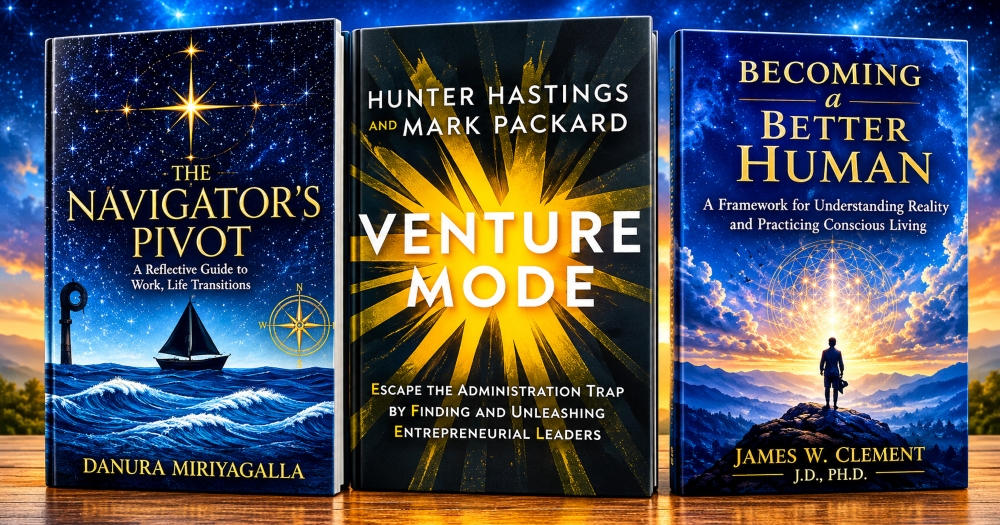
Three books to rethink how you lead, work, and live. Photos: Barnes & Noble/Gemini

Weekly Book Spotlight

Whether you are navigating a major career crossroads, challenging outdated business conventions, or seeking greater clarity in your daily life, the right book can offer a powerful new lens. In this week’s Book Spotlight, I explore three thought-provoking reads designed to help you rethink how you lead, work, and live. From trading rigid corporate bureaucracy for bold entrepreneurial action to quietening ego-driven fear and finding your bearings during periods of professional uncertainty, these titles invite you to step back, shift your perspective, and chart a more intentional path forward.

1. The Navigator’s Pivot: A Reflective Guide to Work-life Transitions

By Danura Miriyagalla

At various points in every working life, progress alone stops being enough. The familiar map no longer explains the terrain. Decisions feel heavier, direction less certain, yet nothing may be visibly “wrong.” The Navigator’s Pivot is a reflective guide for those moments. (Barnes & Noble, 2026)

Drawing on ancient seafaring wisdom and decades of lived experience across cultures, countries, and careers, The Navigator’s Pivot offers a new way of understanding work-life transitions: not as problems to solve, but as voyages to navigate within an international ecosystem. Using the timeless language of navigation—stars, winds, boats, and waves—it introduces an inspirational, practical, and human approach for finding direction when certainty fades.

Instead of offering formulas or quick fixes, the book invites readers to slow down and learn how to read the signals around and within them. Through illustrative examples, metaphors, and practical frameworks, including the Transition Map, Transition Compass, Boats Framework, and Four Periscopes, it helps readers realign purpose, identity, and perspective before choosing their next course or during a transition.

This isn’t a book about escaping uncertainty. It’s about learning to move through it with calm, integrity, and trust in the navigator within, recognizing that for many, the most meaningful pivots occur not by leaving, but by realigning and contributing more deeply where they already stand.

About the Author

Dr. Danura Miriyagalla is an international development and management specialist whose experience spans policy, business, research, teaching, coaching, and creative practice. Having lived and worked across Asia, Africa, Australia, the Pacific, and the US, his career has unfolded at the intersection of international public, private, and non-government organizations, academia, complex systems, cultural contexts, and human transitions.


2. Venture Mode: Escape the Administration Trap by Finding and Unleashing Entrepreneurial Leaders

By Hunter Hastings and Mark Packard

It’s time to take the “A” out of MBA.

Venture Mode is a bold call for an overhaul of modern business leadership and the higher education system that staffs it. It exposes the bureaucratic mindset that dominates modern organizations, especially universities, and explains the true cost of our obsession with administration in the form of suppressed economic potential. In its place, Hunter Hastings and Mark Packard champion venture mode: a radical, entrepreneurial approach that prioritizes value creation, consumer sovereignty, and agile execution. (Barnes & Noble, 2026)

The authors take aim at traditional bureaucratic management and make the case for a new kind of leadership—entrepreneurial leadership—built to drive growth, unleash creativity, and outpace competitors. Drawing from entrepreneurial (Austrian) economics and the experiences of inspiring modern business leaders, they lay out a provocative road map to escape the administration trap and rebuild organizations around the principles of value creation. They also outline a vision for business education that replaces the ubiquitous MBA with the MBE (Master of Business Enterprise), ensuring the next generation is trained in entrepreneurial leadership instead of administration.

Whether you’re a founder, an executive, or a rebel within a legacy system, this book is a call to arms. If you’re tired of the inertia of traditional business thinking and its MBA-fueled administrative mindset, Venture Mode is your new manual for training, nurturing, and unleashing entrepreneurial leaders. The world doesn’t need more administrators, it needs entrepreneurs.

About the Authors

  • Hunter Hastings is a lifelong practitioner of venture mode. Educated in England before the country adopted the MBA, he earned a master’s degree in economics, learned the core practices of venture mode and brand building, and established a global consulting practice applying these principles across multiple companies, industries, and countries.
  • Mark Packard is an associate professor of management, Harry T. Mangurian Fellow of the Phil Smith Center for Free Enterprise, and research director of the Madden Center for Value Creation at Florida Atlantic University. He obtained his PhD from the University of Missouri in 2016, focusing his research on entrepreneurial economics and the philosophical foundations of entrepreneurship theory.

3. Becoming a Better Human: A Framework for Understanding Reality and Practicing Conscious Living

By James W. Clement

What if becoming “better” is not about improving yourself, but about reducing the fear that quietly shapes your perception of yourself and others?

Most people’s identities are reaction-based, organized around praise, criticism, success, and failure. Their lives become governed by fear: fear of losing what they have, of not being enough, or of being judged, exposed, or replaced. From that fear flow the negative emotions that dominate so much of human experience: comparison, defensiveness, envy, shame, and chronic dissatisfaction. (Barnes & Noble, 2026)

Becoming a Better Human offers a different approach. Instead of adding another layer of techniques or motivational advice, it presents a coherent model of reality and identity, clarifying the relationship between awareness, ego, and lived experience. When that relationship is understood, perception begins to change.

Readers learn to observe and supervise egoic identity rather than unconsciously obeying it. Emotional reactivity begins to diminish, not through suppression or discipline, but through a deeper structural shift in how experience is interpreted. This isn’t a promise of perfection; it’s a disciplined reorientation of perception that replaces fear-driven identity with clarity, responsibility, and conscious participation in life.

About the Author

James W. Clement, J.D., Ph.D., is a research scientist whose work explores human flourishing through the lenses of healthy life extension, metabolic health, consciousness research, and the ethical use of emerging science and technology. For more than two decades, he has studied the biology of aging and the science of human longevity. He is best known for launching the Supercentenarian Research Study in 2010 with Professor George Church of Harvard Medical School—a project featured in The New York Times by Pulitzer Prize–winning journalist Amy Harmon.
Weekly Book Roundup: Essential Reads on Global Expansion and Risk Management

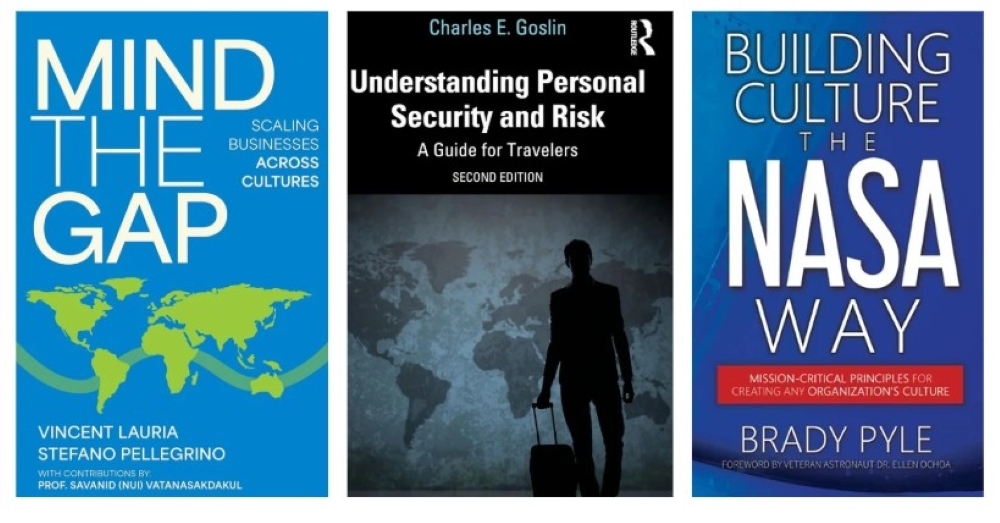
This week’s spotlight on business books for leaders. Photos: Barnes & Noble

Books of the Week: Scale Across Cultures, Personal Security, and the NASA Way

Welcome to this week’s roundup of essential business and leadership reads. Whether you’re expanding your company across international borders, looking to navigate risk with the precision of an intelligence officer, or seeking to build a high-performance team using lessons from space exploration, I spotlight three standout books to elevate your strategy.

1. Mind The Gap: Scaling Businesses Across Cultures

By Vincent Lauria and Stefano Pellegrino

“Your global expansion isn’t failing because of your strategy; it’s failing because you don’t see the cultural gap.”

Have you ever done everything right, built a strong product, crafted a solid pitch, and entered a promising market, only to watch deals fall apart and partnerships stall? (Barnes & Noble, 2026)

Written by global venture capitalist Vincent Lauria and international operator Stefano Pellegrino, Mind The Gap is not another generic business guide filled with one-size-fits-all frameworks. It’s a real-world playbook built from decades of experience scaling companies across continents, exploring the human layer that most books ignore.

  • What You Will Learn: How to walk into any new market with confidence, instantly read the room, build trust faster than your competitors, and close deals that once seemed impossible.
  • Key Takeaway: Each chapter delivers clear, usable takeaways you can implement right away, acting like a seasoned global advisor guiding your every move.

About the Authors

  • Vinnie Lauria is a Silicon Valley entrepreneur turned venture capitalist who has spent over 15 years helping founders build companies across high-growth innovation markets in Asia, the US, and the Middle East. As founding partner of Golden Gate Ventures, he has invested in over 100 companies across 15+ countries.
  • Stefano Pellegrino is an attorney qualified in New York and Italy, holding an LL.M. from UC Berkeley and a PhD from the University of Pavia. His book is based on conversations with more than 50 global founders, executives, and investors from the world’s top technology companies.

2. Understanding Personal Security and Risk

By Charles E. Goslin

Blending decades of global intelligence and security experience with time-tested principles, this book delivers a powerful, practical framework for personal safety and risk awareness. (Barnes & Noble, 2026)

Updated to reflect today’s realities, Understanding Personal Security and Risk equips readers, especially those traveling or operating in high-risk environments, to recognize threats, understand adversarial behavior, and make informed, rapid decisions under pressure.

  • Who It’s For: Professionals managing global security programs, travelers, and individuals navigating an increasingly unpredictable world. It uniquely addresses vulnerabilities faced by women, children, the elderly, LGBTQ+ individuals, immigrants, missionaries, and university students.

About the Author

  • Charles E. Goslin is a retired intelligence officer who actively consults, writes, and travels. With a lifetime spent analyzing risk and threat across corporate operations and government matters, he has developed executive management curriculum and security tradecraft for universities and foreign governments worldwide.

3. Building Culture the NASA Way: Mission-Critical Principles For Creating Any Organization’s Culture

By Brady Pyle

What does it take to build a culture where people perform under pressure, pursue an impossible mission, and show up every single day fully committed? Ask NASA. (Barnes & Noble, 2026)

For thirty years, Brady Pyle worked inside one of the most extraordinary organizations on earth, shaping the culture of an agency where the stakes couldn’t be higher. Through compelling firsthand stories of the people and decisions that defined the agency’s culture, Pyle brings to life what it feels like to work alongside astronauts and engineers.

  • The NASA Framework: Using the Navigate, Assess and Adapt, Strengthen Leadership, and Activate Inclusion and Innovation (NASA) model, Pyle delivers a clear playbook for building cultures of trust, performance, and purpose—whether you lead a team of five or an organization of fifty thousand.

About the Author

  • Brady Pyle is the Chief Human Resources and Inclusion Officer at Space Center Houston, a two-time recipient of the NASA Outstanding Leadership Medal, and the 2024 HRO Today Learning and Development Executive of the Year for Lifetime Achievement.

Weekly Reading List: How to Master AI Fluency and Build Meaningful Leadership

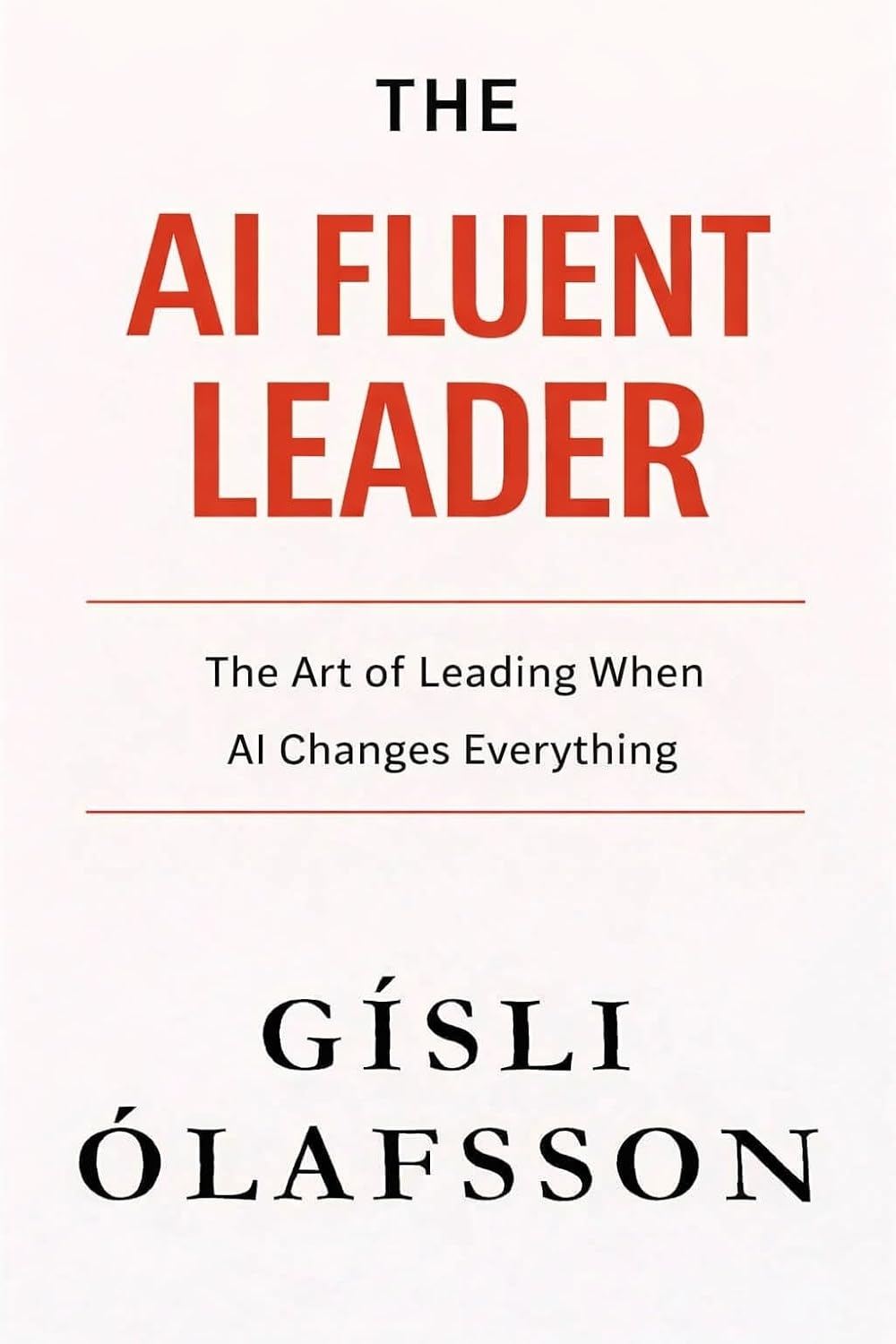
‘The AI Fluent Leader’ by Gísli Ólafsson. Photo: Amazon

Books of the Week

Looking for your next impactful read? This week’s featured selection explores deep human connection, leadership in the age of artificial intelligence, and how to successfully navigate constant technological change.

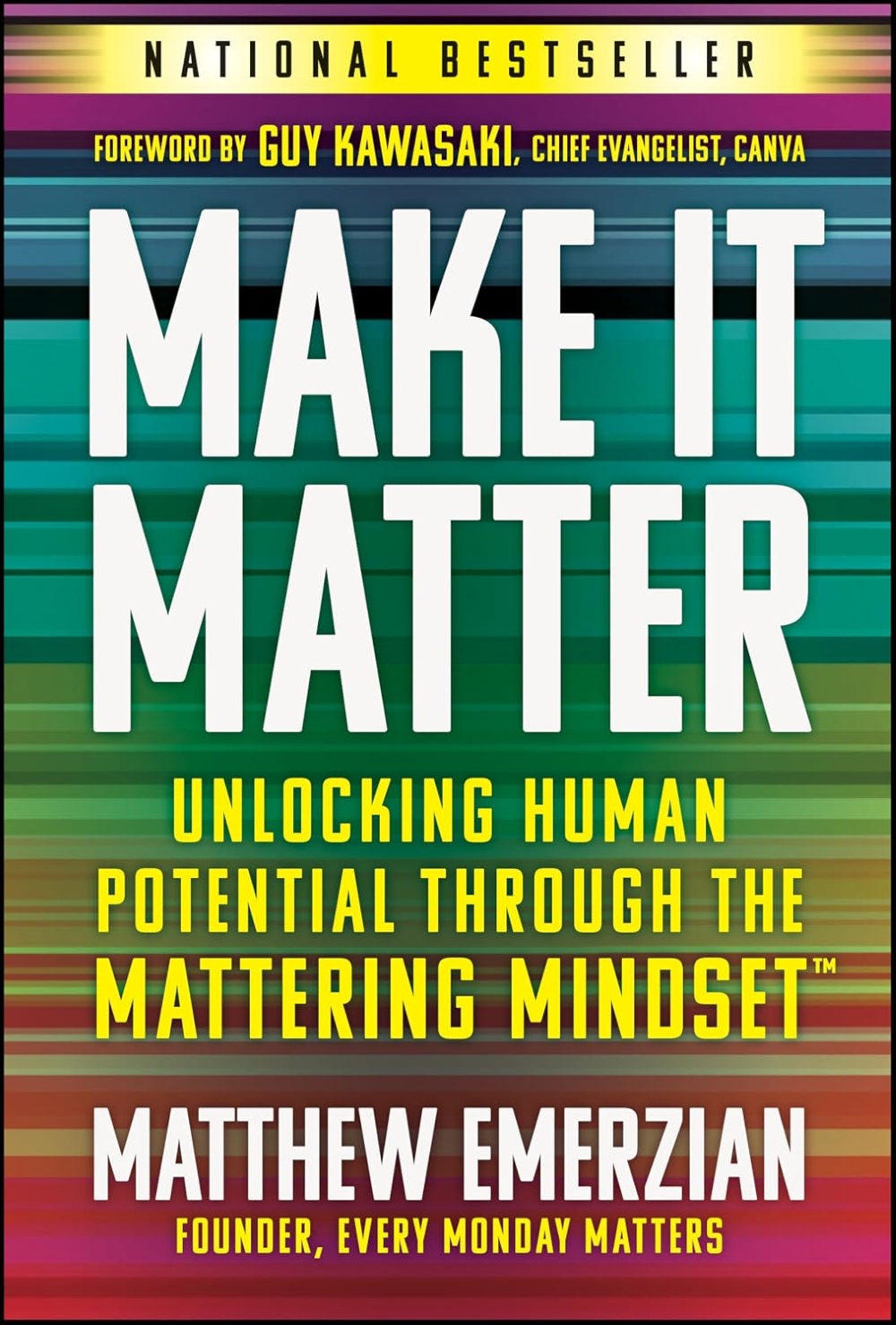
1. Make It Matter: Unlocking Human Potential Through the Mattering Method

By Matthew Emerzian

Something deeper is happening beneath the surface of our lives and our work. People are more connected than ever, yet feel more alone, achieving more, yet questioning if any of it truly matters. In the quiet moments, more people than we realize are asking: “Do I matter?” (Amazon, 2026)

In Make It Matter, Matthew Emerzian introduces a powerful and timely framework—The Mattering Mindset™—built from over two decades of work helping individuals, teams, and organizations reconnect to what matters most. This isn’t about motivation. It’s about mattering. Because when people know how much they matter, to themselves, to others, and to something bigger, everything changes:

  • How they show up
  • How they lead
  • How they live

Blending research, real-world application, and deeply personal insight, Make It Matter offers a new way forward that addresses the root of disconnection, burnout, and disengagement. Whether you’re navigating your own search for meaning, leading a team through constant change, or trying to make a greater impact, this book meets you where you are and helps you move forward.

“In a world that feels increasingly disconnected, uncertain, and heavy, the most powerful thing we can do is help people know they matter. And when we do that, we don’t just change how people feel. We change what’s possible.”

About the Author

Matt Emerzian is a four-time bestselling author and founder of the nonprofit Every Monday Matters, which has spent nearly two decades bringing mattering work into schools, companies, and communities for people of all ages, reaching nearly four million people.


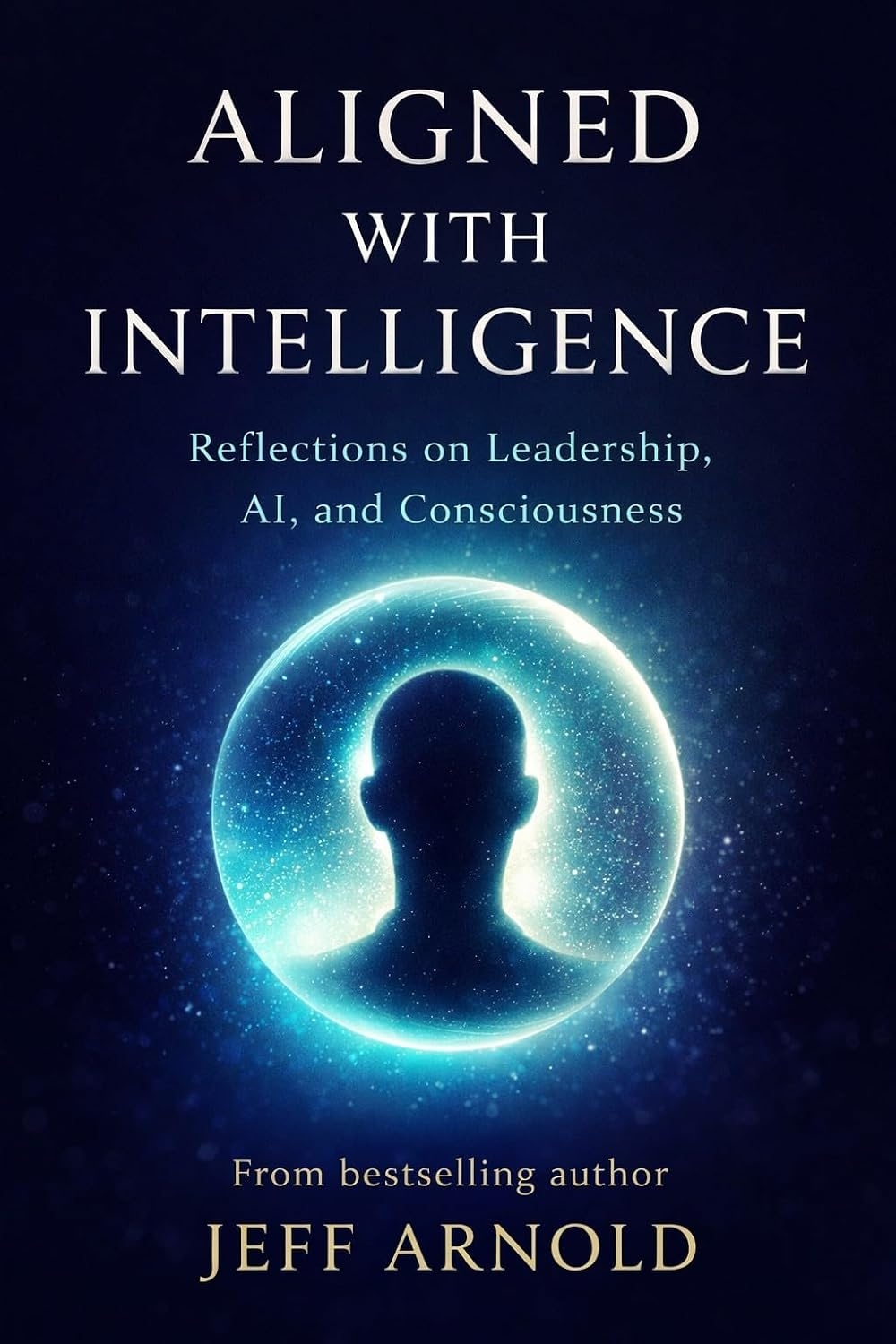
2. Aligned With Intelligence: Reflections on Leadership, AI, and Consciousness

By Jeff Arnold

Artificial intelligence is accelerating. But the real shift isn’t happening in machines, it’s happening in us. (Amazon, 2026)

Aligned With Intelligence is not a technical book about AI. It’s a guide on how leaders must think, decide, and act in a world where intelligence is no longer limited to human minds.

Each chapter is intentionally brief and designed to be read in minutes, but considered for much longer. Between chapters, you will find space, an intentional design choice because in an age of constant acceleration, the ability to pause, think clearly, and act with purpose will define the next generation of leadership.

The book challenges a simple assumption: that more intelligence automatically leads to better outcomes. It doesn’t. Alignment does. As AI becomes faster, more embedded, and more powerful, the question is no longer “What can technology do?” The question is:

“Who are we becoming while we build it?”

If you are a leader, builder, operator, or thinker navigating the future of AI, this book will help you ask better questions—the most valuable skill of all in the age of intelligent systems.

About the Author

Jeff Arnold is a bestselling author known for a writing style that feels like a conversation with a trusted guide. His work blends vivid storytelling with practical insight, turning complex ideas into clear, memorable experiences. Reflecting his background as an entrepreneur and industry leader, Jeff writes to offer readers ideas that shift how they see the world.


3. The AI Fluent Leader: The Art of Leading When AI Changes Everything

By Gísli Ólafsson

Your AI program is not underperforming because of the technology. It is underperforming because of a leadership gap no one is talking about. (Amazon, 2026)

The AI Fluent Leader answers that challenge with precision and honesty. Gísli Ólafsson studied what separates the 12% of organizations that generate real AI returns from the 88% that do not. The answer is not better technology, bigger budgets, or faster adoption—it is better leadership.

The AUGMENT Framework

The book maps seven leadership imperatives into a complete system:

  1. Architect the Vision
  2. Upgrade Your Workforce
  3. Guard the Guardrails
  4. Manage the Machines
  5. Engineer the Culture
  6. Navigate New Competition
  7. Transform the Executive

Each chapter opens with a leadership challenge, provides a framework for addressing it, and closes with a sequenced action plan. The book includes practical tools such as an AI Leadership Bottleneck Diagnostic, an AI Fluency Self-Assessment, workforce readiness frameworks, and a guide to building AI personas that think alongside you on strategic problems.

“The organizations winning with AI are not using better tools. They have better leadership. This book shows you exactly what that leadership looks like, and how to build it.”

About the Author

Gísli Ólafsson is a technology executive, former parliamentarian, and crisis leader who has worked at the intersection of AI, institutions, and accountability for three decades. From Microsoft to global humanitarian responses and national government, he has led under pressure where technology and responsibility collide.


The Future of Work in the Age of AI: Essential Reads for Navigating Workplace Change

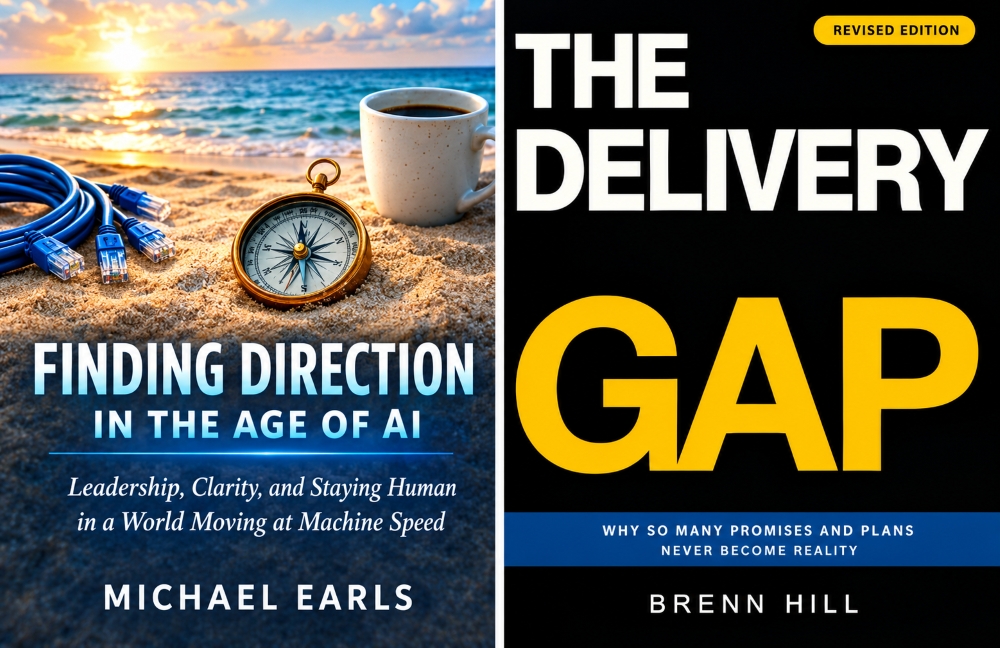
‘Finding Direction in the Age of AI’ by Michael Earls and ‘The Delivery Gap’ by Brenn Hill. Photos: Amazon

The Growing Interest in AI and the Future of Work

Books about artificial intelligence (AI) in the workforce are rapidly gaining popularity. While AI is reshaping industries and redefining traditional jobs, such as automating routine tasks and decision-making, business leaders are exploring how technology is transforming the workplace.

Readers are turning to books that explain these changes and offer practical advice on adapting skills, embracing innovation, and preparing for the future. Authors are also examining critical questions about job security and the human side of technology. As AI continues to evolve, these books provide valuable insights into navigating a rapidly changing professional world.

🤖 AI Book Spotlight

1. The Delivery Gap:

Why AI Adoption Fails and How Engineering Leaders Fix It

By Brenn Hill

Synopsis

Your team is writing more code than ever. Your incident rate is climbing too. Pull request volume is up. Review quality is down. Senior engineers are spending their weeks proofreading AI-generated output instead of designing systems. The dashboards say productivity is up. The incident rate says otherwise. (Amazon, 2026)

This is the delivery gap: the growing distance between how fast your team can generate code and how fast your organization can verify that code is correct, secure, and aligned with what you intended to build.

The Delivery Gap shows you:

  • The Verification Triangle — Metrics that tell you whether your verification is keeping pace with your generation velocity.
  • Six-tier quality gates — From static analysis through behavioral monitoring, each catching failure classes the tier below cannot see.
  • The Capability Ladder — Seven levels of organizational readiness, from experimentation through full agentic operations.
  • Eight decisions — An implementation sequence with completion criteria, starting from wherever you are.
  • The Conversation — Six questions your leadership will ask about AI governance, and how to answer them with data.
  • Case studies — What Stripe, Spotify, Webflow, Dropbox, and Airbnb actually built (not what vendors claim).

This is not a book about prompting. It’s a book about what happens after the code is generated.

Target Audience: CTOs, VPs of Engineering, Directors, and Engineering Managers responsible for AI adoption.

About the Author

Brenn Hill is a software engineer, engineering leader, and author based in Berlin. He has spent nearly two decades building software and leading engineering teams across America, Europe, and Asia, working across front-end, back-end, DevOps, data science, and data engineering.

He now teaches AI-augmented development practices to engineering teams and builds open-source tools and management frameworks for software delivery in the age of AI. The Delivery Gap is his second book.


2. Finding Direction in the Age of AI:

Finding Clarity, Leadership and Human Connection in a World Moving at Machine Speed

By Michael Earls

Synopsis

The tools keep getting faster. The questions keep getting harder.

Cloud computing reshaped how organizations build. Artificial intelligence is now rewriting how decisions get made, how work gets done, and how quickly a career can become unrecognizable. (Amazon, 2026)

Most leaders have figured out how to keep up. Far fewer can tell you where they are going.

Finding Direction in the Age of AI is a short, direct book about staying human, and staying oriented, while the ground moves. It’s written by someone who has spent more than two decades inside the change: infrastructure engineering, cloud transformation, and enterprise technology leadership.

The questions this book takes seriously:

  • How do you hold on to clarity when information moves at machine speed?
  • What happens to culture and trust when work becomes fully digital?
  • Can AI raise output without hollowing out the parts of work that made it worth doing?
  • What should a leader actually be good at, now that the machine is good at so much?

Read this if:

  • You lead a team through AI adoption and are tired of the hype on both sides.
  • You are a technologist wondering which of your skills still compound.
  • You want a clear-eyed hour of thinking, not a 400-page survey of the field.

It’s a small book for a reason, it’s the kind of book you finish on a flight and think about for a month. Because the real challenge of the AI era is not keeping up with the speed. It’s remembering where we were trying to go.

About the Author

Michael Earls is a technology leader and writer with more than twenty years across infrastructure, cloud, and AI transformation. He’s also the author of Wired for Purpose and The Digital Compass.

Michael has spent more than twenty years inside the change he writes about, and he writes for the people doing the work, not the people describing it from outside.

The Future of Work: A Review of ‘The Remote Leadership Playbook’

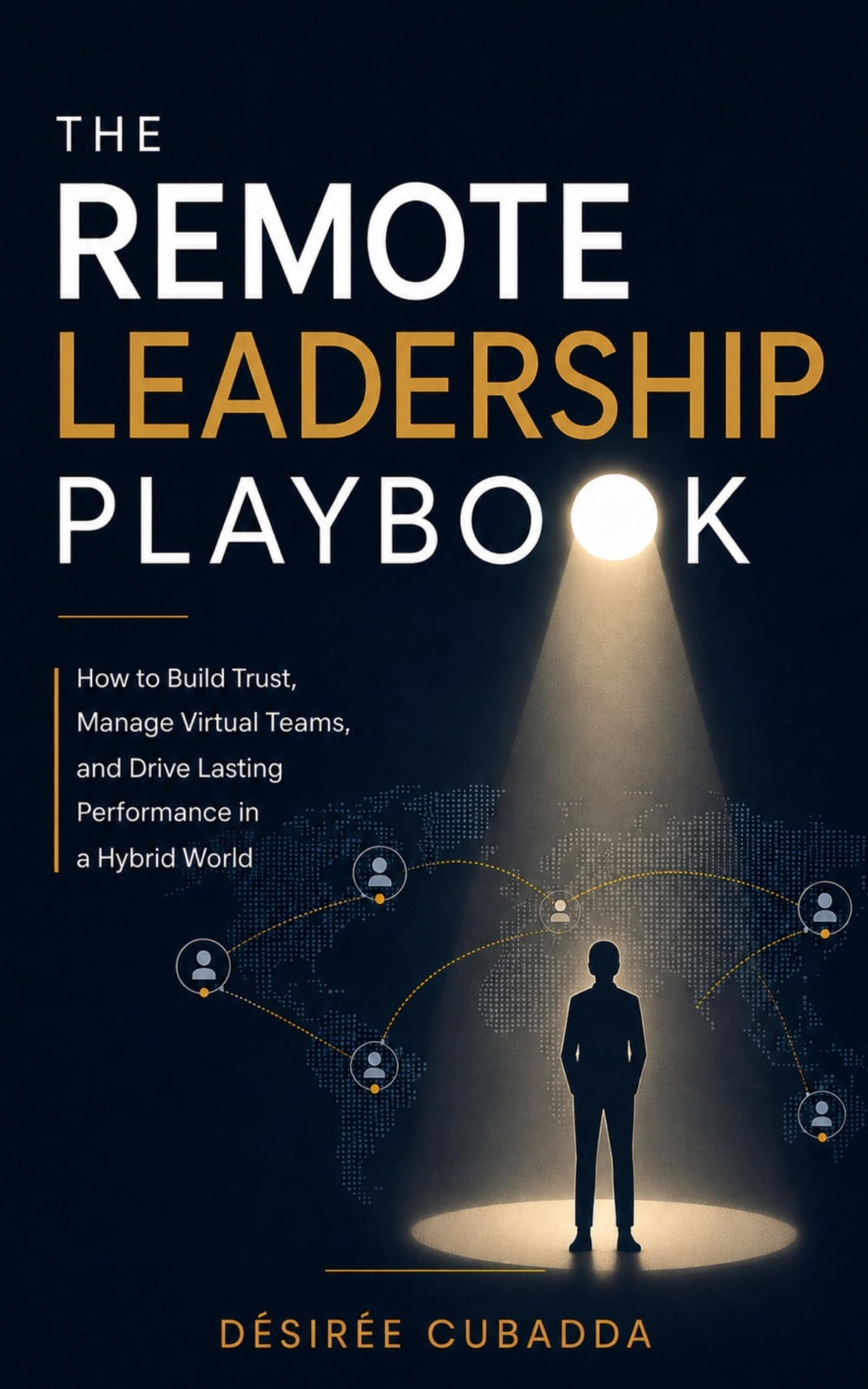
‘The Remote Leadership Playbook’ is the new business management book by Désirée Cubadda. Photo: Désirée Cubadda, used with permission.

Book Review: The Remote Leadership Playbook

How to Build Trust, Manage Virtual Teams, and Drive Lasting Performance in a Hybrid World

By Désirée Cubadda

Synopsis

It’s undeniable: the workplace has changed, and leadership has had to change with it. Remote and hybrid work are no longer temporary arrangements, they are part of how modern teams operate. Yet, many leaders still rely on management practices designed for a world where people shared an office, communication happened face-to-face, and performance was easy to see. (Amazon, 2026)

At a distance, those practices break down:

  • Messages get misread.
  • Workloads become invisible.
  • Quiet team members become hard to read.

Leaders often struggle with how much to check in, how much autonomy to give, and how to track performance without slipping into micromanagement. The challenge isn’t just managing work remotely; it’s learning how to lead effectively when physical presence can no longer substitute for trust, clarity, and accountability.

The Remote Leadership Playbook is a practical, evidence-based guide to doing just that. At its center is the Future-Ready Leadership™ Model, built around three essential pillars: Trust, Autonomy, and Agility. It addresses the real friction of leading at a distance: misread communication, uneven visibility, weakened connection, and the tension between freedom and accountability.


📖Get your copy of The Remote Leadership Playbook today!


Review

The Remote Leadership Playbook tackles one of the biggest challenges facing today’s workplace: how to lead effectively when your team isn’t sitting in the same room. It provides actionable tools to navigate the delicate trust-control paradox without resorting to digital surveillance, while giving employees the freedom to do their best work.

Key Themes and Topics

  • Sustainable Performance: Shifting the focus from tracking hours to managing team energy to prevent burnout.
  • Structured Freedom: Giving employees real autonomy while establishing the structural clarity needed to stay on track.
  • Distributed Accountability: Strengthening performance and ownership without relying on constant, invasive oversight.
  • Global Collaboration: Maintaining engagement, connection, and growth across hybrid and globally dispersed teams through intentional feedback and coaching.

Book Structure & Contents

The book is organized into three core parts, each concluding with an actionable “Playbook” section featuring real-life scenarios and checklists:

  • Part I: Trust – The Relational Foundation
    • Chapter 1: Trust First: Leading Without the Safety of Visibility
    • Chapter 2: The Trust-Control Paradox: Leading Without Overreach or Absence
    • Chapter 3: Clarity as a Signal: Communicating the Why at Distance
    • Chapter 4: Human at a Distance: Empathy, Presence, and Psychological Safety
  • Part II: Autonomy – The Structural Foundation
    • Chapter 5: Structure Creates Freedom: Defining Roles, Goals, and Rhythm
    • Chapter 6: Growth Without Oversight: Feedback and Coaching for Autonomous Teams
    • Chapter 7: From Monitoring to Meaning: Using Control Systems the Right Way
  • Part III: Agility – The Learning Foundation
    • Chapter 8: Leading Across Difference: Culture, Bias, and Adaptive Thinking
    • Chapter 9: The New Stability: Empowerment and Continuous Learning
    • Chapter 10: Sustaining Performance: Designing Work That Lasts

Standout Highlights

  • Chapter 3 (Clarity & Communication): Explains how leaders can use communication to make trust visible. As the book notes:

“The goal is to help you design communication so that people know where they stand, why decisions are made, and how they can contribute without having to guess.”

  • Chapter 4 (The Human Side): Emphasizes empathy and presence. Without in-person cues, assumptions spread faster, making emotional intelligence critical to keeping teams connected.
  • Chapter 8 (Culture & Bias): Examines how workplace bias influences leadership. It notes that the most dominant communication style often sets the tone, not because it’s more effective, but because it’s the most visible.

Readability and Format

The language is clear and free of complicated business jargon. Each chapter ends with a Key Takeaways summary section with bullet points for easy reading, making it a convenient reference guide you can return to frequently.

Final Verdict

Cubadda emphasizes managing energy rather than simply tracking time, recognizing that preventing burnout is essential to long-term productivity. The Remote Leadership Playbook makes a compelling case that physical presence was never the point of great leadership; performance and clarity were.

For anyone navigating the evolving world of remote or hybrid work, this is a sharp and practical guide to leading with confidence, no matter where your team logs on.

“In virtual environments, teams rarely expect leaders to have all the answers. They expect steadiness. When leadership behaviour remains recognisable in both calm and crisis, trust deepens.”

Rating: 4 out of 5.

** Thank you to Désirée Cubadda for the gifted copy for review consideration. I haven’t been compensated for this review and all views and opinions expressed are my own.


About The Author

Désirée Cubadda is an MBA graduate, leadership researcher, and international business leader with more than 15 years of experience leading diverse teams across industries and cultures.

Combining academic research with real-world leadership experience, she developed the Future-Ready Leadership™ Model to help leaders build trust, create clarity, and sustain high performance across distance.

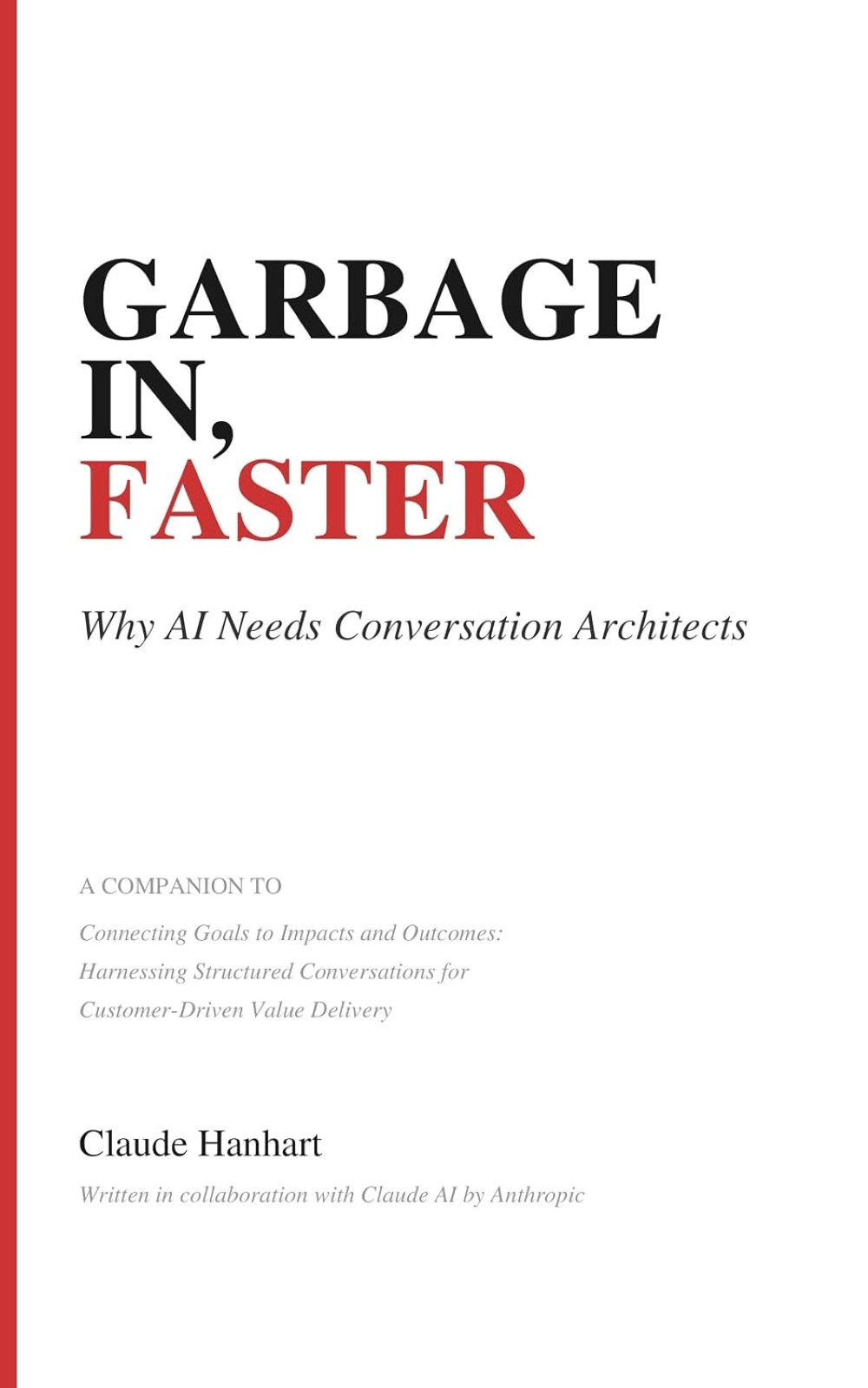
What Is a Conversation Architect? The Critical New Role in the Age of AI

‘Garbage In, Faster’ is a companion to ‘Connecting Goals to Impacts and Outcomes.’ Photo: Amazon

Book Spotlight: Garbage In, Faster: Why AI Needs Conversation Architects

By Claude Hanhart

Synopsis: The Alignment Paradox

“AI doesn’t remove the need for human alignment. It amplifies it.”

From the co-author of the #1 Amazon Kindle Bestseller Connecting Goals to Impacts and Outcomes comes a provocative companion: a book exploring why AI makes human conversation skills more essential than ever. (Amazon, 2026)

Across industries, organizations rushed to lay off Scrum Masters and Agile Coaches, only to immediately adopt AI. They eliminated the very people responsible for creating organizational alignment and bought a technology that makes alignment more critical than ever.

The result? Garbage in, faster.

Fascinatingly, Garbage In, Faster was written in collaboration with Anthropic’s Claude AI, with the entire manuscript generated in under 60 seconds. However, those 60 seconds only worked because of the hours of structured conversation that preceded them and the twenty years of expertise behind those conversations. In short: the process of writing this book proved its thesis.

What You’ll Learn

  • The Diagnosis: Why “agile is dead” is the wrong conclusion, and what actually failed.
  • Communication Debt: The invisible liability quietly destroying your organization.
  • The AI Multiplier: Why AI multiplies clarity and confusion equally and how you choose which one wins.
  • Syntax & Infrastructure: How VERB + NOUN syntax creates infrastructure for both humans and AI.
  • Context Engineering: Why “context engineering” is just Structured Conversations by another name.
  • The Unautomatable: The five conversations AI can never have for you.
  • The New Role: How to become a Conversation Architect, the role organizations need most right now.
  • Actionable Steps: Five conversations you can have on Monday morning using no new tools.

Who This Book Is For

  • Scrum Masters and Agile Coaches wondering what comes next in their careers.
  • Product Managers whose AI tools produce beautiful, meaningless artifacts.
  • Executives who invested in AI but aren’t seeing the promised results.
  • Anyone who suspects that better conversations might actually be the answer.

Note: This is a companion to Connecting Goals to Impacts and Outcomes: Harnessing Structured Conversations for Customer-Driven Value Delivery. While that book provides the complete toolkit, this one is the vital argument for why that toolkit is now existential.

Structure the Conversation. Deliver the Outcome.


About the Author

Claude Hanhart is a Product Strategist and Agile Coach with over 10 years of leadership experience driving groundbreaking product strategies and agile transformations. His approach centers on fostering innovation rooted in business objectives, customer experience, and market leadership using tools like Generative AI, OKRs, and Behavior-Driven Development (BDD).

Claude brings a uniquely interdisciplinary perspective to modern product challenges, holding an MA in Ancient Near Eastern Archaeology and Languages from the University of Berne in Switzerland and an MA in Geography from the University of Minnesota. Multilingual in German, Swiss German, and French, he thrives in international collaborations.

Structured Conversations represents Claude’s commitment to bridging strategic thinking with practical implementation. Currently based in New Jersey with his wife, Claude finds that their three energetic dogs serve as daily reminders of the importance of clear communication and patient guidance, principles that translate beautifully into his professional coaching work.

Are you leveraging AI to speed up your work, or are you just accelerating the chaos?

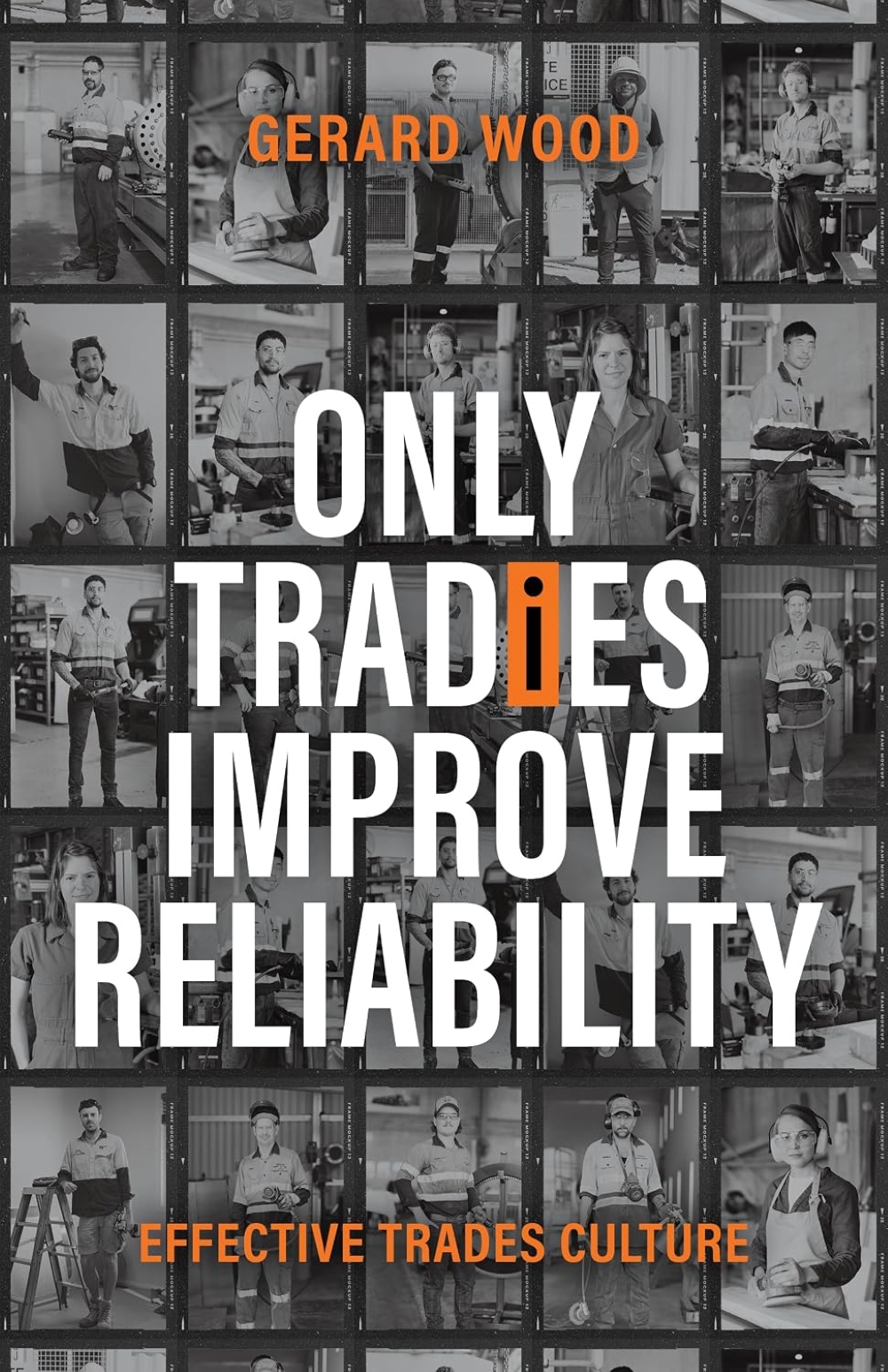
Building a Reliability Culture in the Trades: A Guide by Gerard Wood

‘Only Tradies Improve Reliability’ is Gerard Wood’s new book on effective trades culture. Photo: Amazon

Book Spotlight: Only Tradies Improve Reliability – Effective Trades Culture

By Gerard Wood

In every workshop and on every job site, one truth determines whether equipment thrives or fails: reliability is built by tradies who take pride in their work. But in too many workplaces, that pride is buried under weak culture, rushed decisions, and invisible standards that slowly erode both performance and job satisfaction. (Amazon, 2026)

In Only Tradies Improve Reliability, Gerard Wood, former tradie, maintenance leader, and author of Simplifying Mining Maintenance, reveals the practical, culture-driven routines that transform ordinary maintenance teams into reliability powerhouses. Drawing on four decades of real-world experience, he shows leaders and tradies how to build a culture where quality becomes visible, accountability becomes natural, and reliability improves faster than any technical program could.

What You’ll Discover Inside

  • Spotting the Invisible: Why most failures aren’t caused by tradies who “don’t know” or “don’t care,” but by tradies operating in a culture where they “don’t see,” and how to fix it permanently through simple routines that sharpen the eye for quality.
  • The Leader’s Role: How leaders create the culture, and why no reliability strategy works unless the tradies executing it feel ownership, pride, and trust.
  • Empowering the Trades: How tradies can dramatically improve their satisfaction and impact, even in tough workplaces, by focusing on quality, feedback, and craftsmanship.
  • The Power of Proactive Care: Why proactive maintenance is always cheaper, easier, and more fulfilling than the chaos caused by allowing small defects to become large breakdowns.

Only Tradies Improve Reliability is more than a maintenance book. It’s a blueprint for restoring respect, pride, and craftsmanship in the trades, and for building workplaces where reliability improves quickly, costs fall naturally, and people genuinely want to stay.

Ready to transform your job site’s culture and performance? Grab your copy of Only Tradies Improve Reliability today.


About the Author

During his engineering career, Gerard Wood became passionate about two things: practical asset management and quality work by tradies. After 40 years in maintenance, starting as a tradie, leading asset management across entire businesses, and helping companies sustainably improve reliability, he has seen firsthand what really drives performance. Spoiler alert: it’s not reports, dashboards, or meetings. It’s skilled people doing the right work, the right way. That’s the engine room of reliability.

Through decades of helping sites lift their game, Gerard came to a simple realization: nothing improves reliability faster than quality trades work backed by practical, no-nonsense maintenance leadership. That is the heartbeat of his coaching and his books, Simplifying Mining Maintenance and Only Tradies Improve Reliability. He keeps it sharp, straight-talking, and always shares a few laughs along the way.

Gerard’s mission for this book is ambitious: to positively impact 1 million tradies, helping them gain greater job satisfaction, feel proud to be part of a successful team, and drive better business performance. Realizing that consulting alone has a limited reach, he turned to media, books, and online platforms to share his 40 years of hard-earned experience with a global audience.


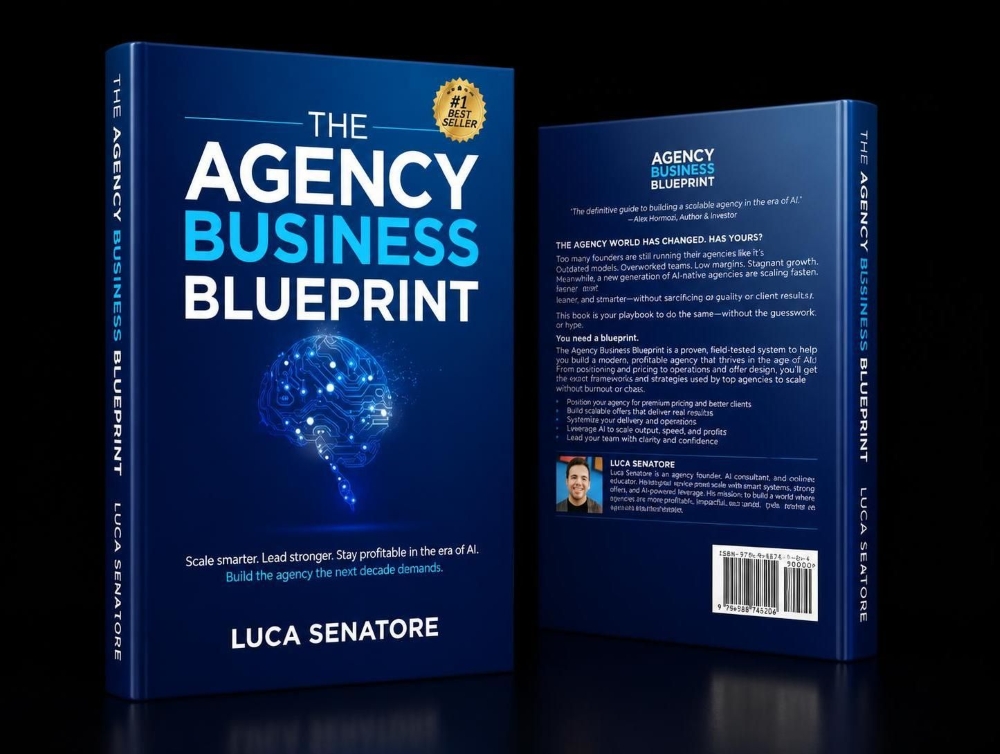
‘The Agency Business Blueprint’ by Luca Senatore

‘The Agency Business Blueprint’ is the new book by Luca Senatore on building a profitable agency in the age of AI. Photo: Luca Senatore.

In the age of artificial intelligence, business leadership books have shifted dramatically from traditional management theories to agile frameworks for human-machine collaboration. Modern executives can’t on gut instinct alone or historical data; they must navigate rapid technological disruption and shifting workforce dynamics.

The most impactful books nowadays focus on how leaders can harness AI not just to automate tasks, but to redesign business models and scale smarter. Ultimately, they emphasize that the future belongs to leaders who combine technical fluency with emotional intelligence, turning AI integration into a sustainable competitive advantage.

Today’s book spotlight is by Luca Senatore.


Book Spotlight: The Agency Business Blueprint

Scale smarter. Lead stronger. Stay profitable in the era of AI. Build the agency the next decade demands.

By Luca Senatore

The agency world has changed — permanently.

What worked even five years ago is no longer enough. Margins are tighter. Clients are more demanding. AI is reshaping every service line. And the next 12–24 months will determine whether your agency grows, plateaus, or quietly disappears. (Amazon, 2026)

In The Agency Business Blueprint, agency leader and strategist Luca Senatore delivers a practical, experience-led field guide for building agencies that don’t just survive change, but use it as a competitive advantage.

This is not a book of hacks, trends, or theory. It’s a blueprint built from two decades of real-world experience: building and exiting agencies, leading teams at scale, working inside Google, and coaching hundreds of agency founders across global markets.

Whether you’re running a boutique agency or leading an established team, this book shows you how to build clarity, leadership, and commercial strength in a world defined by uncertainty and AI-driven disruption.

What’s Inside:

  • How to build an agency designed for long-term relevance, not short-term wins
  • Why clarity, positioning, and leadership matter more than tactics
  • How to scale profitably in uncertain markets without burning out your team
  • How AI should power growth, differentiation, and margins, not just save time
  • How modern agencies win business, retain clients, and grow sustainably
  • How to move from “service provider” to trusted business growth partner

This book is structured around three essential phases — Build, Grow, and Scale — giving you a clear roadmap from foundation to future-proofing.

If you want an agency your team is proud of, your clients trust, and your future self thanks you for building, this book is your starting point.

The agency of the future isn’t louder.

It’s clearer. Stronger. Smarter.


About the Author

LUCA SENATORE is a former CEO of an award-winning UK-based agency, the founder of SAM (Secret Agency Mastermind), and a Google leader. Over two decades, Luca has built companies, coached founders, and helped leaders scale with clarity in fast-changing markets.

Outside of the business world, Luca is a Brazilian Jiu-Jitsu (BJJ) and former mixed martial arts (MMA) athlete. He started a successful martial arts academy, which is now run by two of the best BJJ practitioners and multi-time world champion instructors.

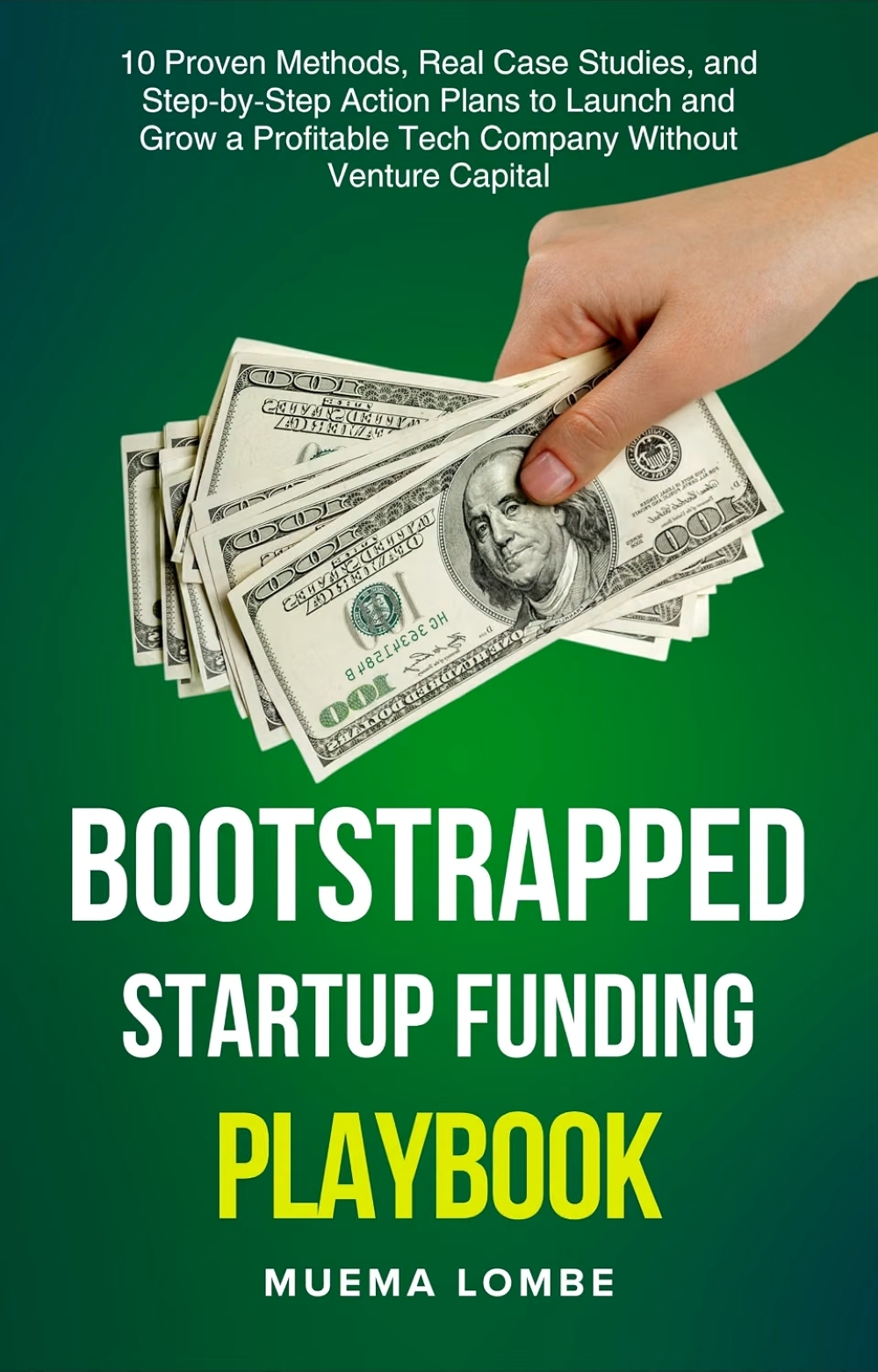
‘Bootstrapped Startup Funding Playbook’: How to Build a Tech Company Without VC

‘Bootstrapped Startup Funding Playbook’ is the new book by Muema Lombe. Photo: Amazon

Book Spotlight: Bootstrapped Startup Funding Playbook 10+ Proven Methods, Real Case Studies, and Step-by-Step Action Plans to Launch and Grow a Profitable Tech Company Without Venture Capital By Muema Lombe

What if you could build a serious tech company, generating millions in revenue and life-changing outcomes, without begging investors, burning out, or gambling your future on a single funding round?

Bootstrapped Startup Funding Playbook is a practical, founder-friendly guide to building and scaling a tech startup without relying on venture capital. Instead of theory, it gives you real methods, real examples, and a step-by-step roadmap drawn from how iconic companies actually did it. (Amazon, 2026)

10 Concrete Bootstrapping Methods Inside

Each chapter is built around real companies and decisions, not vague platitudes, so you see exactly how founders used these methods in the wild, what worked, what nearly killed them, and what you can copy (or avoid):

  • Customer-Funded Growth: Reinvesting revenue to scale organically.
  • Consulting-Funded Product: Using service work to bankroll product development.
  • Freemium & Product-Led Growth: Driving acquisition directly through the product.
  • Friends & Family Capital (Done Right): Raising early funds without destroying relationships.
  • Customer Prepayments & Annual Contracts: Securing upfront cash flow before building.
  • Personal Credit & Small Loans: Managing calculated debt responsibly.
  • Side Jobs & Part-Time Entrepreneurship: Derisking the launch phase while keeping a paycheck.
  • Startup Grants: Accessing non-dilutive capital like NSF/SBIR.
  • Lean Operations & Extreme Cost Discipline: Maximizing runway with minimal burn.
  • Crowdfunding & Pre-Order Campaigns: Validating demand before production.

No hype. No “just work harder” nonsense. Just honest trade-offs, battle-tested strategies, and an operating manual you can implement while holding down a job, supporting a family, or running an existing business.

What You’ll Learn

  • 10 Major Bootstrapping Strategies: Clear frameworks on when each approach actually makes sense.
  • Layered Funding Models: How to combine methods, like side jobs, consulting, customer prepayments, and lean ops, into a coherent, low-risk plan.
  • Origin Case Studies: How iconic companies quietly bootstrapped their earliest, riskiest phases before raising rounds or exiting for billions.
  • Risk Mitigation: Practical ways to manage personal risk, protect relationships, and avoid common financial traps.
  • The 30/60/90-Day Execution Plan: A step-by-step roadmap to get from zero to paying users and your first taste of customer-funded growth.

Who Should Read This Book?

  • SaaS & Dev-Tools Founders: Build software on your own terms without VC dependency.
  • Solo Founders & Indie Hackers: Follow a structured, serious path to profitability.
  • Agency Owners & Consultants: Productize your service and spin out scalable software.
  • Deep-Tech & Hardware Founders: Secure non-dilutive, customer-driven funding routes.
  • Undecided Entrepreneurs: Get a clear, nuanced answer when weighing “bootstrap vs. raise.”

About the Author

Muema Lombe is a tech founder and bootstrapping expert who has helped multiple startups launch and scale without traditional venture capital. Through real-world experience and in-depth research, Muema created this practical playbook so other founders can build serious companies on their own terms.


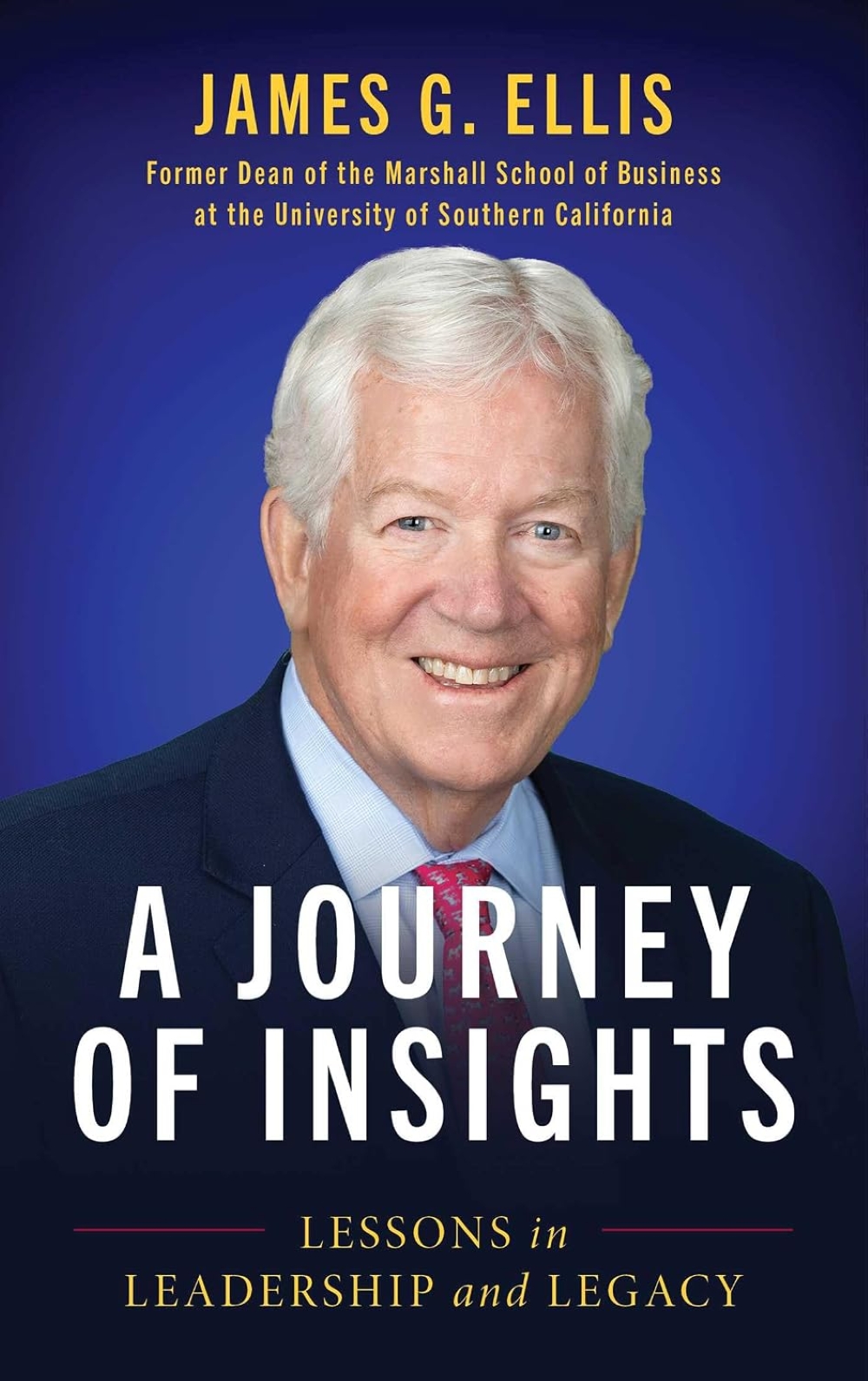
‘A Journey of Insights’ Review: Key Leadership Lessons from Former USC Dean James G. Ellis

‘A Journey of Insights’ is the new book by James G. Ellis. Photo: Simon & Schuster

Book Review: A Journey of Insights: Lessons in Leadership and Legacy

By James G. Ellis

Synopsis

A Journey of Insights draws upon the lessons James G. Ellis learned while a teacher and dean of USC’s Marshall School of Business, as well as those he absorbed during his preceding years at Harvard Business School and in executive leadership. In plotting a roadmap for a successful business life, his stories show illustratively how business schools and their students can prosper. At the core of his message is a central theme: listening to the voices around you throughout life is the key to success. In essence, ears can speak louder than voices. (Simon & Schuster, 2026)

Contents

  • Chapter 1: A Dean’s Story: The Cold Car Hood
  • Chapter 2: Finding Your Wave
  • Chapter 3: The Bill Gates Conundrum: Is Business Education Worth It?
  • Chapter 4: Relationships and Mentors: The Power of Connection
  • Chapter 5: Plotting Your Own Map: Know Thyself
  • Chapter 6: Preparation and Perseverance
  • Chapter 7: Don’t Sell Sales Short
  • Chapter 8: Risk Management and Disappointment
  • Chapter 9: The Fifth Decade: Giving Back

Review

What if one of the most important skills for success isn’t knowing what to say, but knowing when to listen? That simple idea is at the heart of this collection of lessons drawn from a lifetime in business, education, and leadership. Ellis doesn’t offer a rigid formula for success; instead, he shares stories and observations that encourage readers to think differently about their careers and lives.

He weaves in personal stories from people he met along the way and the takeaways from those encounters. For example, Matthew Guglielmo, who started out as a furniture buyer with a Philadelphia department store chain, taught him how to prepare for negotiations by knowing what you want and how to ask for it. Simply put, if you don’t ask for something, you won’t get it.

Of all the notable people he met throughout his life, the one who stands out most is Senator John F. Kennedy, whom Ellis accidentally bumped into at the San Francisco airport in 1959 when he was just 12 years old. That day, he learned the importance of taking responsibility for your actions and the power of a sincere apology. It became a guiding principle for his life: we can learn life lessons, big and small, from everyone around us.

Key topics explored in the book:

  • Leadership & Mentorship
  • Relationships & Connection
  • Preparation & Perseverance
  • Risk-taking & Overcoming Disappointment
  • The Art of Sales
  • The Importance of Giving Back

Each chapter concludes with reflection questions, allowing readers to apply these concepts directly to their own personal and professional journeys.

Ellis repeatedly returns to the value of learning from those around us. Sometimes the best advice isn’t delivered in a formal lecture or board meeting, it comes from simply paying attention. The book serves as a great reminder that success is rarely achieved alone: listening, staying curious, recognizing opportunities, and learning from both successes and failures shape a much richer journey.

Key Chapter Highlights

  • Chapter 5: Focuses on the integrity of your word. Ellis learned that protecting your reputation matters throughout your entire life. He also stresses putting yourself in the shoes of those who work around you, recommending that early-career professionals learn a business from the ground up to truly understand every role.
  • Chapter 8: Highlights the necessity of risk-taking and personal accountability. Ellis urges readers to own their actions while giving full credit to others for their accomplishments.

“Sometimes you must take risks to take care of those around you. In doing so, stay humble, as you are one of many.”

Ellis also challenges readers to consider whether traditional business education truly prepares people for the realities of leadership and life. Avoiding generic corporate jargon, he uses a smooth blend of practical business wisdom and personal reflection to deliver his message.

Overall, A Journey of Insights is a thoughtful, engaging reflection on what it takes to build a successful career and a meaningful life. Recommended for students, entrepreneurs, business professionals, and anyone seeking practical wisdom. It’s never too late to learn something new—and if you’re willing to listen, this book has plenty to say.

“Preparation is what gets you ready to do a great job. Perseverance is what you need to see a job through to completion… Each time you leave an achievable goal unachieved, it becomes easier to give up the next time you’re faced with a challenge.”

Rating: 4 out of 5.

Get your copy of A Journey of Insights today!


About the Author

James G. Ellis served as dean of the Marshall School of Business at the University of Southern California from April 2007 until June 2019, overseeing the education and well-being of over 5,700 graduate and undergraduate students. He held a full-time tenured appointment as Professor of Marketing starting in 1997, retiring in July 2021.

Holding an MBA from Harvard Business School and a BBA from the University of New Mexico, Ellis held leadership roles across the corporate world, including President/CEO of Porsche Design and CEO of Port O’Call Pasadena, along with ownership in six other companies. He began his career with Broadway Department Stores in Los Angeles.


** Thank you to Fauzia Burke and FSB Associates for the gifted ARC for review consideration. I haven’t been compensated for this review and all views and opinions expressed are my own.