Savor the Flavor: Twang’s Perfect Dry January Cocktail Recipe

Enjoy Dry January with Twang’s Miche-Nada Recipe. Photo: Twang, used with permission.

Dry January has gained popularity as a way for individuals to reduce their alcohol consumption, often for health reasons. By committing to a month of sobriety, participants can experience immediate benefits, such as improved sleep, increased energy, and better hydration. It provides an opportunity to reset habits, assess personal drinking patterns, and evaluate how alcohol affects overall well-being. Many people find the challenge empowering, with the support of a growing community engaging in the same commitment. Dry January also offers a break from the pressures of social drinking, promoting mindfulness and a healthier approach to alcohol consumption in the long term.

With the Dry January movement gaining popularity on social media, I want to share a refreshing, non-alcoholic recipe from Twang, a sensational Tex-Mex-inspired, family-driven company infamous for its bold blends of flavored salts, sugars, and spices since 1986. (Twang, 2025)

To celebrate Dry January, Twang offers a twist on the classic Michelada —the Miche-Nada. Made with Twang’s Reserve Michelada Mix in flavors like classic, spicy, or pickle; this drink packs a punch with all-natural ingredients, including real lime juice, ancho chiles, and organic Worcestershire sauce. For the ultimate experience, top it off with Twang’s zesty Drink Rimmers in varieties like chile lime, grapefruit, dill pickle, and more.

The 16oz Michelada Mix is just $7, conveniently packaged for easy shipping, while Drink Rimmers are $5 for 4oz of unbeatable flavor. Twang is available in-store in all 50 states and ships nationwide, ensuring every abstemious friend or family member can easily enjoy.

Twang Miche-Nada

Ingredients:
• Twang Reserve Michelada Cocktail Mix (classic, spicy, or pickle flavors)
• Twang Rimming Salt (chile lime, grapefruit, dill pickle & more flavors)
• Ice
• Sparkling water
• Lime wedge

Directions:

  1. Rim your glass with your choice of Twang’s Rimming Salt
  2. Add some ice to your glass
  3. Add your choice of Twang Reserve Michelada Mix
  4. Add sparkling water
  5. Garnish with a lime wedge

‘The Serviceberry Way’: Lessons in Self-Discovery and Connection

Learn how the serviceberry can guide you towards growth and gratitude in the new book by Kim Lewitt. Photo: Amazon.

Serviceberry (Amelanchier spp.) is a small deciduous tree or shrub known for its sweet, edible berries. Rich in antioxidants, vitamins A, C, and K, it supports immune health and skin repair. The berries have anti-inflammatory properties, which may help reduce the risk of chronic diseases such as heart disease and diabetes. Additionally, serviceberries are a good source of dietary fiber, aiding digestion and promoting gut health. Native to North America, serviceberry also provides various ecological benefits, attracting pollinators like bees and birds. Its leaves, bark, and roots have been traditionally used for medicinal purposes by indigenous peoples.

“The Serviceberry Way: Gratitude, Growth, and DIY Practices for Everyday Living” is the new book by Kim Lewitt where she writes all about its uses for health and better living.

It is a comprehensive and enlightening guide to the often-overlooked serviceberry plant. Through this book, Lewitt introduces readers to the rich history, versatility, and numerous benefits of the serviceberry, making a compelling case for its place in gardens and landscapes.

It is divided into sections that explore the plant’s history, from its use by Indigenous peoples for food and medicine, to its growing popularity in modern gardening. Lewitt provides an in-depth look at how to cultivate serviceberries, offering practical advice on planting, caring for, and harvesting this hardy shrub. The author emphasizes the plant’s adaptability to various climates and its ability to thrive in a wide range of conditions, making it a sustainable choice for gardeners.

There are two major parts:

Part One: Lessons from Nature
Includes sections such as The Hidden Life of Plants, The Wisdom of Animals, and The Indigenous Perspective: Connection and Community.

Part Two: DIY Practices
Includes sections such as Preparing Your Garden for Serviceberries, Pest and Disease Management, and Cooking with Serviceberries: Recipes and Ideas.

Highlights include:

Part One: Lessons from Nature
Lessons from the Serviceberry: Adaptability and Resilience – it explains the characteristics of the serviceberry and the lessons it teaches us, like Thriving in Diverse Environments and Rapid Recovery and Renewal.

Part Two: DIY Practices
Crafting with Serviceberries and Other Uses – it shares uses for serviceberries beyond the usual jams and pies, such as making natural dyes and other craft ideas.

A big plus for me is the celebration of the many uses of the plant. Lewitt covers everything from incorporating the berries into delicious jams and pies to using the tree’s wood for crafting. The book serves as both a practical gardening resource and a celebration of the serviceberry’s cultural significance.

Overall, for plant enthusiasts, gardeners, and anyone interested in sustainable living, “The Serviceberry Way” is an invaluable resource that highlights the enduring charm and utility of this underrated plant.

“Adaptability is about finding ways to thrive in less-than-ideal circumstances. Just as the serviceberry makes the most of the resources it has, we can learn to be flexible, assess our surroundings, and use what’s available to us creatively and efficiently.”

*The author was contacted for an honest review of this book. The views and opinions expressed here belong solely to her.

Rating: 5 out of 5.

Book of the week: ‘Fitness Planner: for beginners’ by Stefan Bercea

‘Fitness Planner: for beginners’ is an essential guide to reaching your fitness goals. Photo: Amazon

The year is winding down and it is time to start making resolutions for the new year. If your goal for the coming year is to get in shape and live a healthier life, it is always best to consider where you are in your journey, what your goals are, and how you want to achieve them. Fitness planners are an excellent way to do this. One such planner is Stefan Bercea’s “Fitness Planner: for beginners.” It is designed to give support and guidance for three types of people: beginners, those who want to return to the gym, and people who are recovering from an accident and planning to return to the gym soon. Start the year right and pick up your copy today; it is available on Amazon UK and Amazon US.

Stefan Bercea has a Master’s degree in Criminology, specializing in Crime and Victimization which brings a unique perspective to his writing. The threads of his academic journey are woven into the narratives, adding depth and insight to the stories he shares. Beyond the pages, his driving force is a genuine passion for helping others. Each tale is a vessel for empathy, understanding, and a shared journey through the tapestry of human experiences. His books are a reflection of his diverse interests—whether it’s exploring the realms of comics, delving into the world of sports, pondering the intricacies of philosophy, or unraveling social sciences. His new book “Fitness Planner: for beginners” offers support and guidance for beginners, people wanting to return to training in the gym, and people recovering from an accident.” (Stefan Bercea, 2023)

“Fitness Planner: for beginners” – This planner focuses specifically on the motivation/reason for which an individual should train and defines it as a goal to be achieved. It then progresses into offering information and recommendations on how training should be approached, depending on the chosen goal, by giving examples and beginner training routines. The planner then discusses the idea of “dieting” and prompts readers towards a healthy challenge encouraging them to adopt a lifestyle and abandon the idea of dieting. It then concludes by prompting readers to create a visual representation of their goal, training, and eating lifestyle as a motivational tool for their fitness journey.

If you are looking into starting or restarting your fitness journey and need a little bit of support in organizing it, then this planner will provide you with some serious advice which you should consider through your journey. It includes three beginner workouts and teaches you how to train, even with only one day available from the entire week. It also teaches you to optimize your training sets and repetitions according to your output. This planner offers you a health challenge in order for you to learn about your body and discover a healthy lifestyle.

The main sections are Find Your Motivation, How to Train, and What to Eat.

Find Your Motivation – this section helps you decide what your fitness goals are: building Muscle, being Athletic, or becoming more Powerful; in other words: M.A.P. Of course, you don’t have to choose just one, but you will achieve your goal faster by focusing on just one. Everyone’s journey is unique and should be personalized. The author does an excellent job of giving detailed steps to help readers narrow down what their goal should be.

How to Train –  This section focuses on finding a training split, the right amount of sets and repetitions for each exercise, finding the best exercise, and the different types of exercise (arms, legs, abdomen).

What to Eat – Far from dictating specifically what to eat, he proposes that you test yourself by eliminating certain foods to find out what works best for your body. This includes sugar, milk, gluten, and processed foods. His biggest advice is to stay away from fad diets and instead create an eating plan to get the most out of the foods you eat.

At the end, he provides a layout for readers to use as a visual board to create their fitness goal plans. Overall, it may be a small book, but “Fitness Planner: for beginners” is an extremely useful reference guide for optimizing your fitness goals. The best part is that he emphasizes the need to personalize your training plan to suit your needs and according to what works best for your body. It is recommended for readers interested in fitness, exercise, and healthy living.

Rating: 4 out of 5.

Sponsored Post

New book release: ‘Live Longer, Suffer Less’ by Darrell Parrish

‘Live Longer, Suffer Less: The Herbal Guide To Improve Health’ by Darrell Parrish. Photo: Amazon

Darrell Parrish is an author whose three previous books centered around surviving America’s number two worst working occupation: the aggressive car salesman. Before that, he worked at an aircraft manufacturing company that made military and civilian aircraft. He supervised the cleaning of aircraft parts processed in huge chemical tanks and his main assignments was to manage engineering blueprints and develop test procedures to solve plant manufacturing problems regarding chemical processing. These two work assignments impacted his life but the car books turned him into a consumer advocate. Working sixteen years in the Material and Processing department gave him the mental means of discovering how to live longer and suffer less with herbs. He converted an American made coffee warmer into his dry diffuser invention. This enabled him to do a self-wellness DIY book for fellow Americans. The purpose of “Live Longer, Suffer Less: The Herbal Guide To Improve Health” is to allow Do-it-Yourself [DIY] enthusiasts to select herb combinations that collectively render ample “benevolent effects” into the body’s cell communities living in the human. More information and an excerpt of this book is available online. (Darrell Parrish, 2023)

“Live Longer, Suffer Less: The Herbal Guide to Improve Health” – Life is too short, no matter how old you are. Why risk your state of wellness on marketed goods and services pitched in the marketplace? Why not learn how to measure your own healthfulness? In this book, there is a simple test anyone can take. There are currently numerous health books available online. Thousands of herbs are being marketed as possible cures to specific diseases. Yet not one single herb is capable of removing any single infestation, perfectly within the body.

Few people realize the central portion of the body is not the beating heart, but the blood stream itself, which consists of sixty-five thousand miles of smaller vessels called capillaries. Only a few pre-selected herbs can protect the blood system and thereby aid the entire body’s immune system. There are ample cell communities in the body which support the thirty-seven trillions of human single cells. The supreme support to all these cells within the body are the 400 million air sacs called alveoli. Between these two living mediums is the blood system, which effectively moves oxygen and food energies in a cyclic mode — every minute of the human body’s entire life. This book will teach you how to identify the essential oils worth taking long term and how to administer key herbs with a unique dry diffuser. One main thing to remember: select key herbs from leaves, flowers, and stems. You can practice and learn this book’s five learning courses and over time and give yourself and your friends the gift of a longer life.

Sponsored Post


How to master the art of a home cooked meal

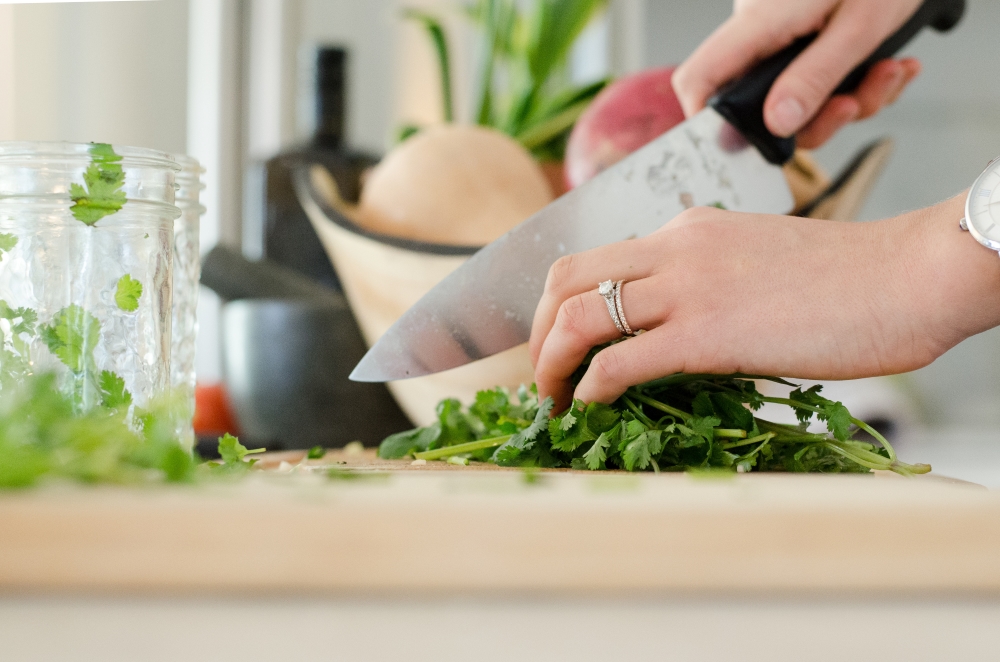
Cooking your meals at home is good for your health and your wallet. Photo: Alyson McPhee, used with permission.

There are so many reasons why cooking your meals at home is a good idea. While ordering takeout is easier, convenient, and often tastes great, it is not good for your health or your wallet. Because of this, more and more people are trying to get into cooking as a hobby and a way to feed themselves.

Unfortunately, cooking is not always easy, especially if you do not know where to start. This is where this article comes into the picture. With this advice, you can save money, improve your health, and learn how to make some delicious meals. 

Saving Money

With the recent rise in the cost of living, everything is expensive. You might reason that takeout is not much more expensive than buying groceries, but this is just a sign that you are buying groceries wrong. 

The first mistake people make is to neglect to write a list. This makes you more likely to forget something you need, so you end up having to go back to the grocery store, where you might pick up a bunch of other groceries. Write a list and plan what you will buy, ideally based on specific recipes. 

Writing a list also prevents you from buying food you do not need. Shopping when you are hungry leads to buying junk food and other unneeded items, which can lead to waste. Pay attention to prices as you buy, specifically the price per weight, which will tell you what provides better value for money.

The Right Recipes

If you are not familiar with cooking, then recipes are your friend. Ideally, you want to start with simple, delicious, and quick recipes so that you can get started on your cooking journey. Consider the nutritional value of the meals you cook as well.

For example, try some delicious brown sugar pork chops. You’ll love how simple yet tasty they are. Because they are packed with flavor, you can pair them with some steamed or sauteed vegetables for a quick, healthy, and easy meal.

Once you build a collection of recipes that you have learned, you naturally get a grasp of the basics of cooking. You learn how to hold and use a knife properly, as well as the best way to brown meat and create a sauce. You also grow more confident in your skills, which allows you to experiment or try more complicated dishes.

Cooking Classes

One way that you can improve your skills and grow in confidence is to find some local cooking classes. These will teach you specific techniques and tips that will boost your cooking ability, and give you some great ideas for meals. 

Cooking classes are also an excellent way to make new friends and connections. You can find classes geared towards your age group and your peers, or go for a mixed group. You never know who you might meet and what ideas you might pick up.

Learning how to cook is a good way to help yourself grow as a person and pick up some practical skills.

Collaborative Post

Loma de Vida offers social movement classes

lomadevidapic
Loma de Vida Spa & Wellness located at La Cantera Pkwy is now offering social movement classes. Photo: google.com

Loma de Vida Spa & Wellness is a secluded hillside retreat set in the stunning hill country. It offers guests services that are rooted in soulful reflection, joyful celebration, mindful movement and vibrant living. The Fitness and Movement studio has fitness machines, cardio, TRX and more while the Quenche Juicery & Barista Bar serves fresh organic and cold-pressed juices along with protein elixirs and healthy meal options to stimulate the metabolism and enhance internal healing. The spa is open to the public and local residents can purchase a daily spa pass to take advantage of the many resort amenities.

This month there will be a series of movement classes to complement the spa’s experience that focus on complete relaxation while offering holistic, meditative and restorative treatments. These classes will be on Saturdays and Sundays and includes a Happy Hour on Fridays through the month of January. The cost is $20 and includes facility access to salt infused water pools, private garden terraces and big sky views during Friday Happy Hours only. More information is available online. (Loma de Vida, 2016)

Upcoming schedule:
Saturday, January 14, 21 and 28
9a.m. – Vinyasa Yoga
11a.m. – Phitness Phusion
2p.m. – Vinyasa Yoga
4p.m. – Circuit Training
5p.m. – Gentle Restorative Yoga and Meditation

Sunday, January 15, 22 and 29
9a.m. – Vinyasa Yoga
10a.m. – Circuit Training
Noon – Vinyasa Yoga
7p.m. – Integrative Restorative Yoga + Meditation + Nirda

Friday, January 13, 20 and 27
5:30 p.m. – Social Movement Happy Hour that includes choice of class, facility access and one happy hour cocktail/mocktail.
5:30 p.m. – Social Yoga or Happy Hour Burn
6:30 p.m. – Social Hour and use of Solarium, Infinity Pools and Gathering Place

Loma de Vida Spa & Wellness
16641 La Cantera Pkwy
San Antonio, TX 78256
(210) 558-2252