‘The Vanishing Family’ Review: Robert Kolker’s Powerful Story of FTD and Hope

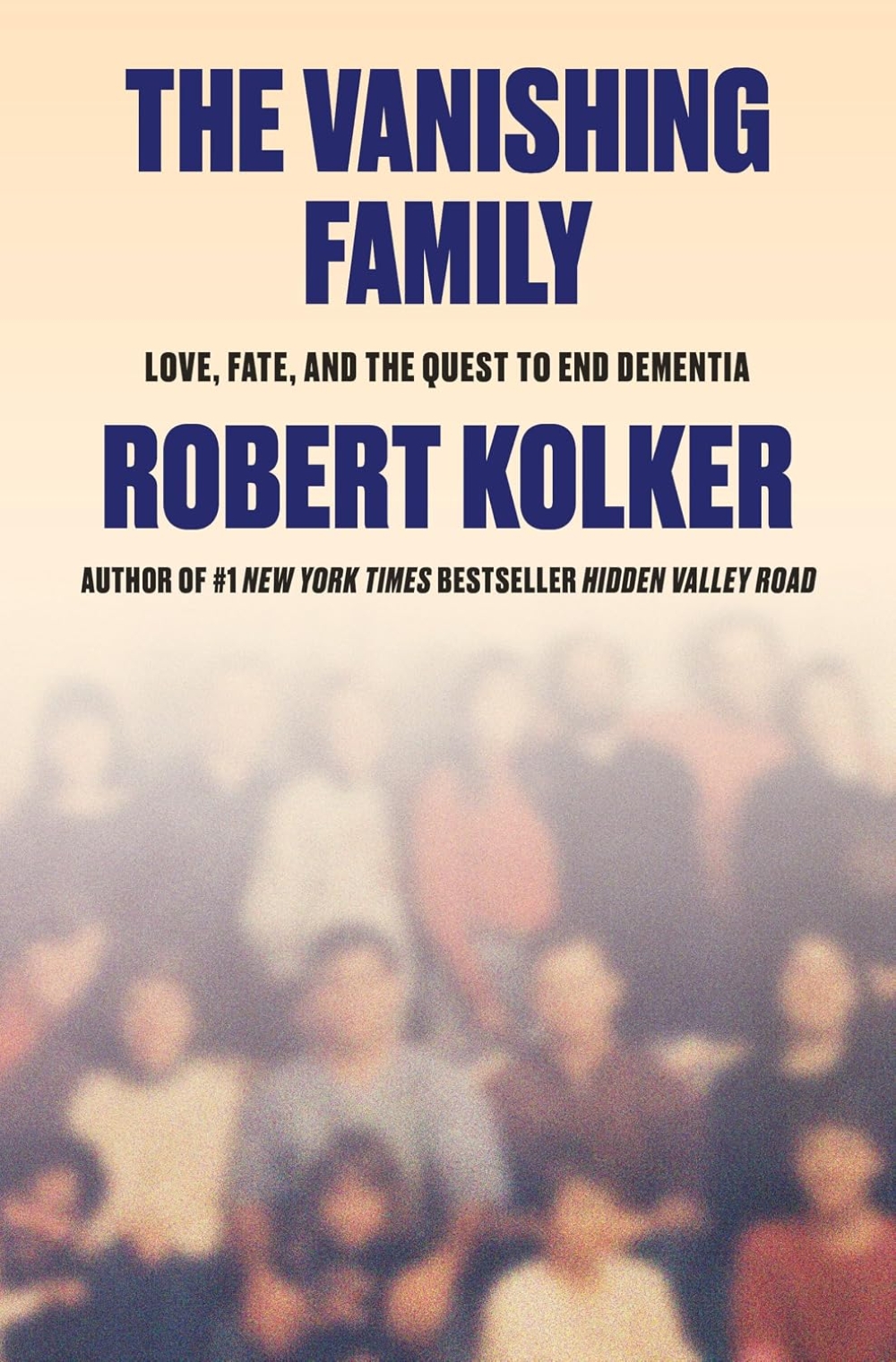
‘The Vanishing Family’ by Robert Kolker is a moving look at genetics, dementia, and identity. Photo: Penguin Random House

Book Review: The Vanishing Family: Love, Fate, and the Quest to End Dementia

Author: Robert Kolker

Genre: Nonfiction / Narrative Journalism / Science

The Story

The narrative opens with a tense prologue: after years of delaying testing, 41-year-old Barb receives a lab letter that will confirm whether she carries a devastating genetic mutation. She’s currently the same age her mother, Jean, was when symptoms first emerged.

Oliver and Jean lived in Pleasant Hills, Pennsylvania, raising nine children: Kathy, Christy, Sue, Dutch, Mary, Peggy, Scott, Jenny, and Barb. As the older siblings moved out to start their adult lives, Barb remained at home to witness their vibrant mother fall under a dark, gothic spell, transforming into someone withdrawn, neglectful, and entirely unrecognizable.

A Cruel Genetic Mutation

The family carries a rare genetic mutation (V337M) that causes frontotemporal dementia (FTD) with a cruel twist. Striking early, often in a person’s early forties, it causes formerly devoted parents and high-achieving executives to:

  • Lose their jobs unexpectedly
  • Have reckless affairs and take up heavy drinking
  • Shed all social inhibitions and moral responsibility
  • Experience total personality loss, leaving families with strangers

With a 50/50 chance of inheritance, the children face the constant terror of an impending genetic fate.

Alongside this human tragedy, Kolker documents the high-stakes scientific race against neurodegenerative disease. Decades of research into this single family’s rare FTD mutation may ultimately provide the key to preventing and treating all forms of dementia, including Alzheimer’s disease.


Pick up your copy of ‘The Vanishing Family!’


Review

The Vanishing Family unfolds like a heartbreaking psychological thriller as the siblings watch the illness strike one by one: first Christy, then Mary, and beyond. Kolker captures the agonizing tension between love and fear, forcing the family to confront profound questions about predetermined fate, obligation, and identity.

Key Themes Explored

  • Identity and Disintegration: The erosion of character when the brain’s frontal lobe declines.
  • Family Resilience and Devotion: How siblings step up to care for one another despite emotional devastation.
  • Medical Discovery and Hope: The scientific journey to turn a family curse into a cure for millions.

The Science Behind the Story

Beyond the personal narrative, Kolker guides readers through the history of neuroscience:

  • Historical Milestones: From the famous 19th-century case of Phineas Gage, whose altered personality after a brain injury proved that specific brain regions govern behavior, to early diagnostic breakthroughs that established dementia as an organic physical disease rather than a mental defect.
  • The Clinical Battle: A clear overview of genetics, clinical trials, and the decades of frustrating dead ends that have challenged medical researchers.

Chapter Highlights

  • Chapter 10: Barb has been caring for Christy, the first sibling to display symptoms, when Mary arrives unexpectedly. Seeing the exact same behavioral shifts in Mary, Barb realizes with horror that the disease is genetic and that every sibling is at risk.
  • Chapter 11: A deep dive into neuroscience for readers who want the exact mechanics of FTD, Alzheimer’s, and brain pathology.
  • Chapter 20: A crucial breakdown comparing Alzheimer’s and FTD. While Alzheimer’s primarily destroys memory and cognition, FTD attacks emotional processing. Patients lose the ability to recognize their own physiological responses to emotion, causing drastic changes in personality without self-awareness or shame.

“It’s a conclusion with relevance beyond dementia. We most profoundly lose ourselves, it seems, when we can no longer see, feel, or touch the minds and hearts of others.”

Final Thoughts

Overall, The Vanishing Family is a compelling look at family genetics that balances intimate human drama and medical detective work. It’s deeply tragic without ever feeling hopeless, showing how severe illness can reshape a family while highlighting extraordinary resilience.

Kolker never lets complex science obscure the real people at the center of the narrative. For readers who enjoy family sagas, medical mysteries, or popular science, this is an unforgettable read. It serves as a powerful reminder of how much of our identity is tied to memory, personality, and the people who love us, and how hope remains a force even against inherited fate.

“The tragedy is that because some elements of the person are still detectable, the sense of loss is ongoing – like witnessing a living death.”

Rating: 4.5 out of 5.

About The Author

Robert Kolker is a contributing writer at The New York Times Magazine and author of the #1 New York Times bestseller Hidden Valley Road, named an Oprah’s Book Club Pick, a New York Times Book Review Top 10 book of the year, a GQ Best Book of Literary Journalism of the 21st Century, and a Kirkus Reviews Best Nonfiction Book of the Century. His first book was Lost Girls, named a New York Times Notable Book and a Publishers Weekly Best Book of 2013.


** Thank you to Michael Goldsmith and Penguin Random House for the gifted ARC for review consideration. I haven’t been compensated for this review and all views and opinions expressed are my own.

Book Review: ‘Natural Intelligence & the Logic of Consciousness’ by Antonio Damasio

Antonio Damasio explores consciousness and interoception in his new book ‘Natural Intelligence & the Logic of Consciousness.’ Photo: Penguin Random House

Book Review: ‘Natural Intelligence & the Logic of Consciousness’

By Antonio Damasio

Synopsis

Throughout his illustrious, decades-long career, Antonio Damasio has been at the leading edge of science’s enduring quest to unravel the mysteries of the human mind. Now, drawing on a lifetime of groundbreaking research as well as the newest findings of neurobiology, Damasio seeks to move the debate about the origins of consciousness from the world of high-level cognition and abstract reasoning into the wondrous realm of interoception—the human body’s own internal monitoring system.

A probing synthesis of neurobiology, evolutionary science, and philosophy from one of the most notable leaders in his field, Natural Intelligence & the Logic of Consciousness offers readers a scientifically rigorous and profound re-examination of what it means to be alive and aware. (Penguin Random House, 2026)

It will be released on September 15 and is available for pre-order.

Book Contents

  • Beginnings
  • Part I: The Problem of Generating Consciousness and a Sketch of Possible Solutions
  • Part II: Deeper Into the Solution
  • Part III: Now That We Know
  • Part IV: Afterthought

Review

Antonio Damasio’s Natural Intelligence & the Logic of Consciousness is a fascinating exploration of one of humanity’s oldest questions: What gives rise to consciousness? Building on decades of pioneering research in neuroscience, Damasio challenges conventional theories by arguing that consciousness begins not with complex thought or language, but with the body’s internal regulation system, known as interoception.

The book’s central insight is that homeostatic feelings—such as hunger, thirst, pain, comfort, and well-being—form the biological foundation of subjective experience. Rather than treating consciousness as an abstract cognitive achievement, Damasio presents it as an evolutionary solution that helps living organisms survive and thrive. This perspective offers a compelling bridge between neurobiology, philosophy, and evolutionary science.

Beyond explaining the origins of consciousness, Damasio broadens the discussion to examine whether simpler life forms, such as plants and bacteria, exhibit primitive forms of sentience. He also explores how homeostasis influences human culture, politics, religion, and commerce, while thoughtfully considering the promises and limitations of artificial intelligence.

“…there is no guarantee that AI tools will remain as docile servants in the hands of their human owners. The possibility of their gaining independence, even if only momentarily, is certainly a reason for worry.”

His analysis raises important questions about whether machines can truly replicate conscious experience or merely imitate its outward appearance.

Key Chapter Highlights

  • Chapter 9: Examines how feelings developed before words and numbers, and how consciousness developed early to help guide evolution. Even though most homeostatic regulation occurs nonconsciously, some of it remains under our conscious control.
  • Chapter 11: Breaks down the core science behind consciousness—specifically interoception, or the ability to sense, interpret, and integrate signals from inside your body.
  • Chapter 18: Explores the science behind pain and nausea. Damasio explains how nausea serves as another vital bodily alert system designed to prevent damage from ingesting toxic molecules.
  • Chapter 22: Outlines his theories regarding artificial intelligence. Damasio posits that AI is fundamentally neutral to good because it stems from human innovation, but cautions that if the humans behind its creation have malicious intent, the technology will reflect those motives.

Final Verdict

Although the scientific concepts occasionally demand careful reading, Damasio’s arguments remain engaging, logical, and thought-provoking. Readers interested in neuroscience, cognitive science, philosophy of mind, or the future of AI will find this book both intellectually stimulating and deeply rewarding.

Natural Intelligence & the Logic of Consciousness is a profound, accessible examination of the relationship between body, brain, and awareness that challenges readers to rethink the very nature of intelligence. Damasio delivers a compelling argument that feeling is the logic of consciousness. For anyone seeking to understand the deep biological origins of human experience, this is a definite must-read.

“Poets understood, long before neurobiologists ever could, that the glories of passionate love and the sufferings of love gone astray could be legitimately described in physiological terms, even though the physiological details are not exactly the same.”

Rating: 4 out of 5.

About The Author

Antonio Damasio is University Professor, David Dornsife Professor of Neuroscience, Psychology, and Philosophy, and director of the Brain and Creativity Institute at the University of Southern California, Los Angeles. Damasio is a member of the National Academy of Medicine and a fellow of the American Academy of Arts and Sciences as well as the author of Descartes’ Error, The Feeling of What Happens, Looking for Spinoza, Self Comes to Mind, The Strange Order of Things, and Feeling & Knowing, all of which have been published in translation and are taught in universities throughout the world.


** Thanks to Michael Goldsmith and Penguin Random House for the gifted ARC for review consideration. I haven’t been compensated for this review and all views and opinions expressed are my own.

Brains, Humor, and Science: A Fun and Illustrated Journey with ‘Out of Your Mind’

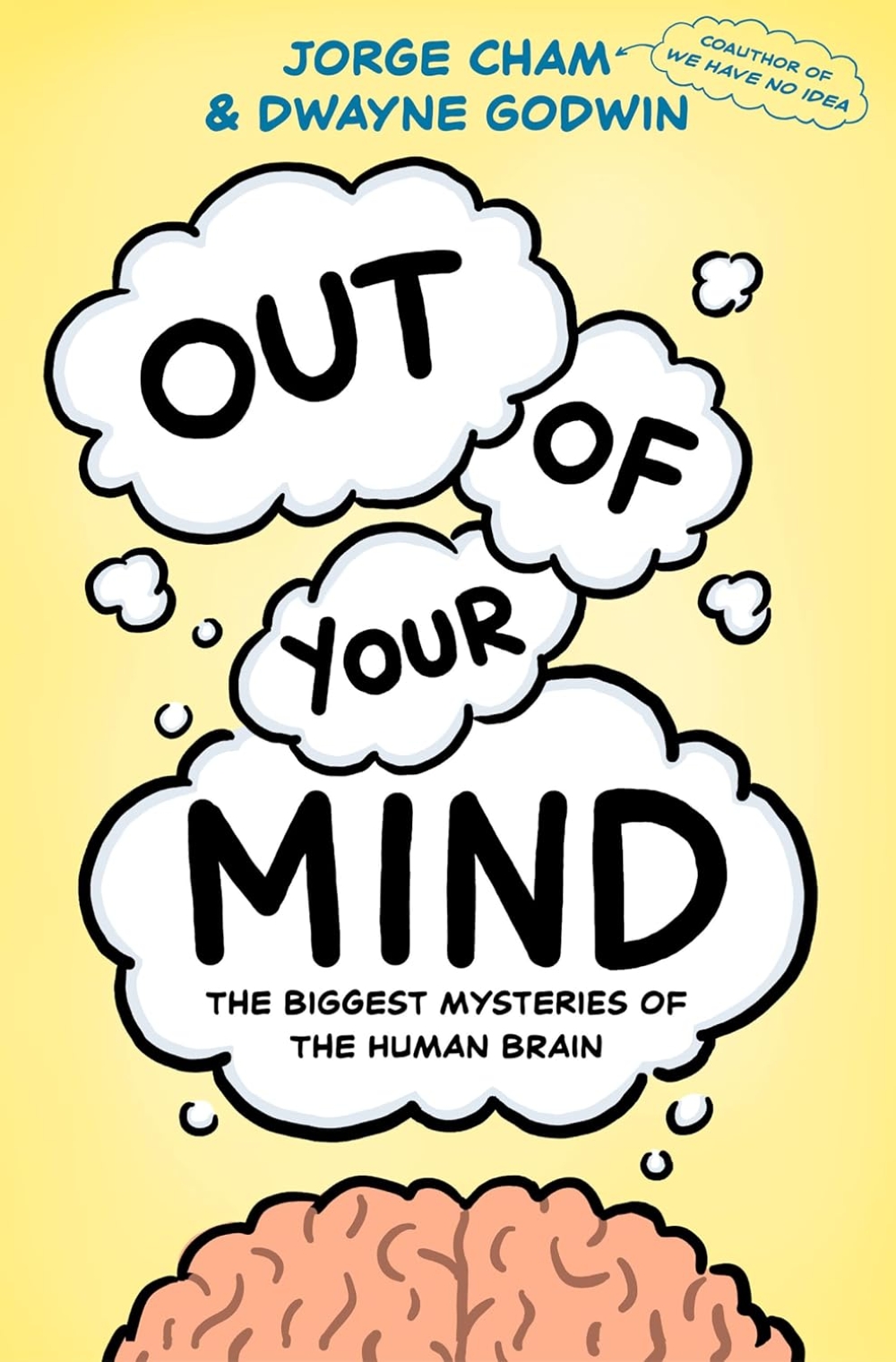
‘Out of Your Mind’ by Jorge Cham and Dwayne Godwin. Photo: Barnes & Noble

“Out of Your Mind” by Jorge Cham and Dwayne Godwin is an engaging and visually captivating exploration of the human brain. This illustrated book takes readers on a journey through the complexities of neuroscience by blending humor, vibrant artwork, and scientific insight to make an often-intimidating subject accessible and entertaining.

Cham, known for his Piled Higher and Deeper (PhD Comics) series, brings his signature wit and illustration style, while neuroscientist Dwayne Godwin provides expert knowledge in an engaging, digestible format. It begins by touching on the subject of identity and what makes who we are and covers a range of topics, including how neurons communicate, the mysteries of consciousness, and the quirks of human memory and perception. The illustrations and comic-style storytelling make complex scientific concepts understandable and fun to explore.

Chapters include:

  1. Where Is The Mind?
  2. Why Do We Love?
  3. Why Do We Hate?
  4. Will an AI Take My Job?
  5. What Are the Limits of Memory?
  6. What Is Addiction?
  7. What Is Consciousness?
  8. What Makes Us Happy?
  9. Do We Have Free Will?
  10. What Happens When We Die?
  11. What Makes Us Human?

Highlights:
3. Why Do We Hate? – explores ideas about where hate comes from and how to combat hate, including some self-reflection because some hatred can be projections of the things we hate in ourselves. “Not only do humans have the capacity to hate, we also use our intelligence to organize and find ways to spread it.”

4. Will an AI Take My Job? – it addresses questions such as whether or not AI can gain consciousness (maybe, but not one that we would recognize) and if AI will eventually take over the world (the jury is still out on that one).

Despite the advanced topic, it manages to balance education and entertainment by using language simple enough to make the material understandable. The humor and visual storytelling ensures that even complex topics remain engaging, making it an excellent read for students, educators, or anyone looking to better understand the brain in a fun and interactive way.

Overall, whether you’re a science enthusiast or just curious about how the brain works, “Out of Your Mind” offers an enjoyable and informative experience. By making neuroscience fun and more accessible for everyone, it reaches a wider range of readers. It is recommended for readers who enjoy science and comics and can appreciate the humor involved in learning something new.

“If your Mind is the sum total of every way you process information and interact with the world, then anything that affects any part of your brain will change you, even if only a little.”

*The author of this blog received a copy for an honest review. The views and opinions expressed here belong solely to her.

Rating: 4 out of 5.

Related post: Unlocking the Mysteries of the Brain: What ‘Out of Your Mind’ Reveals About the Human Brain.

Unlocking the Mysteries of the Brain: What ‘Out of Your Mind’ Reveals About the Human Brain

‘Out of Your Mind: The Biggest Mysteries of the Human Brain’ will be released in January. Courtesy photo, used with permission.

The search to understand how the brain works has been a long-standing scientific endeavor, exploring the complexities of cognition, emotions, memory, and consciousness. Neuroscience and psychology have made significant strides, yet much remains unknown about the brain’s intricate processes. Books such as “The Man Who Mistook His Wife for a Hat” by Oliver Sacks delve into neurological disorders, offering insight into brain function. In “How to Change Your Mind,” Michael Pollan explores neuroplasticity and the impact of psychedelics. Meanwhile, Daniel Kahneman’s “Thinking, Fast and Slow” illuminates decision-making and cognitive biases, offering a deeper understanding of human thought processes.

If you’ve always wanted to learn more about the inner workings of the brain but found the subject too complicated, there’s a new book coming out next month that aims to make it more accessible to all readers.

“Out of Your Mind: The Biggest Mysteries of the Human Brain” by Jorge Cham and Dwayne Godwin goes on sale January 28th, 2025. It’s an introductory journey into your own mind—if your inner voice had a Ph. D. in brain science, cracked jokes, and drew cartoons. (Penguin Random House, 2024)

Why do you love? Why do you lie? What makes you happy? Every single thought you have comes from one place: your brain. But what makes it tick? How much of it have we decoded, and how much of it remains an impenetrable mystery?

Join best-selling author and online cartoonist Jorge Cham and neuroscientist Dwayne Godwin on a deep dive into the fascinating world of the human brain, in which they will explore questions such as: What is consciousness? Where is you in the brain? And do we have free will? All while illuminating everything we know (and DON’T know) about one of the most complex objects in the known universe.

Think of it as conversation-ammunition for your next cocktail party, or a quick fascinating read while you’re in the bathroom (don’t worry, the chapters aren’t that long). Centered around questions we all ask ourselves at some point but don’t usually have answers to, “Out of Your Mind” is an illustrated book about the brain that isn’t too brainy. Playful, accessible, and deeply insightful, it’s the one brain book that’s truly accessible and suitable for all brains.

Some of the questions that are addressed include:

  • Where is the mind?
  • Why do we love?
  • Why do we hate?
  • Will an AI take my job?
  • What are the limits of memory?
  • What is addiction?
  • What is consciousness?
  • What makes us happy?
  • Do we have free will?
  • What happens when we die?
  • What makes us human?

JORGE CHAM is the Daytime Emmy-nominated and best-selling cartoonist creator of the popular online comic strip “Piled Higher and Deeper” (known as PHD Comics – phdcomics.com). He is the co-creator, Executive Producer and Creative Director of “Elinor Wonders Why,” one of the highest-rated animated shows on PBS Kids, and the co-author of two popular science books: the best-selling and award-winning “We Have No Idea: A Guide to the Unknown Universe and Frequently Asked Questions about the Universe,”as well as the children’s book “Oliver’s Great Big Universe.” Jorge is also the co-host and co-creator of “Daniel and Jorge Explain the Universe” a popular podcast and radio show. He obtained his Ph.D. in robotics from Stanford University and was an Instructor and Research Associate at Caltech from 2003-2005. He is originally from Panama.

DWAYNE GODWIN is a neuroscientist, an educator, and an academic leader who is a professor in the Department of Translational Neuroscience and served as graduate dean at the Wake Forest University School of Medicine in Winston-Salem, North Carolina. His research centers on the cellular basis of abnormal brain rhythms, including active projects on calcium channel function, epilepsy, and traumatic brain injury. His goal is to use emerging insights about the brain to develop treatments and potential cures for neurological diseases. His science outreach includes Mind in Pictures, cocreated with Jorge Cham for Scientific American Mind, as well as blogs for the Society for Neuroscience and the Museum of the Moving Image.

1738058682

  days

  hours  minutes  seconds

until

‘Out of Your Mind’ release date

Upcoming book release: ‘The Girl from Wudang’ by PJ Caldas

PJ Calas’ new novel ‘The Girl from Wudang’ will be released October 17, 2023. Photo: Amazon

The author of multiple best-selling novels in Brazil, PJ Caldas, a.k.a PJ Pereira was picked by the Dictionary of Brazilian Literature as one of the most important writers of the twenty-first century. There, he published four books inspired by the mythology carried to the country by the African diaspora, and reached the top five best-selling titles multiple times. PJ is also a martial artist with 40 years of experience in combat sports, including kempo, karate, tai chi, and Brazilian jiu jitsu. In 2023 he was named Jury President of the Artificial Intelligence Awards at the Art Director’s Club, and curated a Global immersive exhibit of designers collaborating with AI, called ADC101+1, as a way to explore the use of this emerging technology as a creative tool. His new book “The Girl from Wudang: A Novel About Artificial Intelligence, Martial Arts and Immortality” is a story about immortality, martial arts, and AI that will make you change the way you look at life, science, and the crazy times we are living in. It will be released Tuesday, October 17, 2023. (Meryl Moss Media Group, 2023)

“The Girl from Wudang” – Tigress is immortal. This is her story. Yinyin, called Tigress, was raised in the sacred mountains of Wudang, where her life was about Tai Chi, the Dao, and trying to balance her yang with yin. She had never heard of Artificial Intelligence or neuroscience. But then her overpowering yang sets her on a course to the Bay Area to become a professional fighter.

For as long as she could remember, Yinyin had been told she was poised to become part of something big, but what “big” turned out to be was beyond her imagining: a scientific experiment that would allow her to connect her brain to a “Brainternet” and become unbeatable. Bonus: the suicidal headaches that had plagued her all her life would cease.

But nothing comes without a price, and this connection would give others access to family secrets Yinyin has sworn to protect. Secrets that, at large and in the wrong hands, could be a very dangerous.

Fans of the legendary cyberpunk novels and gritty sci-fi thrillers of William Gibson and Stieg Larsson will be captivated by this new techno-thriller–a fast-paced blend of action, neuroscience, spirituality, and martial arts.

“A superlative new novel by one of Brazil’s most innovative writers. A mesmerizing clash between Eastern and Western beliefs about mind and body.” —Bruce Dean Willis, literature professor, University of Tulsa

“An interdisciplinary brewing of ideas and imagination, packed with futuristic brain science tech, martial arts action, and Asian culture.” — Professor Paul Li, author and faculty in cognitive science, UC Berkeley

1697551784

  days

  hours  minutes  seconds

until

‘The Girl From Wudang’ release date