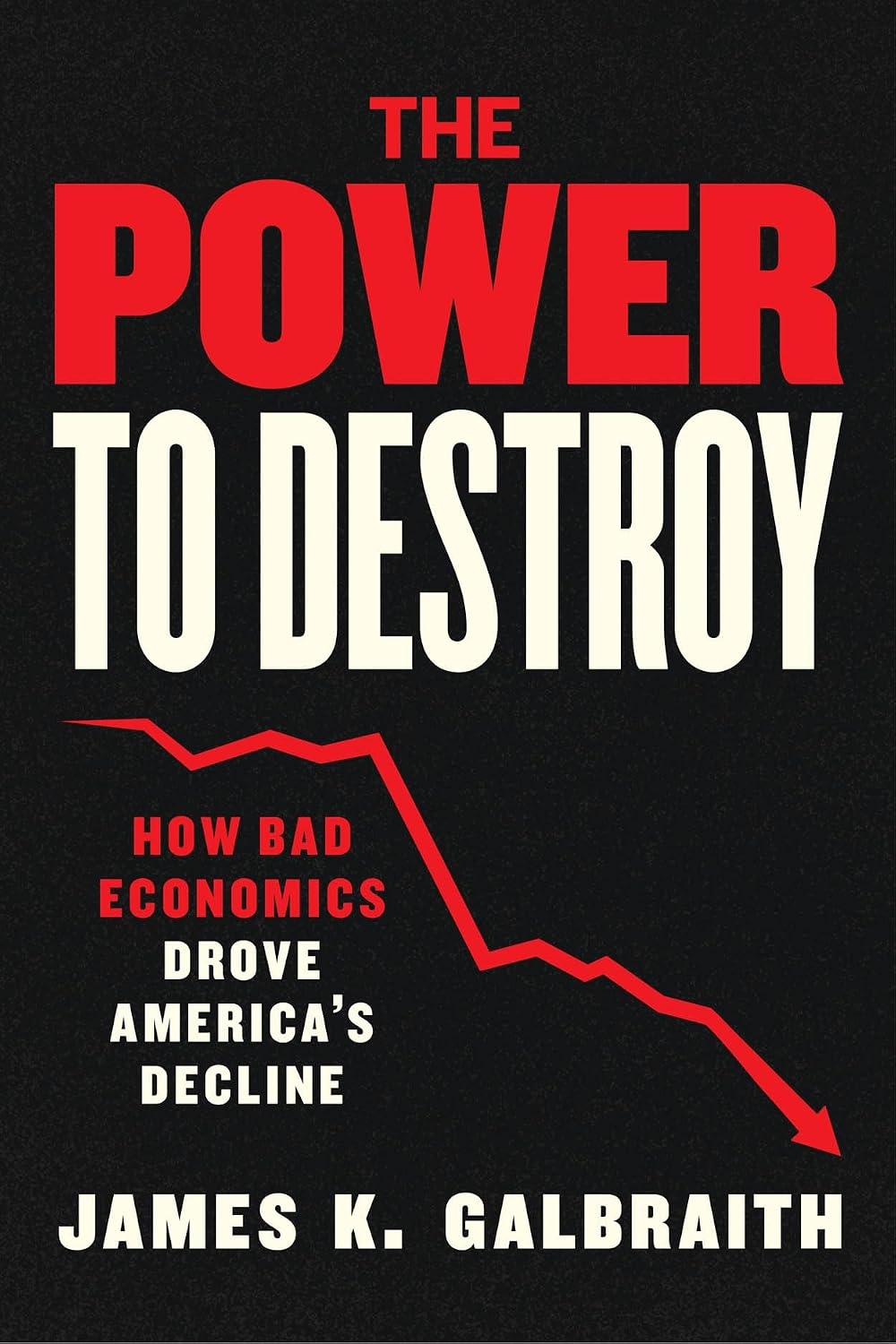
Why Modern Economic Policy Failed: James K. Galbraith’s ‘The Power to Destroy’

‘In The Power to Destroy,’ James K. Galbraith explains how yesterday’s economic tools don’t work today. Photo: University of Chicago Press

📚 Book Spotlight: The Power to Destroy: How Bad Economics Drove America’s Decline

Author: James K. Galbraith

Release Date: September 23, 2026 (Available for pre-order)

The Dissonance of Modern Economics

Acclaimed economist James K. Galbraith sounds an urgent alarm on how conventional economic ideas and policies have failed to adapt to the most daunting challenges of our geopolitical moment. (University of Chicago Press, 2026)

Amid a mounting sense of American decline, everyday citizens live with a strange contradiction: traditional economists keep announcing that everything is fundamentally fine. They point to steady growth, low unemployment, relatively stable prices, and high stock markets, asking: what’s there to worry about?

Synopsis

The Power to Destroy shows that this dissonance reflects a failure of the discipline to evolve. Galbraith’s incisive history of 21st-century economic policy centers on a fundamental flaw: today’s experts are still deploying tools from yesterday’s wars.

Relying on obsolete ideas, outdated measures, and crude indicators like standard output and price indexes—many honed a century ago for a vastly different social landscape—offers little hope in the face of today’s existential threats.

Galbraith argues that these conventional policies are accelerating the decline of the US economy. Key policy shortcomings include:

  • Mismanaged Inflation: Weak responses to the post-pandemic inflation of 2021–2022.
  • Geopolitical Miscalculations: Flawed strategies regarding the sanctions war against Russia and the economic rise of China.
  • Stagnant Revival: Half-hearted and ineffective attempts at domestic industrial policy.
  • Unaddressed Crises: Inadequate preparation for climate change and the impending demographic crisis.

All of these failures root back to a flawed body of economic thought sustained for ideological rather than practical reasons. As Galbraith makes plain, while market systems have their virtues, government policies are what make functioning markets possible in the first place. Sticking with outdated theories brings the power to destroy, making new, realistic ideas an urgent necessity for survival in an emerging multipolar world.


About the Author

James K. Galbraith holds the Lloyd M. Bentsen, Jr. Chair in Government/Business Relations at the LBJ School of Public Affairs, The University of Texas at Austin.

His previous books include:

  • Entropy Economics: The Living Basis of Value and Production (with Jing Chen)
  • Inequality: What Everyone Needs to Know
  • Welcome to the Poisoned Chalice: The Destruction of Greece and the Future of Europe

1790173434

  days

  hours  minutes  seconds

until

‘The Power to Destroy’ release date
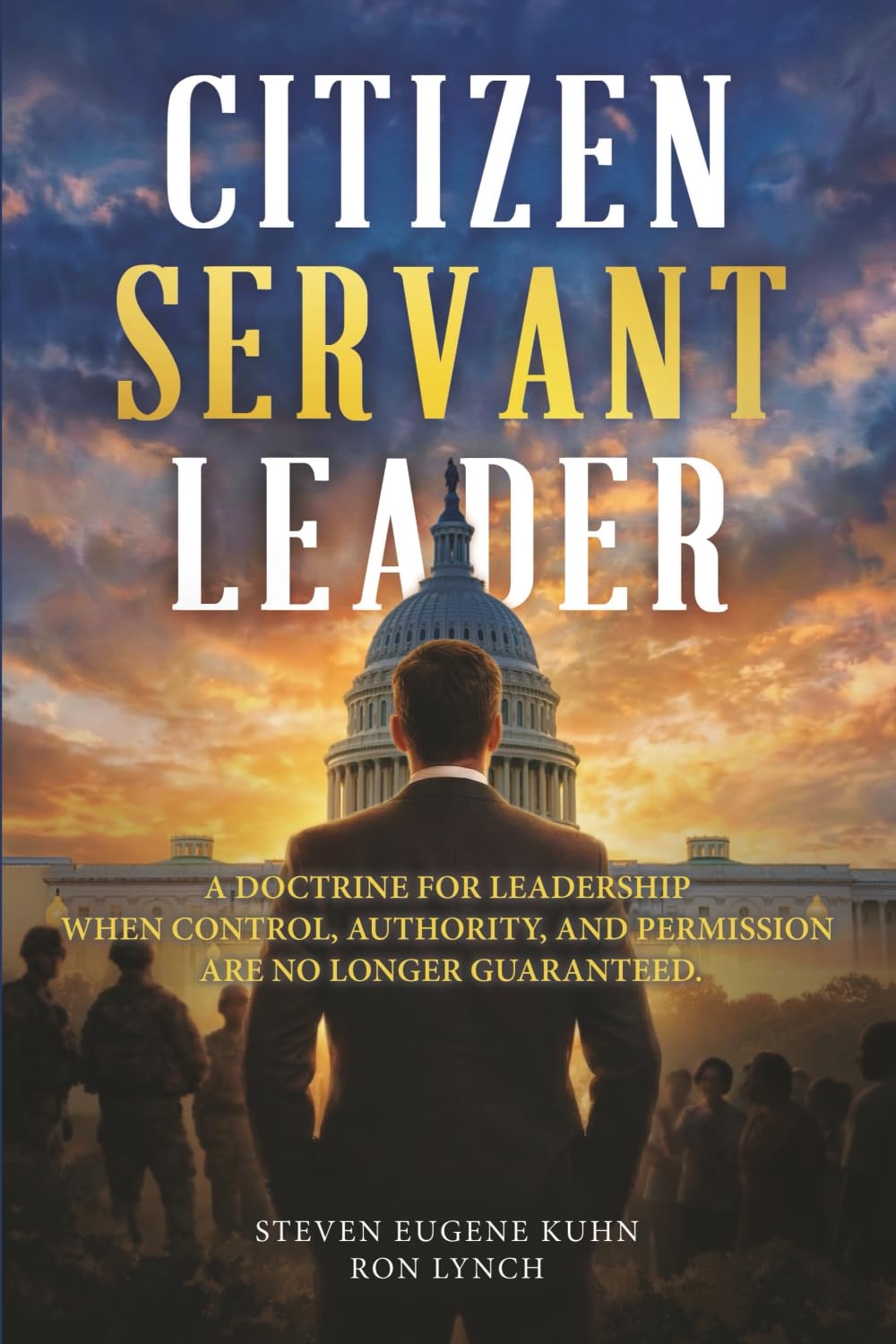
The Ultimate Leadership Field Manual for Uncertain Times: ‘Citizen Servant Leader’

‘Citizen Servant Leader: A Doctrine for Leadership When Control, Authority, and Permission Are No Longer Guaranteed’ by Steven Kuhn Photo: Amazon

📖Book Spotlight: Citizen Servant Leader

A Doctrine For Leadership When Control, Authority, and Permission Are No Longer Guaranteed

By Steven Kuhn/Ron Lynch

The Synopsis

Citizen Servant Leader is a doctrine-based field manual for leadership when authority, control, and permission are no longer guaranteed. (Amazon, 2026)

Rather than teaching influence, motivation, or personal branding, this book focuses entirely on the behaviors that stabilize systems under pressure. It is built on one uncompromising principle: responsibility always comes before authority.

Responsibility Precedes Credibility.
Credibility Precedes Authority.

Drawing from combat experience, high-stakes international business, and decades of organizational leadership across ten countries, the authors show how leadership forms naturally when individuals are willing to carry burden early, speak truth when it costs something, and create space when control is gone.

What’s Inside?

Each chapter combines real-world stories with clear standards, recognizable failure patterns, and practical field applications designed to be practiced, not admired. The book examines:

  • How silence and passivity quietly erode trust.
  • Why truth functions as a structural requirement rather than a moral preference.
  • How small, disciplined actions prevent collapse at personal, organizational, and civic levels.

This is not a motivational book. It is a practical guide for becoming reliable when others hesitate, and for leading with clarity, restraint, and integrity when systems fail.

Who is this book for?

It is written for people who already feel the weight of responsibility: leaders without titles, citizens navigating uncertainty, business operators, veterans, parents, and community builders who are done waiting for permission to act.

Exploring the Citizen Servant Leader Series

This book is the foundation of the Citizen Servant Leader series, a values-first leadership doctrine designed for individuals who choose responsibility before authority.

VolumeTitleFocus
1Citizen Servant LeaderThe foundation. Who you are, what you owe, and what it means to lead with integrity.
2Financial FreedomBuild wealth, break dependence, and use resources to serve.
3Health, Wellness and ResilienceThe physical infrastructure the mission requires.
4Information WarfareThe defensive manual.
5IncorruptibleThe capstone. The standard every Citizen Servant Leader is building toward.

About the Author: Steven Kuhn

Steven Kuhn is a decorated U.S. Military combat veteran who has been hand-picked to consult with some of the most influential people in the world (including rock stars, actors, business leaders, and politicians) on how to expand their brand, build loyalty, and develop strategies for increasing beneficial relationships.

Steven served in the U.S. Army in combat and was awarded the Bronze Star. After his military service, he spent over 30 years living and working internationally, advising business leaders, organizations, and public-sector decision-makers across Europe and the Middle East.

His grassroots movement, Take America Back, grew from these experiences after observing similar patterns across multiple countries: centralized power, declining accountability, and citizens disengaged from responsibility.