
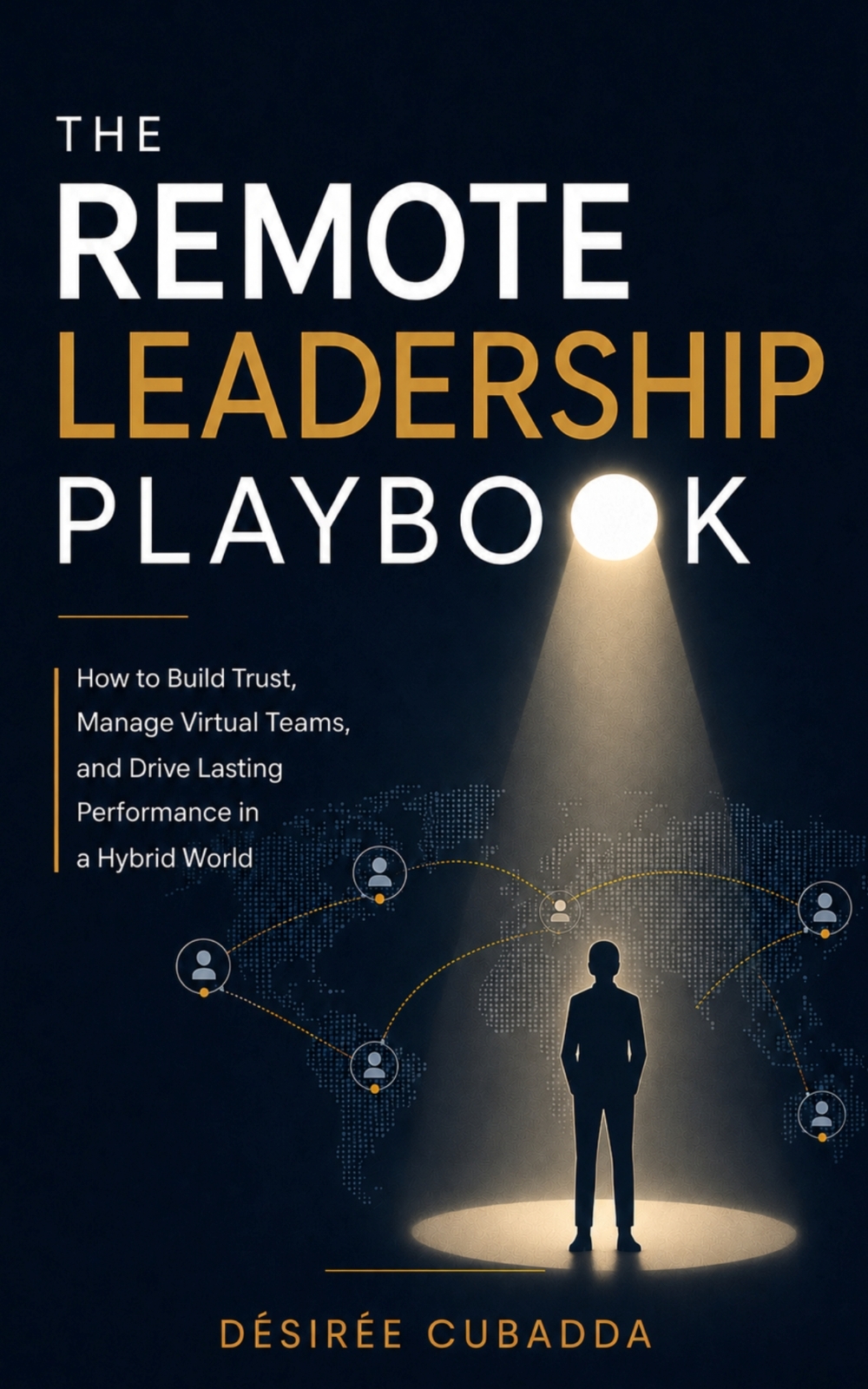
Book Review: The Remote Leadership Playbook
How to Build Trust, Manage Virtual Teams, and Drive Lasting Performance in a Hybrid World
By Désirée Cubadda
Synopsis
It’s undeniable: the workplace has changed, and leadership has had to change with it. Remote and hybrid work are no longer temporary arrangements, they are part of how modern teams operate. Yet, many leaders still rely on management practices designed for a world where people shared an office, communication happened face-to-face, and performance was easy to see. (Amazon, 2026)
At a distance, those practices break down:
- Messages get misread.
- Workloads become invisible.
- Quiet team members become hard to read.
Leaders often struggle with how much to check in, how much autonomy to give, and how to track performance without slipping into micromanagement. The challenge isn’t just managing work remotely; it’s learning how to lead effectively when physical presence can no longer substitute for trust, clarity, and accountability.
The Remote Leadership Playbook is a practical, evidence-based guide to doing just that. At its center is the Future-Ready Leadership™ Model, built around three essential pillars: Trust, Autonomy, and Agility. It addresses the real friction of leading at a distance: misread communication, uneven visibility, weakened connection, and the tension between freedom and accountability.
📖Get your copy of The Remote Leadership Playbook today!
Review
The Remote Leadership Playbook tackles one of the biggest challenges facing today’s workplace: how to lead effectively when your team isn’t sitting in the same room. It provides actionable tools to navigate the delicate trust-control paradox without resorting to digital surveillance, while giving employees the freedom to do their best work.
Key Themes and Topics
- Sustainable Performance: Shifting the focus from tracking hours to managing team energy to prevent burnout.
- Structured Freedom: Giving employees real autonomy while establishing the structural clarity needed to stay on track.
- Distributed Accountability: Strengthening performance and ownership without relying on constant, invasive oversight.
- Global Collaboration: Maintaining engagement, connection, and growth across hybrid and globally dispersed teams through intentional feedback and coaching.
Book Structure & Contents
The book is organized into three core parts, each concluding with an actionable “Playbook” section featuring real-life scenarios and checklists:
- Part I: Trust – The Relational Foundation
- Chapter 1: Trust First: Leading Without the Safety of Visibility
- Chapter 2: The Trust-Control Paradox: Leading Without Overreach or Absence
- Chapter 3: Clarity as a Signal: Communicating the Why at Distance
- Chapter 4: Human at a Distance: Empathy, Presence, and Psychological Safety
- Part II: Autonomy – The Structural Foundation
- Chapter 5: Structure Creates Freedom: Defining Roles, Goals, and Rhythm
- Chapter 6: Growth Without Oversight: Feedback and Coaching for Autonomous Teams
- Chapter 7: From Monitoring to Meaning: Using Control Systems the Right Way
- Part III: Agility – The Learning Foundation
- Chapter 8: Leading Across Difference: Culture, Bias, and Adaptive Thinking
- Chapter 9: The New Stability: Empowerment and Continuous Learning
- Chapter 10: Sustaining Performance: Designing Work That Lasts
Standout Highlights
- Chapter 3 (Clarity & Communication): Explains how leaders can use communication to make trust visible. As the book notes:
“The goal is to help you design communication so that people know where they stand, why decisions are made, and how they can contribute without having to guess.”
- Chapter 4 (The Human Side): Emphasizes empathy and presence. Without in-person cues, assumptions spread faster, making emotional intelligence critical to keeping teams connected.
- Chapter 8 (Culture & Bias): Examines how workplace bias influences leadership. It notes that the most dominant communication style often sets the tone, not because it’s more effective, but because it’s the most visible.
Readability and Format
The language is clear and free of complicated business jargon. Each chapter ends with a Key Takeaways summary section with bullet points for easy reading, making it a convenient reference guide you can return to frequently.
Final Verdict
Cubadda emphasizes managing energy rather than simply tracking time, recognizing that preventing burnout is essential to long-term productivity. The Remote Leadership Playbook makes a compelling case that physical presence was never the point of great leadership; performance and clarity were.
For anyone navigating the evolving world of remote or hybrid work, this is a sharp and practical guide to leading with confidence, no matter where your team logs on.
“In virtual environments, teams rarely expect leaders to have all the answers. They expect steadiness. When leadership behaviour remains recognisable in both calm and crisis, trust deepens.”
** Thank you to Désirée Cubadda for the gifted copy for review consideration. I haven’t been compensated for this review and all views and opinions expressed are my own.
About The Author
Désirée Cubadda is an MBA graduate, leadership researcher, and international business leader with more than 15 years of experience leading diverse teams across industries and cultures.
Combining academic research with real-world leadership experience, she developed the Future-Ready Leadership™ Model to help leaders build trust, create clarity, and sustain high performance across distance.

