
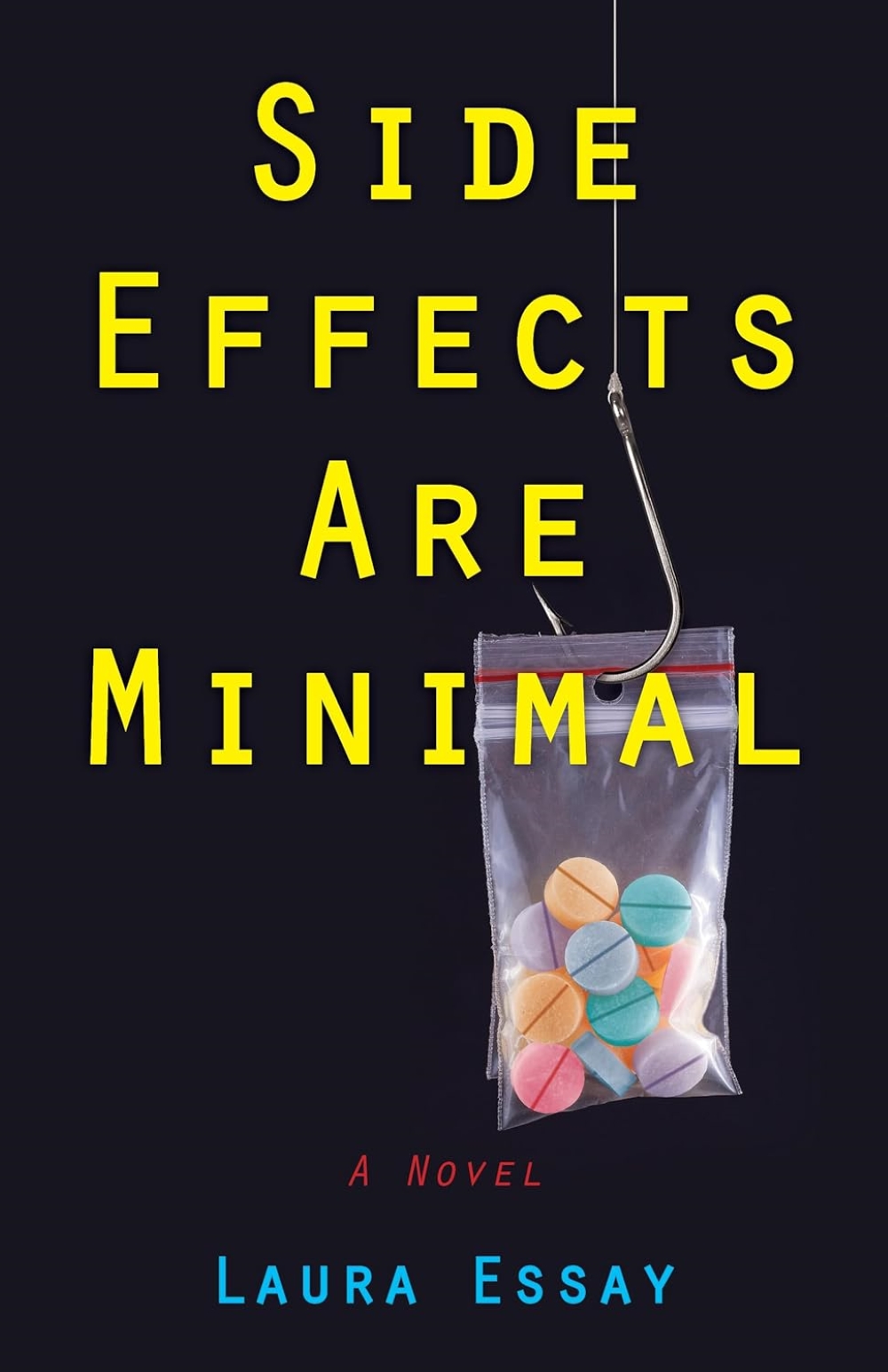
Laura Essay attended the University of Nebraska and obtained a law degree from Creighton University School of Law. When her three grown children moved on to graduate programs in other cities, writing became her passion. “Side Effects Are Minimal,” her debut novel, is about a corrupt pharmaceutical industry, the guilt of physicians prescribing the opioids that kill, and the pain experienced by families who have lost loved ones to a widespread epidemic. Her knowledge of the opioid crisis stems from her passion for research and countless hours spent searching for the truth about opioids in America.
Synopsis:
“Side Effects Are Minimal” – ambitious attorney Claire Hewitt is asked to represent the Satoris, one of Philadelphia’s most prominent families in a lawsuit over the death of their daughter Emma. She is thrust into an opioid nightmare with deadly impact—and not for the first time. Even after twenty years after her sister Molly’s death from what she believes to be an opioid-related death, Claire still feels guilty for not being able to help her. Now, with this new assignment, her guilt comes full circle. Who was really at fault in Molly’s death? And who is at fault now?
Claire struggles to balance her desire for justice with the Satoris’ thirst for revenge. She knows she needs to expose the greed that transforms legal opioid production into illicit fabrications and the neglect that is the breaking point between physicians and their patients. There are powerful people who will seemingly stop at nothing to prevent these truths from seeing the light of day, and she is sabotaged at every turn. Can she push past the obstacles in her way to build a winning case?
Review:
The opioid epidemic in America has devastated communities nationwide, claiming countless lives and leaving a trail of shattered families. Laura Essay expertly combines real events with a compelling narrative. The story begins as Claire is excited at being assigned the Sartoris case even though in the long run it might be a class action suit. She is nervous but looking forward to the challenge partially because the opioid crisis affected her family as well when her sister Molly passed away and she sees this case as a way to get justice for her as well. Her character is confident and qualified but right from the beginning when she is assaulted and her briefcase is stolen, it becomes evident that there will be strong forces out to stop her at all costs.
I was drawn to this novel because of its exploration of the human experience within the medical and legal systems. The fictional court case brings to light the heartache faced by families touched by this crisis and how it transcends demographics, but at least the parents in this story are lucky to be wealthy enough to be able to sue the pharmaceutical supplier. The courtroom drama and the hard work by the lawyers and everyone working behind the scenes to bring these cases to court is gripping and eye-opening.
Essay’s writing style makes it easy to follow the medical and legal terms because she doesn’t use overly complicated jargon. Her use of descriptive language immerses the reader in the action: “Beads of sweat glistened on his upper lip and beside the veins spider-webbing his nostrils.” The characters she creates are vivid and relatable, each struggling with their own challenges and triumphs. This story explores the themes of family, courage, and power/corruption and the challenges that come in times of crisis. Highlights include the in-depth research on the case and Chapter 24 No Friend of Mine when Claire is given the spotlight when the trial begins.
Overall, “Side Effects Are Minimal” is a compelling novel that reminds us of the power of the court system and the resilience of the human spirit in the face of medical challenges. It is recommended for readers interested in learning more about the opioid epidemic and enjoy medical thrillers by Robin Cook, legal thrillers by Mike Papantonio and John Grisham, and strong female characters.
“Claire’s movements revealed the sorrow she felt. Her fingers glided along each line as she read. She whispered their names. She grimaced and smiled and often looked to the ceiling for a break. She squeezed her eyes shut when a break wasn’t enough.”
*The author received a copy of this book for an honest review. The views and opinions expressed here belong solely to her.



 SA Examiner