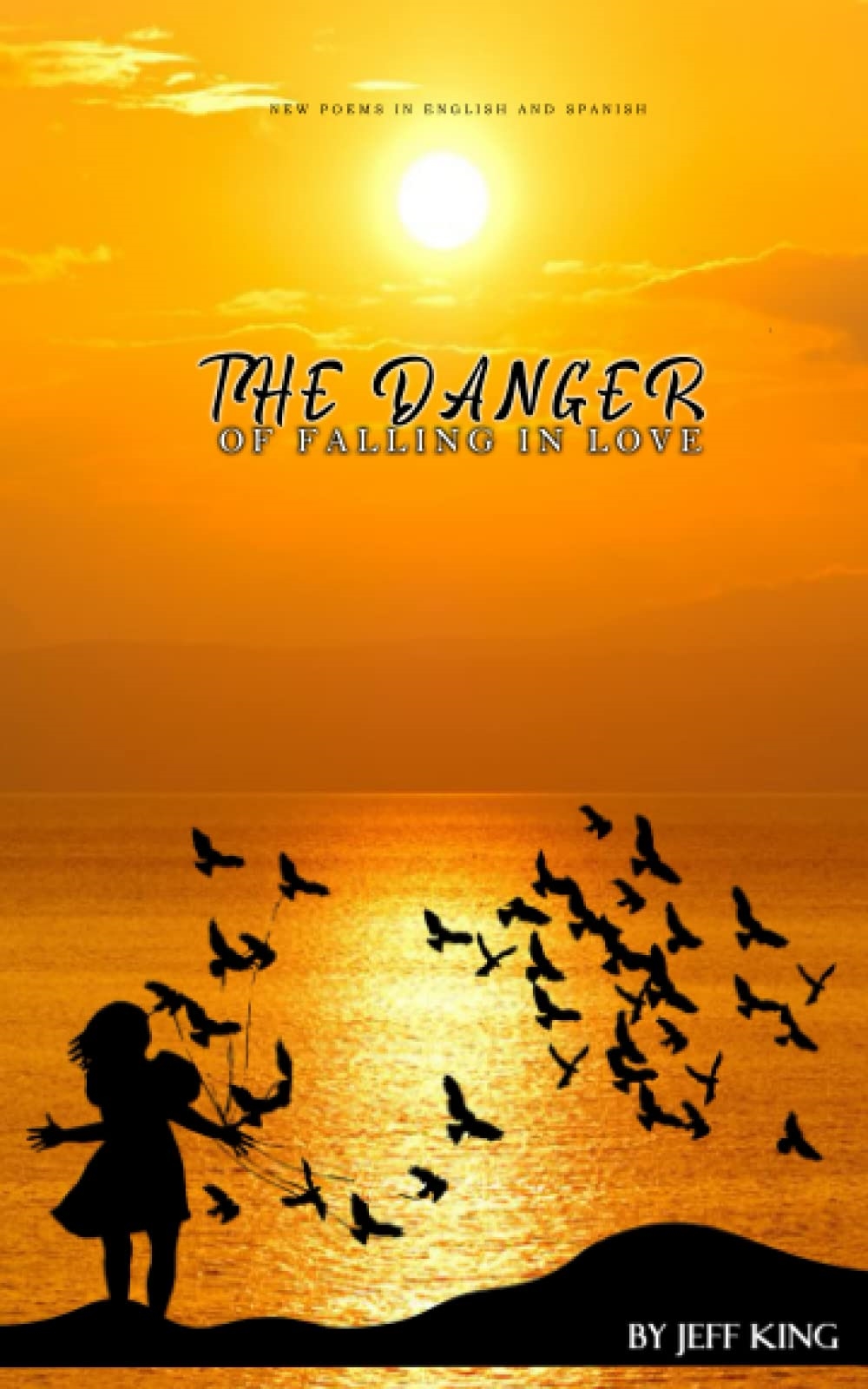
‘The Danger Of Falling In Love’ is the new poetry collection by Jeff King. Photo: Amazon
In book news today: there is a new poetry book out this month. Titled “The Danger Of Falling In Love: New Poems In English & Spanish,” this bilingual poetry book by Jeff King will appeal to poetry lovers who appreciate poetry from the heart.
“The Danger Of Falling In Love: New Poems In English & Spanish” takes the reader on an emotive journey of familial and amorous misadventure. In this bilingual poetry collection, Jeff Kingdivulges “what the knife leaves behind”: layers upon layers of deep-rooted pain that when revealed, give one the space to process, overcome, and heal. Nostalgia, remembrance, introspection…it is these key elements and more that make “The Danger of Falling In Love: New Poems In English & Spanish” a truly raw, vulnerable, and candid reading experience. Above all, this book serves as an homage to loves never forgotten, for love is as eternal as the cosmos itself. (Amazon, 2023)
Poetry is a form of self expression that for some can help heal and restore. In “The Danger Of Falling In Love: New Poems In English & Spanish,” the author conveys a variety of emotions and his honesty shines on every word he writes. His poems are relatable, particularly The Danger of Falling In Love as anyone who has fallen in love can attest. The English and Spanish version of each poem is set side to side and if you are lucky enough to read Spanish, the Spanish ones are just as poetic, not just a generic translation of the English ones. Even though it is a short book, each poem is melodic and speaks straight to the heart. It is recommended for die hard poetry fans.
“You once asked me why I stayed with you; But, where else could I have gone? What kind of life could I have had, without you?” – The Danger of Falling In Love
‘Meru’ is the new science fiction novel by S.B. Divya. Photo: Amazon
S.B. Divya is the Hugo and Nebula nominated author of “Meru,” “Machinehood,” “Runtime,” and “Contingency Plans For the Apocalypse and Other Possible Situations.” Her short stories have appeared in numerous magazines and anthologies, and she was the co-editor of Escape Pod, the weekly science fiction podcast, from 2017-2022. Divya holds degrees in Computational Neuroscience and Signal Processing, and she worked for twenty years as an electrical engineer before becoming an author. In her new book “Meru,” one woman and her pilot are about to change the future of the species in an epic space opera about aspiration, compassion, and redemption. A reading sample is available on Amazon. (Amazon, 2023)
“Meru” – For five centuries, human life has been restricted to Earth, while posthuman descendants called alloys freely explore the galaxy. When the Earthlike planet of Meru is discovered, two unlikely companions venture forth to test the habitability of this unoccupied new world and the future of human-alloy relations. For Jayanthi, the adopted human child of alloy parents, it is an opportunity to rectify the ancient reputation of her species as avaricious and destructive, and to give humanity a new place in the universe. For Vaha, Jayanthi’s alloy pilot, it is a daunting yet irresistible adventure to find success as an individual. As the journey challenges their resolve in unexpected ways, the two form a bond that only deepens with their time alone on Meru. How can Jayanthi succeed at freeing humanity from its past when she and Vaha have been set up to fail? Against all odds, hope is human, too.
The story takes place in the far, far future when humans, whose numbers have dwindled, live in colonies on Earth and their robot/AI descendants called ‘alloys’ are the next form of intelligent life. This concept in itself is what stands out because of the rapid rise in AI in recent years. Combined with science fiction, space exploration, and genetic engineering, it makes for a complex saga filled with technology, friendships, and the ever increasing question of what it means to be human. There are so many types of technologies introduced, like the bodym, the body’s information network, and an incarn, the temporary body that alloys use while on Earth, that at times it is hard to focus on the story itself. While the use of the pronouns zie/zir is commendable, it can be distracting until/unless the reader gets used to them. The language, while occasionally tech-heavy, is relatively easy to understand and the story is mainly dialogue driven and switches narration between Jayanthi and Vaha. ‘Meru’ is an impressive work of science fiction complete with space travel, world building, exploration of the human condition in the face of insurmountable challenges, and even an interspecies romance. Labeled as The Alloy Era Book 1, the story will likely continue, and is recommended for readers who appreciate books on genetic engineering, space exploration, and science fiction. It is certainly an interesting work of science fiction.
“No amount of grief and rage could overcome a lifetime of conditioning. Do the least amount of harm to every form of consciousness, alive or not. A planet might not think and feel, but it had a place in the universe. It deserved respect and kindness, especially from a puny thing like her, whose survival depended upon it.”
*The author received a copy of this book for an honest review. The views and opinions expressed here belong solely to her.
‘If I’m Upset I Can’ is a children’s book designed to help children identify and cope with anxiety and anger. Photo: Amazon
Julien Bodrieu, a school teacher and avid children’s book author, has over 10 years of experience working with children. Julien had a passion for telling stories since he was a child, which inspired him to begin writing stories and picture books for children. He writes in simple, easy-to-understand language with an entertaining style that keeps children engrossed in his books while teaching them important lessons about life. “If I’m Upset I Can” is a positive, interactive book that will help children calm down, cope, and cool a hot temper with skills that will last them a lifetime. (Amazon, 2023)
“If I’m Upset I Can” – Kids, like adults, go through a wide range of emotions. They may experience emotions such as boredom, anxiety, sadness, disappointment, embarrassment, and fear. While most of us experience a variety of emotions daily, we are not always taught how to deal with or manage them. Children must learn how to handle their emotions in a healthy manner. It is critical to teach children coping techniques that will enable them to face their concerns, relax, and cheer themselves up. Coping methods are divided into two categories: emotion-focused and problem-focused. Both types of abilities are critical for children to learn and apply in their daily lives. This book includes essential skills to help kids deal with feeling so they are less stressed, activities that help kids develops these important skills, anger management and growth mindset activities, self-esteem and social skills activities, and an anxiety workbook and activities. If you work with kids, you are always looking for creative ways to help them navigate through their hardships. This book can help you do that.
This is book #1 of the Social skills Children’s Books for Kids designed to help children develop their social skills. It is an interactive workbook that older children can use as they learn to cope with anger and anxiety. Illustrations such as ‘How I Feel Anxiety In My Body’ will help them identify these emotions by how their bodies are reacting: ‘Headache, Trembling or Shaking.’ Once identified, they can use the coping statements and changing negative thoughts ideas to guide them as they navigate these often confusing emotions. The Self-Care Checklist gives healthy living tips they can use anytime. Since these are skills anyone can use, parents and their children can work on it together and benefit from this extremely resourceful guide. The Worry Jar idea is a wonderful tip anyone can use to set aside some ‘worry time’ each day. Mental health is an important issue, and ‘If I’m Upset I Can’ is geared towards children as they learn to identify and cope with anxiety and anger. Highly recommended!
‘Daddy’s Girl’ by Michael Schnabel is a memoir about the challenges and struggles of parenting. Photo: Amazon
Michael Schnabelis an author and a graduate of Northern State University. Michael developed his passion for writing and storytelling during his thirty-year career at Bristol-Myers Squibb. He lives in Overland Park, Kansas with his wife, and when not spending time with family, you can find him tending to his 26-acre tree farm. His first book, “Daddy’s Girl,” is a memoir about the challenges and struggles of parenting through a medical crisis. (Amazon, 2023)
“Daddy’s Girl”– How does a young mother overcome an 8% chance of living to raise her newborn son? She becomes a warrior and provides hope for others. This is the story of a father, his daughter, and the deadly battle she won. In each person’s life there are events that forever change their course. Twenty-seven year old Stephanie experienced two of these events in fourteen days; the birth of her only child and the discovery that she might now live long enough to raise him. She is haunted by the thought that this baby will only know her through pictures, until she makes that thought her motivation to survive. Michael Schnabel, Stephanie’s father, tells the story of survival and how three generations of a family respond to crisis. It begins with the happy news that Stephanie is pregnant but well into her second trimester, she starts feeling sick. The narrative switches back and forth between the present, Stephanie’s ordeal, and the past, as Michael shares parenting stories and the lessons he learned along the way. Some of the chapters contain ‘life lessons’ like “The obstacles people face in life do not define them, but the way they deal with them might.” In the Epilogue, he shares what they as a family learned to do during a medical challenge, including the importance of having a team mentality, seeking out medical experts according to the disease you are fighting, taking it one day at a time, and celebrating victories, no matter how small.
As the English poet John Donne famously wrote, ‘No man is an island, entire of itself,’ so it is when facing a major medical diagnosis. In Stephanie’s case, the joy she and her husband experienced with the birth of their son Caden came with a cancer diagnosis. Family and friends surrounded them with the love and support necessary to see this challenge through. Told through the point of view of her father Michael, it also chronicles a parent’s difficult journey as he watches their daughter struggle on. The language is simple enough to make this an easy read but it comes with a trigger warning: some of the material is somber and difficult to get through but readers are rewarded with a happy ending. Even though the subject of religion comes up, it does not come across as preachy and instead, Michael focuses on a ‘higher power’ and the importance of surrounding yourself with loving people, doing good for others, and being at peace. “Daddy’s Girl” is the story one woman’s difficult journey and contains a wide range of emotions while reinforcing the validity of family, hope, miracles, and faith. It is recommended for fans of memoirs, survival biographies, and the Chicken Soup for the Soul series of books.
*The author received a copy of this book for an honest review. The views and opinions expressed here belong solely to her.
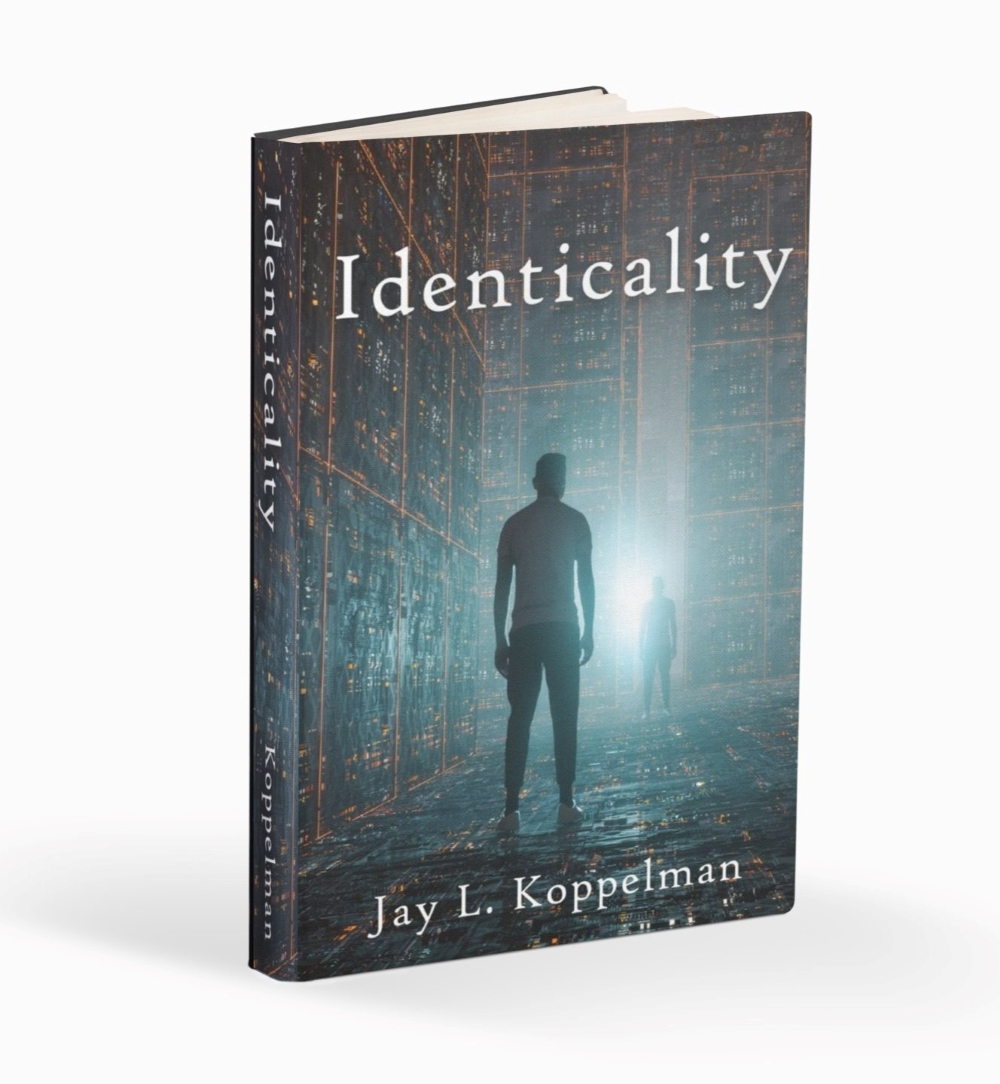
‘Identicality’ is the new technothriller by Jay L. Koppelman. Courtesy photo, used with permission.
How do genetic engineering, artificial intelligence and emerging technologies in computer science, medicine and physics engage with ethics and morality? These are themes in “Identicality,” the debut novel from San Francisco Bay Area resident Jay Koppelman. It is a riveting and thought-provoking science fiction novel that will keep you thinking and guessing until the very end – and then beyond. In today’s world, science is quickly catching up to fiction. Will it have gone too far when it comes to replicating human beings? Check out the reviews for this amazing romp of a techno thriller and see what the excitement is all about.
As Adam Braudy, a brilliant inventor-entrepreneur, lies dying following an assassination attempt, he asks Charlie Wood, his lifelong friend, to use Adam’s latest invention—a human replicator to create Adam’s replicant. Despite deep ethical reservations, Charlie sets them aside, and at the risk of spawning a Frankenstein monster, creates Adam’s replicant who then steps into Adam’s role as husband, father, inventor and industrialist, having no reason to doubt that he is the real Adam Braudy. But then the first Adam miraculously survives. How far will Adam go to get his life back?
“Identicality is exhilarating!”
It’s a thriller that takes you to a place where “I is another”, and “identical is actually distinct.” I can’t wait to see the movie. It’ll put The Matrix to shame.
—Patrick Feigelson, author
“Thoroughly human characters grappling wit extraordinary dilemmas”
The technological wonders in Identicality are only just out of our reach, but they have profound implications for our sense of our selves. It’s a sense we feel as we witness thoroughly human characters grappling with the extraordinary dilemmas that animate this thrilling and thoughtful novel.
What a fun combination of page-turning action and real ethical questions about life. Human replication is such a creepy thing to think about. This is a book that will stick in my mind for a long time to come.
In this unique, gripping novel, fleshed out characters live out their lifelong friendships full of mutual dependence, competition, shared ambition, and love. All against a backstory that includes exciting dramatic scenes of chase, explosion, terror, and medical science fiction. This should appeal to readers seeking science fiction that unfolds medical and ethical fictional situations with real human impact. A unique and well written offering. Highly recommended!
‘Leaving: How I Set Myself Free from an Abusive Marriage’ is Kanchan Bhaskar new memoir. Photo: Amazon
Kanchan Bhaskar was born and brought up in New Delhi, India. She holds a master’s degree in social work from Delhi University and a postgraduate certificate in personnel management and industrial relations. She moved to the US in 2000. She works in the corporate world, mentoring, counselling, and coaching employees at all levels in the industry. She is also now a certified advocate for domestic violence victims in the state of Illinois and is a volunteer speaker, mentor, and coach for victims and survivors. Her new book “Leaving: How I Set Myself Free from an Abusive Marriage” is an inspiring memoir of a woman who reclaims her power and finds the strength to leave an abusive relationship. (Kanchan Bhaskar, 2023)
“Leaving: How I Set Myself Free from an Abusive Marriage” – Raised by two loving parents in New Delhi, India, Kanchan Bhaskar has always been taught that marriage means companionship, tenderness, and mutual respect—so when she enters into an arranged marriage, this is the kind of partnership she anticipates with her new, seemingly wonderful, husband. The story is told in chronological order and begins in 1980-1981 when, as a new wife, Kanchan is starting a new life with her new husband and his family, all strangers to her, but is still naively hopeful that it will be full of wonder and romance. She quickly discovers that his warmth is deceptive—that the man beneath the bright, charming façade is actually a narcissistic, alcoholic, and violent man. Kanchan pleads with her husband to seek help for his issues, but he refuses. Trapped in a nightmare, and now with children to protect, she tries numerous times to leave him but Indian law is not on her side. It is not until many years later, when the family of five moves from India to the United States, that Kanchan is presented with a real opportunity to leave him—and she takes it. It is divided into eighteen chapters, including A Love Story, My Safe Haven, and Coming Together.
Kanchan Bhaskar’s memoir is not just about domestic abuse. In the Preface, she writes that “the story does not stop with gaining my freedom but describes my continuing journey on the path of spirituality.” The abuse she endured is just one part of her story; the whole is more about her personal journey to self reliance. She perseveres against all odds and it does not define who she is now. The abuse details, while disturbing, are brief and not too graphic, just enough to shed light on her tragic experiences. It is always interesting to learn about other cultures, in this case, Indian culture, especially the process of selecting a partner in an arranged marriage. This proves the universality of the human condition regardless of race or culture. The language is easy to understand and often poetic “I felt like a free bird, seeing myself as a white swan gliding high in the infinite sky – who had no boundaries, no limits, no shackles, no fear, no apprehensions…” With a story that flows easily through the pages, readers are witness to her journey from abuse to spiritual awakening. “Leaving: How I Set Myself Free from an Abusive Marriage” is an empowering story of a woman who even during her bleakest moments, found the strength to move on. It is recommended for readers who enjoy inspirational memoirs by strong women.
“I wish there was one formula for all of us, but there isn’t. The formula that worked for me and liberated me was essentially powered by my three strong beliefs, my tools, and my mantras. Belief in self. Belief in Universe. Belief in spirituality.”
*The author received a copy of this book for an honest review. The views and opinions expressed here belong solely to her.
‘Gray: Assorted Poems’ by Conor Noll. Photo: Amazon
Conor Nollis a poet with a lifetime love of the written word and has spent most of it reading and writing. He has had his share of hardships including serving in the military, being a shut-in, and serving time in prison. “Gray” is his first published book of poems with plans for more to come. He currently lives in his Pennsylvania hometown. (Conor Noll, 2023)
“Gray”– This book is a short collection of original poems; a worthy assortment of thoughts and feelings put into words and onto paper. There are topics of love, loss, fond feelings of comfortable places, and also of sadness. Enjoy the poems within.
Poetry can have different meanings for different people. Some enjoy expressing their thoughts while for others, it can be therapeutic. In “Gray,” Conor Noll expresses all types of emotions, from hopelessness to friendship and love. The topics range from the drudgery of daily life to the majesty of the night sky, including the stars and planets. This may be a small book, but it serves as a reminder of the universality of the human condition; that if you are feeling down, you are not the only one and there is always hope right around the corner. Most, if not all the poems are relatable, like Unease, for those of us who have battled with anxiety and The Magical Brew, a humorous ode to coffee and its many benefits. Running reminds us that though it may be hard, sometimes you have to move on from what is familiar. So if you are looking for honest, heart felt poetry to remind you of your humanity, give this one a try. It is an easy read without complicated language and can be read in one sitting, which makes it the perfect book to take to the beach this summer.
“Yet it’s the bad that make, The good all the better, I will not be fake, I refused to be fettered, And I’ll give as much as I can take.” – To Be Human
‘The Union’ by Leah Vernon is a coming of age novel set in a dystopian future. Photo: Amazon
Leah Vernon is an author, body-positive activist, and the first international plus-size Hijabi model. During her double master’s program, she started a blog about being a fat Black Muslim in Detroit experiencing everything from eating disorders to anti-Blackness. She has been featured in ads from Target to Old Navy and even made it to the New York Times and HuffPost. She currently resides in New York City. Her new book “The Union” is a daring dystopian novel that explores the power of friendship in a future society built on violence and division. (Amazon, 2023)
“The Union” – A thousand years in the future, a black elite class reigns. The lower classes, made up of whites, toil in the fields or scrape by in blighted cities, serving their rulers in a cruel, divided world. The story begins with Saige Wilde, a mixed-race enslaved girl whose only goal is escaping beyond the borders of their brutal nation. Among the Lower Residents, there are three classes: Domestic, Chattel, and Impure. Because she is mixed, she is simply labeled as Impure. In this dystopian world, color determines everything: “the paler you were, the worse you got it.” Among the Elites is eighteen-year-old Avi Jore, born to a powerful father and destined to rule. As she comes of age, Avi cannot help but notice the injustices in her world―the treatment of enslaved workers and the oppression of the lower classes. Her disillusionment grows when she meets Saige, who saves her from an assassination attempt, and their paths become intertwined in ways they never imagined. As Saige plots her path to freedom, Avi tries to enact change from the inside but it is a complicated endeavor, filled with danger and malice. Together, their efforts could spark a revolution and underscore the staggering power of friendship.
“Power tends to corrupt, and absolute power corrupts absolutely,” this is the quote from George Orwell’s “Animal Farm” that comes to mind while reading “The Union.” Regardless of who is in charge, there is a risk of them eventually going power hungry and those who are not end up under their heels. Such is the case in this totally engaging speculative novel that dares to imagine a world where whites are not the ruling class. Add in elements of a coming of age novel and friendships that are tested by life’s complications and you have a thought provoking story. Judging by the ending, this is likely to be a series and it would be interesting to read where the author takes these characters. They are well developed, relatable, and strong willed. The narration is in the first person point of view and switches back and forth between Avi and Saige, giving readers a glimpse into their thought processes. With descriptive language that is simple and down to earth, the story flows through the pages, making it a fast read. “The Union” is a coming of age fiction set in a dystopian future similar to the Hunger Games. It may appeal to fans of the genre who appreciate strong characters in tales of revolution and class struggles all mixed in with politics.
“The environment was nothing that I’d ever experienced. It was as if an acidic mist lingered over the entire block, turning everything into the same dull color. The buildings were tall, connected, and intimidating, like they had trapped any soul that had tried to escape. It was like being in a parallel universe, eons away from home.”
*The author received a copy of this book for an honest review. The views and opinions expressed here belong solely to her.
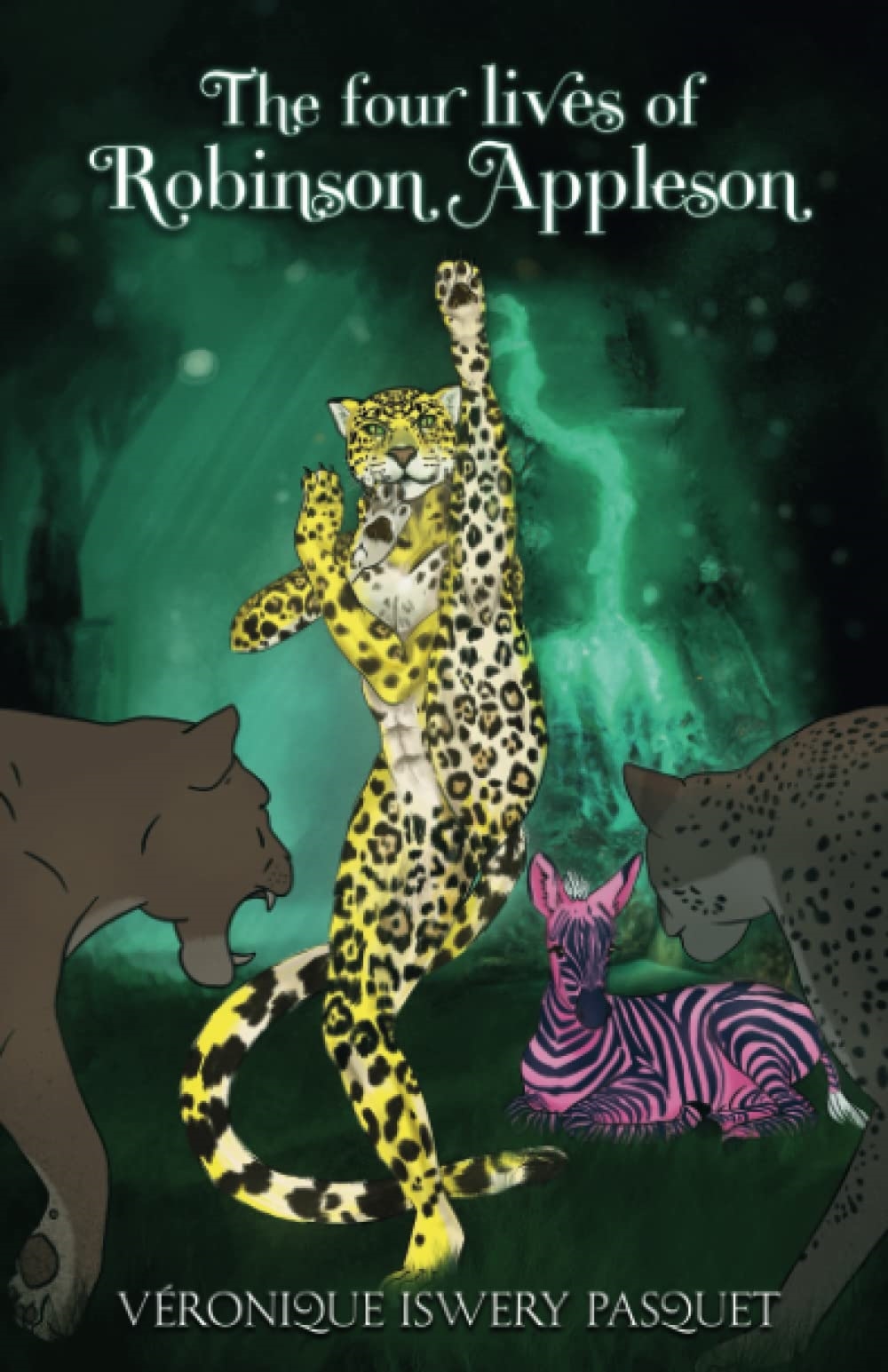
‘The four lives of Robinson Appleson’ is the debut novel by Véronique Iswery Pasquet. Courtesy photo, used with permission.
Véronique Iswery Pasquet is a French author of Indian descent. A voracious reader, she prefers horror, thriller, romance, and biographies of actors and writers. Her fascination for plot twists in scary books and movies are her go-to entertainment choices. Twisted plots and bizarre endings pique her curiosity. That is exactly what she offers her readers in her new book “The four lives of Robinson Appleson.” It plunges into cannibalism and weaves a love story around it. She has taken the challenge of making the readers fall in love with the cruel protagonist. (Amazon, 2023)
“The four lives of Robinson Appleson” – Can a killer turn a new leaf? Robinson Appleson is one lucky bastard. We get only one life. He has had four so far and it is not like he deserved them, either. The story begins in the Prologue where the protagonist, Norman Appleson, a self described “suave and charming millionaire,” addresses readers and encourages them to read his life story and guarantees an unforgettable one. Each of his lives has been different from the last, except that it looks as if he is doomed to make the same mistakes. Gwendolyn, the woman he loves, dies in his arms in all of his lives because of a curse placed on his family. Having been selfish and cruel in his previous lives, he attempts to change this forever. Using a range of tricks learned from Oscar, his mentor, he hopes to suppress and destroy the evil lurking inside him.
The story is divided into four parts:
I Norman Appleson, The First Reincarnation Reborn as a rich kid in Beverly Hills, California, he has no recollection of his past life and thinks of himself as a blessing to mankind. He holds no respect or feelings for women and treats them like objects. It leads to everyone avoiding him like the plague.
II Robinson Appleson, The First Life In his first life, he was a Porcian prince who was known to devour humans. His obsession with eternal youth and beauty has made him addicted to the taste of human flesh, much to the dismay and terror of his kingdom’s subjects.
III Inson, The Second Reincarnation His third life is different, as he is born as a jaguar in the African savannah. Filled with new wisdom, he fights against his instinct to hunt while the smell of prey drives him mad with hunger.
IV Deeva, The Third Reincarnation His last life lands him in the body of a beautiful but poverty-stricken Black woman who was also unfaithful.
Reincarnation is the rebirth of the soul in a new body. Though it is a familiar concept, how often have we wondered what it would be like to be reborn several times. Add a romantic theme of ill fated lovers who meet in each life but are doomed to never be happy together and you have a brilliant debut novel by Véronique Iswery Pasquet. She not only combines these themes but the narrative includes highly descriptive fantasy worlds like The Village of Sweet People where everything and everyone is sweet and scented. It is told in the first person point of view and the protagonist is an extremely smart and good looking antihero. In the beginning you are disgusted by the fact that he is a cannibal but you slowly come to sympathize with him because of everything he has been through and keep reading to find out what happens to him, whether good or bad. The language is down to earth and expressive: “There were warts filled with hair around her eyes, curved nose, and big mouth.” Since the story takes place during several lifetimes, the characters are well developed.
Even though he becomes a better person towards the end, he still has attitude “I hope you have had a great time reading the story of someone who does not give a damn about yours.” Though uncomfortable to read, the cannibal scenes are short and not overly graphic. Instead, they serve a purpose because when he is reborn as an animal, a jaguar, he is starting to change and refuses to eat Gwendolyn, who is now a zebra, and would rather starve to death. “The Four Lives of Robinson Appleson” is a must read unconventional and redemptive love story that spans several lifetimes and explores the many facets of the human experience. My take: love is love, even if you are human, animal, or same gender; a love story that transcends genders, vices, and physical forms. It is recommended for readers who enjoy romance novels, ghost stories, paranormal novels, and urban fantasy novels and appreciate original, though eccentric story lines.
“Do you want a piece of friendly advice? Disconnect yourself from reality to discover and enjoy my surreal but fabulous world. I can assure you it’s worth it.”
*The author received a copy of this book for an honest review. The views and opinions expressed here belong solely to her.
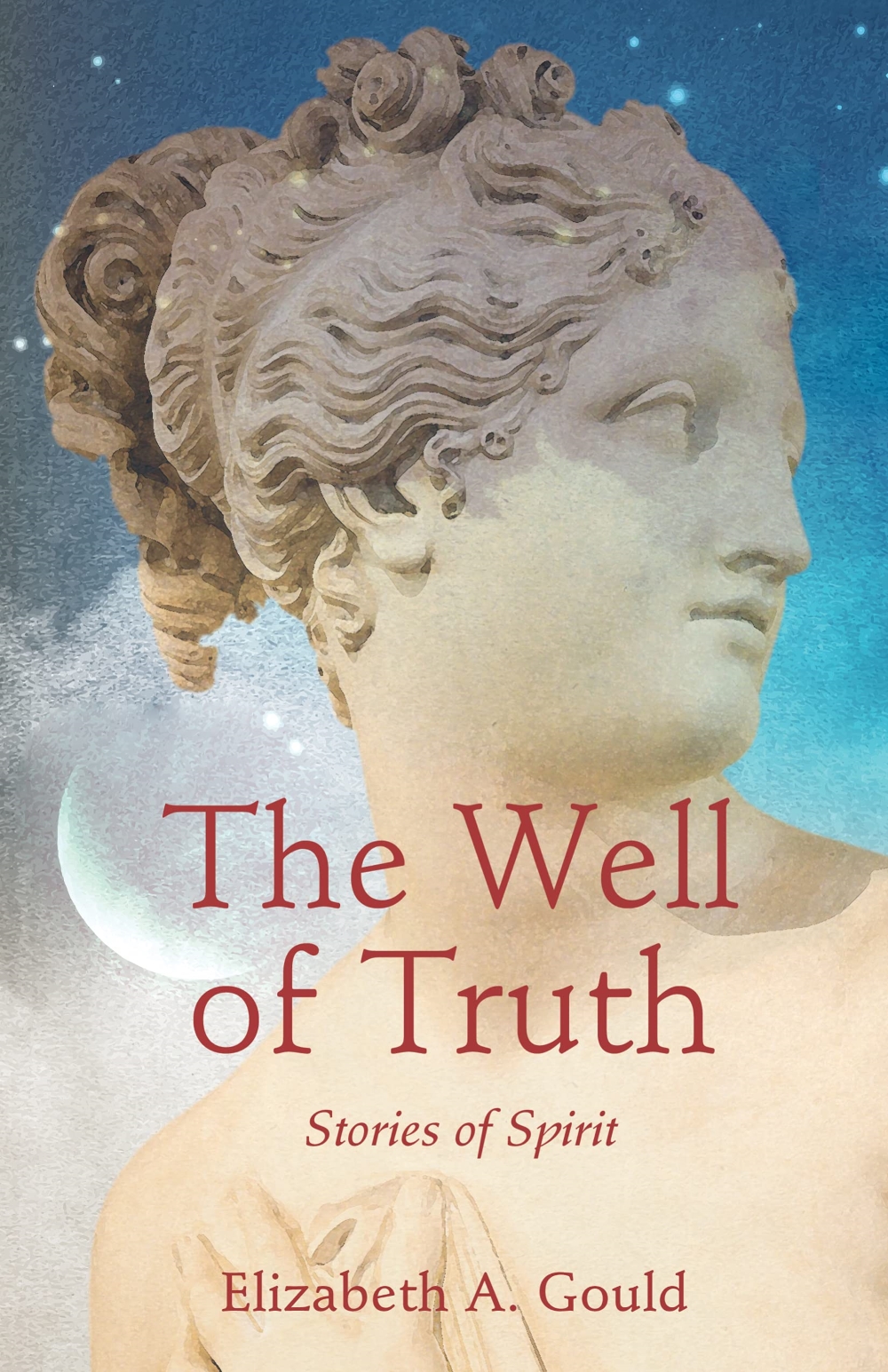
‘The Well of Truth: Stories of Spirit’ by Elizabeth A. Gould. Photo: Amazon
Elizabeth Gould is a mother, teacher, art historian, and menstrual advocate and has long been fascinated with the importance of rites of passage and divine feminine archetypes for women in our modern culture. She has taught and mentored girls at puberty and is the former director of a nonprofit dedicated to positive menstrual/menopausal education. She holds a BA in Art History from Stanford University and an MA in Education from the State University of New York. “The Well of Truth: Stories of Spirit” follows a female heroine through poignant moments of her adult life. (Elizabeth Gould, 2023)
“The Well of Truth”– Incorporating elements of fantasy, mysticism, and lore, Grace experiences life’s ups and downs. Through the initiations of marriage, raising children, getting divorced, going through menopause, losing loved ones, and ultimately making an independent life for herself, she gains insight and spiritual wisdom from unexpected places. These short stories are filled with reflections on feminine resilience, power, and agency. It begins with Grace deciding to spend the summer traveling in Scotland to work on her photography portfolio and research her Celtic ancestry. From there, her life’s milestones come and go, sometimes with unexpected surprises, but she always comes out on top a little wiser with the help of various deities.
Every woman’s life journey is different but we all share the same milestones and struggles. This is what makes Grace’s story so relatable. Readers bear witness to one woman’s transformation from young woman to mom and beyond, complete with victories as well as heartbreaks. The tone has a certain dreamlike quality, with the narration going back and forth between daydreaming and reality. Throughout her life, her personal values are deep rooted in nature and the different goddesses that push her along to succeed. The chapters/stories are short and easy to to read and the language is flowing and poetic. “The Well of Truth: Stories of Spirit” is charming and entertaining and can easily be read in one sitting yet the themes of nature, resiliency, and personal growth resonate past the final page. It is recommended for readers who enjoy books on folklore, fantasy, spiritualism, and magical realism.
*The author received a copy of this book for an honest review. The views and opinions expressed here belong solely to her.





 SA Examiner